Data Center Electrical Maintenance Checklist
Keeping a data hall reliable is not about magic, it is about discipline. This data center electrical maintenance checklist is built for facility managers who want fewer surprises, better uptime, and documentation that actually makes sense during audits and post-incident reviews.
Below, you will find a structured walkthrough that starts with planning, moves through power paths, UPS systems, generators, and electrical rooms, and then ties everything back to fire protection coordination and NFPA 75 style thinking. Throughout, the focus stays on practical steps your team can repeat, not vague theory.
Data center electrical maintenance starts with a calm checklist
At Kord Electric, we support commercial and industrial facilities with reliable data center electrical maintenance that facility managers can actually use. We do not sell mystery. We bring order to the chaos of power distribution, cooling loads, and safety systems. When others wait for alarms to do their job, we prefer checklists that prevent problems before they become stories that staff tell at the end of the day. And yes, we have heard the jokes about “the power will sort itself out.” It does not. It just takes your downtime with it.
Others may treat maintenance like a formality, but our approach is steady and practical. We follow proven guidance for fire protection and NFPA 75 related concerns, and then we expand into the electrical world that keeps a data hall alive. Below, facility managers will find a clear, step-by-step maintenance checklist our technicians explain in plain terms. If you want to see how fire protection strategy ties into these concepts, our partners at Kord Fire walk through the Data Center Fire Protection and NFPA 75 Guide in detail.
Plan the walkdown like a pro, not like a hopeful wizard

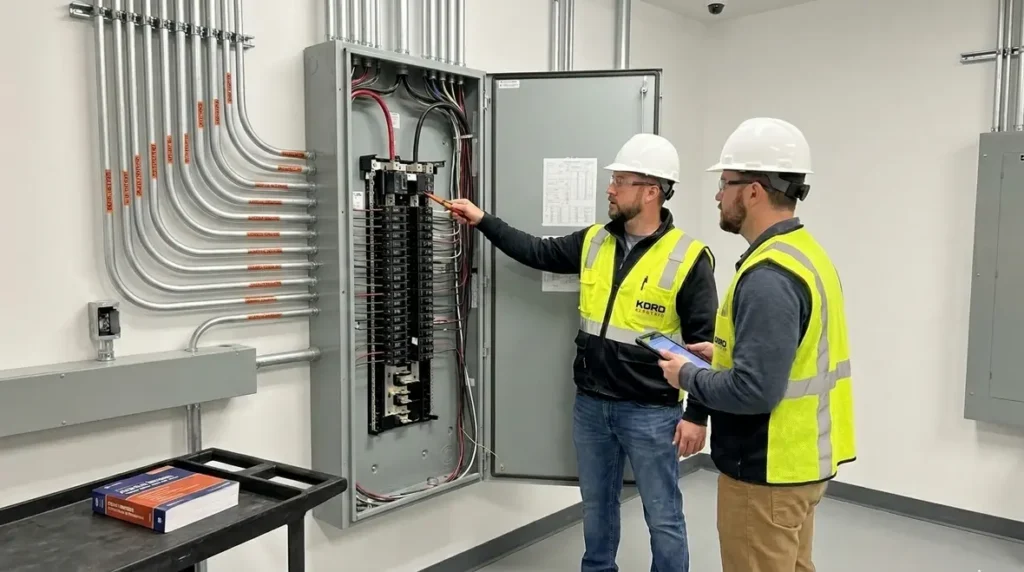
Before anyone touches a breaker or opens a panel, we set the plan. First, the facility manager defines the scope for the shift, including critical load areas, support spaces, and any rooms with special hazards. Next, our expert service staff confirm access needs, safety roles, lockout steps, and documentation requirements.
Then we build a walkdown route that matches how the building actually operates. We start where risk concentrates: main switchgear, transfer equipment, UPS systems, generator distribution, and power distribution units. After that, we move to branch circuits, receptacle panels, and any location tied to mission critical gear.
- Verify up to date one line diagrams and equipment labels
- Confirm last service dates for UPS, batteries, transfer switches, and ATS
- Set clear acceptance criteria for test results and visual inspections
- Assign a responsible person to record findings in real time
Transition matters here. If we do not control the route and the documentation, the team spends the next month arguing about what they “saw.” And nobody wants that. Even your CFO wants fewer surprises than a Netflix season finale.
Inspect power paths end to end
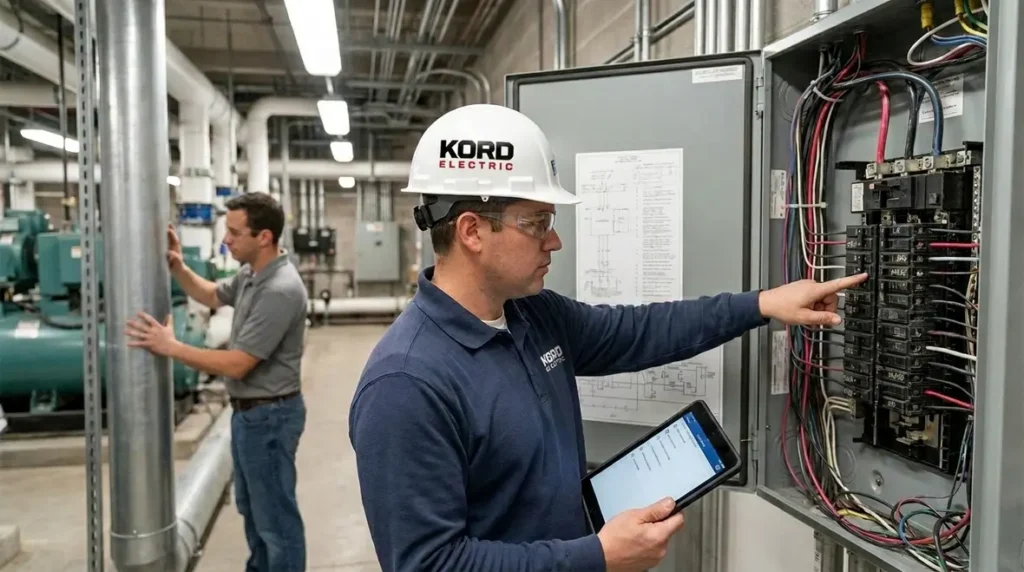
With a planned walkdown, we then inspect the power path as a system, not as separate boxes. In data centers, power fails in patterns. Loose connections, overheating components, dust in wrong places, and worn insulation show up the same way again and again.
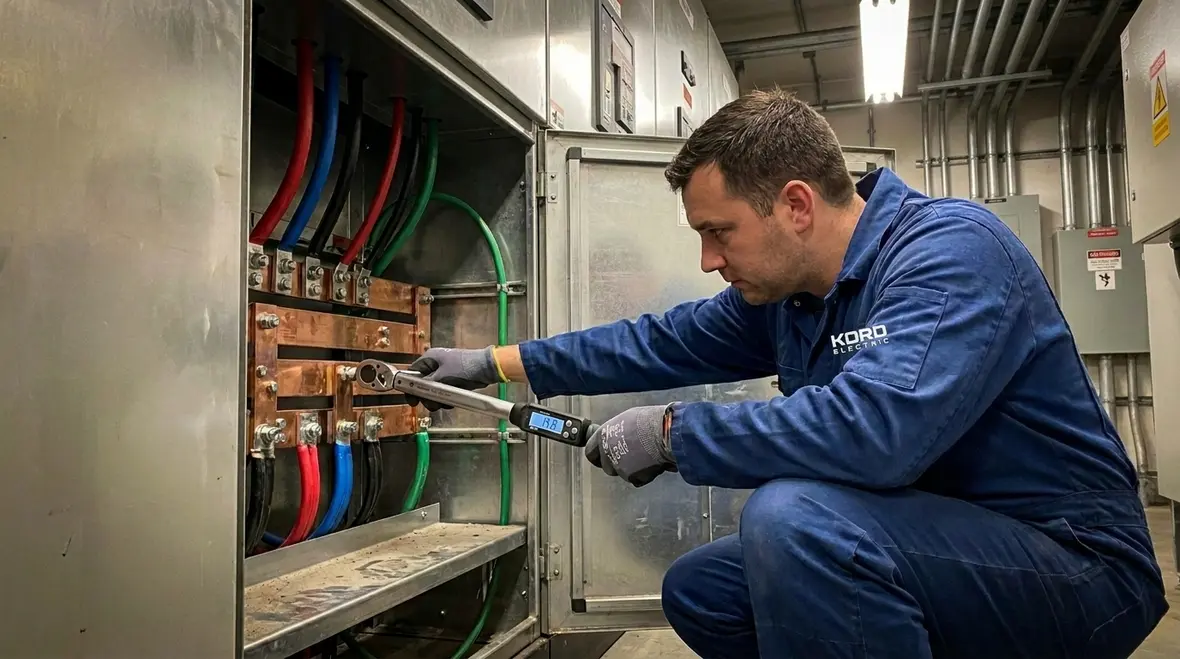
Our technicians check physical condition first. We look at bus bars, breaker compartments, cable terminations, and grounding points. Then we measure what matters. We confirm tightness where torque specs apply and verify labeling aligns with drawings. If anything does not match, we treat that as a risk, because it usually is.
- Check switchgear for signs of overheating, discoloration, and corrosion
- Inspect breaker mechanisms for smooth operation and correct status indications
- Verify breaker and feeder ratings match load assignments
- Confirm cable termination condition and labeling accuracy
- Inspect grounding and bonding connections for integrity
In addition, we review how the facility handles abnormal conditions. For example, if maintenance work disrupts a load, facility managers need to know how the building rebalances it. We help others document that behavior so the next outage report makes sense and the next drill does not turn into theater.
UPS and battery care that reduces surprises
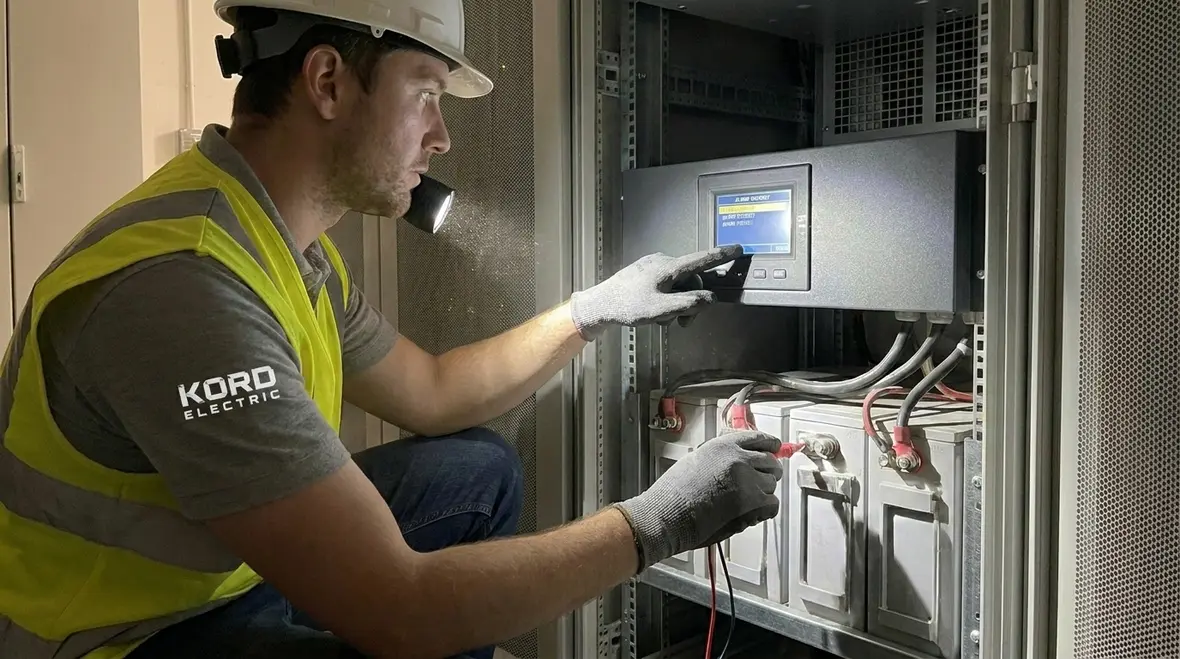
UPS systems do not fail politely. They usually degrade quietly, and then they show their worst side at the most inconvenient moment. Therefore, our data center electrical maintenance includes UPS and battery checks with a clear focus on performance and safety.
We follow manufacturer requirements, but we also use a practical method that facility managers understand. We look at alarms, operating modes, fan operation, and environmental conditions around the cabinet. Then we review logs and test results from prior service events.
- Verify UPS self tests, alarm history, and load levels
- Inspect cabinets for dust, blocked airflow, and vibration
- Check battery string connections and terminal condition
- Confirm battery temperature limits and room HVAC performance
- Review runtime performance against expected critical load
Next, we help facility teams interpret what test results mean. Battery readings can look like “numbers with no story” if nobody explains them. Our expert service staff do explain them. They connect the results to expected performance and to what actions should happen before a real event.

Generators, ATS, and transfer reliability
Generators and transfer switches carry the load when utility power does not. So, when facility managers ask about uptime, this is the section that matters. Even well maintained generators can underperform if transfer behavior is not reliable.
Our approach includes inspection plus verification. We check transfer switch condition, control wiring, and selector logic. We also confirm generator start readiness and that shutdown and cooldown behavior match the planned sequence.
Then we test how the building behaves during transfers. We verify that ATS operation aligns with engineering intent and that the facility can transition loads smoothly. If we find repeat issues, we recommend targeted corrective actions rather than vague “monitor it” advice.
- Inspect ATS control panels, indicators, and mechanical condition
- Verify interlocks, wiring terminations, and correct calibration
- Check generator fuel system, filters, and alarms
- Review exercise schedules and actual run history
- Confirm load step behavior during transfer events
And yes, we keep the tone light when it makes sense. We have joked that transfer switches have the personality of a very stubborn elevator. But stubborn does not work in a data hall. So we keep them honest with disciplined checks.
Electrical rooms, panels, and cable systems you can trust
Even if the main gear looks perfect, the rest of the electrical ecosystem can create hidden risk. Cable systems, panelboards, and electrical rooms often hold the “slow trouble” that grows into outages.
As part of our data center electrical maintenance, we inspect routing, separation, and protection. We check for water intrusion, missing blank plates, damaged conduit, and improper cable bends. We also verify that cable supports and tray systems remain secure and aligned.
When teams manage multiple projects, labeling and segregation drift. We prevent that drift by verifying that panel names match drawings and that spares and spare breakers remain controlled. We also check that access paths stay clear so the next service visit does not require a forklift and a prayer.
| Maintenance focus | What our technicians verify |
| Electrical room condition | Ventilation paths, cleanliness, moisture control, clear egress routes |
| Panel and breaker labeling | Correct feeder IDs, match to one line, missing covers and blanking plates |
| Cable trays and supports | Secure mounts, damage checks, correct routing and separation |
| Terminations and splices | Inspection of accessible joints, signs of heat, proper torque where applicable |
| Grounding paths | Bond integrity, continuity where relevant, corrosion and looseness checks |
To keep flow, we also tie these inspections back to protection requirements. In many facilities, electrical installation details and life safety concerns overlap. Kord Electric references the same discipline found in fire protection planning and NFPA 75 style thinking, then we apply it to electrical reliability. For a deeper look at how NFPA 75 shapes data hall strategy, the Data Center Fire Protection and NFPA 75 Guide from Kord Fire Protection is a useful companion read.
How fire protection coordination affects electrical maintenance
Facility managers often treat electrical maintenance and fire protection coordination as separate teams. We do not. When planning maintenance, we align practices that affect smoke control, detection, notification, and the electrical circuits that support them.
From a data center perspective, our technicians understand that electrical systems influence emergency behavior. Therefore, we coordinate with fire protection components and ensure that maintenance does not compromise intended behavior. We also ensure that power availability for life safety systems remains within the facility’s design intent.
In line with guidance like the data center fire protection and NFPA 75 guide that our team uses as a reference point, we focus on the concept that electrical discipline supports life safety outcomes. That means verifying that related circuits remain intact, properly identified, and ready to operate when required. It also means keeping clearance and access paths maintained for inspection and testing.
Still, we keep it simple. We do not turn maintenance into a PhD exam. We guide facility managers through what matters now, what to document, and what to fix next. If anyone asks “why are you checking that,” our expert service staff explain the chain of cause and effect in plain language.
FAQ for facility managers who want quick answers
CTA: Call Kord Electric for a maintenance plan that holds up under pressure
When your facility manager team needs a checklist that is clear, repeatable, and built for uptime, we step in. Kord Electric supports commercial and industrial data centers with disciplined data center electrical maintenance, technician led inspections, and documentation that makes audits easier. If you want fewer surprises and faster recovery when something drifts, reach out to us. We will review your current approach, align it with best practice concepts, and build a plan your team can follow with confidence.
If you are evaluating upgrades or new builds in parallel with maintenance, our article on data center electrical distribution design for reliability shows how we approach topology, protection coordination, and maintainability long before the first server powers up. Together with a strong maintenance program, that design discipline keeps your data hall ready for real-world stress, not just ideal conditions.
For facilities working closely with fire protection partners, coordinating with Kord Fire’s Data Center Fire Protection and NFPA 75 Guide ensures that your electrical maintenance checklist and your fire protection strategy support each other instead of operating in silos.