
Optimizing Power Load Balancing for Commercial Facilities
Optimizing Power Load Balancing: The Playbook for Commercial Facilities
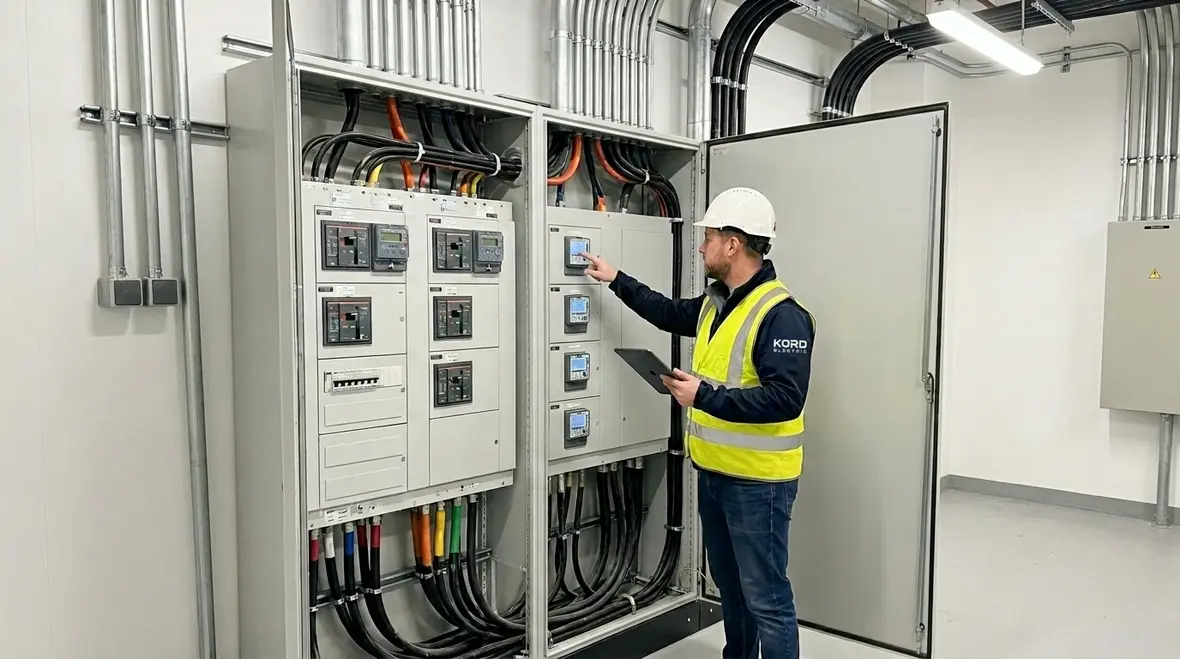
In the first stage of our work at Kord Electric, we optimize power load balancing in commercial facilities by starting with measurement, then matching capacity to demand, and finally tuning protection settings so the system behaves the way people expect it to. First, our team reviews the facility load profile by time, then we spread critical loads across phases and switchgear paths to reduce overheating and nuisance trips. Next, we verify grounding and harmonic conditions because “clean power” is not a fantasy, it is a requirement. After that, we implement controls that respond to real usage, not guesses. Finally, we document everything so future staff can maintain it without guessing like it is a sports bracket.
We know this topic can sound dry, but then again so can a tax form, and yet everyone still deals with it. So we keep it practical for commercial and industrial facilities and major property buildings, with clear steps and calm, measurable outcomes.
How modern electrical systems strain without balanced loads
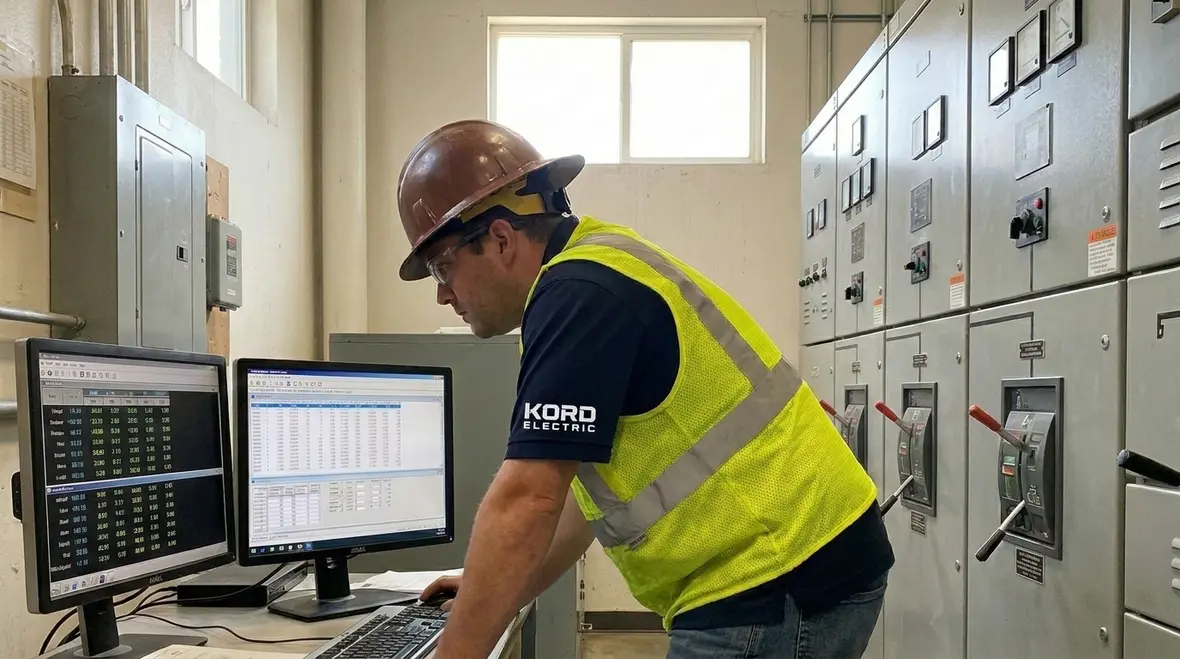
In commercial and industrial settings, electrical demand rarely stays flat. It ramps with HVAC cycles, production schedules, kitchen loads, EV charging, and even lighting changes across floors. When these loads do not share evenly across phases, the result often shows up as hot conductors, reduced equipment life, and uneven breaker wear. Then, during peak events, the facility can experience voltage imbalance that makes motors run less efficiently.
Now, add harmonics from variable speed drives, LED drivers, and power supplies. Even if the kW looks fine, harmonics can quietly raise neutral current and stress transformers. As a result, someone notices “a smell” or a thermal reading, and then everyone rushes to respond. We would rather prevent that moment than explain it after the fact.
Our technicians and expert service staff approach this with a simple mindset: if the system carries the wrong load on the wrong path, it will age faster and behave worse. Therefore, they focus on phase balance, neutral loading, and system health during real operating conditions.
For facilities that want a broader view of their infrastructure, this work pairs naturally with a full review of commercial electrical systems for modern buildings, where distribution, redundancy, and code compliance all intersect with day-to-day load behavior.

Key components that make load balancing work in practice
To optimize power load balancing, a facility needs more than good intentions. It requires visibility and coordination across several pieces of the commercial electrical system. From our experience, these elements decide whether the fix lasts.
- Switchgear and distribution define where loads land and how protective devices respond.
- Transformers influence voltage regulation and thermal margin during uneven phase loading.
- Metering and monitoring provide the data needed to spot imbalance before alarms trigger.
- Busbars, panels, and feeders determine phase allocation and where neutral current can rise.
- Power quality controls help manage harmonics, voltage dips, and equipment stress.
- Load management logic supports switching strategies that adapt as usage changes.
When our service staff reviews modern building systems, we often start from the distribution side because that is where imbalances become real. Then, we connect the dots back to upstream transformers and switchgear. Consequently, we can tune the system instead of playing whack a mole with the next failing breaker.
And yes, harmonics can feel like an invisible villain. Like a superhero movie where you never see the monster directly, but the damage still hits. We prefer to detect it early and stop it with engineering, not guesswork.
If your facility is already planning upgrades to panels or feeders, combining those projects with structured commercial load balancing and broader improvements such as rewiring older commercial electrical systems can turn a single project into a long-term reliability plan.
Phase balancing strategies for day-to-day commercial operations
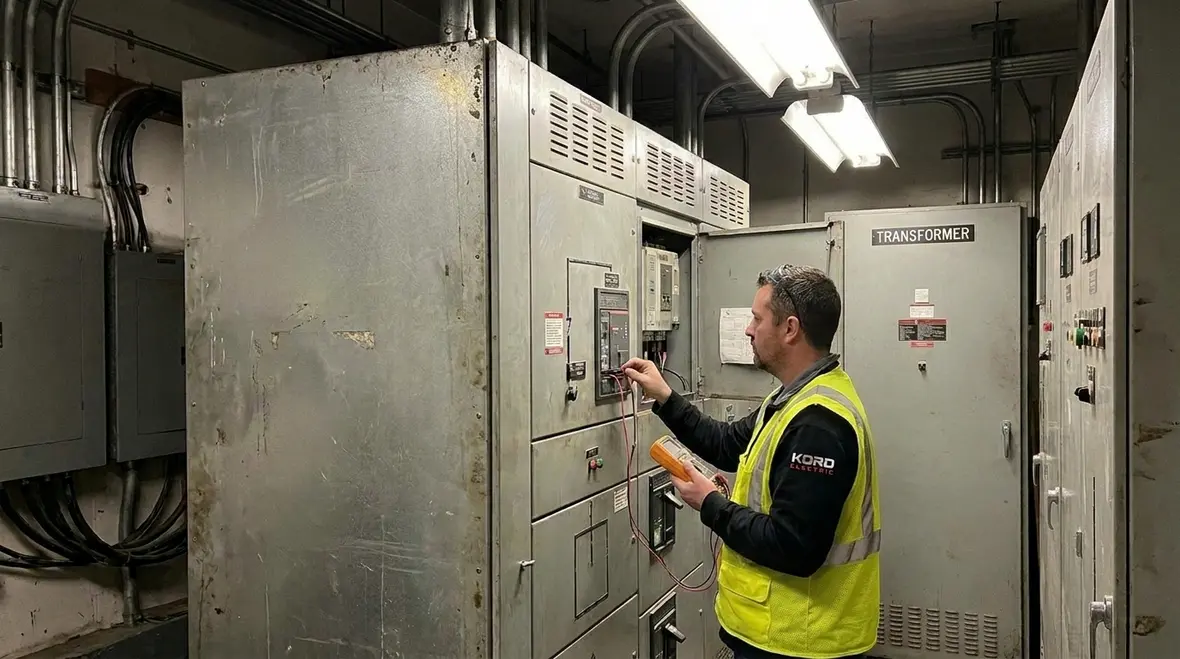
Phase balancing is where the work becomes both practical and surprisingly powerful. We often find that loads were assigned during initial tenant fit-out, or moved during renovations, and nobody fully rechecked phase distribution afterward. After that, imbalance creeps in. Over time, one phase carries more heating stress while another stays underused. Therefore, the system looks “functional” until peak demand reveals the cracks.
To address this, our technicians evaluate loads by circuit and by time. Then we apply strategies that work in real buildings, not only in theory.
- Reassign single phase loads across phases based on actual operating hours, not nameplate guesses.
- Use circuit mapping and phase labeling so future maintenance does not undo your improvements.
- Balance three phase loads by checking connected kW and kVA, then adjusting feeder paths where safe.
- Target neutral loading when harmonics or high non linear loads exist.
- Coordinate protective settings so devices trip for the right reason, at the right time.
In many facilities, we also improve operational continuity. For example, we plan changes during low demand windows and we document the procedure so the facility manager can understand what changed and why. Additionally, we verify results with post-change measurements. That step matters, because the “before and after” tells the truth, not the rumor.
Think of phase balancing like a band performing on stage. If one instrument is playing louder than the rest, the performance still continues, but it becomes a mess. We just bring the sound back into harmony, except our harmony is measured in amps and temperatures.
These phase strategies work even better when they live inside a broader preventive program. Many facility teams combine commercial load balancing tips with structured electrical preventive maintenance so that thermal scans, torque checks, and inspections keep pace with how the load profile evolves.

Power quality and harmonics: the hidden load that bites
When our expert service staff talks about load balancing, we also talk about power quality. That is because harmonics can increase current even when average demand looks normal. As a result, transformers run warmer and conductors experience additional heating. Moreover, voltage waveform distortion can reduce motor efficiency and cause control systems to behave unpredictably.
So, how do we handle it without turning the project into an endless science fair? We use targeted testing and then apply solutions that match the facility’s equipment profile.
- We measure harmonic distortion on key feeders and at distribution points.
- We identify major sources like drives, UPS systems, and large LED lighting banks.
- We improve phase allocation for non linear loads when possible, which can reduce neutral stress.
- We consider filtering and mitigation where harmonic levels exceed acceptable limits.
- We coordinate protective devices to ensure safe operation under distorted waveforms.
Additionally, we look at the relationship between load changes and power quality. If a building adds EV charging, for instance, harmonics and imbalance can rise quickly. Therefore, our team helps facilities plan electrical upgrades so performance stays stable as the building evolves.
And if that sounds like a lot, it is because it is important. Like watching a drama series and realizing the plot changed the moment the season finale hit. Power quality problems often “appear” later, but the cause starts much earlier.
Many property teams first spot these issues when they investigate voltage fluctuations in commercial and industrial facilities. By connecting the dots between those symptoms and underlying harmonics, we can tune protection, capacity, and monitoring so the system behaves the way people expect it to.
Using monitoring and automation for resilient load control
Manual balancing can help, but modern commercial and industrial buildings need ongoing control. Because demand shifts daily, and sometimes hourly, our approach includes monitoring and, when appropriate, automated load management. This allows a facility to respond instead of react.
We recommend strategies that improve resiliency and reduce downtime risk. For example, we can apply measurement at critical distribution points, then use that data to drive operational decisions. When a load spikes, the system can redistribute demand where capacity exists and where protective coordination remains safe.
- Real time metering reveals imbalance trends and neutral current conditions.
- Dashboards and alarms help staff act quickly without waiting for maintenance reports.
- Controlled switching logic supports safe transfer and load redistribution.
- Load shedding plans protect critical systems during emergencies.
- Maintenance baselining tracks equipment health so issues show up early.
We also train facility personnel on what the numbers mean. Our technicians and expert service staff explain configurations and results in plain language, so the team can make informed calls. Consequently, the building does not rely on one person’s memory or one vendor’s spreadsheet.
For facilities with sensitive environments like data centers or campus-scale systems, we often align these monitoring strategies with the concepts in Kord Electric’s approach to electrical distribution design for reliability, so that resilience, redundancy, and commercial load balancing live within the same playbook.
Common setbacks we see during load balancing projects
Even smart facilities stumble. Usually, the issue is not effort, it is scope and follow through. Over the years, we have seen patterns that slow projects or create side effects.
- Balancing without measurement leads to “feel good” changes that fail later.
- Ignoring neutral and harmonics causes overheating even after phase adjustments.
- Overlooking tenant changes because fit-outs add loads without updating phase plans.
- Neglecting protective coordination which can create nuisance trips or unsafe behavior.
- Not documenting circuit mapping so future work accidentally reverses improvements.
Meanwhile, some teams try to solve the problem by only swapping panel circuits. That may help in the short term. However, it does not always address where the true stress sits in transformers, feeders, or upstream distribution. As a result, the building returns to imbalance after the next renovation or seasonal load change.
Our approach stays disciplined. First, we identify the real load paths and the operating profile. Then we apply changes that keep equipment within safe thermal and electrical conditions. Finally, we verify outcomes with testing so we can stand behind the work like it is a promise.
For many commercial and industrial facilities, the most durable results come when load balancing is woven into larger programs such as commercial and industrial electrical maintenance plans. That way, every renovation, new tenant, or equipment upgrade automatically includes a check on load paths and power quality.
FAQ
Conclusion: Let us balance your loads before your system speaks up
If your commercial or industrial facility has uneven loads, rising neutral current, or equipment that runs hotter than it should, it is time to act with a plan. At Kord Electric, we use measurement, disciplined phase strategies, and power quality awareness to optimize commercial load balancing in a way that holds up under real operating conditions. Contact us today, and our technicians will review your system, explain what they find, and outline next steps you can trust. Because waiting for an alarm is not an engineering strategy.
If you are ready to move from quick fixes to a long-term strategy, pairing load balancing with structured services like electrical preventive maintenance for commercial and industrial facilities gives your building a roadmap for reliability, not just a one-time adjustment.


