Commercial EV Fleet Charging Infrastructure
At Kord Electric, we help commercial sites handle electric vehicle fleet charging without turning the electrical room into a science fair. When a company grows its vehicle fleet, the charging needs grow with it, and the infrastructure has to keep up. Otherwise, the charging stations may work on paper while real drivers wait in the real world, and that is not a good look for anyone with a spreadsheet.
In this guide, we explain how owners and facility managers scale safely and smoothly. We also lean on our technicians and expert service staff, who explain the “why” behind every step in plain terms. Along the way, we keep it practical for commercial and industrial facilities and major property buildings, because that is where the stakes actually are.
Scaling Up: Infrastructure Requirements for Commercial EV Fleet Charging
Scaling commercial EV fleet charging is not about stacking chargers in a parking lot and hoping the lights stay on. It is about understanding how your existing electrical backbone behaves under load, what it can support today, and how to design the next phase so it does not unravel the moment your fleet schedule gets busy. That is where careful electrical evaluation, smart load management, and long-term planning come together.
For facility managers and owners, the core questions stay remarkably consistent: Do we have enough capacity? Will this disrupt daily operations? Can we expand later without tearing up everything we just installed? At Kord Electric, we answer those questions with data, clear diagrams, and practical guidance. The goal is simple: a fleet charging system that works on Monday morning, not just in the design meeting.
Right sizing power, not just chargers
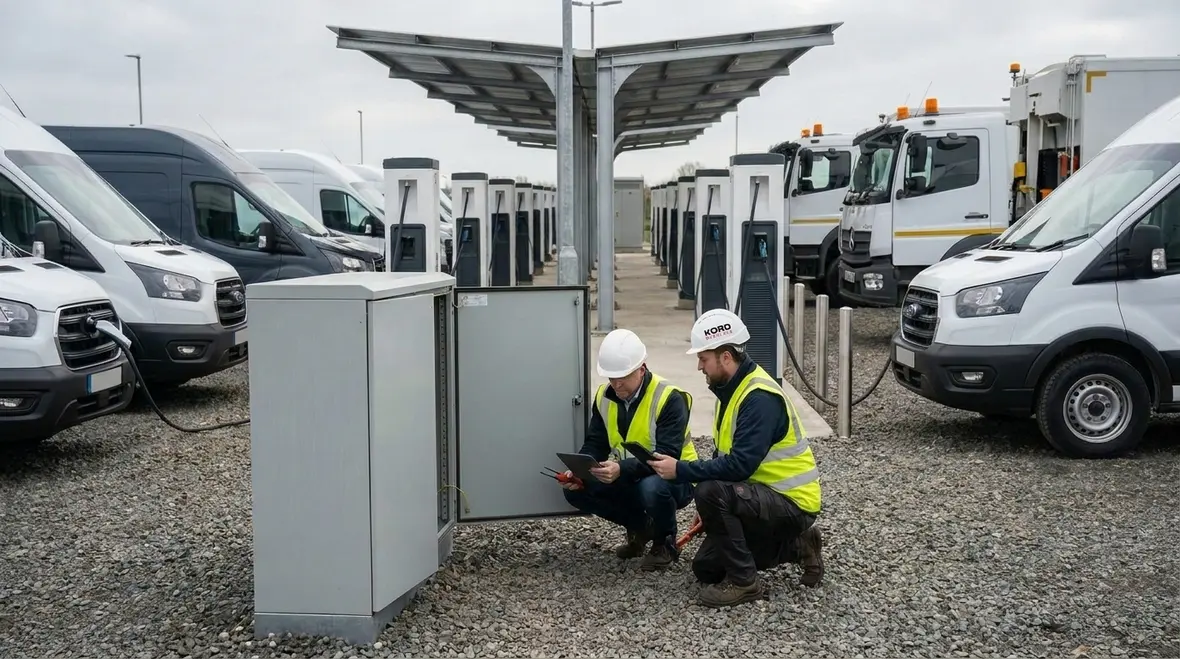
When people plan electric vehicle fleet charging, they often buy chargers first. Then they remember electricity exists, which is a bold plot twist. The truth is that scaling starts with power availability and distribution capacity. We begin by reviewing the facility’s electrical one line diagram, utility demand history, and available service capacity. Then we map the charging load to the actual operating pattern of the fleet.
If the existing service and distribution were originally designed for office loads, lighting, and a few process systems, aggressive EV expansion can push that infrastructure to its limits. That is why our team looks carefully at both nameplate ratings and real-world demand data, not just theoretical maximums. We identify where headroom exists, where upgrades are necessary, and how to phase work so the building does not have to pause operations while you improve capacity.
To do that well, we focus on several parts of the power system:
- Service size and available capacity from the utility connection
- Main and feeder ratings that carry energy to the charging area
- Switchgear and distribution components that must handle peak and continuous demand
- Grounding and bonding so the system performs safely under real site conditions
Next, we calculate charging demand in a way that matches how drivers actually use the site. If fleets charge at staggered times, smart controls can reduce peak draw. If the fleet returns home all at once, the system needs headroom. Either way, we help our clients avoid “best case” assumptions. Because in the field, reality always shows up, like a sequel you did not ask for.
We also connect this early-stage evaluation to broader reliability planning. For example, facilities that have already addressed voltage fluctuation issues or other power quality concerns do not want those gains erased by poorly coordinated EV loads. Our engineers make sure the charging design respects existing corrective work and, where helpful, we point clients toward resources like Kord Electric’s guidance on voltage stability for commercial and industrial facilities.
When the numbers are clear and the distribution paths make sense, owners can commit to charger counts and locations with confidence. No guessing, no wishful thinking, just a clear link between fleet demand and electrical reality.
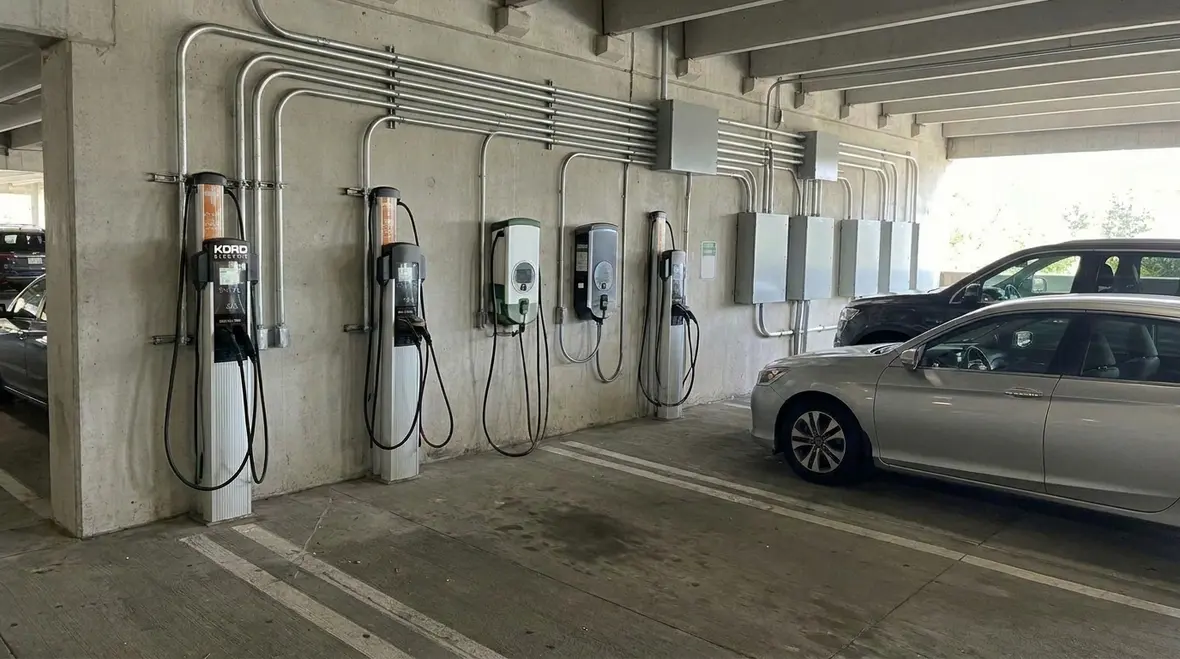
Designing for load management and future expansion
After the power math checks out, we plan for how chargers will share energy. Load management matters because it protects the facility from sudden peaks and reduces the chance of nuisance trips. Also, it helps keep power quality stable across the site.
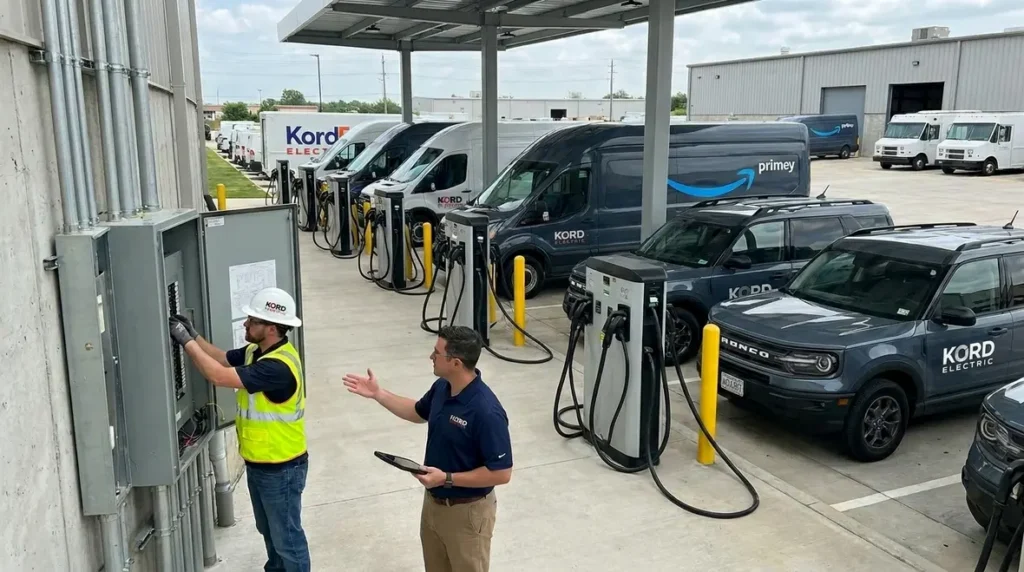
Our expert service staff often explain this like traffic flow. You do not open one lane and hope for the best. You design how cars merge. Similarly, you configure charging stations so they coordinate with facility loads. That design includes smart controls, clear priorities, and a deliberate strategy for how many vehicles can fast charge simultaneously versus how many charge more slowly in the background.
Common scaling approaches we support for commercial and industrial facilities include:
- Managed charging that adjusts output based on available capacity
- Staged deployment so early installations do not block later growth
- Metering and monitoring to verify actual demand versus predicted demand
- Communication based control for coordinated behavior across chargers
Then we look at the physical and electrical pathways for expansion. We confirm that conduits, wire sizing, and panel space can support later additions. In major property buildings, we also consider routing between electrical rooms and parking areas, including safe separation rules. In short, we build so the next phase feels like an upgrade, not a rebuild.
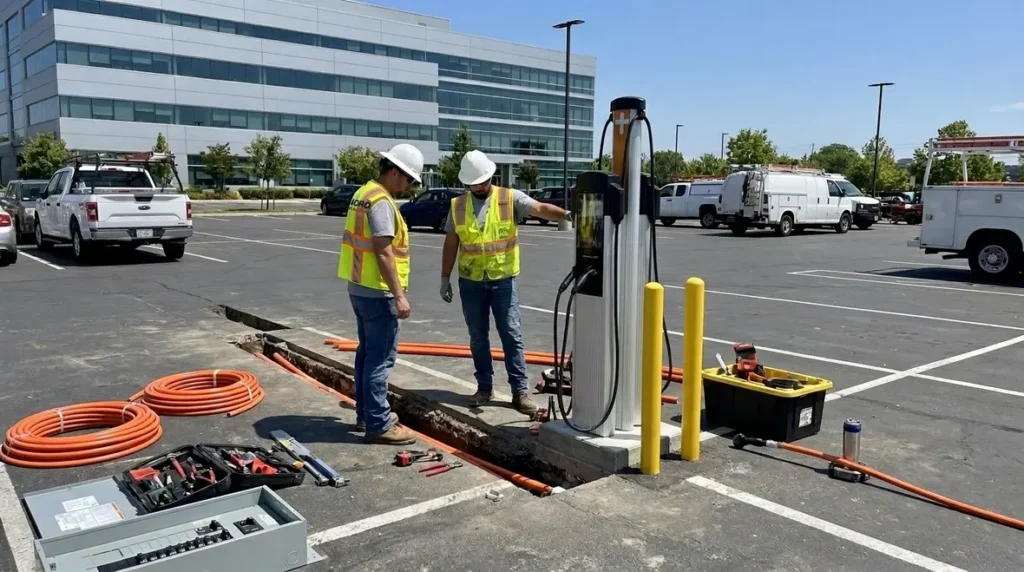
Because Kord Electric also delivers dedicated EV charger installation services for commercial and industrial properties, our fleet charging designs line up with the same practical standards we use in the field. Conduit runs, trenching, equipment placement, and labeling are all coordinated from day one, which helps keep later additions predictable and less disruptive.
Future expansion is not just about adding more hardware; it is about preserving a calm, organized electrical room as the system grows. That is why we plan spare capacity at the panel and feeder level, reserve space for additional gear, and document everything so the “next phase” crew knows exactly what they are walking into.
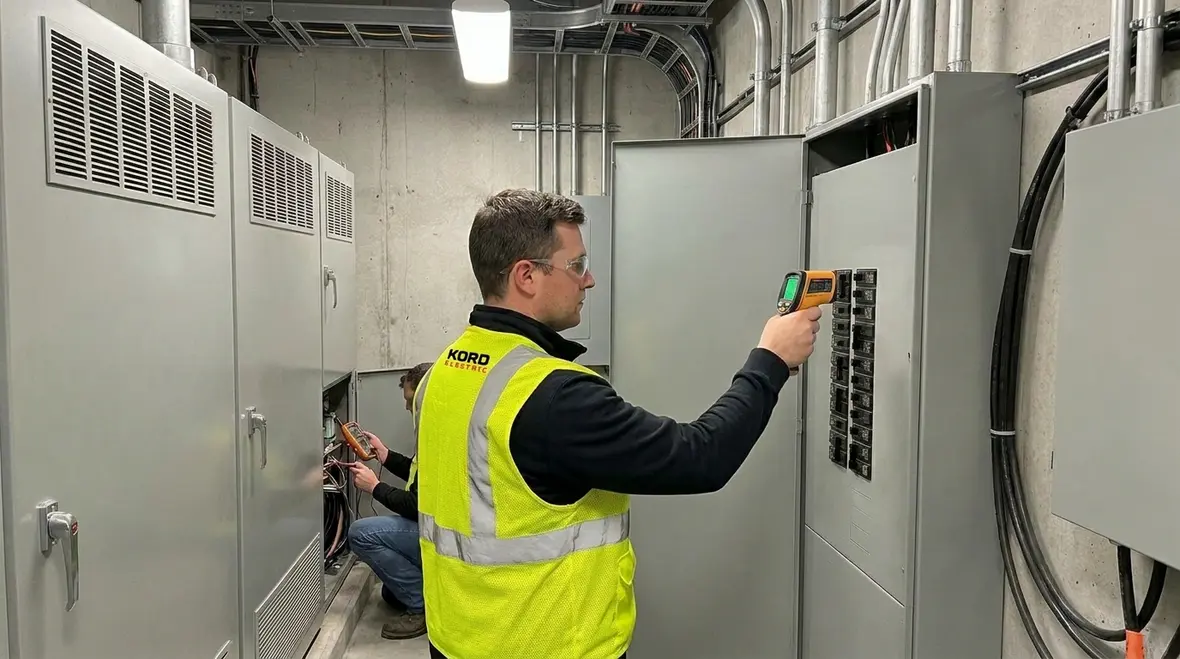
Electrical room capacity, heat, and reliability
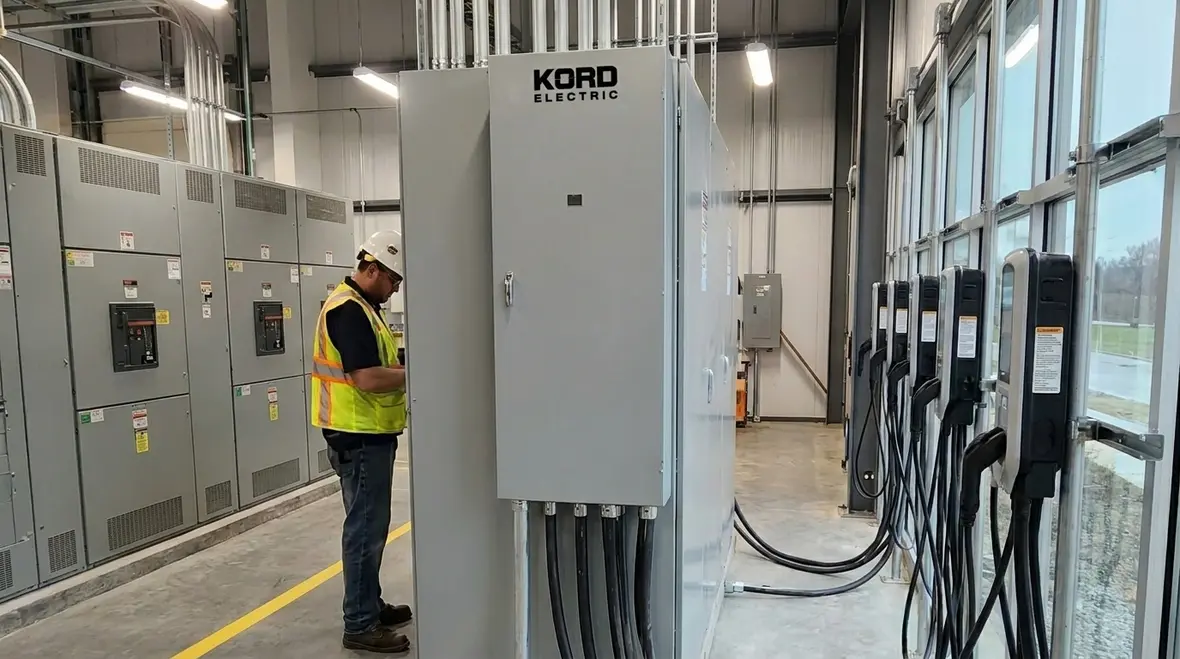
Scaling also means thinking about what happens inside equipment cabinets when many chargers run at once. Heat rises, currents increase, and components age faster if the design ignores thermal limits. So we evaluate the electrical room layout, ventilation options, and equipment ratings.
Our technicians do this with a calm, methodical approach. First, we assess whether existing panels, breakers, and bus bars can handle added loads. Next, we verify that the environment supports safe operation. That includes checking clearance, airflow, and the condition of installed components.
For commercial sites, we often see the same pattern: equipment gets added over time, but the facility never does a full capacity review. Then the system struggles during the moments of highest demand. It is like adding more seats to a theater without checking the exits. Everything seems fine until it matters.
We also plan for redundancy where it makes sense, especially in sites that need high uptime for fleet schedules. That can include proper spare capacity, robust protective devices, and clear labeling so maintenance teams can work without guesswork.
In many commercial and industrial buildings, the same switchgear and distribution assemblies that support fleet charging also serve critical process loads, data equipment, or life-safety systems. That dual role raises the stakes on reliability. Kord Electric’s preventive maintenance guidance for electrical panels and switchgear aligns naturally with the needs of EV-heavy facilities, where long-term reliability is part of the business model, not an optional feature.
By combining infrastructure upgrades with a structured maintenance mindset, facilities avoid “silent drift” in their equipment. Instead of waiting for elevated temperatures, worn components, or nuisance tripping to show up unexpectedly, we design and service systems so problems are caught while they are still easy to correct.
Monitoring, controls, and data that facility teams can use
Once the infrastructure can deliver power, the next step is making sure the system stays under control. Monitoring gives owners and facility managers visibility into usage, faults, and energy consumption. And because we work with commercial and industrial facilities, we focus on data that helps operations, not just dashboards that look nice in a meeting.
We help teams set up:
- Usage reporting for fleet planning and cost tracking
- Fault alerts so technicians can respond before small issues become big downtime
- Performance logs to understand charging behavior across shifts
- Power quality checks to spot abnormal conditions
For many commercial operators, the biggest win is not a single data point but a pattern. Usage data reveals which vehicles consistently arrive undercharged, which routes may be overly demanding, and where infrastructure might need to be rebalanced. Fault logs show whether issues cluster around certain chargers, times, or operating conditions. When combined, these insights help facility leaders adjust operations before problems escalate.
We also coordinate with our client’s internal stakeholders. That means we explain the system in plain language, then we help them train the right staff. Our technicians and expert service staff do not just install. They teach. So when a driver says “it is not charging,” the facility team knows how to verify power, check station status, and escalate properly.
When monitoring and controls are set up the right way, they also support future planning. Historical data helps justify additional chargers, spot the best locations for higher-speed units, and build a business case for further infrastructure upgrades. Instead of guessing how the system behaves, you see it clearly—and you can make decisions that stand up under scrutiny.
Maintenance planning that keeps chargers reliable
Charging systems do not fail all at once. They drift, they wear, and they react to the environment. Therefore, we treat maintenance as a core part of scaling infrastructure, not as an afterthought. For this, our process aligns with the preventive approach described in our electrical preventive maintenance program, found at kordelectric.com/electrical-preventive-maintenance/.
In plain terms, preventive maintenance reduces surprises. It also improves safety and helps extend the life of breakers, connections, and control hardware. Our technicians use checklists and verification steps that support reliable performance across busy commercial sites.
For fleet charging areas, preventive tasks often include:
- Inspection of connections to confirm no signs of heat damage or looseness
- Verification of protective devices to ensure proper trip and fault response
- Cleaning and physical checks for water exposure risk and debris accumulation
- Testing of grounding and bonding for safe fault paths
- Firmware and control checks where supported
And because commercial operations run on schedules, we coordinate maintenance so we do not disrupt fleet workflow. When we explain these steps to facility leaders, we keep it simple: we prevent the “mystery outage” that ruins a whole afternoon.
For organizations that already rely on formal commercial and industrial electrical maintenance plans, fleet charging infrastructure fits naturally into existing service windows. The same scheduled visits used to inspect panels, switchgear, and distribution equipment can incorporate targeted checks on EV chargers, feeders, and controls. That way, fleet charging reliability becomes part of the broader strategy, not a separate to-do list that only appears when something goes wrong.
Over time, this structured approach gives owners a record of work performed, issues identified, and improvements made. That documentation supports internal risk management, insurance discussions, and compliance efforts, all while keeping the actual day-to-day charging experience calm and predictable.
Putting it all together across complex commercial sites
Commercial and industrial facilities are rarely simple. They include varied loads, multiple buildings, and changing schedules. Therefore, our approach treats scaling as a system project, not a charger project.
We typically start with a site walk, then we review utility constraints, electrical distribution paths, and charging locations. After that, we draft a scope that covers electrical upgrades, controls, conduit routing, and safety features. Then we coordinate installation in a way that respects operations, permits, and access needs.
To avoid rework, we also confirm details that people overlook:
- Vehicle access and cable management so cables do not become trip hazards or wear points
- Weather exposure and the right equipment ratings for each area
- Safe separation and labeling so installers and future technicians can work confidently
- Commissioning steps that validate performance under real conditions
When our team brings it together, we help owners scale without chaos. So instead of “wait and hope,” the facility team gets a plan, a built system, and dependable support. Like a good playlist, everything flows, and nobody has to skip the track.
For facilities ready to move from planning to action, our commercial EV charger installation services connect all the dots: electrical assessment, design, permitting, installation, and commissioning. Fleet charging stops being an experiment and becomes a dependable part of daily operations.
From there, tying fleet charging into a broader reliability program—whether through structured preventive maintenance or targeted voltage and power quality corrections—helps keep the entire system ready for the next phase of growth. The result is a site that can welcome more electric vehicles without drama.
FAQ
Conclusion: Let us plan your next phase
Scaling up commercial EV fleet charging takes more than installing hardware. It demands power planning, load management, reliable monitoring, and preventive electrical maintenance that holds up under real schedules. At Kord Electric, we bring expert technicians and clear explanations to commercial and industrial facilities and major property buildings. If you are planning expansion, upgrades, or a new charging rollout, contact us to review your electrical capacity and build a safe, future ready plan. We will handle the heavy lifting, and we will keep it calm.
If your facility is ready to align fleet charging with a broader reliability strategy, explore our dedicated electrical preventive maintenance services and schedule a conversation about how EV infrastructure fits into your long-term plan. For sites that need hands-on deployment support, our EV charger installation team can turn that plan into a built, tested system that supports your fleet every day.