Scaling Electric Vehicle Fleet Charging Infrastructure
Scaling Up Commercial EV Fleet Charging: Infrastructure That Doesn’t Break Under Pressure
Kord Electric helps commercial and industrial facilities plan electric vehicle fleet charging that works today and scales tomorrow. In the real world, fleets do not wait for paperwork, and drivers do not accept “it will be fixed next week.” So we build charging infrastructure around load, uptime, safety, and smart maintenance.
We also take the time to explain every step, because our expert technicians have seen what happens when a site gets rushed and later treated like a science experiment. Think of this guide as the calm voice before the surge, the paperwork before the power.
To keep things practical, we cover what a facility needs when the fleet grows, how the electrical system should be designed, and how preventive work keeps charging reliable. After all, nobody wants a charger that behaves like a flaky celebrity.
What Commercial Properties Actually Need When EV Loads Scale

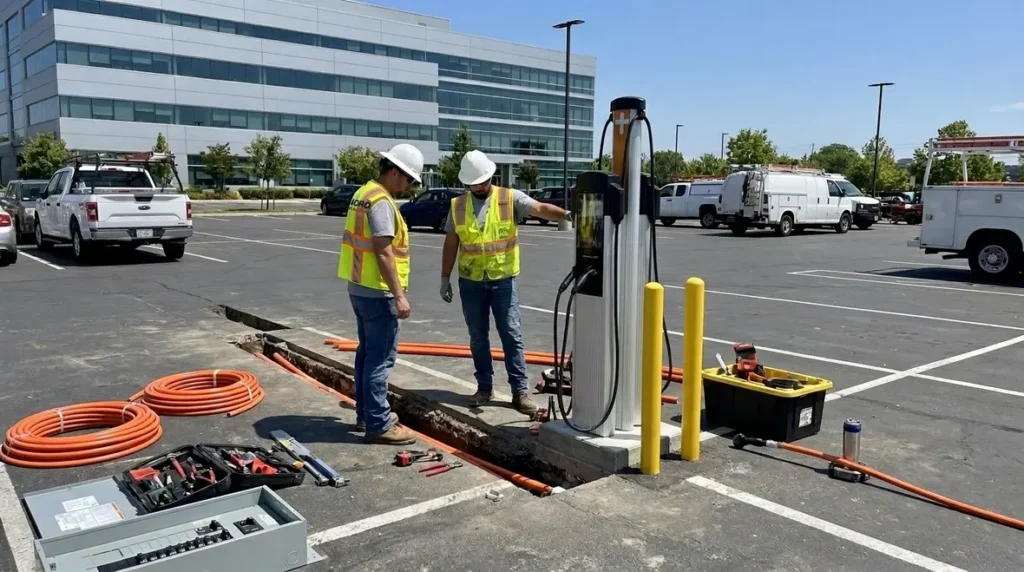
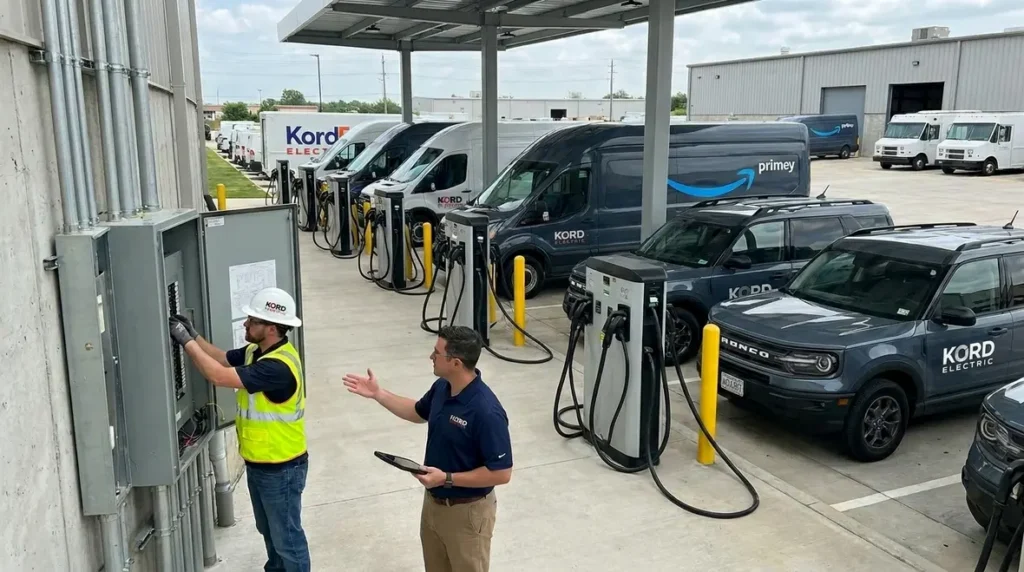
Commercial and industrial sites scale in a way homes never do. A single workplace may add chargers slowly, but a fleet yard can add them quickly, then shift usage by shift changes, weather, and route schedules. As a result, electric vehicle fleet charging demands careful load planning across the building and the site.
First, we look at energy demand, not just charger count. We map out how charging overlaps with other facility loads such as HVAC, compressors, lighting panels, and process equipment. Then we model peak demand so the utility service, feeders, and switchgear handle the highest likely moments. This prevents “under-sized infrastructure” from turning into a recurring outage story.
Second, we plan for expansion with spare capacity. Even if the initial deployment is modest, fleet operators often add vehicles, then add chargers, then add more. Therefore, we design busways, conduits, and panel schedules with room to grow. Our technicians review the drawings closely, and if something looks tight, we say so early, not after the ribbon cutting.
Electrical Service, Switchgear, and Load Management for Fleet Charging
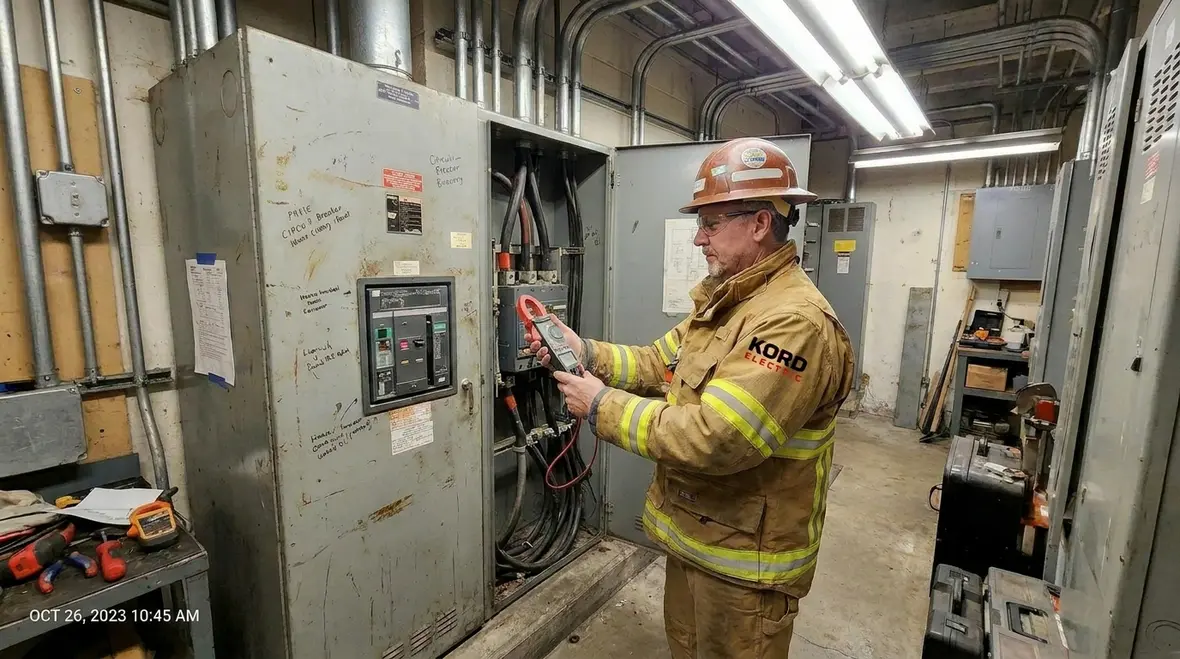
When organizations scale up, the heart of the system becomes the electrical service and distribution gear. If the utility transformer, service rating, or switchgear capacity is insufficient, the entire charging plan becomes a guessing game. We prefer a plan that stays grounded in measured data and realistic assumptions.
To avoid surprises, we typically assess the utility connection capacity and the existing electrical one-line diagram. From there, we evaluate whether the facility needs service upgrades, transformer changes, or additional switchgear sections. We also plan feeder sizing for the likely charging profile, since some chargers draw current in a way that can spike demand.
Next, we set up load management so charging remains steady. This can include smart controllers that throttle charging power based on site demand, plus scheduling rules that charge at lower demand windows. While some managers want every vehicle charged at maximum power, good planning helps the fleet charge efficiently without harming operations. Our expert service staff explains the approach in plain terms, so managers understand what to expect when multiple vehicles plug in at once.
And yes, if a transformer ever gets “surprised,” it is not because the transformer woke up and chose chaos. It is because the numbers were not handled early enough.
Charging Site Layout: Power Routing, Safety Zones, and Cable Pathways
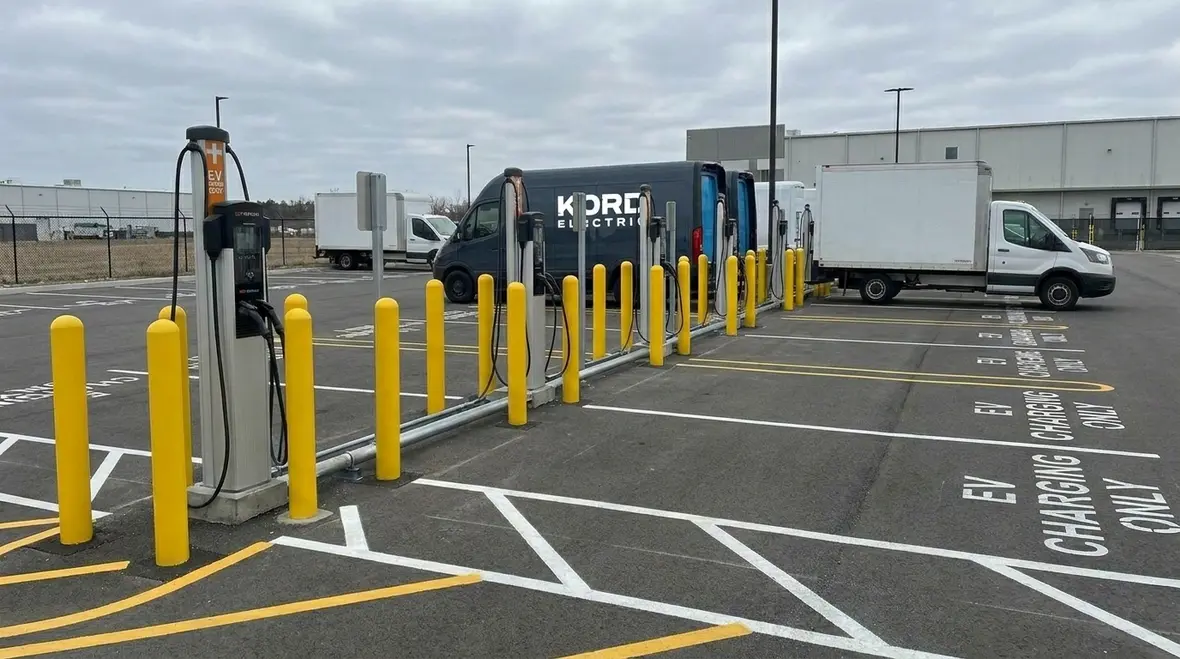
After the electrical backbone, the layout decides whether charging is safe, maintainable, and scalable. For commercial and industrial sites, we build layout plans that reduce cable runs, avoid conflict with traffic flow, and keep pathways protected from vehicle impact and harsh environments.
We start by setting clear equipment zones. Charging cabinets, pedestals, and dispensers need proper clearance, ventilation, and safe access for maintenance. Then we map cable routing with conduit where required, and we protect runs against water, dust, and mechanical damage. When we plan for harsh conditions, we prevent corrosion and reduce future troubleshooting.
Next, we align the charging bays with the fleet’s real behavior. Drivers should plug in quickly, and staff should reach connectors safely. If the bays force awkward angles or limit access, downtime rises. Therefore, we design with day to day use in mind, not only installation day.
Finally, we ensure future additions fit the physical plan. We reserve space for extra chargers, keep conduit pathways ready, and label equipment clearly so technicians work efficiently later. Our technicians take pride in installation quality because the next problem is always easier when the layout already makes sense.
Installation Quality That Prevents Downtime Later
Scaling does not mean cutting corners. Instead, it means building repeatable standards that hold up when usage increases. We treat installation quality as part of the infrastructure requirement, because loose terminations, poor grounding, and incorrect settings can create issues that show up weeks or months later.
We follow disciplined work steps for electrical connections, torque procedures, labeling, and equipment configuration. We verify protective devices, confirm correct settings for breakers and disconnects, and ensure proper grounding and bonding. Then we test before we hand over service.
However, “test” should not mean a quick look and a shrug. We perform verification that supports reliable performance under load, and we document results so facilities can track outcomes over time. Our expert service staff then walks the facility team through the installed system and explains how to operate it during normal hours. That training matters because an alarm nobody understands becomes an outage nobody can fix.
In short, we build for the day the fleet grows, not just for the day the inspection is done.
Preventive Maintenance as a Scaling Strategy
When fleets add chargers, they also add wear. Connectors see more cycles, electronics work harder, and environments challenge every component. This is where preventive maintenance becomes a scaling strategy instead of a “nice to have.”
Kord Electric supports preventive maintenance for electrical systems and related equipment, and we align it with the needs of commercial and industrial facilities. If you want a grounded example of how we approach preventive work, we reference our electrical preventive maintenance approach at https://kordelectric.com/electrical-preventive-maintenance/. The key idea is simple: check early, fix small issues, and keep systems stable under real use.
We schedule inspections that focus on the parts that fail first, such as terminations, cooling paths, protective devices, and signs of water intrusion. We also verify that chargers respond properly, detect unusual behavior, and confirm that any control settings remain correct as the site evolves. In addition, we plan maintenance windows around operations so fleet schedules keep moving.
Meanwhile, our technicians log findings in a way facility managers can use. So instead of vague “we looked at it,” they get clear notes and next steps. Think of it like a health record for your electrical system, only less dramatic and without the crying.
For facilities building long-term reliability around their charging and power systems, it often makes sense to pair fleet-focused maintenance with a broader facility plan, similar to the structured programs described in Kord Electric’s commercial and industrial electrical maintenance guidance for large properties.
How We Plan for Future Growth Without Rebuilding Everything
Smart scaling prevents rework. If we only design for today, growth will force costly changes. Therefore, we build the initial infrastructure with the next phase in mind, including space, capacity, and upgrade paths.
We plan physical expansion by adding conduits, reserving cabinet slots, and labeling all wiring paths so future work stays faster. In parallel, we plan electrical headroom by sizing panels and feeders with realistic growth in mind, then confirming that load management can cover transitional peaks.
We also help facilities set up operational rules that support expansion. For example, we align charging schedules with shift patterns and demand limits. As a result, the site can grow while maintaining stable electrical performance. This matters especially for facilities that run production schedules, warehouses, and transportation hubs at the same time.
Finally, we recommend a maintenance cadence that scales with the number of chargers. A site with one or two units needs a different rhythm than a yard with a full fleet. We help our customers keep the process balanced so the equipment stays dependable as utilization rises.
FAQ: Electric Vehicle Fleet Charging Infrastructure
Get Infrastructure Ready With Kord Electric
When commercial fleets scale, charging infrastructure must scale too, and that means power planning, safe layouts, and preventive maintenance that stays proactive. Kord Electric designs and supports electric vehicle fleet charging for commercial and industrial facilities so your chargers run reliably through daily demand. If you are planning an expansion, we recommend starting with a site assessment and a growth plan. Contact us to map your electrical needs, protect uptime, and keep your fleet moving without drama. We will bring the calm, the expertise, and the power.
If you are ready to take the next step beyond planning and into implementation, explore how our dedicated EV charger installation services support commercial and industrial properties with code-compliant, scalable charging solutions built for real-world fleet operations.