Commercial Garage Subpanel Install Guide
How to Install a Subpanel in Your Garage for Commercial and Industrial Properties
When commercial facilities begin to outgrow their original power layout, the conversation often turns to subpanel install, upgraded garage wiring, and strategic electrical expansion. At Kord Electric, they see this every week. Warehouses add fleet charging stations. Industrial shops bring in CNC machines. Property managers convert garage bays into maintenance hubs. Power demand rises, and the main service panel starts to feel like an overworked intern on a Monday morning.
That is where a properly planned subpanel changes everything. Their technicians and expert service staff explain each step in calm, clear language, so facility managers understand not just what is happening, but why. Because in commercial and industrial buildings, power is not just convenience. It is continuity, safety, and productivity.
Let us walk through how professionals approach a garage subpanel project the right way.
Understanding the Purpose of a Garage Subpanel in Large Facilities
In commercial and industrial properties, garages are rarely simple parking spaces. They house fleet vehicles, heavy equipment, backup generators, fabrication tools, or storage systems with climate control. As operations grow, circuits multiply. However, relying on one main panel to carry all that load creates congestion and risk.
A subpanel install distributes electrical load closer to the point of use. Instead of running long branch circuits from the main switchgear across the building, a feeder supplies a dedicated panel in the garage area. As a result, voltage drop decreases, breaker organization improves, and maintenance becomes far easier.
Kord Electric often explains it this way. Think of the main panel as the heart. A subpanel is like a strong artery delivering power directly where it is needed. It supports electrical expansion without forcing the entire system into surgery.
Additionally, subpanels improve isolation. If an issue arises in the garage wiring, technicians can shut down that panel without affecting critical operations elsewhere in the facility. In manufacturing environments, that separation protects productivity and prevents costly downtime.
When Commercial Properties Need a Subpanel Install
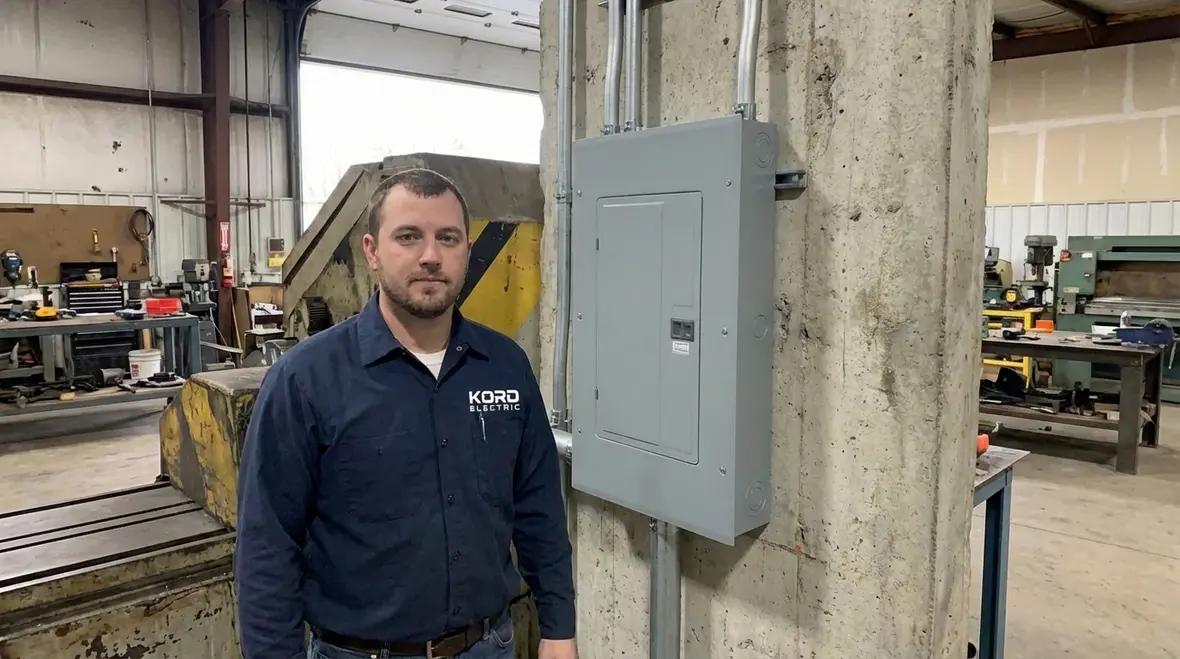
Facility managers often ask when it is time to move forward with a subpanel install. The answer becomes clear when certain warning signs appear.
- Frequent breaker trips in garage areas
- Limited breaker space in the main distribution panel
- New heavy equipment or EV fleet chargers
- Planned electrical expansion for new operations
- Overextended garage wiring running long distances
Moreover, compliance requirements sometimes drive the decision. Industrial codes evolve. Load calculations must meet current standards. What worked ten years ago may no longer meet present demand.
Kord Electric technicians begin with a thorough load analysis. They calculate existing amperage draw, projected growth, and diversity factors. In other words, they do not guess. They measure. Their expert service staff then walk property managers through the numbers, so expansion plans align with both safety and long term goals.
And yes, sometimes they deliver the news gently. Because nobody enjoys hearing that their electrical system is one welder away from a blackout.
Planning the Electrical Expansion Step by Step
A successful electrical expansion does not start with tools. It starts with strategy. Before a single conduit is mounted, Kord Electric develops a detailed roadmap.
First, they confirm service capacity at the main panel or switchgear. If the building service cannot support additional load, upstream upgrades may be required. Therefore, every subpanel install begins with upstream verification.
Next, they determine feeder size. This includes:
- Calculated load demand
- Conductor sizing based on ampacity
- Voltage drop considerations
- Future growth allowance
After that, they select panel location. In garage wiring projects, placement matters. Panels must remain accessible, clear of obstructions, and compliant with working space regulations. Installing a panel behind shelving or equipment might look convenient today, but it becomes a compliance nightmare tomorrow.
Finally, permitting and inspections are coordinated. For industrial and commercial facilities, this process is non negotiable. Kord Electric handles documentation so property managers can focus on operations rather than paperwork.
For facilities also modernizing lighting or addressing power quality issues during their electrical expansion, pairing a subpanel project with related upgrades can be highly efficient. Their team frequently coordinates subpanel work alongside services such as lighting installation for large-scale facilities or resolving voltage fluctuations in commercial and industrial buildings, so downtime is minimized and the entire system is upgraded with one cohesive plan.
The Subpanel Install Process Explained Clearly
So how does a professional subpanel install actually unfold?
First, technicians shut down and secure the relevant power sources. Safety protocols come first, always. Lockout and tagout procedures ensure zero accidental energizing during installation.
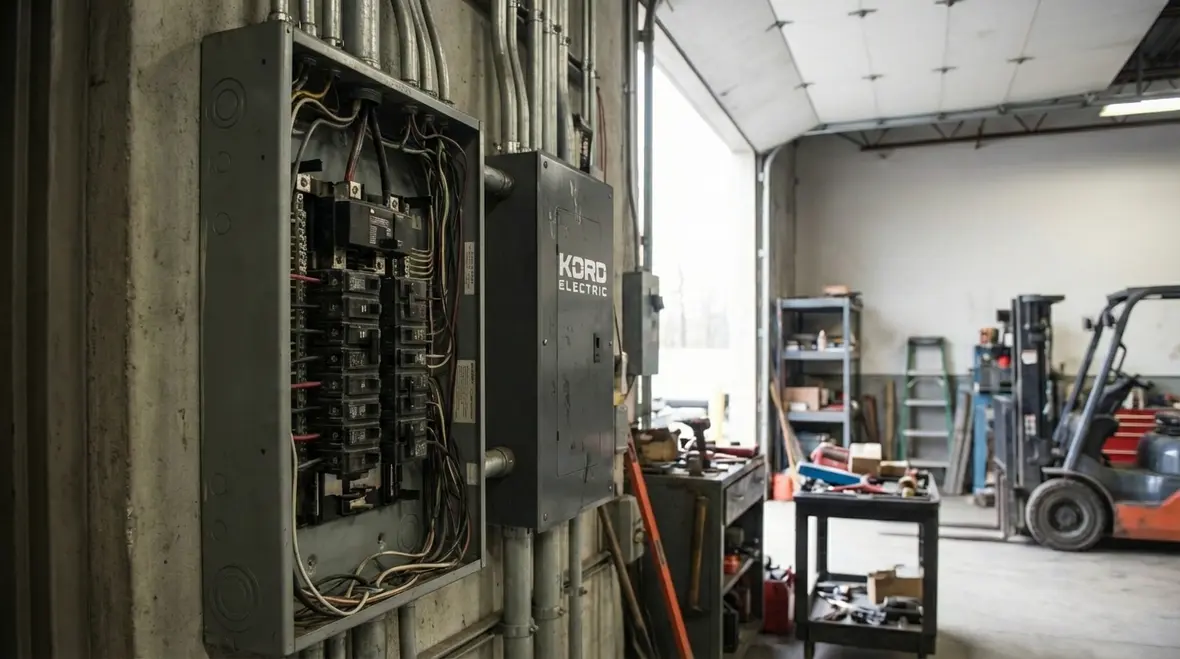
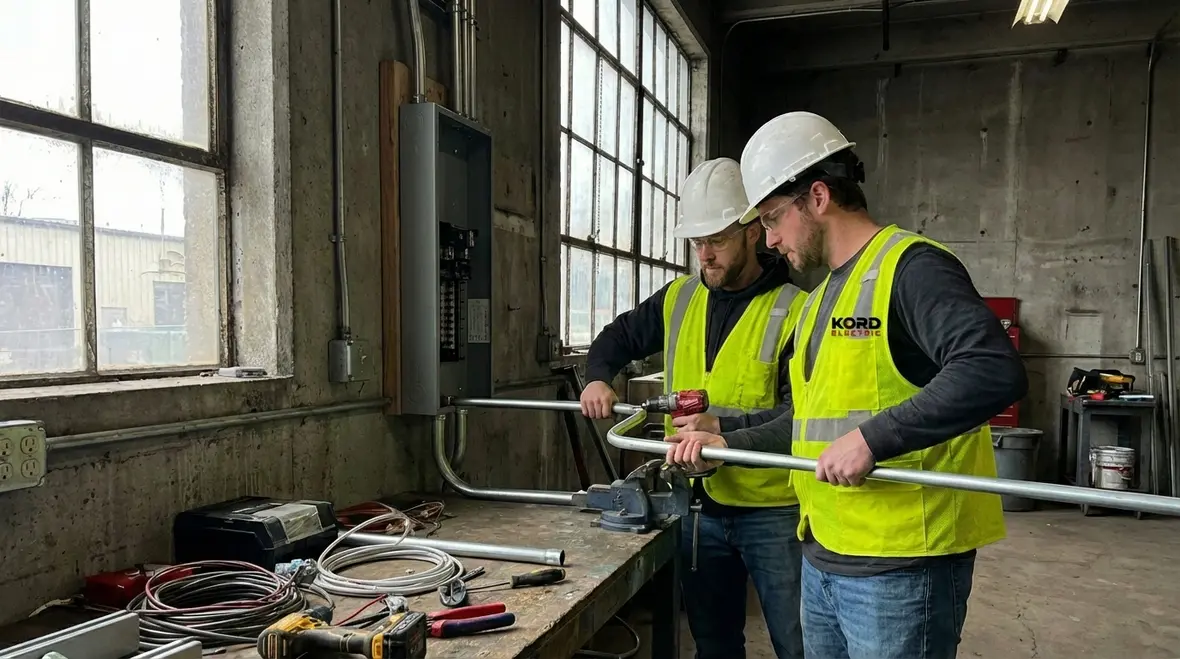
Second, they mount the subpanel enclosure. In garage wiring environments, this often involves concrete or masonry surfaces. Anchoring must support both weight and vibration, especially in facilities with heavy equipment movement.
Third, they run feeder conductors from the main distribution point to the new panel. Conduit type depends on the environment. Industrial garages may require rigid metal conduit for durability. In other cases, EMT or cable tray systems provide efficient routing.
Next comes one of the most critical steps. In a subpanel install, neutral and ground conductors must remain isolated. Unlike the main service panel, a subpanel cannot bond neutral to ground. This distinction prevents circulating currents and ensures system stability. It may sound like a small detail. It is not. It is the difference between clean power and unpredictable behavior.
After terminating feeders, technicians install branch breakers and connect new circuits for garage wiring loads. Each circuit is labeled clearly. No mystery breakers. No guessing games. Because when maintenance staff open a panel during a late shift, clarity matters.
Finally, the system undergoes testing. Voltage checks, torque verification, and load balancing confirm the installation meets design specifications. Only then is the panel energized.
At Kord Electric, their expert service staff take time to explain the completed work. They walk facility managers through the layout, breaker assignments, and expansion capacity. In short, they leave knowledge behind, not just hardware.
Garage Wiring Considerations in Industrial Settings
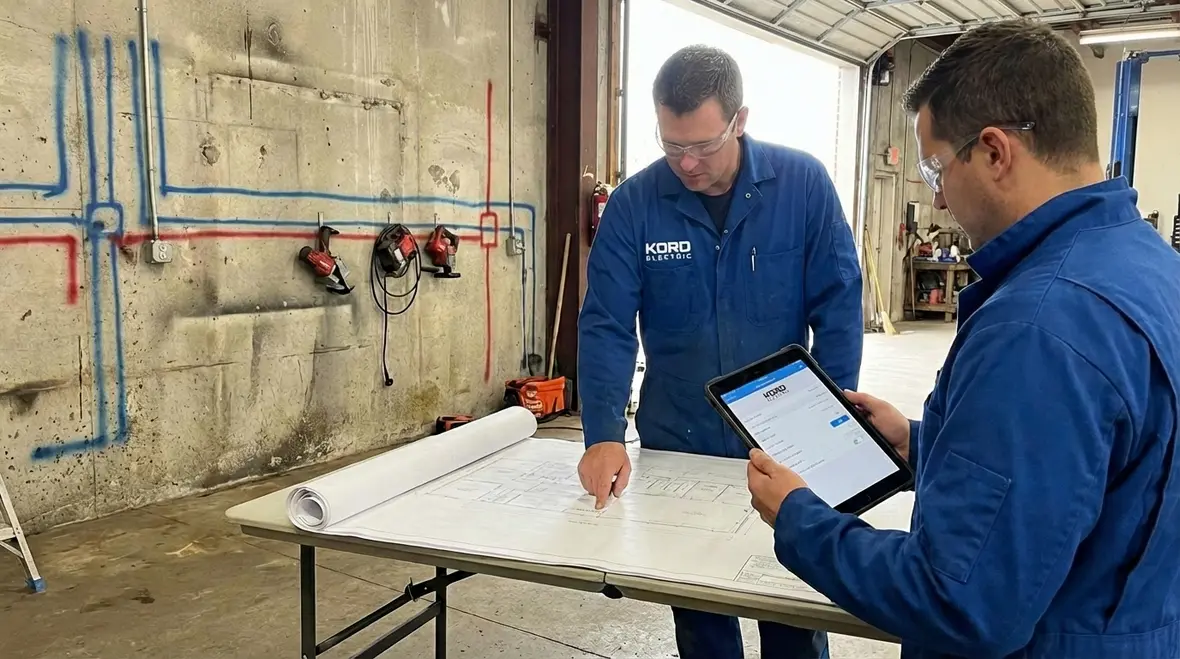
Garage wiring in commercial properties differs significantly from residential environments. Industrial garages often host welders, compressors, lifts, and EV charging stations. Each introduces unique load characteristics.
For example, motor driven equipment creates inrush current. Therefore, breaker selection must account for startup demands without nuisance tripping. Additionally, harmonic distortion from certain equipment can influence panel design and conductor sizing.
Environmental conditions also shape installation decisions. Dust, moisture, vibration, and temperature swings affect enclosure ratings. A standard indoor panel might not survive long in a heavy duty maintenance bay.
Kord Electric evaluates these factors during every electrical expansion project. Their technicians select appropriate NEMA rated enclosures and ensure garage wiring remains protected against mechanical damage. In facilities where forklifts roam freely, conduit placement becomes almost strategic. Nobody wants a forklift versus conduit showdown.
Furthermore, proper lighting circuits, dedicated equipment feeds, and spare breaker capacity prepare the space for future changes. Because growth is not a possibility in commercial properties. It is an expectation.
Cost Drivers and Long Term Value
One of the most common questions facility owners raise concerns cost. A subpanel install in a commercial garage involves materials, labor, permitting, and sometimes upstream service adjustments. However, focusing only on upfront numbers misses the larger picture.
Strategic electrical expansion reduces long term operational risk. Distributed load decreases overheating in main panels. Organized garage wiring shortens troubleshooting time. Localized shutdown capability minimizes disruption during maintenance.
Below is a simplified comparison Kord Electric often shares with property managers.
| Without Subpanel | With Subpanel Install |
| Overcrowded main panel | Balanced load distribution |
| Long branch circuits | Shorter localized circuits |
| Difficult troubleshooting | Clear circuit organization |
| Limited expansion room | Future ready electrical expansion |
While the table looks simple, the operational impact is significant. In industrial facilities, downtime costs more than installation. Therefore, investing in structured garage wiring and a properly sized subpanel often pays for itself through efficiency alone.
Safety, Compliance, and Risk Management
Commercial and industrial electrical systems operate under strict codes. A subpanel install must comply with national and local regulations regarding grounding, conductor sizing, overcurrent protection, and working clearances.
Kord Electric places compliance at the center of every project. Their technicians document torque values, conductor types, breaker ratings, and labeling details. Inspections are scheduled promptly. Any corrections are handled without delay.
Additionally, proper electrical expansion reduces liability exposure. Clear panel labeling and organized garage wiring decrease the chance of accidental shutdowns or improper modifications by untrained personnel.
And let us be honest. In large facilities, someone always tries to “just add one more outlet.” That is how legends of overloaded circuits are born. Structured planning prevents those stories from becoming expensive reality.
Can Facility Maintenance Teams Handle a Subpanel Install Alone?
This is the one question that surfaces frequently.
While skilled maintenance teams manage many electrical tasks, a commercial subpanel install demands advanced load calculations, code expertise, and coordination with inspectors. Furthermore, improper neutral and ground separation can introduce safety hazards that are not immediately visible.
Kord Electric collaborates with in house teams rather than replacing them. Their expert service staff explain each step, share documentation, and provide clear schematics. However, they lead the technical execution to ensure the installation meets industrial standards.
In other words, it is a partnership. The facility team understands operations. Kord Electric ensures the power infrastructure supports those operations safely and efficiently.
Frequently Asked Questions
Power the Next Phase with Confidence
Growth should feel exciting, not stressful. When your facility demands smarter garage wiring, structured electrical expansion, or a professionally executed subpanel install, Kord Electric stands ready. Their technicians and expert service staff guide every step with clarity, precision, and calm authority.
If your commercial or industrial property is preparing for its next upgrade, partnering with a contractor who understands large scale power distribution is essential. From dedicated garage subpanels and fleet charging circuits to comprehensive electrical preventive maintenance programs, the right plan keeps your operations stable today while protecting future capacity.
When you are ready to map out subpanel install options, evaluate garage wiring limits, or design a full electrical expansion roadmap, Kord Electric can help you align technical details with real-world facility goals.
If your commercial or industrial property is preparing for its next upgrade, contact Kord Electric today and let us build the infrastructure that keeps your operations moving forward.
For facilities planning to add EV fleet charging as part of a garage renovation, explore their dedicated EV charger installation services to ensure your new subpanel and charging infrastructure are engineered to work together from day one.