Commercial Lighting Compliance in California
Does Your Building Meet California Lighting Code Requirements?
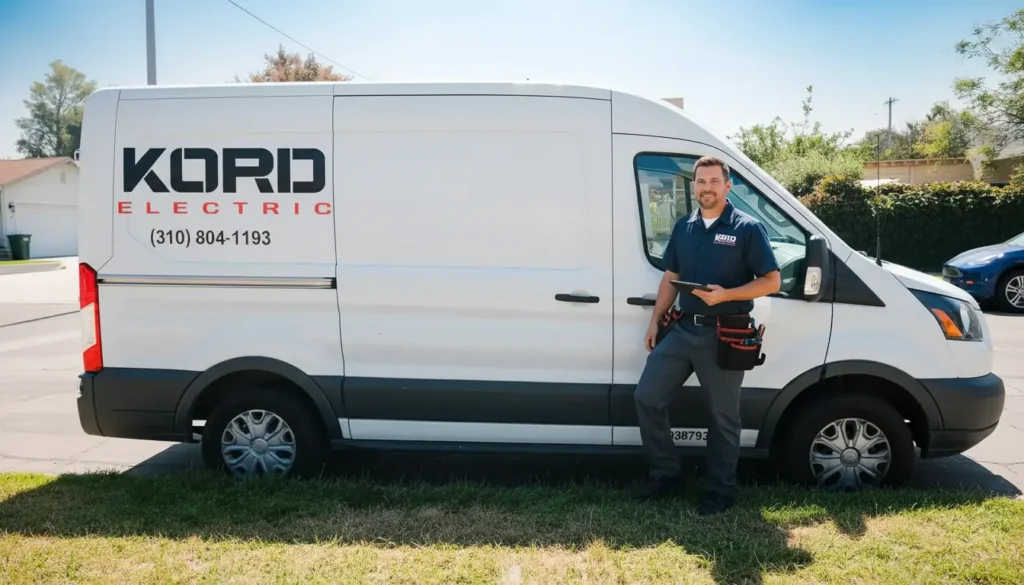
In California, the lights do not just shine. They answer to the law. At Kord Electric, commercial lighting compliance in California is not a side note or a paperwork formality. It is the backbone of how large facilities operate, save energy, and pass inspections without losing sleep. From distribution centers to high rise office towers, every commercial and industrial property must meet strict standards under Title 24 and related energy codes. Therefore, understanding where a building stands today can prevent expensive retrofits tomorrow.
Property owners and facility managers often ask whether their systems are compliant or just hopeful. Fortunately, our technicians and expert service staff walk them through every requirement in plain language. No code book recitals. No dramatic music. Just clear answers, practical steps, and a calm, steady plan forward.
Understanding Commercial Lighting Compliance in California
California does not treat lighting as decoration. Instead, the state treats it as a major energy consumer that must be controlled, measured, and optimized. Title 24 sets detailed standards for lighting power density, automatic shut off controls, daylight harvesting, occupancy sensors, and more. Consequently, every commercial and industrial building must prove that its lighting system meets these benchmarks.
Commercial lighting compliance in California applies to new construction, major renovations, and in many cases tenant improvements. Even a lighting upgrade in a warehouse can trigger requirements for controls and documentation. Moreover, energy codes evolve. What passed inspection five years ago may not satisfy current standards.

Our team at Kord Electric sees this often. A facility manager proudly says, “We switched to LED, so we are good, right?” Well, LED is a great start. However, compliance involves more than swapping bulbs. It includes control strategies, zoning, wattage limits, and verification forms that must be completed correctly. Otherwise, the project may stall during inspection.
Because the regulations are detailed, our expert service staff explain them step by step. They outline what applies, what does not, and where upgrades will deliver both compliance and measurable savings. As a result, building owners gain clarity instead of confusion.
For property teams who want to dive even deeper into the latest California standards, pairing this guide with our in‑depth overview on statewide code updates can be helpful. You can explore additional insights in our resource on California commercial lighting code requirements for 2026, which expands on how Title 24 shapes real world projects.
How Do I Know If My Commercial Building Is Compliant?
The short answer is this. If no one has reviewed the lighting system against current California energy standards in the past few years, there is a strong chance gaps exist.
Nevertheless, there are clear indicators that signal potential issues:
- Lighting that remains on in unoccupied spaces without automatic shut off
- Lack of occupancy or vacancy sensors in offices, restrooms, or storage areas
- No daylight responsive controls near windows or skylights
- Outdated fluorescent or metal halide systems exceeding allowed power density
- Missing or incomplete compliance documentation
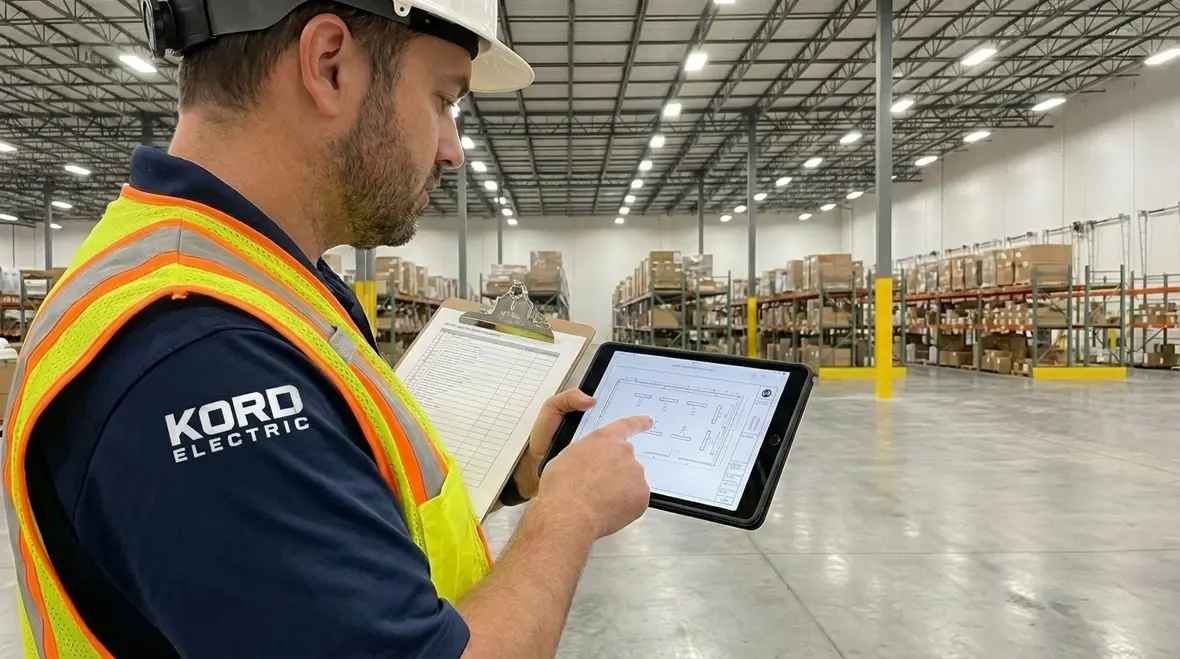
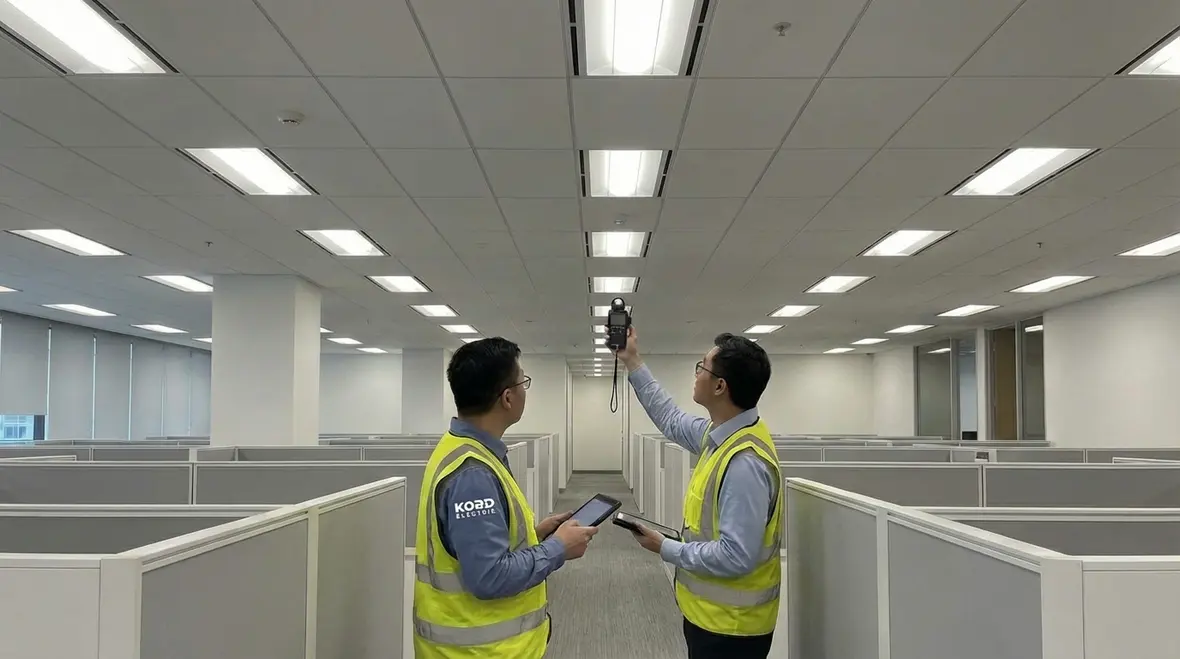
During assessments, our technicians evaluate both the physical installation and the control strategy. They measure lighting power density and compare it to code limits. Additionally, they verify that sensors are properly placed and programmed. A sensor installed but never calibrated is about as useful as a gym membership used only in January.
Furthermore, we review panel schedules and control sequences. In large industrial facilities, lighting often connects to building management systems. Therefore, we ensure integration supports automatic shut off and scheduling as required by state standards.
By the end of the review, property owners receive a clear compliance snapshot. Not a vague maybe. Not a hopeful probably. A defined yes, no, or here is what must change.
Key Requirements for Large Commercial and Industrial Facilities

Energy codes for commercial properties in California focus on measurable performance. While decorative lighting might win design awards, inspectors care about watts, controls, and documentation. Consequently, owners of major properties must pay close attention to several core elements.
Lighting Power Density Limits
The state limits the amount of lighting power allowed per square foot. These limits vary by space type. For example, warehouses, office floors, and manufacturing areas each have distinct thresholds. Therefore, a one size fits all approach rarely works.
Automatic Shut Off Controls
Most commercial spaces must include automatic shut off through time based scheduling, occupancy sensors, or building automation systems. In addition, certain spaces require multi level controls that allow occupants to reduce light output.
Daylight Harvesting
Areas with significant natural light must include controls that reduce artificial lighting when daylight is available. While this sounds simple, correct sensor placement and calibration are critical. Otherwise, lights may flicker or fail to dim properly, frustrating occupants and defeating the purpose.
Acceptance Testing and Documentation
Even a perfectly installed system can fail inspection without proper documentation. Acceptance testing verifies that controls operate as required. Our expert service staff coordinate this process and ensure all required forms are completed accurately.
Together, these elements define commercial lighting compliance in California. When aligned, they create safer, more efficient environments that satisfy both regulators and finance teams.
When it is time to move from requirements to real hardware, many facility teams also lean on broader installation expertise. For a deeper look at how compliant systems are designed and built in the field, you can review our dedicated commercial and industrial lighting installation services, which are engineered specifically around performance, safety, and efficiency.
Where Most Properties Fall Short and Why
Many large facilities were built under older code cycles. At the time, they met every requirement. However, as standards evolved, these properties quietly drifted out of alignment. Consequently, issues surface during renovations, audits, or utility incentive reviews.
One common shortfall involves control zoning. For instance, an entire warehouse may operate on a single lighting schedule. While that once passed, newer standards often require more granular control. Therefore, selective upgrades become necessary.
Another frequent issue appears in tenant improvements within office towers. A tenant upgrades fixtures but ignores control requirements. Later, during inspection, the project faces delays. Our technicians often step in at this stage, review the installation, and recommend targeted corrections that restore compliance without gutting the entire system.
Additionally, improper sensor placement creates headaches. A sensor aimed at an air vent or moving machinery can trigger lights unexpectedly. Although it sounds like a scene from a low budget sci fi film, it is usually just physics. Proper commissioning solves the problem quickly.
Because our focus stays on commercial and industrial facilities, we understand the scale and complexity of these environments. We plan upgrades that minimize downtime and protect operations. After all, shutting down a distribution center for lighting corrections is not anyone’s idea of a good afternoon.
Our Process for Achieving Commercial Lighting Compliance in California
At Kord Electric, we approach each property with a structured plan. First, we conduct a detailed site evaluation. Then, we compare existing conditions to current state requirements. Finally, we design and implement solutions that close any gaps.
To make this clearer, here is how our process typically unfolds.
Assessment
Site walkthrough of all lighting systems
Measurement of lighting power density
Review of control zoning and schedules
Identification of documentation gaps
Implementation
Installation of compliant fixtures and controls
Programming of occupancy and daylight sensors
Integration with building management systems
Completion of required compliance forms and testing
This dual focus ensures that planning and execution move together. Moreover, our technicians explain each step in clear terms. They do not hide behind technical jargon. Instead, they outline what is required, why it matters, and how it affects operations.
Because commercial lighting compliance in California involves both design and verification, our expert service staff stay engaged through final inspection. They coordinate acceptance testing and remain available to answer inspector questions. As a result, projects move forward with fewer surprises.
The Financial and Operational Benefits of Getting It Right
Compliance is not just about avoiding penalties. When done properly, it improves operational performance and lowers energy costs. For large commercial and industrial properties, even small efficiency gains translate into significant savings.
First, optimized lighting power density reduces monthly utility expenses. Additionally, advanced controls limit unnecessary runtime, especially in warehouses and manufacturing facilities that operate on variable schedules. Consequently, energy waste declines without sacrificing safety or productivity.
Second, compliant systems often qualify for utility incentives. These programs can offset upgrade costs, making modernization more attractive. Our team frequently helps property owners identify eligible measures and prepare required documentation.
Third, well designed lighting improves occupant comfort and visibility. In office environments, balanced light levels reduce glare and fatigue. In industrial spaces, consistent illumination supports safety and accuracy. Therefore, compliance aligns with performance goals.
Finally, properties that meet California lighting regulations present fewer obstacles during leasing, refinancing, or sale. Prospective tenants and investors increasingly review energy performance data. A building that already satisfies commercial lighting compliance in California stands on stronger ground.
Working With Technicians Who Actually Explain the Code
Energy codes can feel dense. However, clarity changes everything. Our technicians and expert service staff take pride in explaining requirements in straightforward language. They outline what applies to a specific facility and what does not. Moreover, they listen to operational concerns before proposing solutions.
For example, in a large logistics center, lights cannot simply shut off in active aisles. Therefore, we design control strategies that balance compliance with real world use. In high rise commercial properties, we coordinate with facility teams to align lighting schedules with occupancy patterns.
Because we work exclusively with commercial and industrial facilities and major property buildings, our recommendations reflect scale and complexity. We do not offer residential quick fixes. Instead, we deliver structured solutions that satisfy inspectors and support long term operations.
And yes, sometimes we joke that Title 24 has more plot twists than a streaming series. Yet, unlike your favorite cliffhanger, we prefer clear endings. Our goal is simple. Bring the system into compliance, document it properly, and let clients move forward with confidence.
Frequently Asked Questions
Conclusion
Commercial lighting compliance in California is not optional for major facilities. It is a clear standard that shapes how buildings operate, consume energy, and pass inspection. At Kord Electric, we guide commercial and industrial property owners through every requirement with steady expertise and practical solutions. If your building’s lighting system has not been reviewed recently, now is the time. Contact our team and let us bring clarity, compliance, and confidence back to your facility.
If you are preparing for a major lighting retrofit, tenant improvement, or system upgrade, partnering with a team that lives and breathes commercial lighting compliance in California can make the difference between drawn out inspections and a clean, confident sign off. Our electrical preventive maintenance and Title 24 lighting compliance services are built specifically for large commercial and industrial facilities that cannot afford guesswork when it comes to code, safety, and uptime.