Commercial Lighting Design Recessed High Bay Panel
At Kord Electric, they begin every commercial project with one core belief: strong lighting design shapes how a facility performs, how people work, and how a brand feels. Within the first walk through of a warehouse, distribution center, or multi story commercial property, their technicians look beyond fixtures and wires. They study ceiling heights, task zones, safety pathways, and energy goals. Because of that, the question is never just about swapping bulbs. It is about building a system that supports productivity, reduces cost, and stands the test of time. In the sections ahead, they break down recessed lighting, high bay fixtures, and panel lighting so property managers and facility directors can choose with confidence.
Understanding the Role of Lighting Design in Commercial and Industrial Facilities
Before comparing fixture types, it helps to understand the bigger picture. Lighting design in large commercial and industrial buildings is not decoration. Instead, it is strategy. It influences safety compliance, employee focus, equipment accuracy, and long term operating expenses.
For example, in a manufacturing plant, shadows can hide hazards. In a distribution center, poor light uniformity can slow picking times. Meanwhile, in a corporate office tower, glare can strain eyes and quietly drain productivity. Therefore, the right layout must balance brightness, distribution, color temperature, and control systems.
Kord Electric’s expert service staff often explain it this way. “Fixtures are the instruments. The lighting plan is the orchestra.” If one section overpowers another, the performance suffers. However, when every element works in harmony, the building feels intentional and efficient.
Moreover, proper planning considers ceiling height, reflectivity of surfaces, rack configurations, and even future expansion. Their technicians routinely ask about five year growth projections. Why? Because ripping out a brand new system due to expansion is about as enjoyable as rewatching a movie only to realize you skipped the ending. It costs time and money.
With that foundation set, it becomes easier to compare recessed lighting, high bay lighting, and panel lighting in a meaningful way.
Recessed Lighting in Large Commercial Spaces
Recessed lighting sits flush within ceilings, creating a clean and unobtrusive appearance. Although many people associate it with offices, it also plays a strong role in corporate headquarters, lobbies, conference centers, and certain retail sections within commercial properties.
In facilities with finished ceilings and moderate heights, recessed fixtures provide controlled, focused illumination. Consequently, they reduce glare and create visual comfort for desk work, presentations, and client facing areas.
However, recessed lighting is not a one size fits all solution. In very high ceilings, it can lose intensity before reaching the work plane. Additionally, installation requires proper spacing and insulation considerations. Kord Electric’s technicians evaluate ceiling plenum depth, HVAC layout, and access points before recommending this option.
From an energy perspective, modern LED recessed fixtures offer impressive efficiency. When paired with occupancy sensors and daylight harvesting controls, they help reduce energy waste. Therefore, in office towers and administrative areas within industrial campuses, recessed lighting often supports both aesthetics and operational savings.
Still, it is best used where ceiling architecture supports it. Installing recessed fixtures in a 30 foot warehouse ceiling would be like bringing a desk lamp to light a football field. Technically possible. Practically ineffective.
For properties that are ready to upgrade or build out new ceilings, dedicated recessed solutions can make a measurable difference in comfort and performance. If recessed lighting is a priority for your facility, explore Kord Electric’s specialized services on their recessed lighting installation page to see how a tailored plan can fit your space and code requirements.
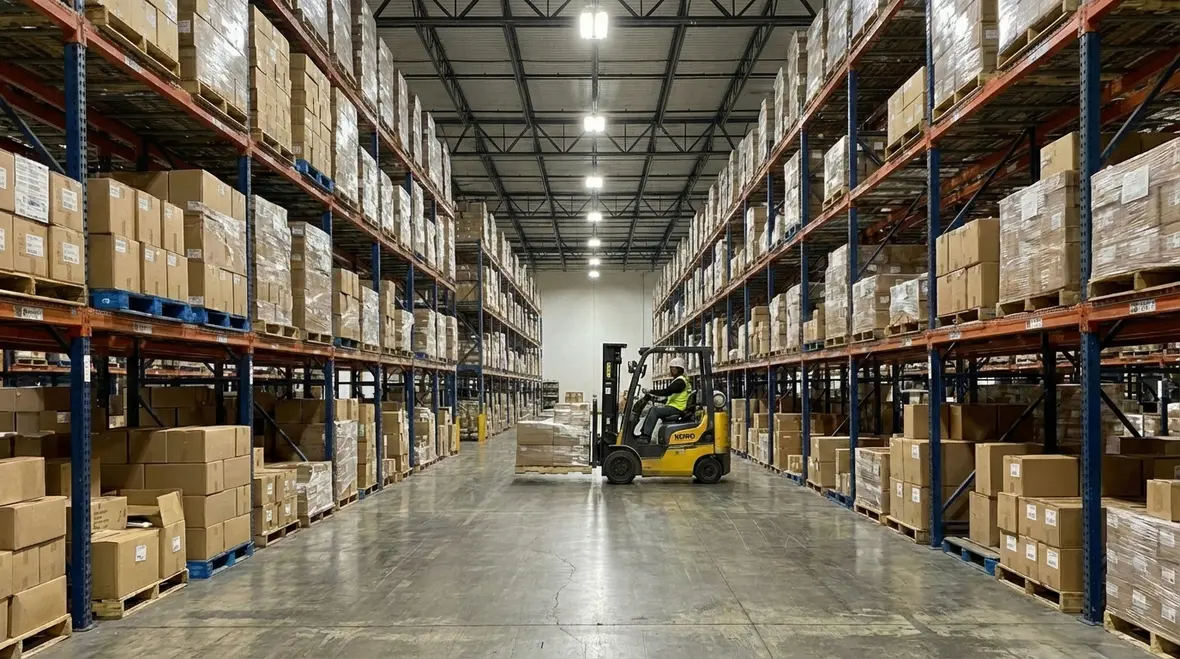
High Bay Lighting for Warehouses and Manufacturing
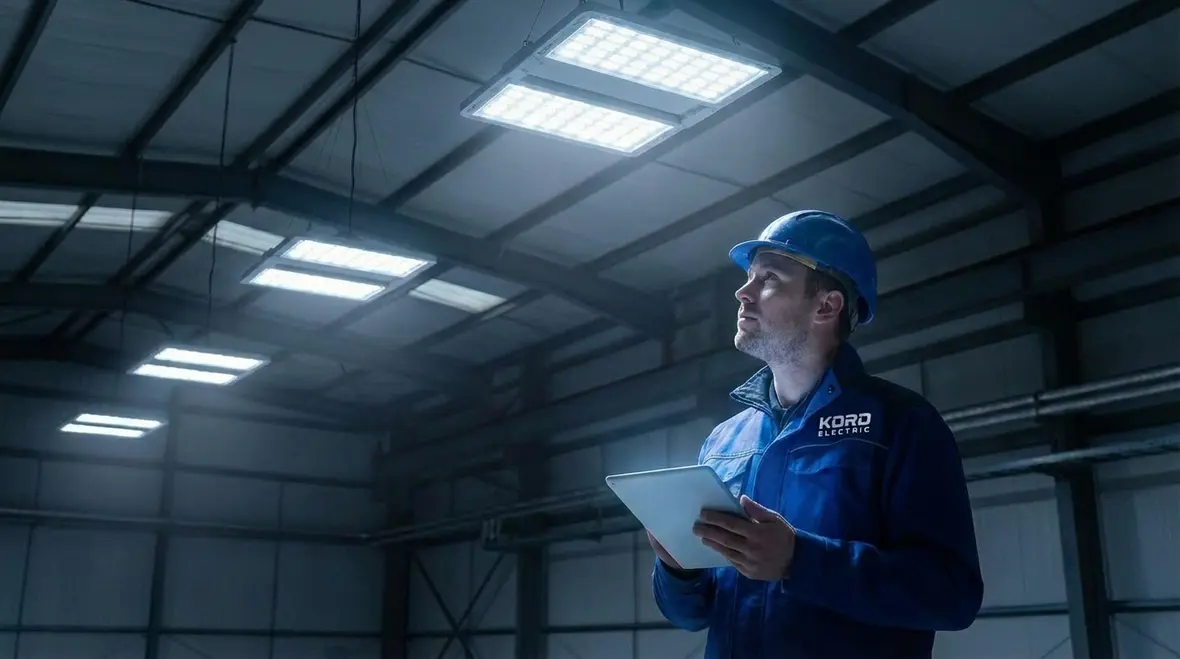
High bay lighting is built for scale. Designed for ceilings typically 20 feet or higher, these fixtures deliver powerful, focused illumination that reaches the floor with consistency.
In warehouses, distribution centers, and production facilities, high bay systems provide the brightness needed for forklift traffic, inventory scanning, and precision assembly. Furthermore, modern LED high bays distribute light evenly across aisles and racks, reducing shadow pockets that can compromise safety.
Kord Electric’s expert service staff often walk clients through photometric layouts. These diagrams show exactly how light spreads across a facility. Because of this data driven approach, facility managers can see how many fixtures they need and where to position them for maximum performance.
Another key factor is durability. High bay fixtures in industrial settings must withstand dust, vibration, and temperature changes. Therefore, selecting the correct housing rating matters. Their technicians carefully review environmental conditions before recommending a specific model.
Energy efficiency also plays a major role. Upgrading from legacy metal halide systems to LED high bay lighting can dramatically reduce energy use and maintenance frequency. In many facilities, that means fewer lift rentals and fewer disruptions to operations. And let’s be honest, shutting down production to change bulbs is not anyone’s idea of a productive afternoon.
Ultimately, high bay lighting excels where height, scale, and task intensity demand robust output. When paired with a thoughtful lighting design plan, these fixtures become the backbone of safe, efficient warehouse and manufacturing environments.

Panel Lighting for Offices and Multi Story Properties
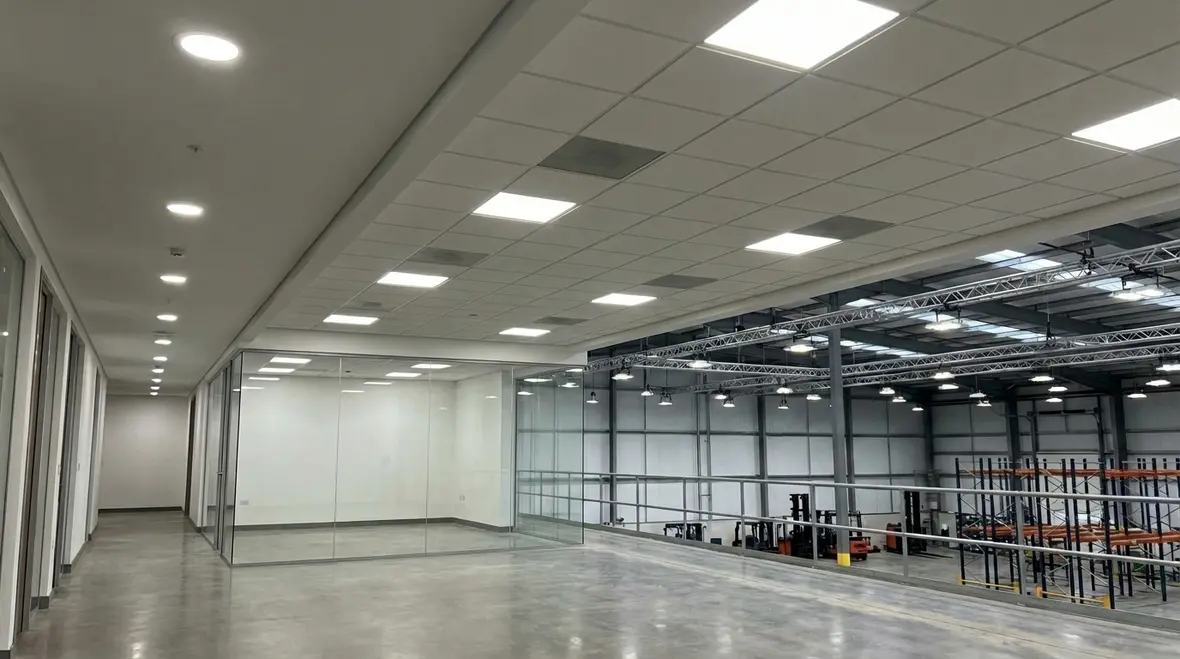
Panel lighting, often installed in grid ceilings, delivers broad and uniform illumination. It works especially well in administrative offices, medical suites within commercial complexes, classrooms in institutional properties, and shared workspaces inside industrial campuses.
Unlike recessed spot style fixtures, panels spread light evenly across wide areas. As a result, they reduce harsh contrast and minimize glare on computer screens. In environments where employees spend hours reviewing data or managing logistics, this consistency improves comfort.
Additionally, LED panels offer slim profiles and modern aesthetics. When integrated into a thoughtful lighting design, they contribute to a professional atmosphere that aligns with corporate branding.
Kord Electric’s technicians often recommend panel systems for properties seeking both performance and clean visual lines. However, they also caution against overlighting. Too many panels can create excessive brightness, which ironically leads to discomfort. Therefore, they calculate appropriate lumen levels based on ceiling height, room size, and task type.
In multi tenant commercial buildings, panel lighting also supports easier maintenance. Standardized fixture sizes simplify replacements and upgrades. Consequently, property managers can maintain consistency across floors without complicated retrofits.
When used strategically, panel lighting becomes a reliable workhorse for modern office environments, supporting visual comfort, brand presentation, and long term efficiency.

Recessed Lighting vs High Bay vs Panel Lighting: What Works Best?
The honest answer is this: it depends on the function of each zone within the facility. Because large commercial and industrial properties contain multiple environments, many projects combine all three fixture types.
Below is a simplified comparison to guide decision making.
| Fixture Type | Best Application |
| Recessed Lighting | Corporate offices, lobbies, conference rooms with finished ceilings |
| High Bay Lighting | Warehouses, distribution centers, manufacturing floors with high ceilings |
| Panel Lighting | Administrative areas, shared workspaces, multi story commercial buildings |
While the table provides a quick snapshot, the real decision requires deeper evaluation. Ceiling height, task precision, energy goals, and maintenance access all influence the final recommendation.
Kord Electric approaches each project with layered lighting design principles. For example, a large logistics hub may use high bay fixtures over racking systems, panel lighting in administrative offices, and recessed lighting in executive meeting spaces. Because each zone serves a different purpose, each requires a tailored solution.
Therefore, instead of asking which fixture is best overall, property managers should ask which fixture supports each operational objective. That shift in thinking often transforms the outcome and makes it easier to justify investment to stakeholders who care about safety, productivity, and long term cost control.
How Kord Electric Builds a Smart Lighting Design Strategy
When clients partner with Kord Electric, the process begins with assessment. Their technicians conduct site evaluations, measure ceiling heights, and review existing electrical infrastructure. Additionally, they discuss operational challenges with facility leaders.
Next, they develop a customized lighting design plan. This includes fixture selection, layout configuration, control systems, and energy modeling. Because they rely on data rather than guesswork, clients gain clarity before installation begins.
Controls also play a critical role. Occupancy sensors, daylight sensors, and programmable systems help reduce unnecessary usage. In large industrial properties, even small efficiency gains can translate into significant annual savings.
Moreover, Kord Electric considers compliance with safety codes and industry standards. Proper illumination levels reduce accident risk and support regulatory requirements. Their expert service staff explain these standards in clear language, avoiding technical jargon that leaves decision makers confused.
Installation follows a coordinated schedule designed to minimize disruption. In active warehouses and manufacturing plants, timing matters. Therefore, they often phase projects by zone to keep operations moving smoothly.
Finally, they offer ongoing support and maintenance. Because a lighting system is not static, periodic evaluations ensure continued performance. As technology evolves, upgrades can be integrated without overhauling the entire system.
In short, their approach treats lighting design as a long term investment rather than a quick fix. When combined with proactive services like commercial and industrial lighting installation, facility leaders gain a roadmap that supports both today’s demands and tomorrow’s growth.
Common Questions Facility Managers Ask
Conclusion
Choosing between recessed, high bay, and panel lighting is not about trends. It is about purpose. Kord Electric evaluates every commercial and industrial facility with precision, builds a tailored lighting design plan, and installs systems that perform for years. If your property demands clarity, efficiency, and reliability, their expert service staff stand ready to guide the way.
For many facilities, the smartest path forward is to pair strong lighting design with structured preventive care. Integrating your upgrade into a broader electrical preventive maintenance strategy helps protect new fixtures, controls, and panels so they continue performing under real world conditions. When lighting, power quality, and maintenance all work together, the result is a safer, more resilient commercial or industrial environment.
Connect with Kord Electric today and let them illuminate your facility with confidence, from design and installation to long term reliability.
If you are planning a new build, retrofit, or code driven upgrade, their dedicated lighting installation services team can help you evaluate options, model performance, and move from concept to commissioning with a clear, structured plan.