LED Retrofit Guide for Commercial Properties
What Is an LED Retrofit — A Simple Breakdown for Commercial Properties
At Kord Electric, retrofit lighting is not a buzzword tossed around in a boardroom to sound impressive. It is a practical, strategic upgrade that transforms how commercial and industrial buildings operate. Within the first few steps of a facility walkthrough, our technicians often point to outdated fixtures humming overhead and say, calmly and confidently, “We can do better.” And they mean it.
LED retrofitting allows large properties to upgrade their existing lighting systems without tearing the entire infrastructure apart. In other words, it delivers modern performance using the bones already in place. For commercial and industrial facilities, that means better light, lower energy use, and fewer maintenance headaches. And let’s be honest, no facility manager has ever said, “You know what I need this year? More maintenance headaches.”
Throughout this guide, Kord Electric breaks down how LED conversions work, why they matter, and how commercial properties can benefit from a well planned retrofit lighting strategy.
Understanding LED Retrofit in Commercial Buildings
An LED retrofit is the process of upgrading existing light fixtures with LED components while keeping much of the original housing or structure intact. Rather than replacing an entire lighting system from scratch, a retrofit modernizes what is already there.
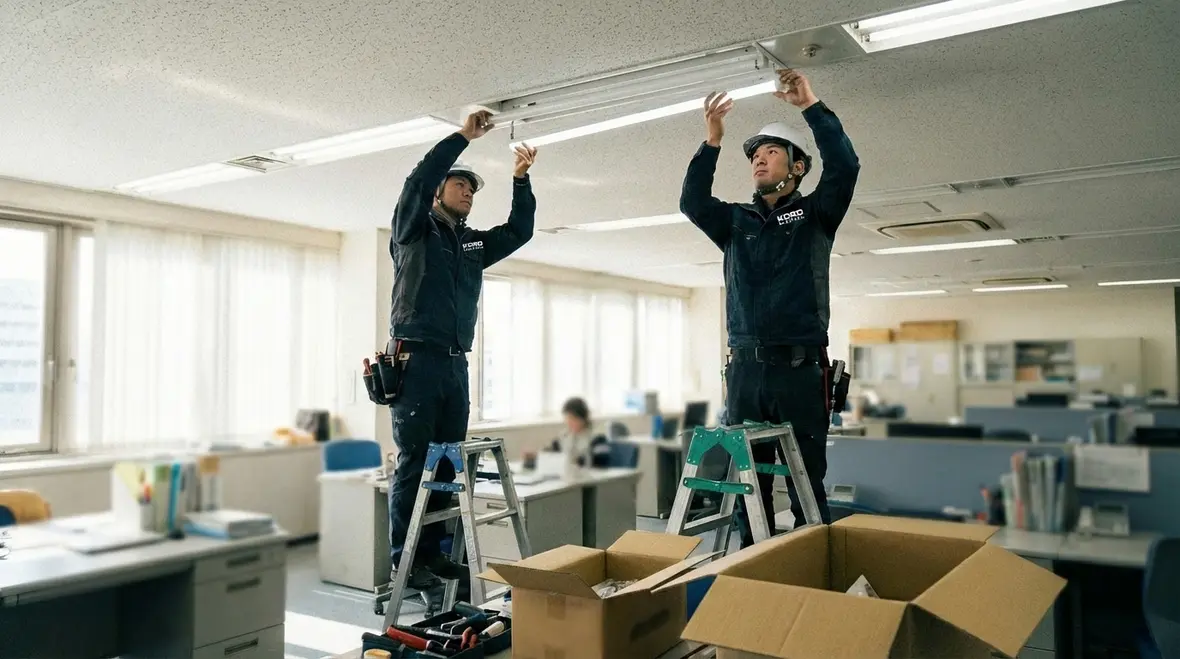
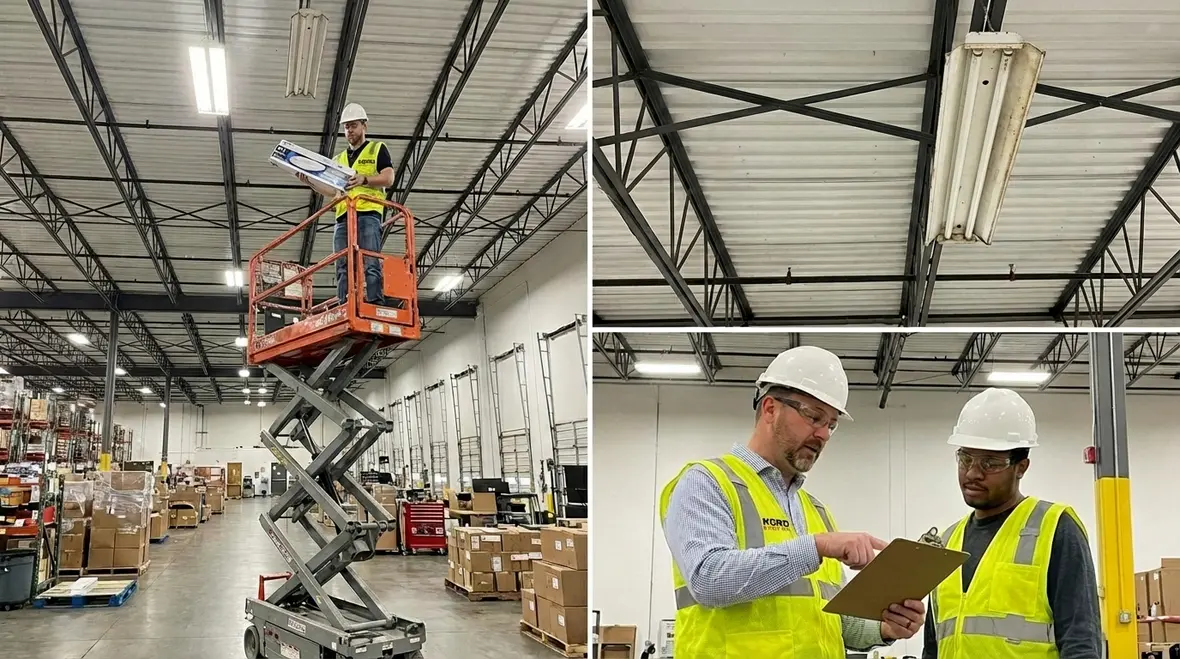
For large commercial properties, industrial facilities, warehouses, office towers, and distribution centers, this approach makes sense. First, it reduces labor and installation time. Second, it minimizes disruption to daily operations. And third, it improves performance almost immediately.
Our expert service staff at Kord Electric often explain it this way. Imagine replacing the engine of a truck while keeping the frame that still has years of life left. The result is stronger performance without buying a brand new vehicle. That is the essence of retrofit lighting in a commercial environment.
However, a proper LED retrofit is never a simple bulb swap. It requires technical planning, load calculations, photometric analysis, and a clear understanding of how light levels affect productivity and safety. Therefore, experienced technicians evaluate the existing fixtures, wiring conditions, and voltage requirements before recommending a solution.
In many cases, an LED retrofit also becomes the perfect opportunity to align your building with modern energy codes and best practices. If your property operates in a region with aggressive efficiency regulations, such as California’s commercial lighting standards, a retrofit approach can support code compliance without starting from scratch. The right partner helps you modernize your lighting while staying aligned with evolving requirements for controls, sensors, and power density.
Why Commercial and Industrial Facilities Choose Retrofit Lighting
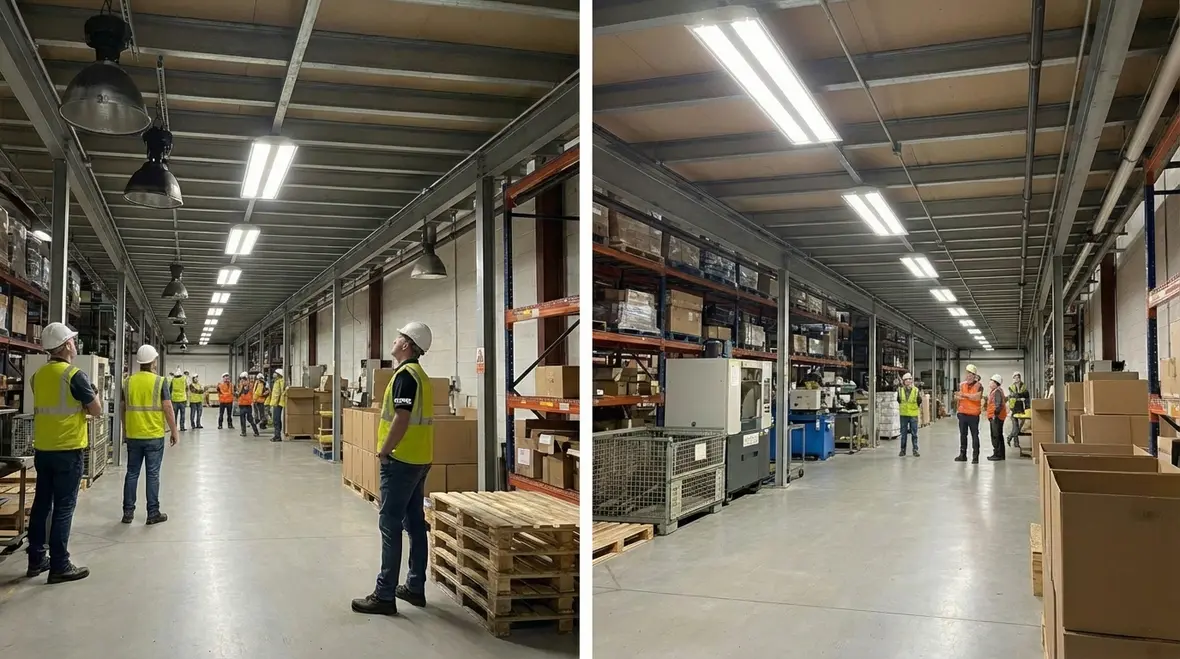
Large facilities operate on tight margins and tighter schedules. Lighting may not always be the first topic at executive meetings, yet it quietly impacts energy costs, maintenance budgets, employee comfort, and even regulatory compliance.
So why do property managers and facility directors consistently turn to retrofit lighting?
First, energy efficiency stands at the forefront. LED systems consume significantly less power than outdated fluorescent, metal halide, or high pressure sodium fixtures. As a result, facilities see measurable reductions in utility bills. Over time, those savings compound.
Second, maintenance demands drop. Traditional lighting systems burn out frequently and require lifts, ladders, and labor hours to replace. In large warehouses or industrial plants with high ceilings, that becomes expensive and time consuming. LEDs last substantially longer, which means fewer interruptions and safer operations.
Third, lighting quality improves. Uniform illumination reduces shadows and glare. In manufacturing environments, that can support precision tasks. In distribution centers, it can enhance visibility and safety. And in corporate buildings, it simply creates a more professional atmosphere.
Moreover, LED upgrades align with sustainability goals. Many commercial properties aim to reduce their carbon footprint. Therefore, modern lighting systems become a visible step toward environmental responsibility. And yes, they also look impressive in annual reports.
Retrofit lighting can also be a strategic move for properties looking to stay ahead of changing codes and energy regulations. By pairing efficient fixtures with smart controls and occupancy sensors, facilities can move closer to the advanced lighting control requirements often found in modern commercial lighting codes. For owners planning capital improvements over several years, an LED retrofit becomes the backbone of a broader, long term energy strategy.
Retrofit Lighting vs. Full System Replacement
One of the common debates among facility teams is whether to retrofit existing fixtures or rip everything out and start fresh. Full replacements absolutely have their place, especially when fixtures are severely damaged, incompatible, or architecturally obsolete. However, retrofit lighting wins in many commercial environments because it:
- Leverages existing fixture locations to maintain consistent light distribution
- Reduces labor costs and installation time compared to full demolition and rewiring
- Allows phased upgrades by floor, zone, or department
- Minimizes debris, dust, and disruption inside active work areas
In other words, retrofit lighting respects the fact that your operations cannot pause for a complete lighting overhaul. It offers a surgical, disciplined approach that modernizes performance without blowing up the schedule.
How Does an LED Retrofit Work in a Large Facility?
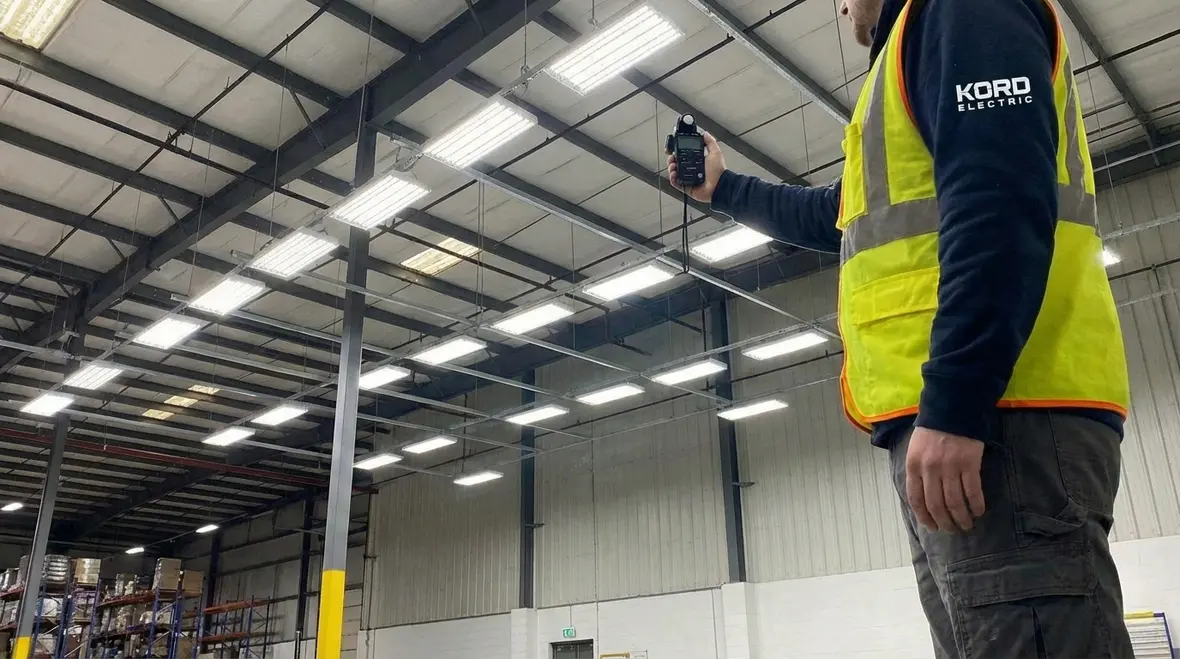
When Kord Electric approaches a commercial LED retrofit, the process follows a disciplined structure. While every building presents unique challenges, the core steps remain consistent.
First, our technicians conduct a detailed site assessment. They examine fixture types, ceiling heights, electrical panels, and current light levels. They also speak with facility managers to understand operational patterns. For example, a warehouse that runs twenty four hours requires a different lighting strategy than an office building with standard business hours.
Next, we perform lighting calculations. Using photometric analysis, we determine how much illumination each area truly needs. This step prevents overlighting or underlighting. In other words, we avoid turning a storage room into a movie set while still ensuring safe, compliant brightness.
Then, we design a retrofit lighting plan tailored to the property. Some projects involve LED tubes installed into existing troffers. Others require integrated LED kits that replace internal components. In high bay industrial settings, we may recommend purpose built LED retrofits designed for large vertical spaces.
After design approval, installation begins. Because retrofitting uses much of the existing infrastructure, downtime remains limited. Our experienced crews coordinate with facility management to work around peak operational hours whenever possible. As a result, productivity continues with minimal disruption.
Finally, we test and verify performance. Light levels are measured, controls are calibrated, and any fine tuning adjustments are made. Only when everything performs to standard do we consider the project complete.
Integrating LED Retrofits with Smart Controls
Modern LED retrofits are most powerful when they are paired with smart lighting controls. Occupancy sensors, daylight harvesting, and time based scheduling can all ride on top of your new LED infrastructure, trimming energy usage even further.
In conference rooms and offices, multi level dimming makes it easy to dial in the right light. In warehouses, zoned controls allow you to illuminate only active aisles or loading docks. Over time, these strategies work together to build a lean, responsive lighting system instead of a one size fits all always on setup.
For properties operating under strict energy codes, integrating smart controls during a retrofit can also streamline inspections and documentation. Rather than bolting controls on as an afterthought, they are designed as part of the overall retrofit lighting plan from the beginning.
Comparing Traditional Systems and LED Retrofit Solutions
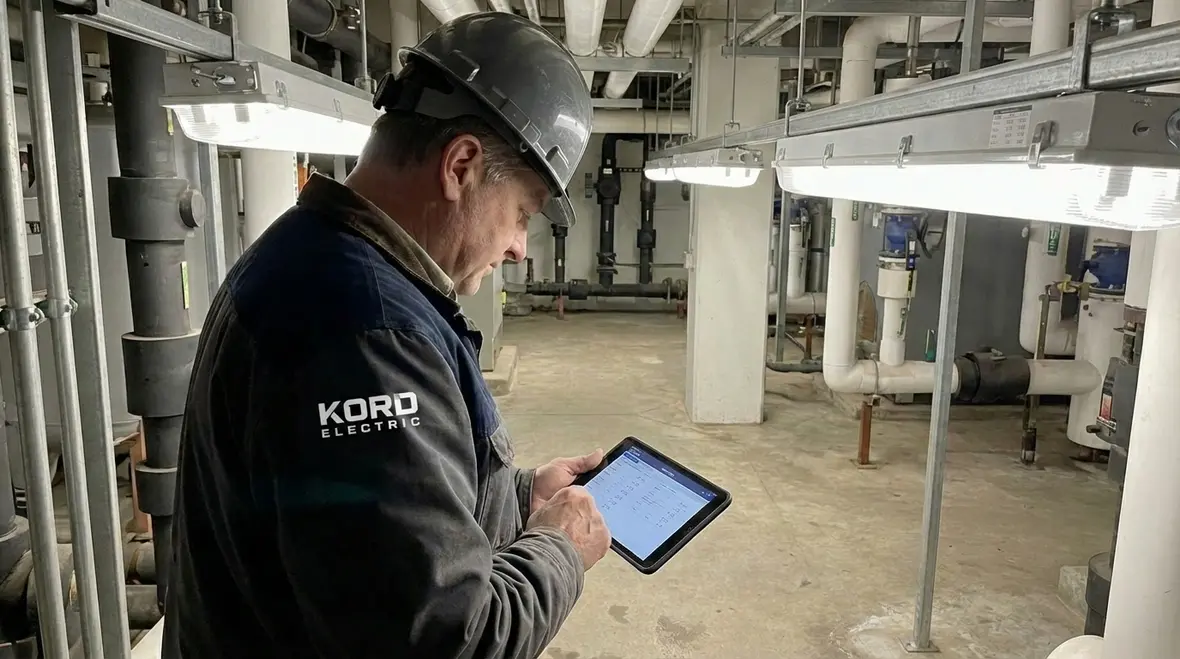
To understand the value of retrofitting, it helps to compare old systems with modern LED upgrades. Below is a clear side by side look at the differences commercial property owners encounter.
- Traditional Lighting | LED Retrofit Solution
- High energy consumption | Lower energy usage with improved efficiency
- Frequent lamp replacements | Long lifespan with fewer service calls
- Inconsistent light levels | Uniform, controlled illumination
- Heat generation that strains HVAC systems | Reduced heat output
- Limited control options | Advanced controls and dimming capability
As this comparison shows, the shift toward retrofit lighting is not simply about swapping technology. It is about improving performance across multiple operational categories. And when facility managers see those improvements reflected in both lighting quality and monthly utility statements, the value becomes undeniable.
Where LED Retrofits Deliver the Biggest Wins
While almost any commercial building can benefit from an LED retrofit, some environments see especially strong results:
- Warehouses and distribution centers with long operating hours, tall ceilings, and safety sensitive workflows
- Manufacturing plants that depend on precise, uniform light for quality control and detailed tasks
- Office towers and corporate campuses where visual comfort, professionalism, and lower energy use all matter
- Parking garages and exterior lots where improved visibility and security lighting are critical at night
In these settings, retrofit lighting does more than brighten the space. It supports productivity, comfort, and brand perception every time someone walks through the door or onto the floor.
Financial Impact and Return on Investment
Commercial and industrial properties operate on data driven decisions. Therefore, lighting upgrades must demonstrate measurable return on investment.
Energy savings form the most immediate benefit. Because LEDs draw less power, monthly electricity costs decrease. Over time, those savings offset installation expenses. Additionally, many regions offer utility incentives or rebates for energy efficient upgrades. Our team at Kord Electric assists clients in identifying and navigating these programs whenever available.
Maintenance savings represent another major factor. Fewer lamp replacements mean reduced labor costs and less equipment rental. In facilities with high ceilings, avoiding repeated lift rentals alone can generate significant savings.
Furthermore, improved lighting can influence productivity and safety. Clear visibility reduces errors and may lower accident risk. While those benefits may not always appear on a simple spreadsheet, they carry real financial weight in large scale operations.
When viewed collectively, these factors create a compelling case. Retrofit lighting becomes not just an upgrade, but a strategic investment.
Evaluating Payback for LED Retrofits
Because every facility is unique, there is no one size fits all payback number. However, most retrofit lighting projects follow a similar pattern:
- Energy savings begin immediately after commissioning
- Maintenance savings accumulate as lamp change outs disappear from the work order queue
- Some projects qualify for rebates that shorten the payback window
- Improved lighting supports revenue generating activities, productivity, and tenant satisfaction
This is why a professional site assessment is so valuable. By comparing your current operating costs with projected LED performance, you can forecast a realistic return on investment instead of guessing. From there, retrofit lighting can be slotted into annual budgeting and long term capital planning with confidence.
Enhancing Safety, Compliance, and Operational Efficiency
In industrial environments, lighting is more than aesthetic. It is directly tied to safety standards and regulatory compliance. Insufficient or uneven lighting can create hazards. Conversely, well designed LED retrofits support safer workflows.
For example, improved illumination in loading docks enhances visibility during vehicle movement. In manufacturing areas, consistent light levels assist with quality control tasks. And in large mechanical rooms, better lighting helps maintenance teams identify issues quickly.
Additionally, many commercial properties must comply with evolving energy codes. Therefore, upgrading to modern LED systems supports adherence to current standards. Our technicians stay informed on code requirements and ensure installations meet applicable guidelines.
Operational efficiency also improves through advanced controls. Occupancy sensors, daylight harvesting systems, and programmable lighting schedules allow facilities to tailor light output based on real time needs. As a result, energy consumption drops even further.
At Kord Electric, our service staff take time to explain these control options in clear terms. They do not bury clients in jargon. Instead, they walk through scenarios step by step. After all, lighting controls should simplify operations, not require a degree in rocket science. Although, if someone does have a rocket in their warehouse, we would certainly like to see it.
Aligning Retrofits with Modern Lighting Codes
For property managers in regions with rigorous energy standards, an LED retrofit becomes one of the most effective tools for staying compliant. By upgrading fixtures and integrating controls, you can reduce lighting power density, improve controllability, and move your building toward the level of performance required by today’s commercial lighting codes.
When you combine LED retrofits with thoughtful design and code aware planning, your lighting system does more than pass inspections. It actively supports your long term operational goals, from reduced operating expenses to better tenant experiences.
Common Questions Facility Managers Ask About LED Upgrades
When commercial property owners explore retrofit lighting, they often share similar concerns. Addressing them directly builds confidence in the process.
Will installation disrupt daily operations?
In most cases, disruption remains minimal. Because retrofits use existing infrastructure, work can be phased or scheduled during off peak hours. Our teams coordinate closely with facility leadership to maintain productivity.
Are existing fixtures always reusable?
Not always. While many fixtures support retrofitting, some outdated or damaged housings may require replacement. During the assessment phase, our technicians determine the most cost effective path forward.
How long does a commercial LED retrofit take?
Project timelines vary depending on building size and complexity. However, compared to full system replacements, retrofits generally reduce overall installation time.
What about light quality?
Modern LED systems offer various color temperatures and output levels. Therefore, lighting can be customized to suit specific operational needs. From clean, bright warehouse aisles to warm and welcoming lobbies, the right retrofit lighting strategy can match both the functional and aesthetic goals of each space.
FAQ About LED Retrofit for Commercial and Industrial Buildings
Partnering with Kord Electric for Strategic Lighting Upgrades
When commercial and industrial facilities consider retrofit lighting, they need more than equipment. They need expertise, planning, and disciplined execution. At Kord Electric, our technicians bring experience, technical knowledge, and a steady hand to every project. We evaluate, design, install, and verify with precision.
From the initial walkthrough to final commissioning, our team focuses on your objectives: lower operating costs, better lighting performance, safer work environments, and smoother day to day operations. Whether you are upgrading a single facility or coordinating improvements across a portfolio of properties, a well planned retrofit lighting strategy can become one of the highest impact investments you make in your building systems.
If your facility is ready to reduce energy costs, improve lighting performance, and modernize operations, we invite you to connect with our team and begin the conversation today.
To explore how LED retrofits fit into broader commercial lighting solutions, including new recessed lighting layouts and control upgrades, visit our Recessed Lighting Installation service page. It is an excellent starting point for understanding how professional design and installation can extend the benefits of LED retrofit lighting throughout your facility.
When you are ready to take the next step, our electricians are prepared to help you map out a retrofit plan that aligns with your budget, timeline, and long term operational goals.