Fluorescent to LED Conversion for Industrial Facilities
There comes a moment in every large facility when the lights flicker, hum, and quietly whisper, “It’s time.” At Kord Electric, that moment often begins with a fluorescent to LED conversion. Within the first walkthrough of a warehouse, hospital wing, or high rise corridor, our technicians can almost hear the ballast sighing in relief. We guide commercial and industrial property owners through upgrading outdated fluorescent systems to modern LED technology with clarity and confidence. Moreover, we explain every step in plain language. Because when lighting affects productivity, safety, and operating costs, guesswork simply does not belong in the room.
What follows is a deeper look at the types of LED retrofit solutions available for commercial and industrial facilities. We speak from experience, not theory. And yes, we may add the occasional pop culture nod, because even serious infrastructure deserves a little personality.
Understanding LED Retrofit Solutions for Large Facilities
LED retrofit solutions allow existing lighting fixtures to be upgraded without removing the entire housing. In other words, instead of tearing out ceilings or replacing complete high bay assemblies, we improve what already works. Consequently, facilities reduce downtime and avoid unnecessary construction costs.
Our expert service staff begins with a lighting audit. They measure foot candles, review energy bills, and evaluate fixture conditions. Then, they present options that align with operational goals. Some facilities want maximum energy savings. Others focus on improved color rendering for quality control. Meanwhile, distribution centers often prioritize uniform light across wide spans.
LED retrofits typically include:
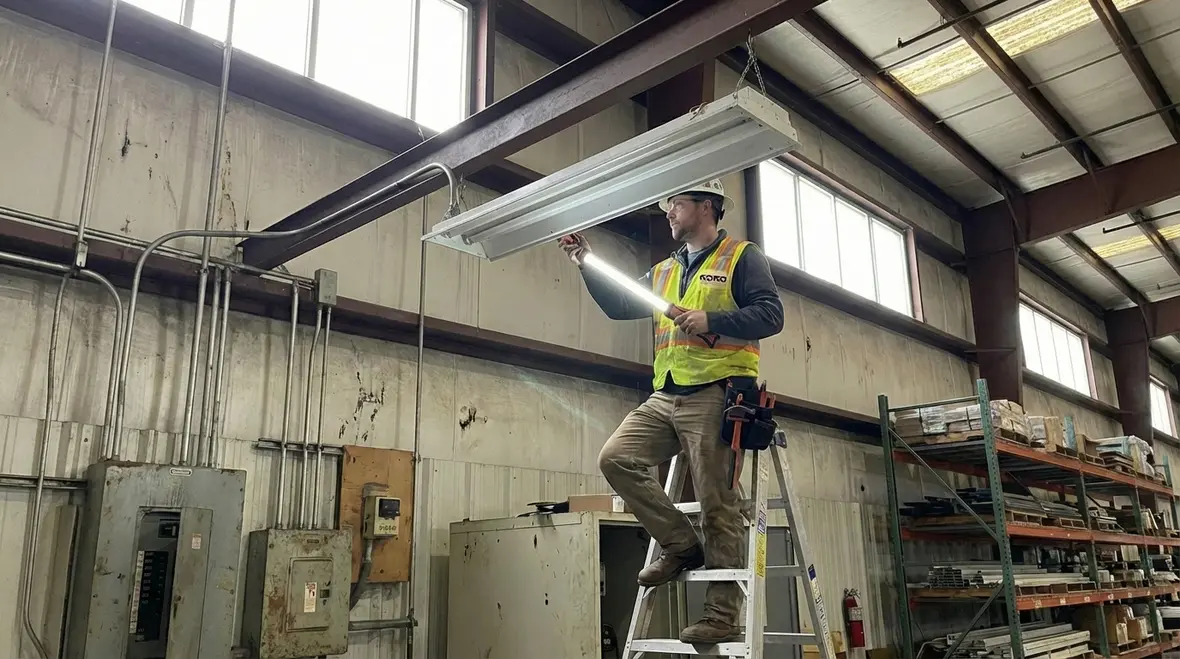
LED tube replacements – Direct replacements for T8 and T12 fluorescent lamps, often used in offices, corridors, and storage areas.
LED retrofit kits – Complete internal upgrades that replace ballasts and lamp holders while keeping the fixture housing.
LED high bay retrofits – Engineered for warehouses, manufacturing floors, and gymnasiums with tall ceilings.
LED panel conversions – Ideal for drop ceilings in commercial offices and medical facilities.
However, selecting the correct approach requires more than swapping parts. It requires experience in load calculations, voltage requirements, and compliance codes. That is where our technicians shine. Pun intended.
For facility managers who want to dive deeper into how lighting upgrades intersect with state regulations, our guide on California commercial lighting code requirements helps connect retrofit decisions with Title 24 compliance and modern control strategies. It’s a practical companion resource when planning scope, budget, and timelines for major lighting projects across campuses and large industrial sites.
Fluorescent to LED Conversion in Commercial Buildings
Commercial buildings present a unique blend of aesthetic expectations and operational demands. Therefore, upgrading lighting systems must balance efficiency with visual comfort. A proper fluorescent to LED conversion addresses both.
In office towers and retail centers, lighting affects mood and productivity. Studies show that consistent, flicker free illumination reduces eye strain. Consequently, employees stay focused longer. Customers, meanwhile, perceive the space as modern and well maintained.
Our team explains color temperature in simple terms. Warm light creates comfort. Neutral light supports focus. Cool light enhances visibility. We guide property managers through these choices with side by side comparisons. No technical jargon. Just clear reasoning.
Additionally, LEDs reduce maintenance cycles. Traditional fluorescent lamps require frequent replacement and ballast servicing. Over time, those service calls add up. By contrast, LEDs operate for tens of thousands of hours. That means fewer lifts, fewer disruptions, and fewer invoices.
Although some managers worry about upfront cost, we break down payback periods with real numbers. Energy savings, rebate programs, and reduced maintenance typically offset investment faster than expected. As our staff often says with a calm smile, “The math rarely argues back.”
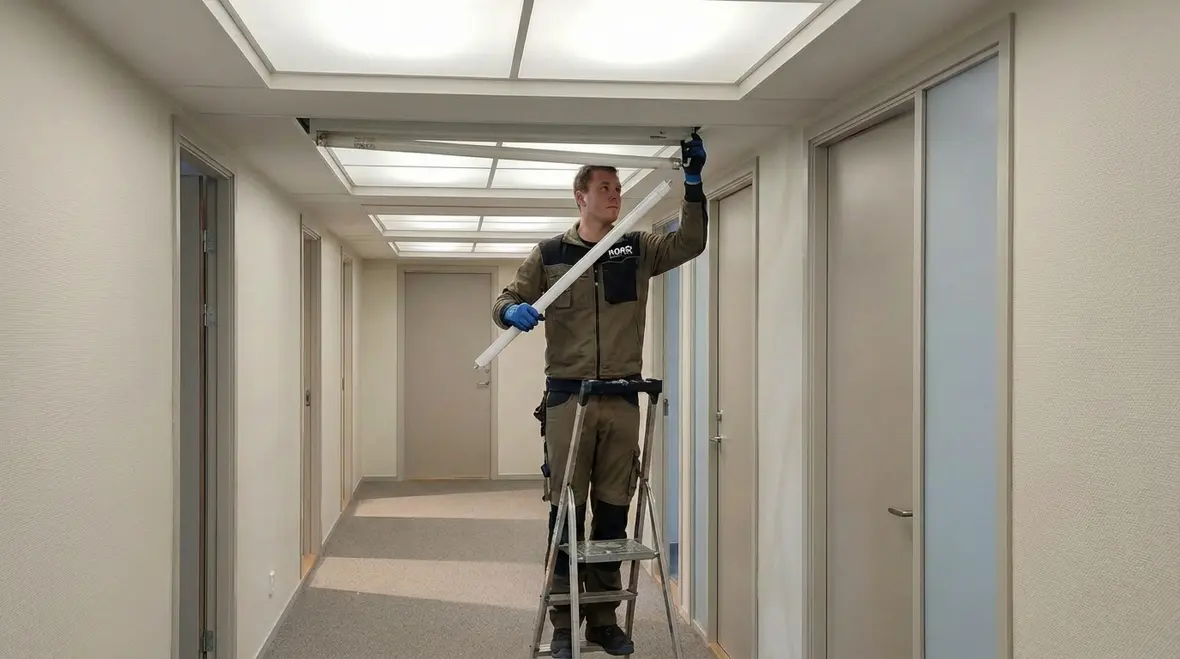
Commercial properties that combine fluorescent to LED conversion with a broader lighting installation strategy often see the biggest gains. By pairing retrofits with targeted fixture upgrades, controls, and code-compliant layouts, large office campuses and retail centers can modernize their visual environment while cutting operating costs and simplifying maintenance across the board.
Industrial LED Retrofits for Warehouses and Manufacturing
Industrial facilities demand durability. Forklifts move. Equipment vibrates. Dust circulates. Therefore, lighting must perform without complaint. LEDs, when properly specified, meet these demands head on.
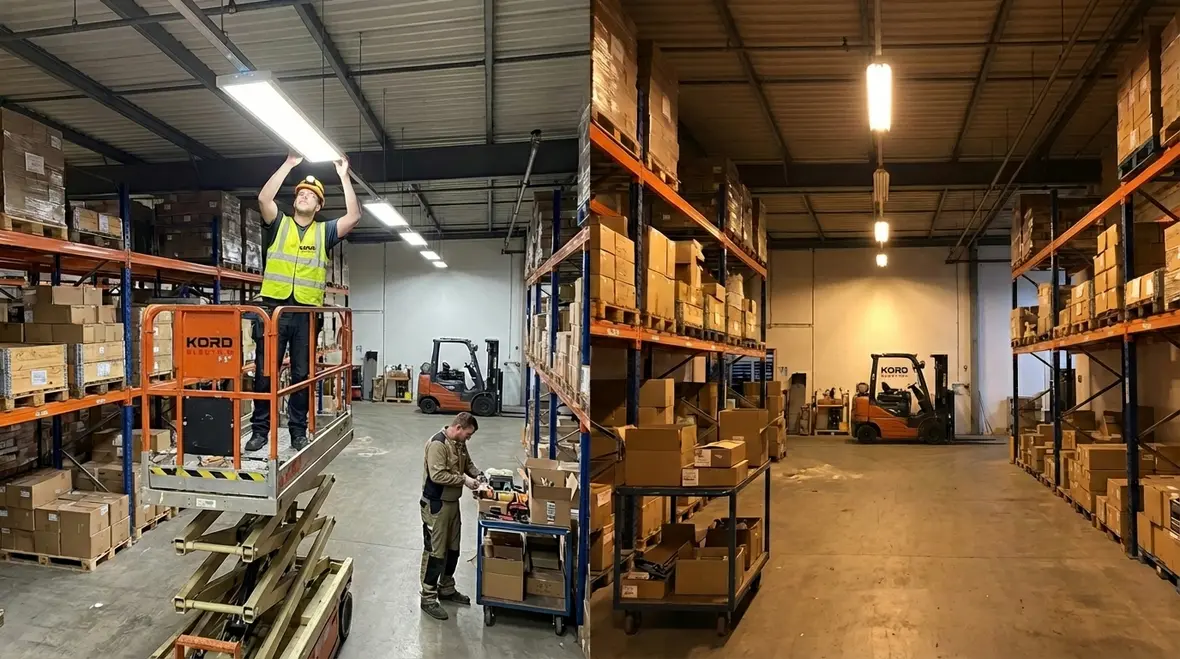
High bay LED retrofits transform warehouse environments. Brighter, uniform lighting improves safety and reduces shadow zones between racks. Consequently, operators see pallet labels clearly, and inventory accuracy improves. In manufacturing plants, improved visibility supports precision tasks. Quality control benefits immediately.
Our technicians assess mounting heights, beam angles, and lumen output before recommending solutions. They also evaluate electrical panels to ensure compatibility. In older plants, wiring upgrades may be necessary. Rather than gloss over these realities, we explain them openly.
Furthermore, industrial LEDs handle cold storage conditions far better than fluorescent lamps. Freezer facilities often experience delayed start times with fluorescent systems. LEDs, however, illuminate instantly. No warm up period. No dramatic pause worthy of a suspense film.
Because downtime costs money, we schedule installations strategically. We coordinate with facility managers to work during off peak hours whenever possible. Planning matters. Execution matters more.
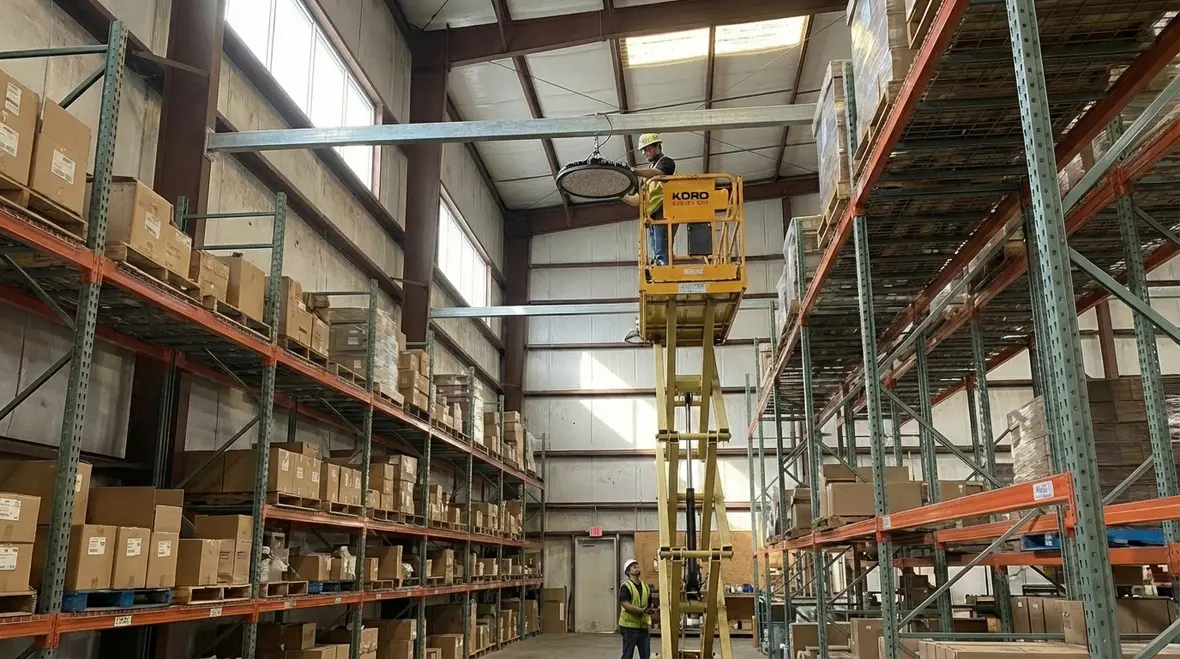
These upgrades do more than improve visibility. They directly support workplace safety initiatives and productivity goals. When aisles, mezzanines, and loading docks transition from dim, flickering fluorescents to crisp LED illumination, incident rates drop, equipment operators work with greater confidence, and teams can focus on throughput instead of squinting at labels.
For operations teams already wrestling with power quality and voltage stability, pairing an LED retrofit with a broader electrical evaluation creates an added layer of protection. Addressing voltage fluctuations while planning lighting upgrades helps extend equipment life, protect sensitive controls, and keep production lines running as intended.
Comparing LED Retrofit Types for Industrial Facilities
Below is a simplified comparison our service staff often shares during consultations:
LED Tube Retrofits
Ideal for: Offices, corridors, light industrial areas
Installation time: Short
Energy savings: Moderate to high
Fixture replacement required: No
LED Retrofit Kits
Ideal for: Large troffers, aging fixtures
Installation time: Moderate
Energy savings: High
Fixture replacement required: No, housing remains
LED High Bay Retrofits
Ideal for: Warehouses, manufacturing plants
Installation time: Moderate to extensive
Energy savings: Very high
Fixture replacement required: Sometimes, depending on condition
This clear layout helps decision makers compare performance, cost, and disruption levels. Moreover, it allows budgeting teams to align upgrades with capital planning cycles. When a campus plans other infrastructure projects or preventive maintenance, lighting can often be scheduled in parallel to maximize lift and shutdown access.
When retrofits are folded into a structured electrical preventive maintenance plan, facilities gain an even stronger return. Upgrading fixtures while technicians are already inspecting panels, feeders, and emergency systems means fewer disruptions overall and a more coordinated approach to safety, reliability, and efficiency.
What Should Facilities Ask Before Upgrading Lighting?
This is the one question we encourage every property manager to ask, and we answer it immediately.
First, what are the facility’s operational priorities? Safety, productivity, cost reduction, or all three?
Second, what rebates or incentives apply? Utility programs often reward energy efficient upgrades. Therefore, timing matters.
Third, what is the expected lifespan of the building? Long term ownership supports deeper investment in premium systems.
Our expert service staff walks through these considerations in person. They review electrical infrastructure, check emergency lighting integration, and confirm code compliance. Additionally, they ensure photometric layouts meet industry standards.
Lighting is not just about brightness. It is about distribution, glare control, and uniformity ratios. We translate these technical metrics into understandable benefits. After all, a facility manager should not need an engineering degree to make an informed choice. Although if they have one, we enjoy the conversation.
Energy Efficiency, Compliance, and Smart Controls
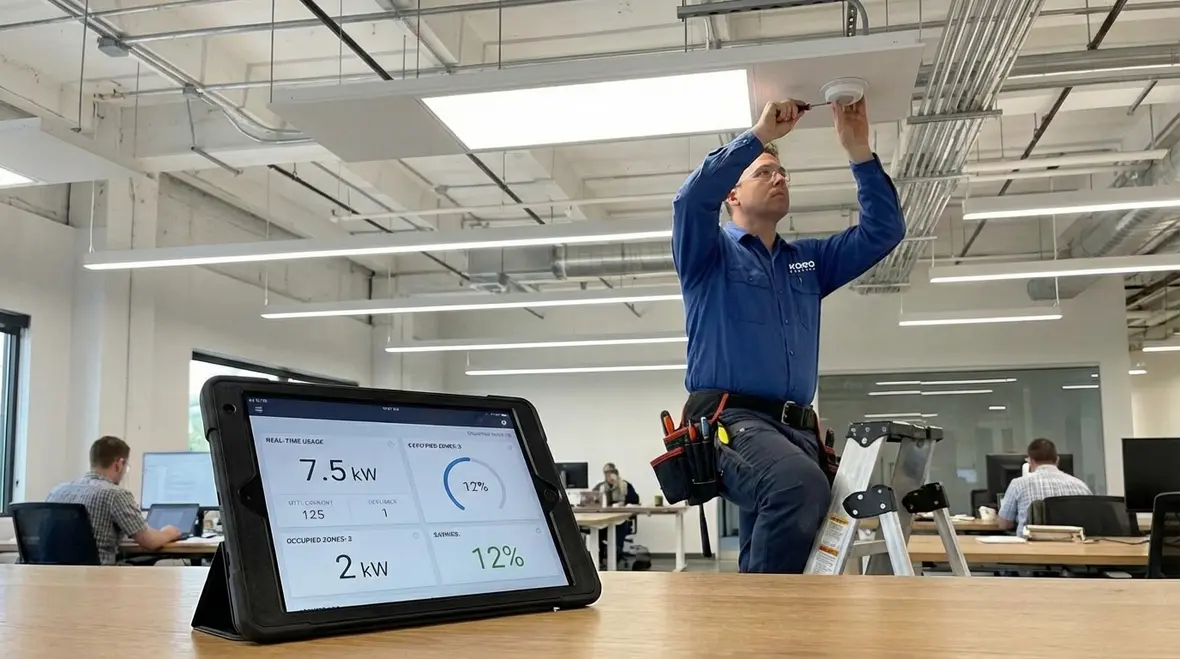
Modern LED retrofits extend beyond bulbs and boards. They integrate controls that enhance savings even further. Occupancy sensors reduce usage in low traffic zones. Daylight harvesting systems adjust output based on natural light levels. Consequently, facilities avoid wasting electricity.
For industrial campuses operating around the clock, these controls create measurable impact. Energy monitoring dashboards provide real time data. Therefore, management gains visibility into consumption patterns.
Moreover, LED systems support compliance with evolving energy codes. Regulations continue to tighten. Facilities that upgrade now position themselves ahead of mandates. Our technicians stay informed on these standards and advise accordingly.
Smart controls also support safety. In emergency situations, properly integrated systems maintain required illumination levels. We design with redundancy in mind. Because when the unexpected happens, lighting must respond instantly.
Many commercial and industrial clients choose to coordinate fluorescent to LED conversion with broader lighting installation services when they are rolling out smart controls. Designing fixtures, sensors, and control sequences together creates a unified system instead of a patchwork of add-ons.
How Kord Electric Executes Retrofit Projects
Execution separates theory from results. At Kord Electric, projects follow a disciplined process.
First, we conduct a comprehensive site survey. Then, we prepare a detailed proposal outlining scope, timeline, and cost. After approval, materials are scheduled and staged to minimize disruption.
During installation, our licensed electricians adhere to strict safety protocols. Furthermore, supervisors perform quality checks at each phase. Once complete, we test systems thoroughly. We do not consider a project finished until performance meets specification.
Communication remains steady throughout. Facility managers receive updates, not surprises. If adjustments become necessary, we address them promptly.
In many ways, a successful lighting upgrade resembles a well directed film. Planning sets the script. Skilled professionals deliver the performance. The result feels seamless. And unlike certain movie reboots, this upgrade actually improves the original.
For facilities that want one team to handle everything from design and code coordination to installation and commissioning, our dedicated lighting installation services provide a turnkey path. From the first walkthrough to the final light level verification, we keep large projects organized, documented, and moving forward.
Frequently Asked Questions
Conclusion and Next Steps
Lighting shapes performance, safety, and cost control across every commercial and industrial facility. Therefore, upgrading to modern LED systems is not simply a maintenance task. It is a strategic move. At Kord Electric, we guide property managers through each step with clarity and steady expertise.
If your facility is ready for smarter, more efficient lighting, a well planned fluorescent to LED conversion can be the start of a broader modernization effort. From warehouse aisles and production lines to office corridors and exterior walkways, we help align fixtures, controls, and electrical infrastructure with the way your teams actually work.
Whether you are planning a focused LED retrofit or a full-scale lighting installation across multiple buildings, our commercial and industrial specialists are ready to help you compare options, understand payback, and map out a realistic schedule. Let us illuminate the path forward with precision, professionalism, and results that speak for themselves.
To explore a larger upgrade that includes new fixtures, controls, and layout improvements, our dedicated lighting installation services provide a natural next step. Together, we can turn aging fluorescents and inconsistent light levels into a clean, efficient system that supports compliance, productivity, and long-term reliability.