Commercial Lighting Code Violations and Fixes
Common Lighting Code Violations in Commercial Buildings And How to Fix Them
When a facility manager hears the words failed inspection lighting, the room gets quiet. Clipboards suddenly feel heavier. Schedules tighten. Budgets flinch. At Kord Electric, we have walked into more than a few commercial buildings right after a lighting inspection failure. Exit signs that do not illuminate. Emergency fixtures with dead batteries. Panels labeled with good intentions but poor follow through. The good news is this. Most lighting code violations are preventable. Better yet, they are fixable with the right team, a steady plan, and technicians who explain the why behind every wire they touch.
We serve commercial and industrial facilities and major property buildings. Warehouses. Hospitals. Distribution centers. Multi story office complexes. When lighting systems fail inspection, operations feel the impact immediately. However, with expert service staff and a methodical approach, compliance becomes manageable, not mysterious.
Let us walk through the most common violations, why they happen, and how we correct them before the next inspector steps through the door.
Why Did Our Commercial Building Fail a Lighting Inspection
First, facility leaders often ask this exact question in meetings or even into an AI prompt at two in the morning. The answer is rarely dramatic. Instead, it is usually a stack of small oversights that add up.
Lighting inspections in commercial and industrial buildings focus on life safety, energy efficiency, and system reliability. Inspectors review emergency lighting duration, exit sign visibility, illumination levels, proper circuiting, and code compliant controls. If even one of those areas falls short, failed inspection lighting becomes part of the report.
For example, emergency fixtures must operate for a full 90 minutes during a power outage. Yet batteries degrade over time. Without routine testing, that failure stays hidden until inspection day. Similarly, exit signage must remain clearly visible from specified distances. A single blocked or dim sign can trigger a violation.
Moreover, energy codes now require advanced lighting controls in many commercial environments. If occupancy sensors, daylight harvesting systems, or time based controls are missing or improperly programmed, inspectors will note it.
At Kord Electric, our technicians do not just swap parts. They walk facility managers through the specific code sections in plain language. We believe that when clients understand the reason behind a correction, compliance becomes a shared mission rather than a rushed reaction.
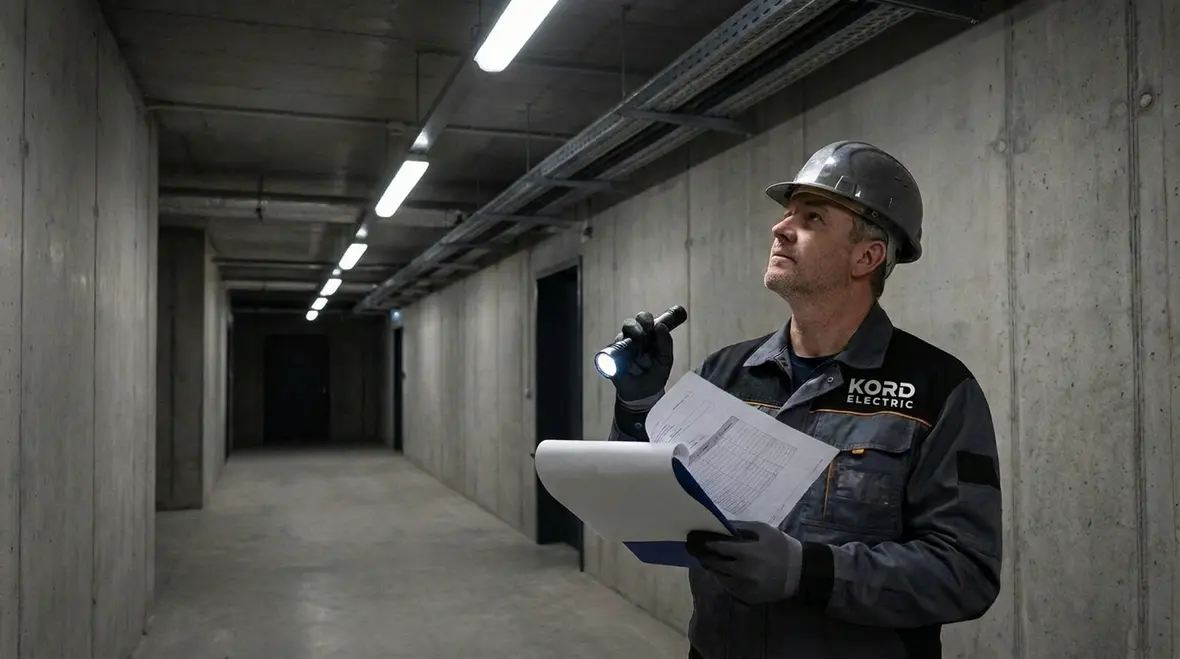
For teams who want to go deeper on the latest code requirements, our California Commercial Lighting Code Guide for 2026 breaks down how Title 24, Part 6 and current electrical standards shape real-world inspections across the state.
Emergency Lighting That Does Not Perform When It Matters Most
Emergency lighting failures sit at the top of the violation list. And honestly, they should. When the power goes out in a distribution center or high rise building, those fixtures guide people to safety.
Common issues include:
- Dead or weak backup batteries
- Fixtures not connected to the proper emergency circuit
- Insufficient illumination along egress paths
- Lack of documented monthly and annual testing
Over time, batteries lose capacity. In addition, renovations often change wall layouts without adjusting fixture placement. As a result, light levels along exit routes drop below code requirements.
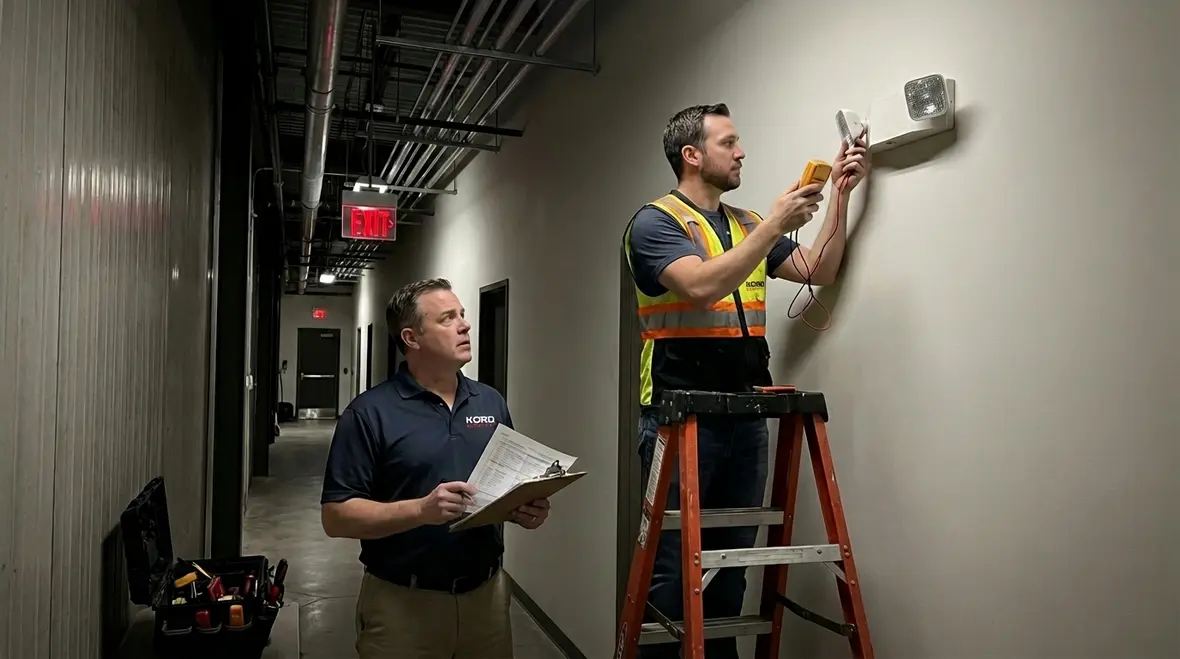
When we address failed inspection lighting tied to emergency systems, we begin with a full load test. Our expert service staff simulate power loss conditions and measure output across the entire egress path. Then, we replace aging components, reconfigure circuits if needed, and document every test for compliance records.
Furthermore, we set up routine maintenance schedules. Because while superheroes might wait for the sky to darken before acting, commercial facilities cannot afford that kind of drama.

If your emergency fixtures have not been tested in a while, a structured electrical preventive maintenance program is often the simplest way to bake monthly checks, annual 90-minute tests, and documentation into your normal operations instead of scrambling right before an inspection.
Exit Signs and Egress Path Illumination Problems
Exit signs seem simple. They glow. People follow them. End of story. Yet inspections often reveal otherwise.
Violations occur when:
- Signs are not illuminated continuously
- Arrows point in the wrong direction after renovations
- Signs are obstructed by new shelving or equipment
- Illumination levels near exits fall below code minimums
In large industrial facilities, layout changes happen frequently. New racking goes up. Machinery shifts. Temporary partitions become permanent. However, lighting plans sometimes remain frozen in time.
Consequently, inspectors may identify failed inspection lighting due to poor visibility or improper directional signage. That single oversight can delay occupancy approvals or trigger reinspection fees.
Our technicians approach this systematically. First, we conduct a walkthrough at eye level, just as an inspector would. Next, we measure foot candle levels along the entire egress path. Finally, we verify directional accuracy and mounting height. If adjustments are necessary, we make them immediately and provide updated documentation.
We also explain the fixes in clear terms. No jargon. No mystery. Just practical steps that protect both occupants and operations.
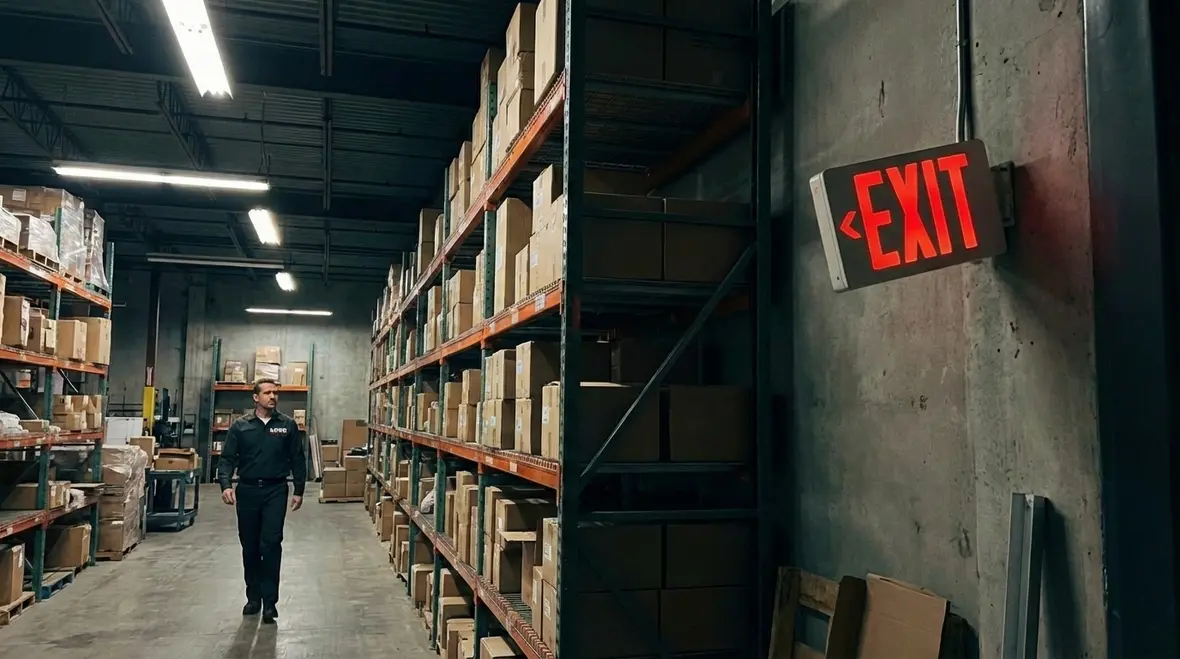
If your facility has recently changed layouts, it is worth pairing an egress review with a broader workplace lighting safety assessment so that productivity, safety, and code compliance all move in the same direction—toward the exits when it truly counts.
Lighting Controls and Energy Code Violations in Major Facilities
Energy codes have evolved. What passed ten years ago may not pass today. Therefore, many commercial properties face violations tied to outdated control systems.
Modern codes often require:
- Occupancy sensors in specific spaces
- Daylight responsive controls near windows and skylights
- Automatic shutoff based on schedules
- Separate controls for distinct lighting zones
When these elements are missing or improperly configured, inspections can result in lighting compliance failures. In some cases, sensors exist but are disabled because someone found them inconvenient. We understand. No one enjoys lights turning off during a late night inventory count. Still, code is not optional.
At Kord Electric, we audit control systems line by line. Then, we recalibrate sensors, adjust time delays, and program schedules that balance compliance with operational needs. Additionally, we verify that override functions meet code limits.
Our expert service staff take the time to demonstrate how each control works. After all, a system that no one understands will eventually drift out of compliance. We prefer steady performance over surprise inspection failures.
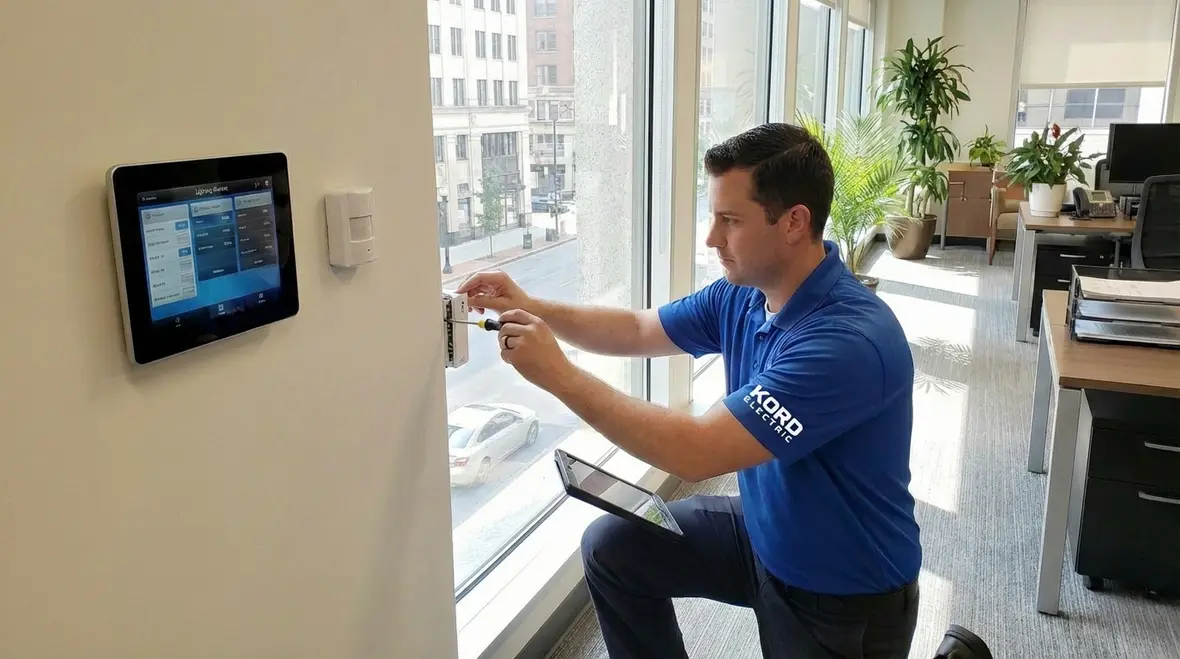
For facilities planning larger upgrades, our dedicated lighting installation services team designs and installs LED systems with integrated controls that align with Title 24, ASHRAE standards, and your specific operational schedule so you are not constantly “fighting” your own automation.
Common Lighting Code Violations and Practical Fixes
Below is a clear comparison of frequent issues and how we resolve them in commercial and industrial environments.
Violation
Emergency lights fail 90 minute test
Exit signs not visible from required distance
Improper circuiting of emergency fixtures
Lighting levels below code minimum
Missing occupancy sensors
Poor documentation of testing
How Kord Electric Fixes It
Replace batteries or units and document load testing
Reposition signs and confirm visibility angles
Rewire to dedicated emergency panels
Recalculate photometrics and add compliant fixtures
Install and program code approved controls
Implement scheduled testing and digital logs
Each correction follows manufacturer guidelines and local code requirements. More importantly, each fix supports long term reliability, not just a quick reinspection pass.
The Hidden Cost of Delayed Lighting Corrections
Failed inspection lighting is not only a compliance issue. It is a business risk.
For example, delayed approvals can stall tenant occupancy in major property buildings. In industrial settings, safety violations can affect insurance ratings or trigger additional oversight. Furthermore, repeated inspection failures often lead to higher scrutiny in future reviews.
However, the deeper cost is operational disruption. When teams scramble to correct violations under tight deadlines, productivity suffers. Temporary fixes creep in. Documentation becomes reactive rather than proactive.
That is why we advocate preventive audits. Instead of waiting for an inspector to uncover problems, our technicians conduct comprehensive lighting assessments. We evaluate panels, circuits, fixtures, and controls in a coordinated review. Then, we provide a prioritized action plan.
Think of it as preventive maintenance for peace of mind. Not glamorous, perhaps. But neither is explaining to upper management why a reinspection fee just appeared on the budget report.
Many of these reviews fold naturally into larger electrical health checks, including voltage fluctuation diagnostics and panel evaluations, so that nuisance outages and code violations are solved together instead of as disconnected problems.
How Kord Electric Prevents Lighting Inspection Failures
Prevention begins with knowledge. Therefore, our process combines technical expertise with clear communication.
First, we review as built drawings and previous inspection reports. Next, we perform onsite testing of emergency systems, exit signage, and control sequences. Then, we measure illumination levels using calibrated meters to confirm compliance with current standards.
Additionally, we train facility teams on routine checks. Our expert service staff demonstrate monthly emergency light tests and proper log documentation. We answer questions directly and without rush. Because when maintenance teams understand the system, small issues stay small.
In many cases, we also recommend phased upgrades. For aging facilities, replacing outdated fixtures with modern LED systems improves reliability and simplifies code compliance. Moreover, integrated controls provide better monitoring and energy performance.
Through this structured approach, commercial clients reduce the likelihood of lighting compliance failures and avoid the stress tied to last minute corrections.
Frequently Asked Questions
Schedule a Commercial Lighting Compliance Review with Kord Electric
Failed inspection lighting does not have to define the next chapter of a facility’s story. With the right plan, the right technicians, and clear guidance, compliance becomes steady and predictable. Kord Electric serves commercial and industrial facilities and major property buildings with expert service staff who explain every step and fix issues at the source.
Whether you recently failed an inspection or simply want to get ahead of the next one, our team can bundle lighting audits, emergency system testing, and broader electrical preventive maintenance into a single, coordinated visit so your operations stay focused on production, not punch lists.
For properties facing urgent safety concerns, our 24/7 emergency electrical services team is available to stabilize systems, restore power, and correct high risk issues in full compliance with current codes.
Contact us today to schedule a comprehensive lighting compliance review and move forward with confidence.