Industrial Lighting Upgrades Performance and Compliance
In every industrial facility, there is a moment when someone looks up at the ceiling and realizes the truth. The building is working harder than the lights are. At Kord Electric, we see it every week. Our lighting systems are designed for commercial and industrial facilities that refuse to operate in the dark ages. While others treat fixtures as an afterthought, we treat them as the backbone of safety, productivity, and compliance. This guide explores Industrial Facility Lighting Upgrades: Performance and Compliance Guide through the lens of our expert service staff, who explain the why, the how, and occasionally the why did we wait so long.
So settle in. Imagine a steady, calm voice explaining how better illumination can transform a facility from struggling warehouse to high performing operation. Because that is exactly what we are about to do.
Industrial Facility Lighting Upgrades: Performance and Compliance Guide
Why Industrial Facility Lighting Upgrades Are Operational Strategy
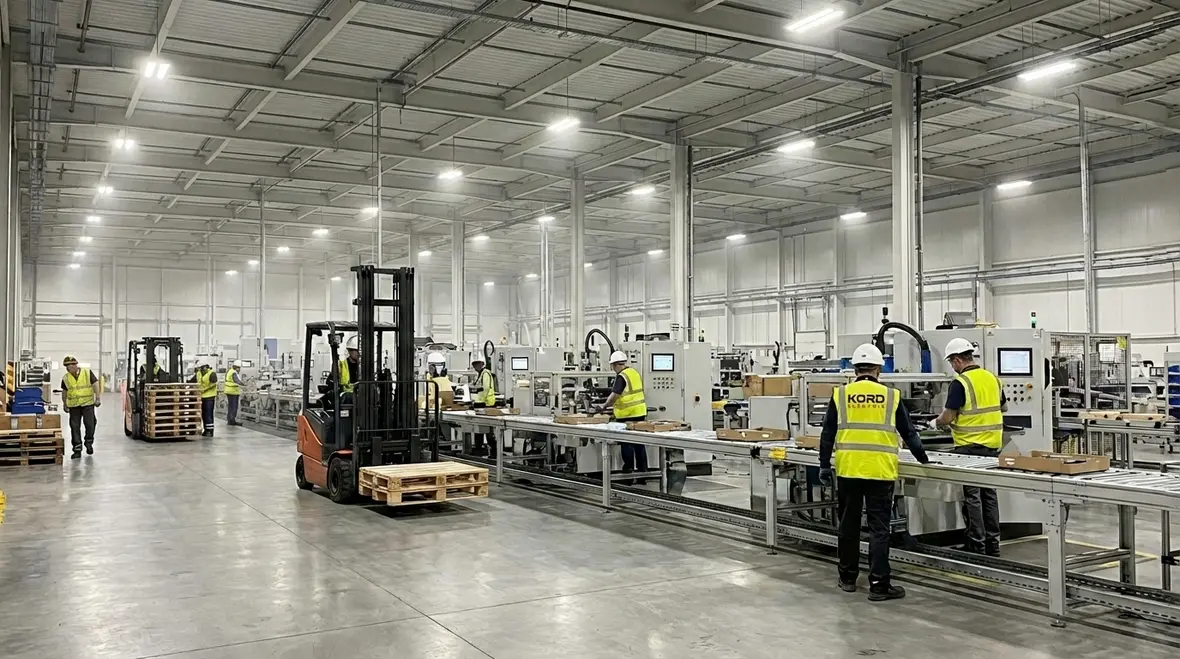
Industrial properties run on precision. Conveyor belts move in rhythm. Machines hum with purpose. Forklifts glide like cautious dancers. Yet when the illumination is outdated, flickering, or poorly placed, that rhythm breaks. Performance drops. Safety risks rise. Compliance officers take notes.
Therefore, upgrading a facility’s lighting system is not cosmetic. It is operational strategy.
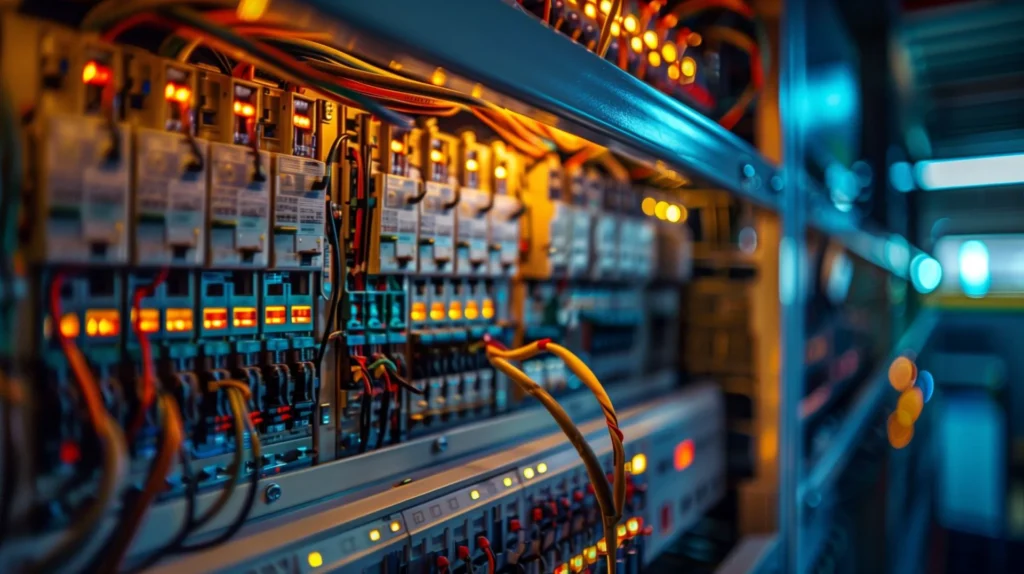
Our technicians at Kord Electric begin with a full site assessment. They measure foot candles across work zones, examine fixture placement, and evaluate electrical load capacity. Moreover, they review industry regulations tied to your sector, whether manufacturing, logistics, food processing, or heavy industry.
We explain it in simple terms. If workers cannot see clearly, they cannot work efficiently. If inspectors cannot verify code compliance, your building becomes a liability. And if your utility bills look like a blockbuster movie budget, something is wrong.
Upgrades improve three core areas:
Performance
Improved brightness uniformity reduces eye strain and boosts productivity. Workers make fewer errors. Inspection accuracy increases. Equipment downtime decreases.
Compliance
Modern systems align with OSHA guidelines, local building codes, and energy efficiency standards. Consequently, facilities reduce exposure to fines and operational disruptions.
Energy Efficiency
Advanced LED technology dramatically lowers consumption. In many cases, clients see energy reductions of 40 percent or more.
And yes, LEDs last longer. Much longer. The kind of longer that makes maintenance teams breathe easier.
For facility managers who want to go deeper into how unsafe lighting conditions hurt productivity and safety, our team has broken down the risks and warning signs in detail in our article on workplace lighting safety hazards that hurt productivity.
Why Performance Lighting Directly Impacts Industrial Productivity
Let us address a question we hear often. Does lighting really affect output that much?
The short answer is yes. The long answer is absolutely yes.
First, consistent illumination reduces shadowing across production lines. When shadows disappear, visual clarity improves. As a result, workers perform tasks with greater speed and accuracy.
Second, high quality industrial fixtures support color rendering. In facilities where wiring, labeling, or product inspection matters, proper color visibility prevents costly mistakes. After all, confusing blue and black wiring rarely ends in applause.
Additionally, optimized systems reduce glare. Glare strains eyes. Strained eyes slow work. Slower work impacts timelines. Therefore, strategic placement and lens selection matter just as much as wattage.
Our expert service staff often walk clients through live demonstrations. We show side by side comparisons between outdated high bay fixtures and modern LED high output systems. The difference is immediate. It feels less like a warehouse and more like a controlled environment built for precision.
Furthermore, intelligent controls such as motion sensors and daylight harvesting maintain brightness where needed while reducing waste elsewhere. In distribution centers with variable occupancy zones, this technology delivers measurable gains.
In short, when visibility improves, productivity follows. And productivity, as every facility manager knows, is not a minor detail.
Compliance Standards Every Industrial Building Must Consider
Compliance is rarely exciting. It does not arrive with fanfare. Instead, it arrives with checklists. However, ignoring it is expensive.
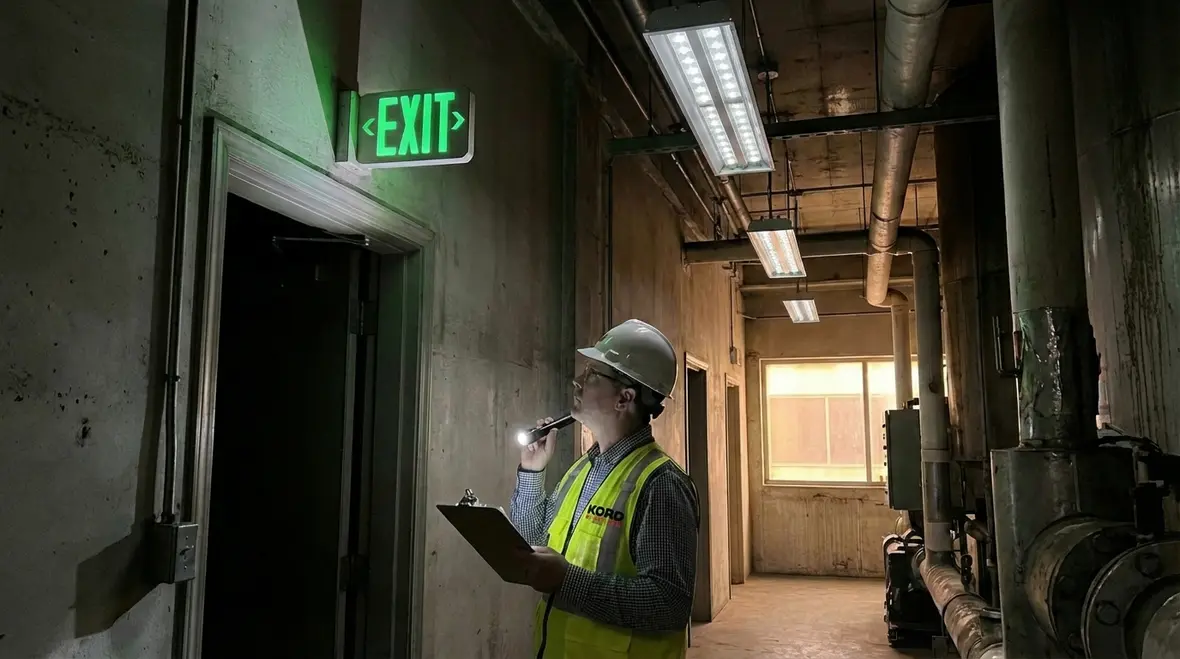
Industrial properties must meet several regulatory benchmarks. These include OSHA requirements for minimum illumination levels in workspaces, emergency egress lighting standards, and local building energy codes.
Because regulations evolve, relying on outdated systems creates risk. Therefore, we integrate compliance review into every upgrade plan.
Our technicians evaluate:
- Required foot candle levels by task area
- Emergency backup power integration
- Exit sign visibility and placement
- Energy code compliance for commercial properties
- Fixture ratings for hazardous or high temperature zones
Moreover, certain industrial environments require vapor tight or explosion resistant fixtures. Installing the wrong equipment in these zones is not merely inefficient. It is dangerous.
At Kord Electric, we do not guess. We verify. Our team explains the code requirements in plain language so facility managers understand both the rule and the reason behind it. After all, compliance should feel like confidence, not confusion.
If your facility operates in California, staying aligned with evolving energy and electrical rules is especially important. Our team regularly helps clients interpret updates covered in resources like our California commercial lighting code guide for 2026, then translate those requirements into real-world lighting upgrades.

How Kord Electric Designs an Upgrade Strategy for Large Facilities
Upgrading an industrial property is not about swapping bulbs. It is a structured engineering process.
First, we conduct a detailed audit. We map fixture counts, measure electrical distribution capacity, and analyze current energy usage. Then we model projected savings using advanced lighting design software.
Second, we create a phased implementation plan. Industrial operations cannot simply shut down because someone wants brighter ceilings. Therefore, we coordinate installations around production schedules to minimize disruption.
Third, we calculate return on investment. Many clients recover upgrade costs within a few years through energy savings and maintenance reductions. Additionally, rebate programs often support commercial and industrial retrofits.
Below is a simplified comparison our technicians often present:
Before Upgrade After Upgrade
High energy draw fixtures Energy efficient LED systems
Uneven illumination zones Balanced, uniform coverage
Frequent maintenance calls Long lifespan with fewer disruptions
Limited control options Smart sensors and automation integration
Compliance uncertainty Code aligned installation
As you can see, the difference is not subtle. It is structural.
Furthermore, our service staff document every stage of installation. This documentation supports inspections and future facility planning. Transparency builds trust. And trust keeps partnerships strong.
For facilities planning broader electrical reliability improvements alongside lighting, our team also develops coordinated strategies that incorporate services like electrical preventive maintenance to keep upgraded systems operating safely over the long term.
Energy Efficiency and Cost Control in Commercial Properties
Energy is not getting cheaper. However, smarter systems make it manageable.
Industrial lighting often accounts for a significant portion of total electricity consumption. Therefore, even incremental improvements generate noticeable savings.
LED technology converts more energy into visible light and less into heat. Consequently, cooling loads decrease in temperature controlled environments. In facilities running heavy machinery, every bit of reduced heat matters.
Additionally, advanced controls allow zoning. For example, storage aisles with limited traffic can operate at reduced brightness until motion activates full output. This approach preserves safety while eliminating waste.
Our technicians also assess power quality and panel capacity. In many older buildings, inefficient fixtures strain electrical systems. Upgrading reduces that burden, which improves overall system reliability.
And let us be honest. Watching utility bills shrink brings a quiet satisfaction. It is not fireworks. It is better. It is predictable savings month after month.
Future Ready Industrial Lighting Systems
Technology moves quickly. Therefore, an upgrade should prepare a facility for tomorrow, not just fix yesterday.
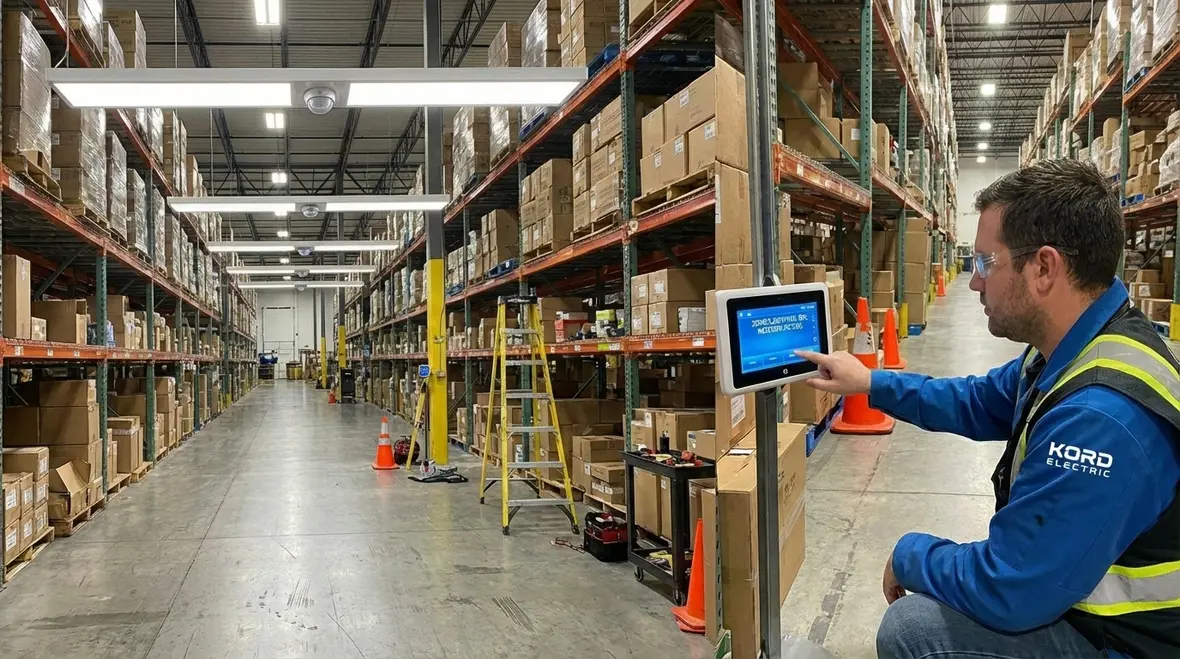
Smart lighting integration connects fixtures to centralized control platforms. Facility managers can monitor performance, track energy usage, and adjust settings remotely. In large industrial campuses, this visibility transforms maintenance from reactive to proactive.
Moreover, scalable systems allow expansion without major rewiring. As operations grow, illumination can grow alongside them.
Our expert team often explains this using a simple analogy. Installing outdated fixtures today is like buying a flip phone in the age of smartphones. It works. Technically. But it does not prepare you for what comes next.
Additionally, modern solutions enhance workplace morale. Brighter, clearer environments reduce fatigue. Employees notice. They may not throw a parade, but they will appreciate a space that feels designed for performance.
Ultimately, forward thinking systems protect capital investments and support long term operational stability.
Frequently Asked Questions About Industrial Lighting Upgrades
Conclusion: Upgrade Industrial Lighting for Performance, Compliance, and Growth
Industrial facilities deserve more than flickering fixtures and rising energy bills. They deserve systems engineered for performance, compliance, and growth. At Kord Electric, we design and install lighting solutions exclusively for commercial and industrial properties that demand excellence. If your building is ready to work smarter, brighter, and safer, we invite you to connect with our expert team today. Let us elevate your facility with confidence and clarity.
If you are ready to move from planning to action, our dedicated lighting installation services for commercial and industrial facilities provide a structured path from initial assessment to final commissioning—built around your schedule, your code requirements, and your long term performance goals.