Commercial Subpanel Capacity Upgrades Guide
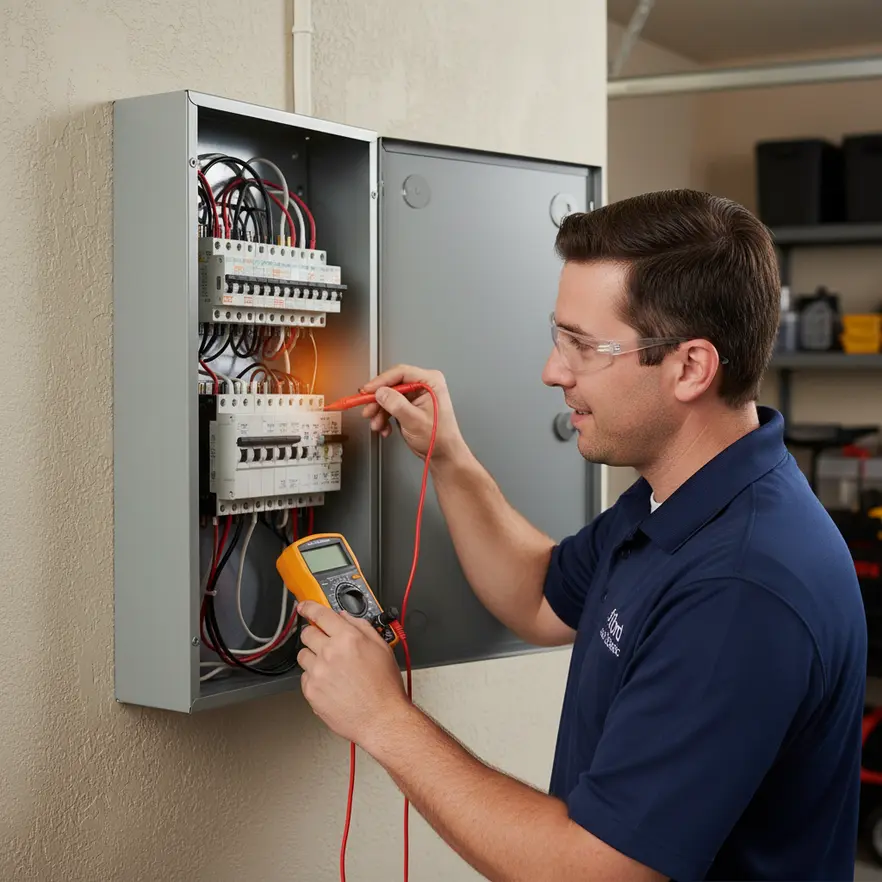
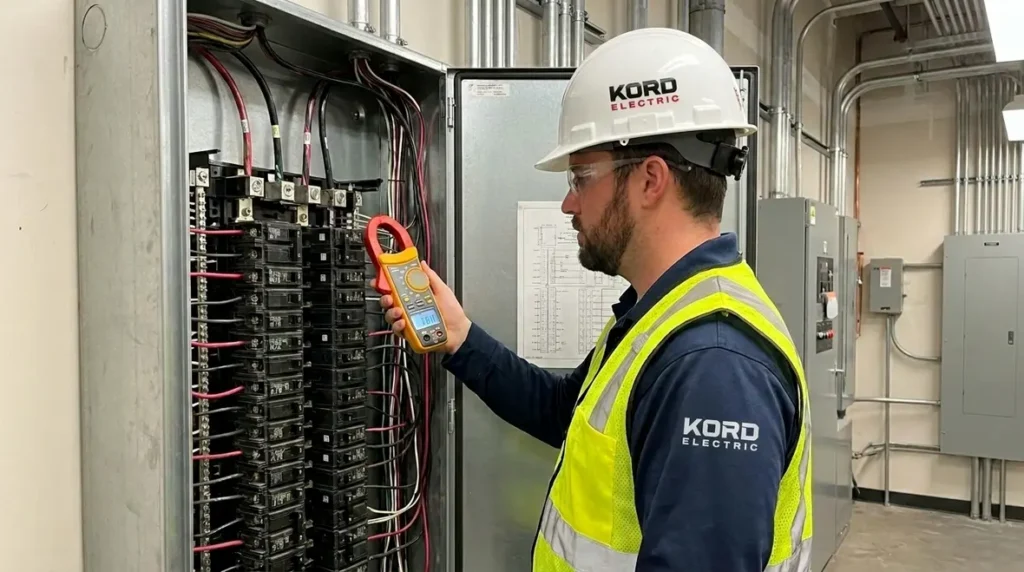
At Kord Electric, we help commercial buildings stay powered, safe, and ready for growth with commercial subpanel capacity upgrades. In plain terms, we make sure your electrical distribution keeps up when your loads change, your tenants evolve, or your building gets busier than a Friday rush at the airport. Then, when the time comes, we schedule the work so you avoid the “why is everything tripping now” drama that no one budgets for. Our approach is calm, careful, and detailed, and our technicians explain the “why” in normal language, not contractor code. If your facility is a major property building, office complex, retail space, warehouse, or industrial site, this guide will show you when to schedule the upgrade and what to watch for before trouble arrives.
Electrical planning that prevents downtime in commercial spaces
Commercial and industrial facilities depend on steady power to protect equipment, maintain comfort, and keep operations running. However, power demand rarely stays still. Instead, it creeps up through new processes, upgraded HVAC, additional lighting, expanded data networks, and the kind of tenant improvements that feel harmless until the breakers start acting like they have opinions.
We typically see the first warning signs before a building fully fails. For example, a subpanel that once handled normal office loads may begin to run hot, trip during peak hours, or show higher than usual thermal stress. These are not “wait and see” issues. They are signals that the panel size, bus capacity, or feeder arrangement no longer matches reality.
That is why we plan commercial subpanel capacity upgrades based on load behavior, not guesses. Our expert service staff reviews your facility’s electrical usage patterns, checks subpanel ratings, and looks at how power moves through upstream gear. Then we develop a schedule that reduces disruption, so your business does not need to pause just because a panel reached the end of its comfort zone.
Signs your facility needs more subpanel capacity
If you want a simple way to know whether a capacity upgrade makes sense, start with the signs your equipment already shows. We look for both electrical and operational clues, because one without the other can be misleading.
- Frequent nuisance trips in the subpanel or connected circuits, especially during predictable demand spikes
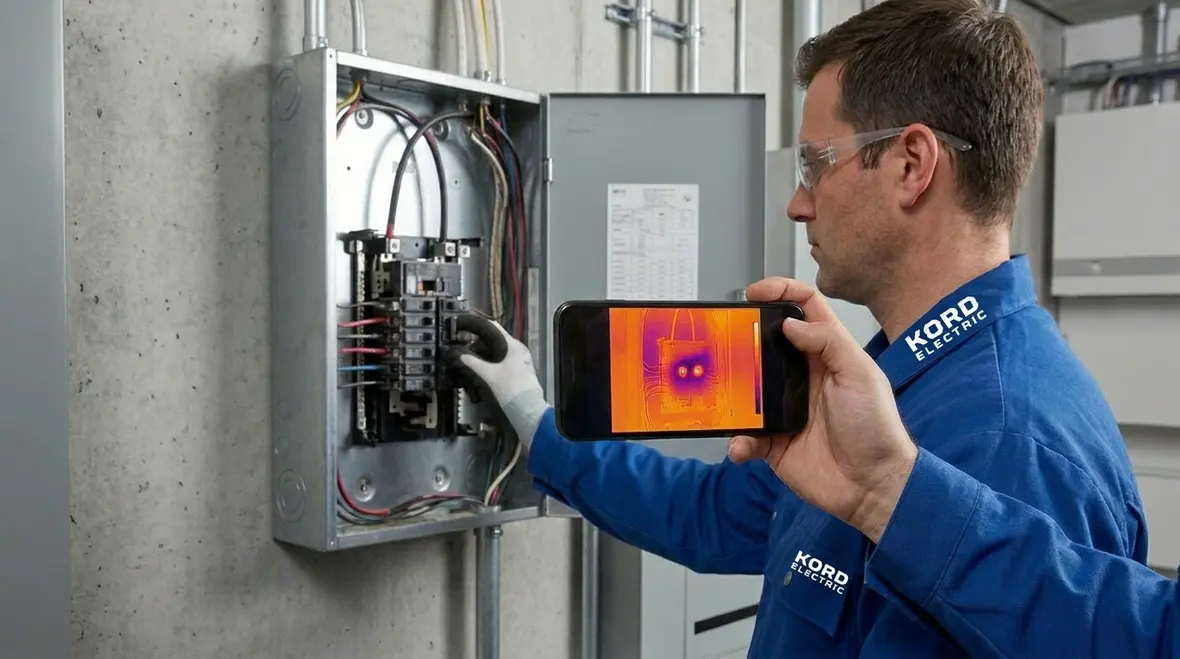
- Hot spots at terminations, elevated temperatures, or panels that feel warmer than they used to
- Voltage drop issues that show up as underperforming motors, dim lighting, or data equipment instability
- Rising load readings from metering or EMS systems, indicating you are using more power than design assumptions
- Expansion projects in progress, like new tenant buildouts, added refrigeration, upgraded production lines, or more EV charging
- Inability to add new circuits because spare breakers are limited or bus capacity is effectively maxed
We tell property owners and facilities teams to treat these as measurable facts, not vibes. And yes, the breakers may feel like tiny drama queens, but they usually do not trip without a reason.
Commercial renovation and tenant changes that trigger upgrades
In major property buildings, the trigger often comes from people changing the building. A tenant moves in, adds equipment, expands their space, or upgrades systems. Retail tenants add point of sale gear, refrigeration, and signage. Warehouses add dock equipment, conveyors, or more charging stations. Offices expand their IT closets and cooling loads. Each change can shift demand and re-balance loads across your electrical distribution.
Scheduling decisions matter most when improvements happen in phases. If you plan upgrades too late, you force the next project to fight the electrical system already at capacity. If you plan too early, you risk spending before the true load profile appears. Our technicians help you land in the right zone by reviewing project timelines and expected equipment loads, then comparing them to what your current subpanel and feeders can safely carry.
We also coordinate with general contractors and building managers. Therefore, we align work windows with tenant requirements, so business stays open where it can, and power gets restored quickly when it must be interrupted. In many cases, we sequence upgrades with other trade schedules, which keeps your entire jobsite calmer than a pop quiz on a Monday morning.
How we assess capacity before any panel work begins
Kord Electric does not start by swapping parts. We start by understanding your building’s electrical story. That includes looking at equipment nameplate ratings, circuit history, breaker schedules, conductor sizes, and the actual distribution layout.
Our expert service staff typically performs an assessment that includes the following steps.
- Load analysis using existing metering data, historical usage, and planned additions
- Panel and bus review to confirm whether the subpanel has room for the bus loading, not just empty breaker spaces
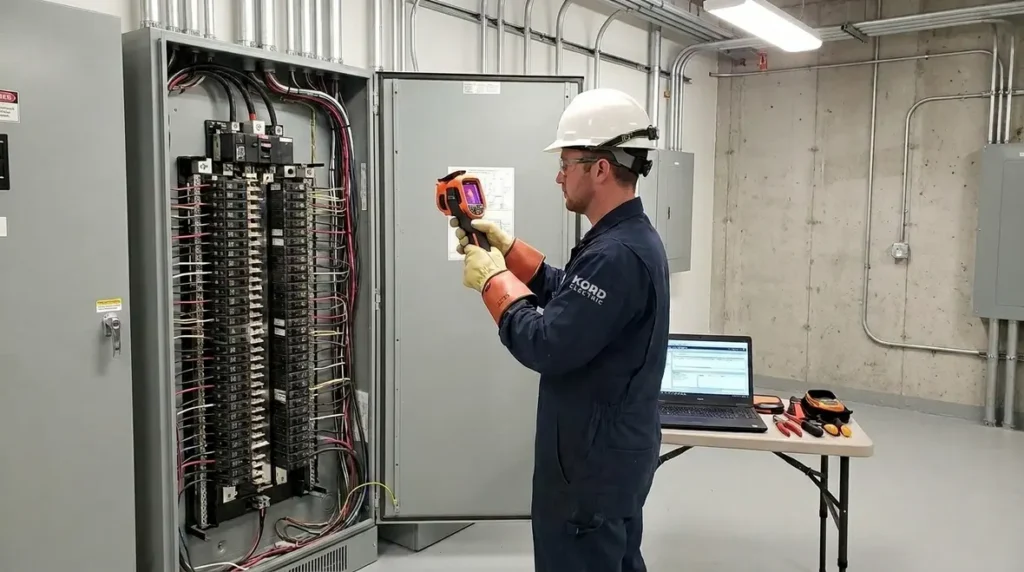
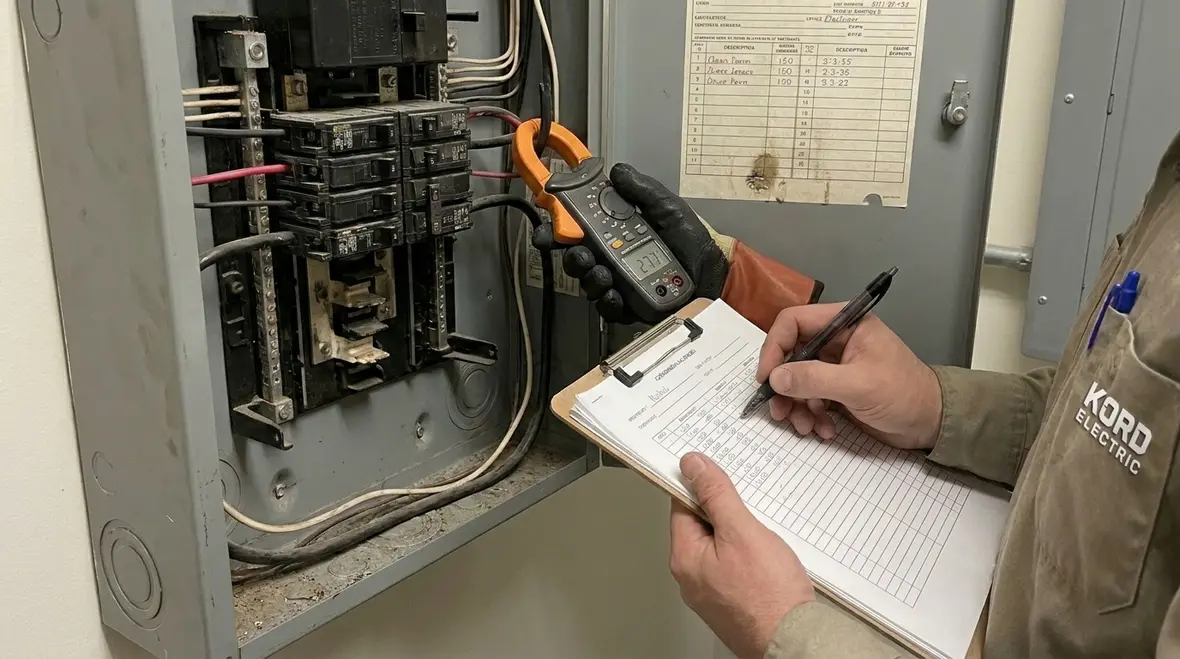
- Thermal and condition checks to spot abnormal aging, loose terminations, or recurring stress points
- Upstream coordination so the rest of the system can support the change without creating new weak links
- Code and safety verification to match current electrical requirements for commercial and industrial installations
Then we build a recommendation around what keeps your site safe and operational. Because even a perfectly sized panel can fail if coordination and installation details do not match the full system. We explain this clearly, and we show facilities teams how the recommendation impacts real circuits, not just theoretical calculations.
Once we know the right scope, we schedule the work so it fits your operations. If your building runs critical processes, we plan around the lowest impact windows and confirm the changeover steps before we touch anything.
When to schedule the upgrade for maximum safety
Timing the work matters, and we schedule commercial subpanel capacity upgrades based on risk, workload, and project deadlines. In other words, we do not wait for a failure that will force emergency decisions. We prefer planned upgrades because they reduce stress for your team and your tenants.
Here are common moments when we recommend scheduling.
- Before a major tenant move-in or remodel, especially when new HVAC, refrigeration, data, or production equipment arrives
- During planned downtime such as annual maintenance windows, scheduled facility shutdowns, or construction phases
- After you see repeating trip patterns, which usually means the system has been operating outside its comfortable range for some time
- When building metering shows sustained increases, even if the equipment still “works,” because the next spike may be the one that tips the balance
- When spare capacity becomes hard to justify, such as limited breaker positions or aging components that cannot handle future growth
- When you plan future expansion, because capacity upgrades are far easier during a scheduled window than during the scramble of a last minute lease requirement
In many facilities, scheduling happens in phases. We might first correct immediate issues like overloaded circuits or coordination gaps, then complete a full capacity improvement when the new load becomes real. That way, your building gains stability now, and your next expansion does not become an electrical cliffhanger. Yes, we can still do this without making your site feel like a sci-fi movie where the lights flicker at the worst possible moment.
What clients can expect during capacity upgrade work
Clients often wonder what the process looks like on site. We keep it straightforward, and our technicians communicate clearly before, during, and after the work. Facilities teams usually care most about safety, time on interruption, and how we protect critical loads.
Typically, we coordinate
- Protection plans for circuits and equipment that must remain energized as much as possible
- Clear labels and documentation so your electrical distribution stays understandable for your staff and future contractors
- Code-aligned installation practices including torque verification, correct terminations, and secure routing
- Testing and verification to confirm safe operation after the upgrade
After we complete the commercial subpanel capacity upgrades, we also walk your team through what changed and what to watch next. Our goal is not only to fix the panel, but to help you make smarter decisions later. That means we explain load planning and circuit allocation so future additions feel less like guessing and more like a plan.
If your facility is dealing with recurring voltage issues on top of capacity constraints, our team can also align panel work with corrective measures similar to the ones outlined in our voltage fluctuations guide for commercial and industrial facilities, so you solve the root causes instead of just the symptoms.
FAQ for commercial and industrial capacity upgrades
Final word: schedule the upgrade before the next problem shows up
Kord Electric helps commercial and industrial facilities protect uptime by planning capacity improvements with clear assessment and careful scheduling. If your building shows trips, heat, load growth, or expansion pressure, it is time to talk with us. Our technicians explain what they find and what they recommend, and our expert service staff coordinates the work to keep disruption low. Contact Kord Electric now to schedule an assessment and get a capacity plan your team can trust, before your electrical system decides to “help” without permission.
For facilities across the region, especially those layering subpanel upgrades with larger reliability goals, pairing this work with broader Los Angeles County electrical services for commercial and industrial properties can create a roadmap that covers power quality, maintenance, and future projects under one plan instead of scattered fixes.
If you are already exploring panel upgrades, power quality improvements, or distribution changes, consider how capacity work can be sequenced alongside other targeted services such as troubleshooting and maintenance programs designed specifically for complex facilities. Treating commercial subpanel capacity upgrades as part of an integrated strategy gives your building room to grow without gambling on every added load.