
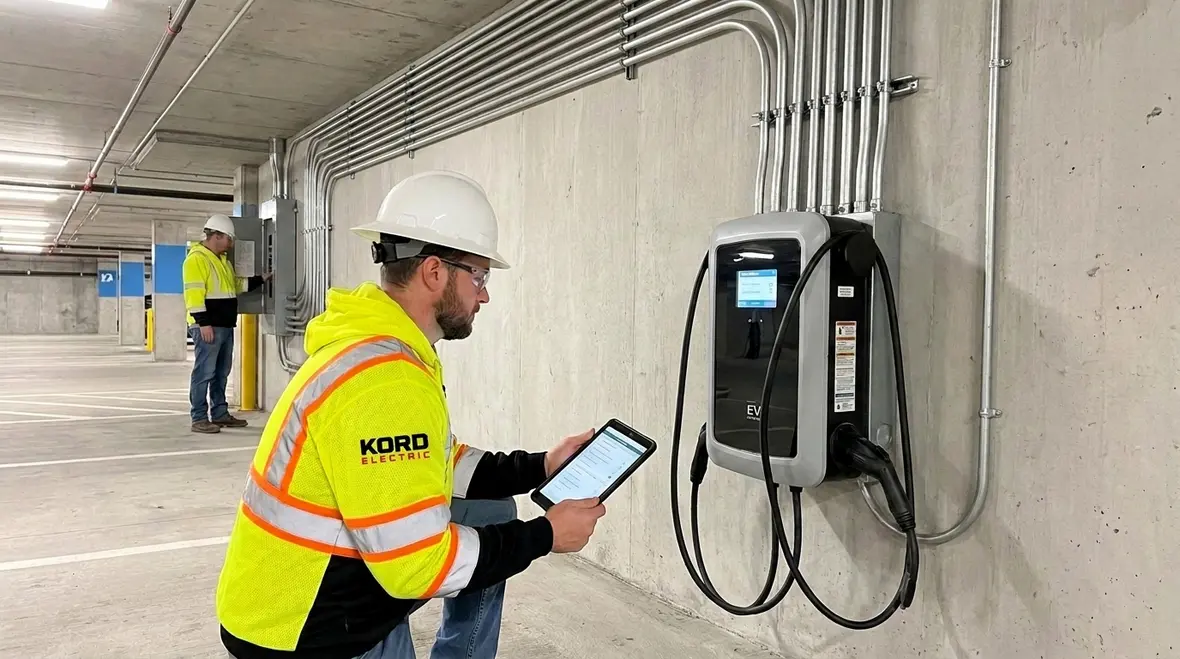
Compliant EV Charger Setup for NEC Electrical Requirements
Compliant EV charger setup that keeps your site inspection ready
At Kord Electric, we approach a Compliant EV Charger Setup: Commercial Electrical Requirements & Best Practices like we approach every job, with clear planning, clean documentation, and electricians who take safety seriously. In the first hours on site, we confirm what you have today, what you need tomorrow, and how your charging network will stay compliant through every phase. Then we build it the right way the first time, because nothing says “fun workplace” like a utility delay or an inspector’s red tag.
Others may rush to install equipment, but we slow down at the right moments. After all, charging infrastructure is not a hobby. It is a utility-grade system that serves people, loads, and revenue. And yes, our technicians explain each step in plain language, so you are not left guessing like it is a movie you half watched.
What “compliant” really means for commercial electrical plans
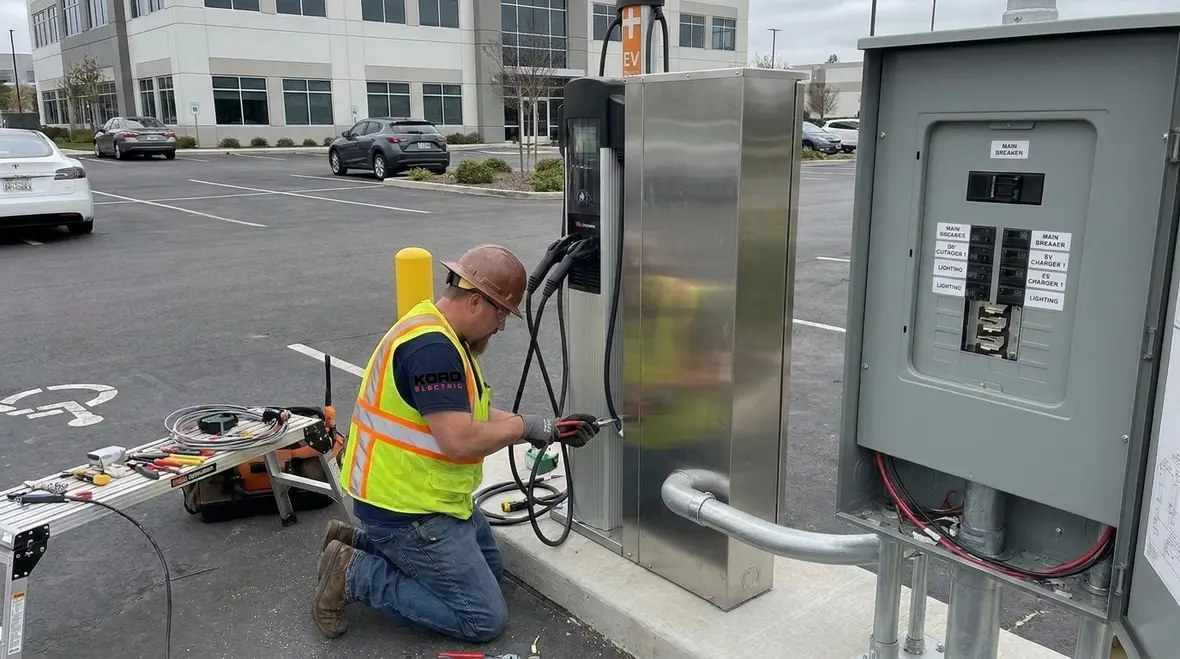
When we talk compliance, we do not mean a vague promise. We mean measurable requirements that connect the charger, the panel, the conduit system, the grounding, and the labeling. In commercial and industrial facilities, that usually includes NEC based planning, utility coordination, and proper circuit design that matches the charger manufacturer’s installation guidance.
First, we map your site conditions. For example, we look at existing feeder capacity, panel space, available circuit routes, and how multiple chargers share load. Next, we verify that the equipment you chose fits the environment, because wet locations, outdoor service, and parking lot installations do not forgive shortcuts. Then we document the system so the next person who touches the project can understand it without starting from scratch.
Our expert service staff also explains the “why” behind the rules. Instead of sounding like a textbook, they speak like people who have seen the same mistakes enough times to recognize them in the dark. If an inspector asks for proof, we hand them real records, not guesswork.
NEC focused requirements that impact charger installation
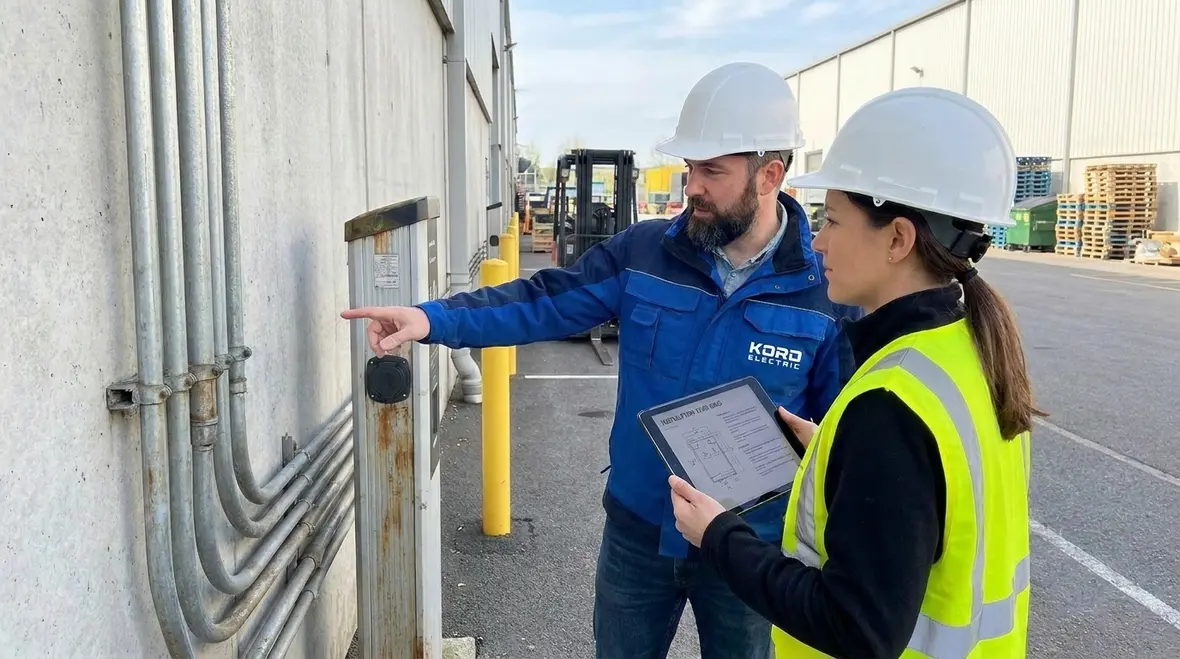
Commercial EV charging touches multiple NEC areas. We plan around them so your charger does not become a line item in someone else’s emergency schedule. In our work, we pay close attention to how the charger is supplied, how conductors run, how disconnects and overcurrent protection are selected, and how equipment is bonded and grounded.
In practical terms, we make sure the electrical design includes the right protection and switching where it matters. We also ensure routing follows code expectations, including use of proper conduit and fittings when needed, along with correct derating choices where conditions require them. Additionally, we focus on labeling and identification so technicians can service the equipment safely.
If you have ever watched a pop culture mystery unfold, you know the trick: the missing clue always shows up later. Electrical systems work the same way. When requirements are ignored, the “missing clue” appears at inspection, interconnection, or during troubleshooting. We avoid that by validating details early, and we keep the process calm even when deadlines get loud.
Load management and site power: the part people underestimate
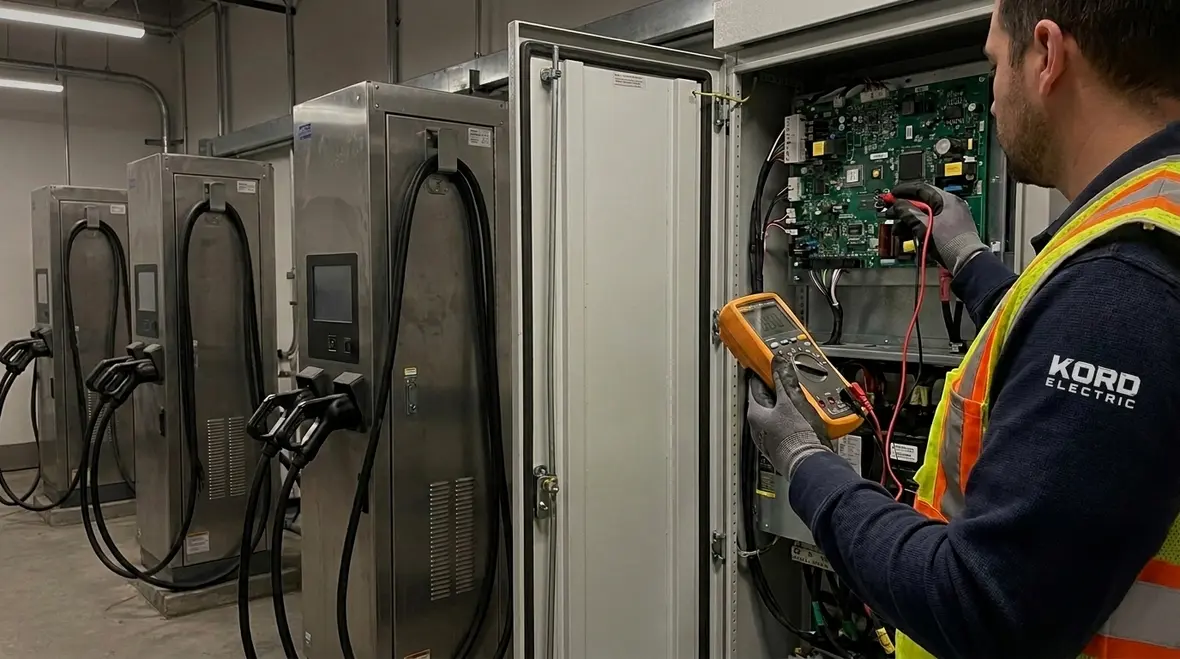
Even when the wiring looks correct, the site can still fail on performance and safety if the electrical load is not managed. That is why our Compliant EV Charger Setup: Commercial Electrical Requirements & Best Practices process includes a real look at your power profile. We review what loads already operate, how peak demand behaves, and how the EV chargers will scale over time.
To keep things stable, we often plan for load sharing or demand management when the facility supports it. We also confirm whether the panel upgrades or transformer capacity changes are required for your charging plan. This is not about predicting the future perfectly. It is about building a system that does not overload equipment and does not cause nuisance shutdowns.
Then, we coordinate with the rest of your electrical distribution. For example, we confirm the charger circuits do not conflict with other critical loads, and we check that voltage levels remain within the acceptable range. With commercial and industrial buildings, small oversights can become big operational headaches. We handle the details so your staff does not spend their day “resetting things” like it is a broken vending machine.
Site layout, conduits, and labeling that inspectors love

We design the physical install to match the electrical plan. That means chargers sit where they can be maintained, where vehicles can access them safely, and where the conduit and cable paths avoid damage risks. We also plan for how the equipment will withstand outdoor exposure, including moisture, temperature swings, and physical impact from traffic and maintenance work.
Next, we ensure proper enclosure choices and conduit methods for the installation environment. We confirm the route is practical and follows expectations for protection of wiring. Then we complete installation documentation and labeling so the system is traceable. In commercial facilities, traceability matters because different teams handle different tasks. Security, facilities, electrical contractors, and maintenance staff all need the same map.
Our technicians explain these details as they work. They walk through access panels, describe what each disconnect does, and show which label identifies the correct circuit. That way, your team understands the system they will rely on daily, not just the one they paid for and hoped would behave.
Commissioning, testing, and the handoff that prevents future surprises
After installation, we do not just “flip the switch and hope.” We commission the charger network to confirm safe operation. Our team checks connections, verifies grounding and bonding, confirms correct operation sequences, and ensures settings match the project plan. We also validate the charger behavior under typical site conditions and confirm that safety features work the way they should.
Then we provide a clear handoff. We include documentation that ties the installed equipment to the design intent, including circuit details, panel information, and any equipment configuration steps. Most importantly, we help the facility team understand how to operate the system day to day, and what to do if a fault occurs.
This is where our expert service staff earns their keep. They explain the steps for basic troubleshooting and show what information to collect for a service call. In other words, we help your team speak the same language as the charger, instead of guessing like they are decoding a treasure map.
Dual column: planning checklist and next step actions
Planning checklist we confirm early
- Existing panel capacity, feeder size, and available circuit space
- Site load profile and demand peak behavior
- Charger count, locations, and future growth plan
- Outdoor conditions and enclosure needs
- Circuit protection, disconnect placement, and labeling plan
If you want a deeper dive into long term planning around electrical capacity and upgrades, you can also explore how Kord Electric approaches commercial EV charging stations for real demand and broader infrastructure strategy.
Actions we take during the job
- Electrical design validation and NEC alignment checks
- Conduit routing and equipment mounting review
- Install verification for grounding, bonding, and continuity
- Commissioning and functional testing of charger operation
- Document delivery and technician training handoff
For facilities that need a broader roadmap, our team can align EV work with your overall Los Angeles County electrical services plan so chargers, panels, and future projects share the same strategy instead of competing for capacity.
FAQ for commercial EV charger compliance
Compliant EV charger setup: final thoughts and call to Kord Electric
When you plan a charging system for your facility, you need more than a hardware install. You need a Compliant EV Charger Setup: Commercial Electrical Requirements & Best Practices approach that respects code, power, and real day to day operations. At Kord Electric, our technicians and expert service staff guide the project from design checks through commissioning and documentation handoff. If you want charging that behaves reliably and passes inspection with less drama, contact us today to schedule a site evaluation.
As you move from concept sketches to construction, our team can also connect your EV charging plans with commercial EV charging infrastructure planning resources so your compliance strategy, capacity planning, and field installation all point in the same direction.
If your facility is ready to coordinate EV charging with broader electrical reliability, explore our dedicated Los Angeles County electrical services as a way to align chargers, panels, lighting, and preventive maintenance under one consistent plan.


