
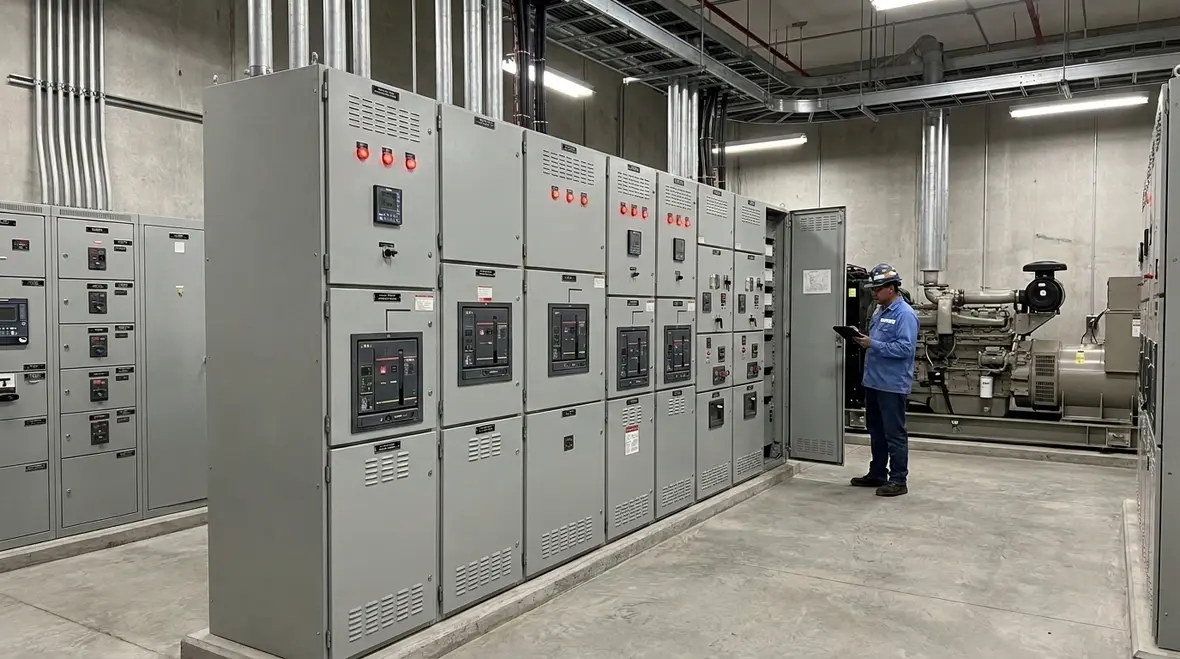
Emergency Power Distribution Solutions for Commercial Facilities
Emergency Power Distribution Solutions for Commercial & Critical Facilities: what we build and why it matters
Kord Electric provides Emergency Power Distribution Solutions for Commercial & Critical Facilities that help keep lights on, equipment running, and operations steady when the utility grid stumbles. In the first moments of an outage, seconds matter, and power should not behave like a mystery novel with a cliffhanger ending. We design and install distribution systems that move emergency power to the exact loads that commercial and industrial facilities rely on, from life safety circuits to critical process equipment.
Our technicians and expert service staff explain the plan in plain language, so facility managers know what gets backed up, when it switches, and how the system behaves under real conditions. And yes, we make sure the technical details do not turn into a sitcom where everyone forgets the punchline.
How emergency power distribution works in commercial buildings
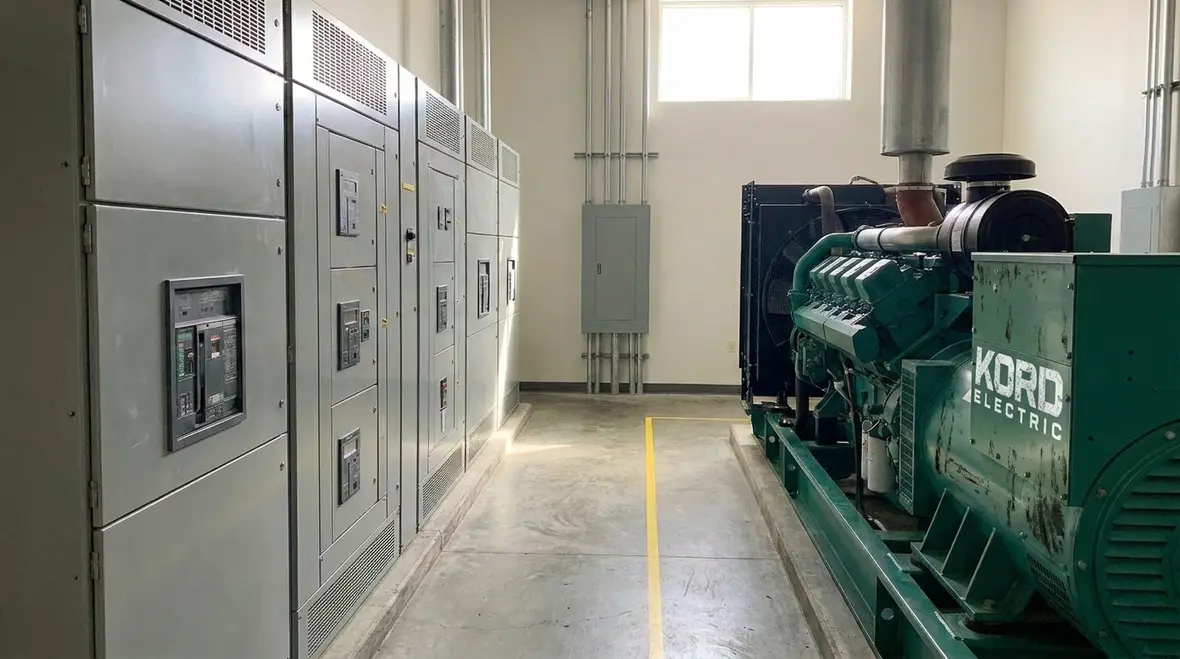
When power fails, distribution does not just “turn on.” It routes. First, the system detects loss of normal power and then shifts to the emergency source, which may include generators, switchgear, or other approved backup methods. Next, it directs electricity through selective pathways so only the intended circuits receive emergency supply.
At Kord Electric, we focus on the full chain: source, transfer, protection, and load management. Therefore, we engineer the architecture so voltage and current stay within safe ranges and sensitive equipment does not get slammed with unstable conditions. In many commercial environments, the difference between a smooth transition and a chaotic restart is how the distribution is designed, labeled, and commissioned.
Meanwhile, the system also needs protective devices that respond quickly. As a result, short circuits do not spread and damage does not cascade. Our expert service staff often tells clients, “A backup system is only as good as the protection inside it.” That is not a slogan. It is a lesson learned the hard way by other teams.
If you are mapping out the bigger picture of how backup systems behave under real load, you can also explore how transfer performance and testing interact with your emergency distribution in our related guide on emergency power system testing for commercial buildings. It shows how disciplined testing supports everything you are trying to achieve with clean routing and well planned power paths.
Choosing loads: life safety, critical operations, and smarter priorities
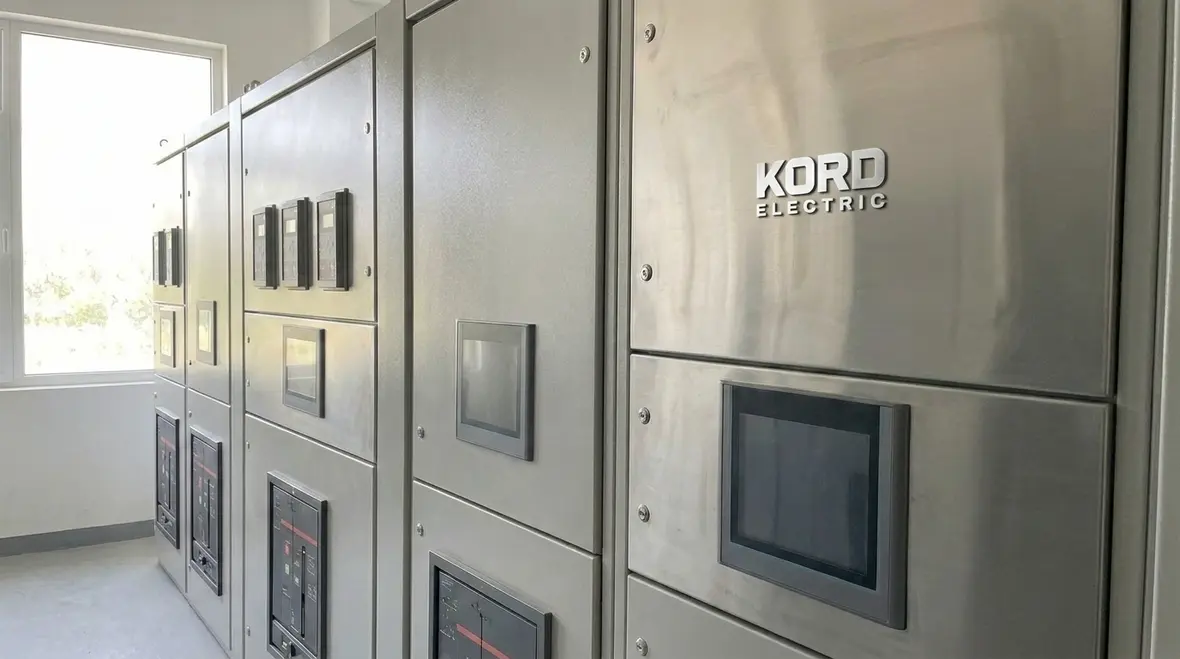
Not every circuit gets emergency power, and that is a good thing. If we back up everything in a major property, the generator capacity gets stretched, the transfer times can increase, and the system becomes harder to maintain. Instead, we help others define loads with intention and document them with clarity.
Typically, we separate loads into categories such as life safety, egress lighting, fire alarm interface needs, and critical power for operations. In industrial and commercial facilities, we also account for processes that must continue, like pumps, refrigeration, certain control systems, and production support equipment.
Because reality varies by building use, we map loads based on function, duty cycles, starting current, and run time expectations. Then we design distribution so motors and inrush loads do not cause unnecessary trips. Transition planning matters here as much as the wiring, so we coordinate with owners and operations teams before final design.
And if someone tries to request “emergency power for everything,” we politely explain the laws of physics and the laws of budgets. Both of them are stubborn.
Switchgear, transfer methods, and reliability you can measure
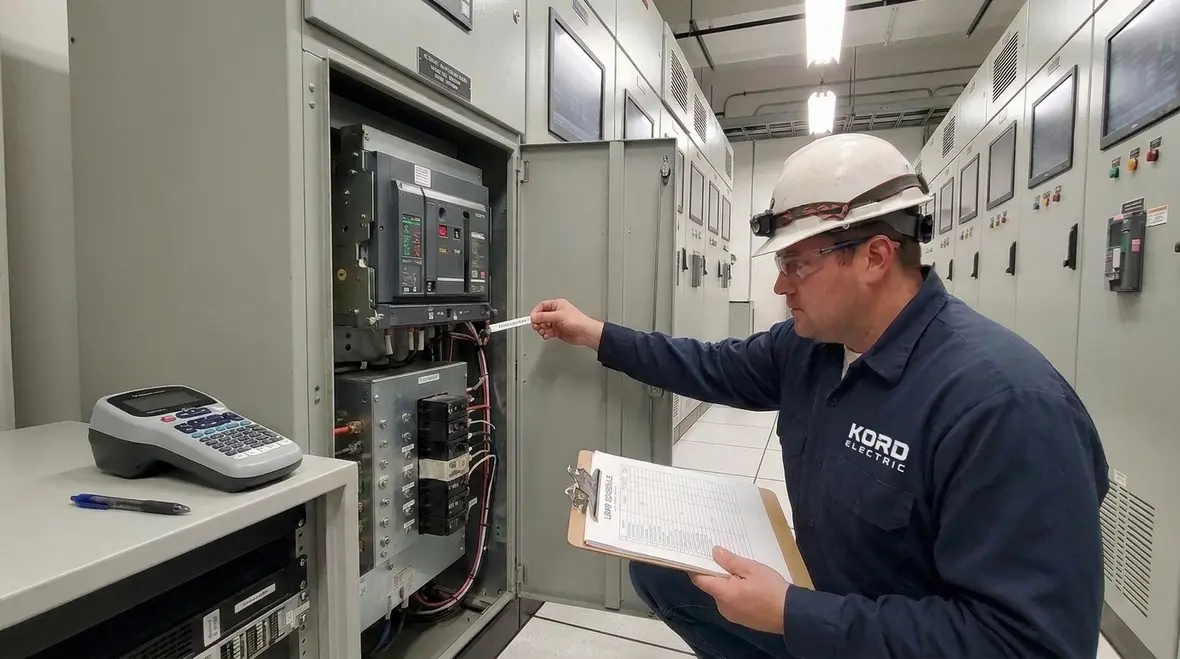
Commercial and industrial buildings require distribution gear that can switch under stress while keeping repeatability. That means switchgear, transfer devices, protective relays, and monitoring controls must work together, not as separate parts that hope for the best.
Kord Electric designs around reliability first. We evaluate transfer approaches based on the facility’s operational needs, the characteristics of the emergency source, and the criticality of downstream equipment. For example, some applications need fast transfer to prevent nuisance shutdowns, while others tolerate slightly longer transitions as long as protection remains consistent.
We also pay attention to how distribution sections are staged. In other words, we do not just “feed a bus.” We break power paths into logical segments, so maintenance does not knock out critical operations. Therefore, we plan for operational continuity even during testing, troubleshooting, or component replacement.
Finally, we commission the system so it performs the same way during real events as it does on paper. Our technicians verify connections, confirm load behavior, and document settings. When someone asks why we spend extra time on commissioning, we say, “Because outages do not care about installation speed.”
Designing for code compliance, coordination, and safe maintenance
In the commercial and industrial world, code compliance is not a box to check. It protects people and equipment, and it supports consistent performance year after year. We help our clients follow the requirements that govern emergency power distribution, including safe installation practices and proper labeling so crews can operate the system under pressure.
Coordination is where many projects quietly fail. If protective devices do not coordinate, you can get selective outages where the wrong breaker trips, leaving important loads dark. So we coordinate relays and protective settings to achieve the right response times. As a result, faults get cleared locally instead of spreading.
Maintenance planning also belongs in the design phase. We build access considerations into the layout and specify procedures that service teams can follow without turning the electrical room into a puzzle box. Our expert service staff also trains your personnel on safe operational steps and what to check during routine inspection.
Because when maintenance is clear and documented, you avoid last minute surprises. And honestly, nobody wants to discover a wiring label problem during a live outage. That is like finding your keys after the car is already driving away.
Commissioning, testing, and documentation that facility teams trust
After installation, the work does not end. In fact, commissioning is where we prove the system’s behavior under controlled conditions. We test emergency transfer functions, verify protection response, confirm load operation, and ensure monitoring points communicate correctly to the right dashboards or panels.
We also develop documentation that works for real teams, not just for binders that gather dust. That includes labeling, as built schematics, load schedules, test reports, and operating guidance. Therefore, when your staff needs answers quickly, they do not have to hunt through ten folders like they are searching for a lost remote control.
Our technicians take the time to explain what we found, what we adjusted, and what to watch during future service cycles. Additionally, we coordinate with your operational leadership so testing times do not disrupt production or tenant schedules. In commercial and critical facilities, that coordination reduces headaches and keeps stakeholders calm.
We also recommend a practical testing rhythm based on the facility’s risk profile. Over time, generators, controls, and distribution components can drift from expected performance due to wear, environment, and usage patterns. Regular testing keeps the system predictable.
Common failure points and how our approach reduces risk
Many emergency power problems do not come from one big disaster. They come from small gaps that add up. For example, unclear load lists can lead to mismatched expectations, so operators assume certain panels will stay powered when they are not in the emergency assignment. Another common issue involves protection settings that fail to coordinate, so the system clears faults in the wrong place.
We also see cases where the distribution plan ignores starting characteristics of motors and pumps. Then the emergency source reaches a high demand moment, and protection trips or voltage dips. Because commercial and industrial facilities often include rotating equipment, we treat motor start behavior as a first class design input.
Additionally, aging components and poor documentation can cause delays during response. When a facility team cannot quickly confirm what breaker controls a critical load, restoration slows. So we build clarity into the system through durable labeling, structured layouts, and service ready documentation.
Our expert service staff stays hands on. They explain not only what exists, but why it exists. That approach helps others troubleshoot effectively when time is short and pressure is high.
Why emergency power distribution planning pays off for major properties
Large commercial and industrial facilities run on uptime. When power interruptions occur, operations slow down, revenue drops, and restoration costs rise. Emergency power distribution planning is not an expense you “hope you never use.” It is a protective investment that keeps your building dependable.
We help others design for operational continuity by matching system capabilities to load needs. As a result, your backup power behaves like a controlled response, not a guess. We also plan for how crews will operate the system during emergencies and service windows.
For facilities that also depend on high availability electrical infrastructure, many of the same design principles appear in our guide on emergency power for business continuity design, where we connect distribution choices to real world uptime and business impact.
When clients choose Kord Electric, they get experienced technicians, careful design, and steady support. And yes, we keep the process professional and organized, even when the world feels like it is running at sitcom speed.
FAQ
Get a distribution plan built for uptime, not wishful thinking
If your commercial or industrial facility needs emergency power that performs when it matters, Kord Electric is ready to help. We design Emergency Power Distribution Solutions for Commercial & Critical Facilities with careful load planning, coordinated protection, and documentation your teams can trust. Contact us to review your requirements and discuss system design, commissioning, and ongoing service support. Let us turn an outage scenario into a controlled process. Because if the grid goes quiet, your operations should not.
As you explore options for your building, you can also review how broader standby architectures and load paths come together in our article on emergency power systems for commercial buildings, which connects system level design to real world building performance.
For facility leaders working across Southern California, our team also supports a wide range of capital upgrades, preventative maintenance, and emergency projects through our Los Angeles County electrical services, where emergency power distribution work ties into broader electrical reliability planning.


