Commercial EV Charging Infrastructure Planning
Commercial EV Charging Starts With Real EV charging infrastructure planning
At Kord Electric, we treat EV charging infrastructure planning like a serious business decision, not a last minute “we’ll figure it out later” situation. In the first weeks of a commercial project, we look at site power, building loads, parking flow, and future growth. Then, we map how fast vehicles will charge, where equipment should live, and how the whole system stays safe and reliable. Meanwhile, our technicians and expert service staff guide the process with clear explanations, so others on the team understand what we’re doing and why. Yes, it is possible to make this feel calm. And no, we will not pretend electrical risk goes away just because someone wrote “EV ready” on a brochure.
What we assess before anyone buys a charger

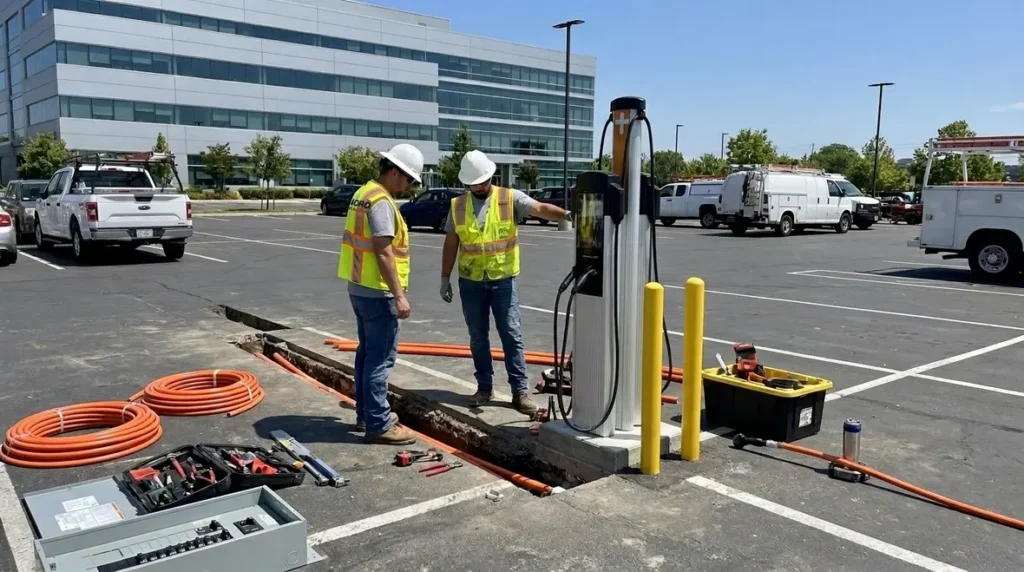
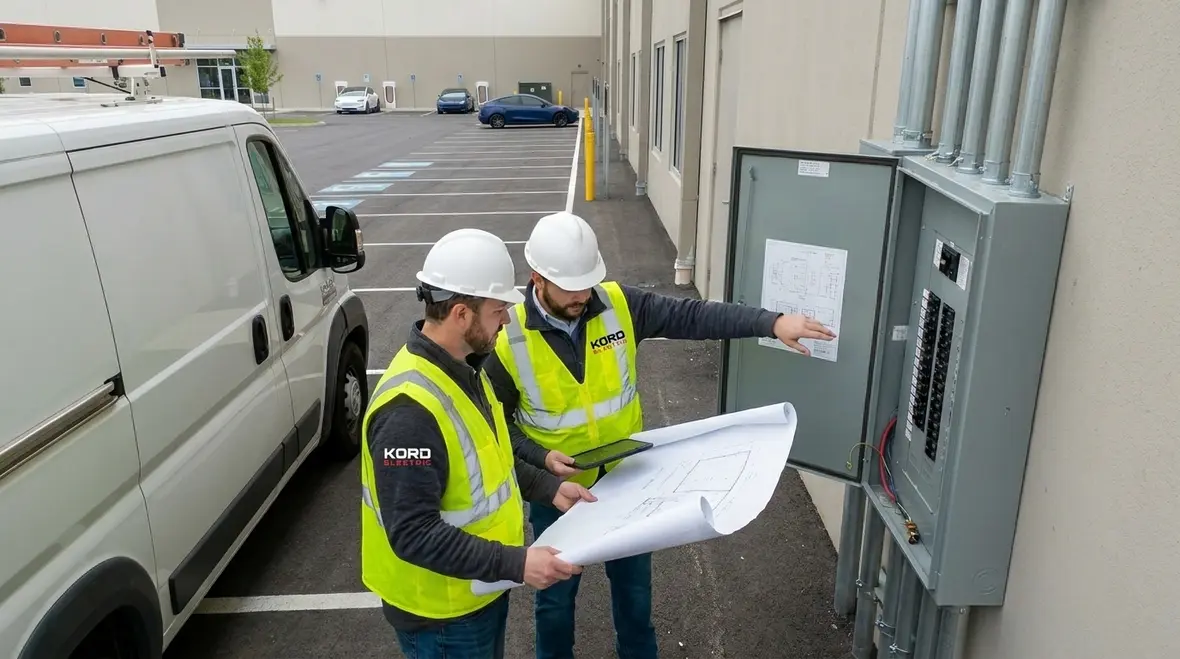
Even the best equipment can fail when the electrical plan is weak. Therefore, we start with a structured review of each commercial and industrial facility. First, we evaluate utility service capacity, demand patterns, transformer limits, and existing panel space. Then, we confirm how the building already behaves during peak use, because EV charging does not charge in a vacuum. At the same time, we look at cable routes, conduit capacity, and the physical realities of the site, like bollards, paving, and future construction plans.
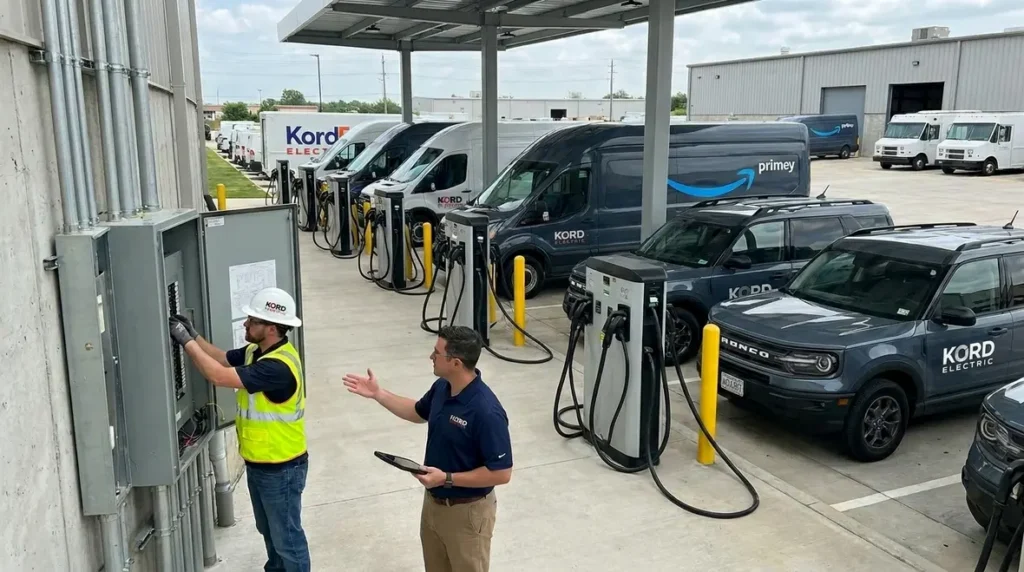
Next, we consider parking and usage patterns. For example, a fleet depot may need predictable charging windows, while a mixed use major property building may see shifting demand. We also ask how many chargers the client wants now, and how many they will likely add later. After that, we design the system so it grows without tearing up everything like it is a TV set being rebuilt between scenes.
Because EV charging ties directly into broader reliability, we also connect planning with the hidden conditions already living inside the building. For commercial leaders who want to explore those issues in more depth, Kord Electric’s article on hidden electrical risks in commercial buildings shows how seemingly small problems behind panels can disrupt ambitious charging projects later.
Hidden electrical risks in commercial buildings that disrupt EV projects
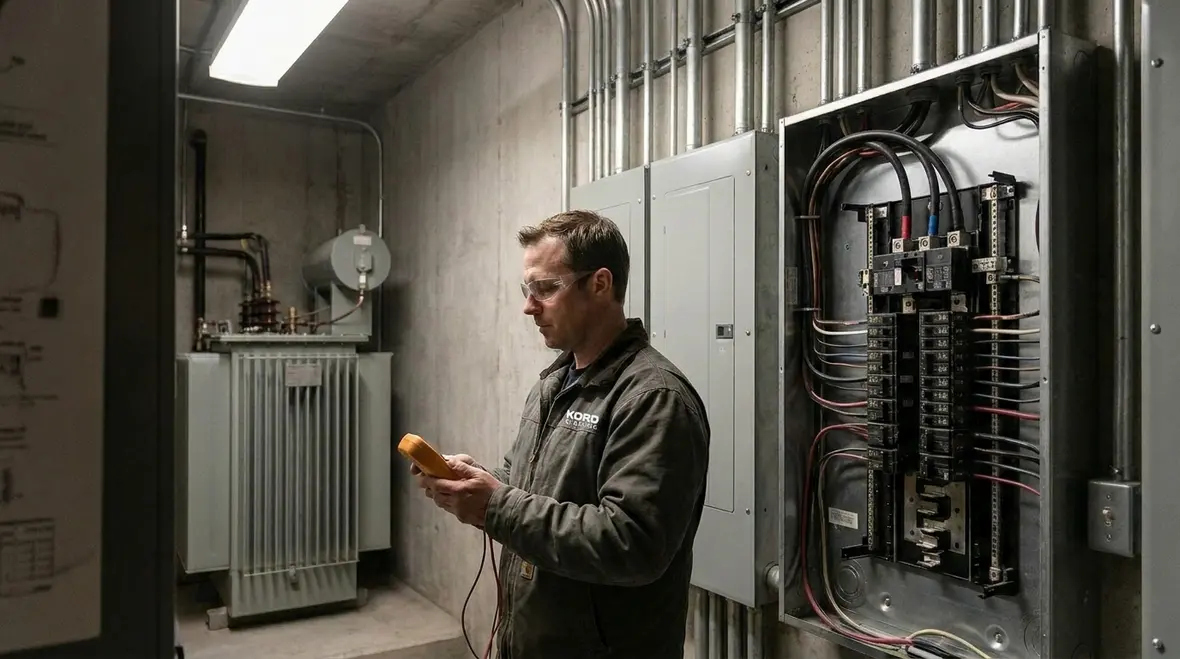
Commercial EV work often runs into surprises that cost time and money. We specifically follow the same safety mindset explained in our hidden electrical risks in commercial buildings article, because those issues show up in the real world when people add new loads. For instance, we check for loose terminations, overloaded circuits, aging switchgear, and problematic grounding. Moreover, we verify that the electrical room can handle added heat and meets required clearances.
In addition, we pay attention to existing wiring quality and insulation condition. If a building already has questionable load paths, a new EV system can expose weak spots quickly. Also, we review whether current labeling and panel schedules match reality, since unclear documentation leads to mistakes during future expansions. And when the team thinks “we will just add another breaker,” we remind them that electricity does not care about optimism. It only cares about limits.
Our technicians and expert service staff then explain each finding in plain language. They show what could fail, what symptoms might appear, and how we prevent it before installation begins. That way, others do not learn the hard way, the way one learns life lessons after stepping on a toy that absolutely refuses to move.
Load management, power quality, and smart scheduling

Once we understand the building and site, we focus on how charging will work under real conditions. Therefore, we build EV charging infrastructure planning around load management. We help others avoid the common trap of installing chargers without coordinating them with existing demand. Then, we select strategies that balance charging so the electrical system stays within safe limits.
We also monitor power quality, because voltage dips, harmonics, and unstable power can cause downtime. In commercial and industrial settings, those effects are not rare. However, smart scheduling, metering, and control logic can smooth demand and protect equipment. Additionally, we consider whether the facility has critical loads that must stay online. If it does, we plan the charger behavior around those priorities rather than treating all outlets as equal.
As we set up the system, our expert service staff ensures the plan matches how the facility actually operates. We do not just design for a perfect spreadsheet day. Instead, we account for shift changes, seasonal demand swings, and the odd times when everyone shows up early, because that is when problems usually like to appear.
Designing around real-world electrical behavior
Commercial facilities rarely behave like static diagrams. Production lines start and stop, elevators surge, data rooms spin up, and HVAC cycles load panels at exactly the wrong moments. Our approach to EV charging infrastructure planning aligns charging profiles with those realities, not against them. Where facilities already face voltage swings or sensitive equipment, we fold in strategies similar to those used in dedicated voltage fluctuation services for commercial and industrial facilities so chargers do not become just another stress point on the system.
Site design that supports real traffic and safe access
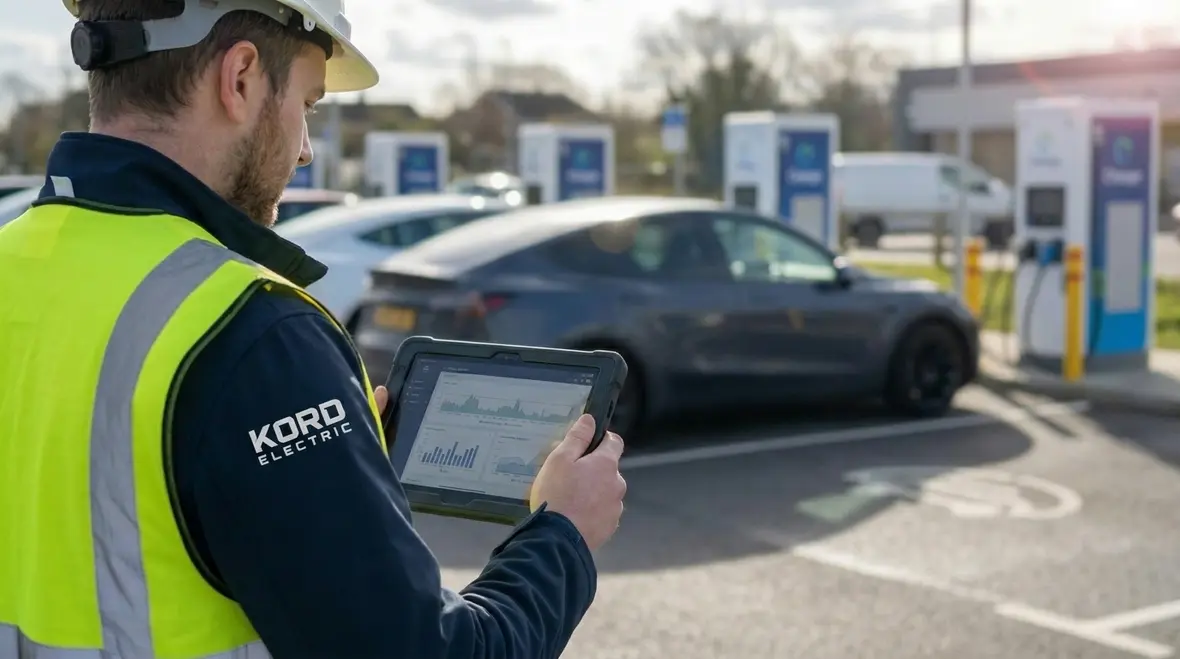
Good electrical design does not help much if the site layout creates unsafe movement. So we coordinate charging locations with parking rules, pedestrian paths, and vehicle access. First, we verify spacing, cable management, and protection against impact. Then, we confirm that charger placement fits the flow of vehicles and drivers, including service vehicles and deliveries that may share the same routes.
Next, we plan for weather exposure, moisture control, and accessibility for maintenance. We also consider how snow removal, landscaping, and construction can affect conduit and equipment. Transitioning from the electrical room to the parking lot requires more than a straight line. It requires routes, clearances, and protection that remain solid after years of use.
In addition, we help clients think about signage and driver guidance so utilization improves. When drivers understand where to park and how to start a session, utilization rises. As a result, the charging network becomes a service, not a decorative object that looks nice in photos but pays no bills.
Connecting layout decisions to long-term operations
A well-sited charger solves three problems at once: it keeps vehicles moving, it keeps people safe, and it keeps maintenance access simple. When Kord Electric coordinates with property managers on larger campuses or major property buildings, we treat charger placement like any other piece of critical infrastructure. That means aligning stalls with fire lanes, loading docks, and designated accessible spaces so the charging plan supports the way the site actually lives and breathes each day.
Permits, codes, and documentation that reduce future headaches
Commercial projects move fast, yet code requirements do not move faster. Therefore, we manage compliance step by step. We review applicable standards, electrical codes, and local requirements for installation, grounding, and circuit protection. Then we align the design with utility expectations where needed. This is where a lot of teams stumble, especially when they underestimate how much paperwork and verification matters.
We also build strong documentation because others will need it later. Our technicians and expert service staff maintain clear as built records, panel schedules, and labeling that match what is installed. That reduces confusion during troubleshooting and makes expansion more efficient. Moreover, when the next contractor arrives, the site does not become a mystery novel.
To keep this process smoother, we coordinate milestones and review equipment and installation details early. Consequently, fewer things get discovered late, and fewer change orders sneak in like a plot twist during a boring meeting.
Staying aligned with commercial electrical standards
EV charging plans do not exist in a separate code universe. They sit inside the same frameworks that govern panels, feeders, and protection devices across the rest of the facility. When needed, we relate decisions back to broader commercial standards and interpretations, similar to the way Kord Electric explains complex topics such as NFPA references and the National Electrical Code in their dedicated compliance guides. The goal is simple: keep the charging project fully aligned with the same rules that keep the rest of the building safe and reliable.
Operations, monitoring, and service that stays dependable
A commercial EV network must keep working after installation day. So we plan the operating model from the start. That includes monitoring, response timelines, and how the facility will handle sessions during peak demand. We also confirm how the system will alert staff if a unit needs attention. Then, we align service access with security rules and building hours.
Our expert service staff explains how to operate and maintain the system without guesswork. They provide guidance on safe reporting, session behavior, and what to do when a charger shows a fault. Meanwhile, we support preventative checks so small issues do not grow into expensive downtime. This matters especially for industrial facilities where charging interruptions affect schedules.
Also, we evaluate the system’s ability to handle future growth. If the facility adds vehicles, we want the plan to support that addition without starting over. In other words, we design for the next phase, not just today’s parking count.
Planning for scalable commercial EV charging
Scalability is only real when the electrical backbone can carry the next wave of chargers without constant redesigns. That is why Kord Electric folds future-ready capacity, conduit strategies, and control logic into the earliest planning stages. For facilities that want to go deeper into growth strategy, their dedicated guidance on EV charging infrastructure scalability for commercial sites pairs well with the kind of detailed EV charging infrastructure planning described here.
FAQ: Quick answers for commercial sites
Ready to design a dependable EV charging plan?
If you manage a commercial or industrial facility or a major property building, you deserve charging that works now and grows later. Kord Electric helps others build EV charging infrastructure planning that protects electrical capacity, reduces hidden risks, and supports daily operations. We bring technicians and expert service staff into the process early, so your team understands the plan and trusts the outcome. Contact Kord Electric today to discuss your site, your timeline, and your charging goals. We will keep it clear, calm, and dependable, like a good power factor.
As you move from concept to construction, it often helps to think about EV charging as one piece of your broader electrical roadmap across Los Angeles County and surrounding areas. Kord Electric’s dedicated Los Angeles County electrical services connect charging projects with panel upgrades, preventive maintenance, and troubleshooting so your infrastructure strategy stays unified instead of scattered across multiple vendors.
When you are ready to turn a sketch of charger icons on a site plan into a real, dependable system in the ground, Kord Electric’s commercial EV charger installation services take the planning, permitting, and field work and wrap them into one coordinated path from first assessment to final commissioning.