Data Center Electrical Design for Mining Operations
At Kord Electric, we build Data Center Electrical Design for Mining Operations: Power & Reliability into the very bones of each project. We design electrical systems for mining focused data centers so power stays clean, stable, and ready for real-world stress. After all, mining gear does not care about your plans or your excuses. It only cares about voltage, uptime, and protection when things go sideways.
In this guide, others will see a clear path from utility incoming power to distribution, backup, monitoring, and maintenance. Meanwhile, our technicians and expert service staff walk alongside the design team, explaining the “why” in plain language so you can make smarter decisions before the first panel ever gets energized.
Understand the mining data center load before we design
When we plan a mining data center, we start by treating load like it is a living system. First, we map the mining racks, cooling equipment, network gear, and auxiliary loads. Then we group them by function, so the distribution matches how the facility actually operates. In practice, this means we avoid treating everything as one big blob of “electrical stuff,” because that approach usually turns into an expensive mystery later.
Next, we account for growth. Mining loads tend to scale in steps, not in smooth ramps. Therefore, we design with future capacity in mind by adding space, capacity, and clear upgrade paths. We also review power factor, harmonic risk, and transient behavior from the equipment. Even if the facility manager never says the word “harmonics,” the wires still do. So we measure, we model, and we plan for what happens when equipment starts, ramps, and idles.
Finally, we confirm how downtime costs money. Then we align the design level to business needs: critical power for the compute and control paths, plus reliable support power for cooling and monitoring.
Reliable power starts at the utility interface and protection
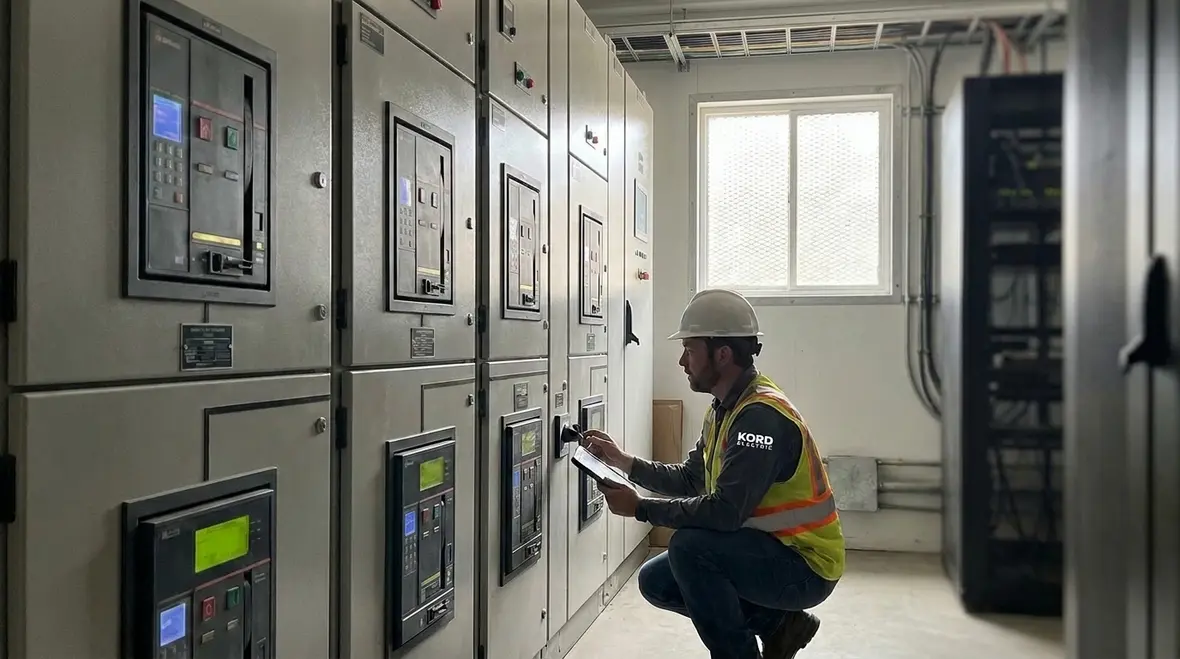
In a mining site, the utility interface is where reliability gets tested early. We evaluate the available service, voltage regulation, and how disturbances travel through the facility. After that, we choose protection settings that coordinate correctly from the incoming switchgear down to branch circuits.
Then we think about selectivity. If a fault happens, the right device should clear the fault without bringing down the whole data center. That is the difference between a clean correction and a full day of “why is everything off?” We coordinate settings so breakers trip in the smallest area possible, and we document these plans in a way that our field teams can actually follow.
Moreover, we handle grounding and bonding with care. This work supports safe operation, stable voltages, and proper fault clearing. When we do it well, the data center behaves. When we do it poorly, it becomes the electrical version of a horror movie where every room lights up at once.
Our technicians also review installation details during commissioning. In other words, we do not just draw it. We verify it, and we explain the test results in a way that building owners can use.
How we plan distribution for power quality and uptime
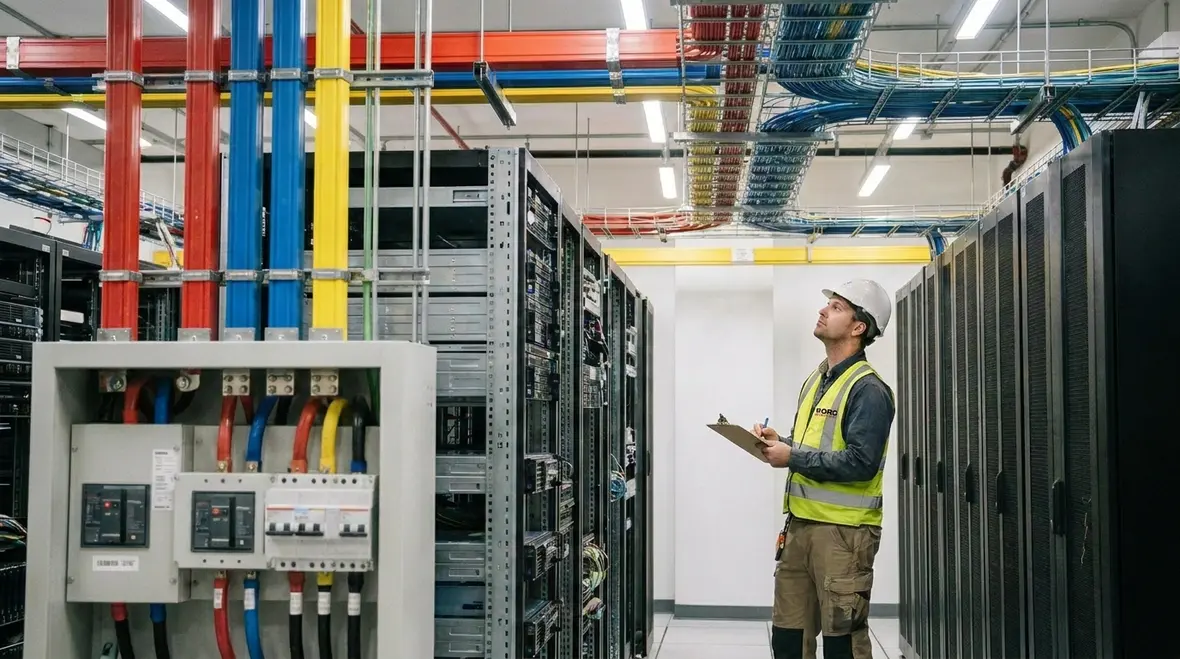
Distribution design decides how power gets delivered and how fast the system responds. First, we segment loads based on criticality. Then we route power in a way that reduces single points of failure. We also select busway, cable routes, and switchboard layouts that support both performance and service access.
Second, we control voltage drops. Voltage drop looks boring on a spreadsheet, but in the field it can create unstable operation for sensitive gear. So we calculate load currents, ambient temperatures, conductor sizes, and installation conditions. Then we keep the results within a range that protects performance.
Third, we address power quality. We look at harmonics, ripple effects, and possible resonance in the system. If the mining racks pull non linear current, the distribution must handle it. We evaluate filters or mitigation when needed and we ensure components do not overheat under real load.
Next, we plan redundancy where it matters most. For many commercial and industrial facilities, redundancy means the ability to ride through faults and maintain operations. We design with transfer schemes and protective coordination so that switching does not cause chaos.
And since our expert service staff lives in the real world of maintenance and troubleshooting, we plan labeling, access, and test points from the start. That reduces downtime because someone can actually find the right breaker, the right circuit, and the right data without opening five different books like it is a mystery novel.
If you are mapping out a broader reliability strategy for your facility, it can help to pair this mining focused view with Kord Electric’s companion guide on Data Center Electrical Distribution Design for Reliability, which dives deeper into distribution choices that keep commercial and industrial data centers running under stress.
Backup power and transfer that behave under stress
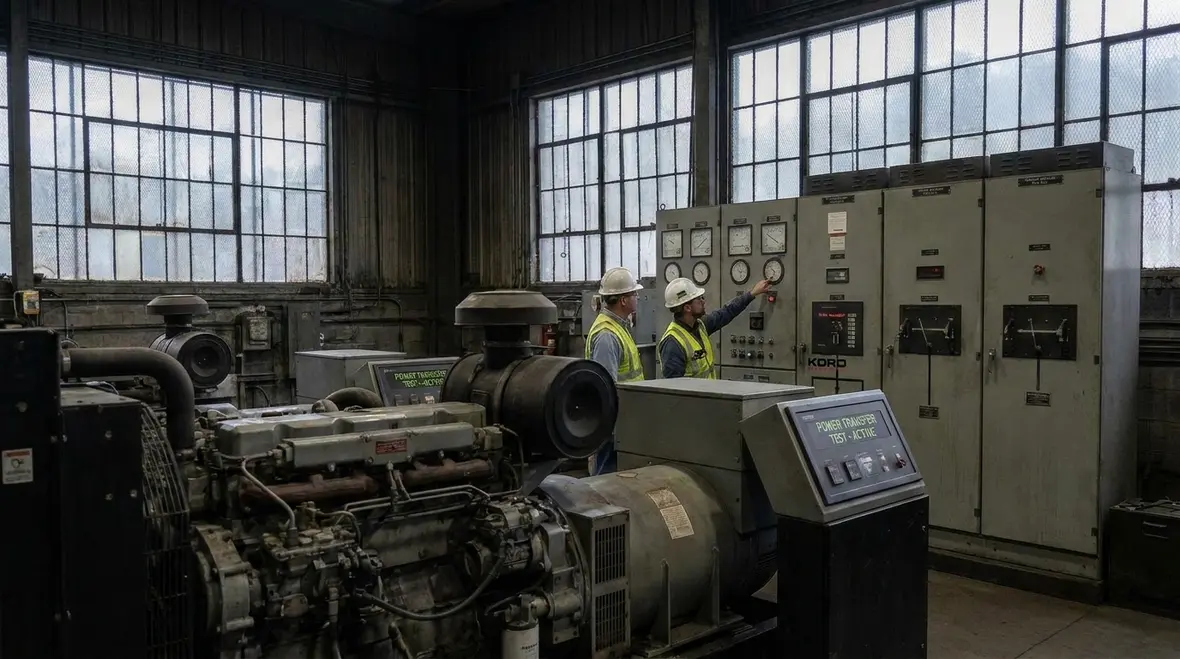
Backup power for mining data centers does not just need to exist. It needs to behave. So we evaluate the generator size, fuel strategy, and start performance based on the actual load profile. Then we include the right transfer approach to keep critical equipment online.
We also plan for the time window when utility power dips or fails. Therefore, we look at how quickly generators reach stable output and how the system handles sensitive loads during transfer. We consider ramping behavior and stability across the electrical system.
On top of that, we coordinate protective devices so that backfeed does not create new problems. For example, if a fault exists during transfer, the protective scheme must still clear it correctly. That coordination work makes the difference between “backup engaged” and “backup engaged with fireworks.”
In many projects, we also include UPS strategies for control, networking, and brief ride through. This is not about showing off. It is about preventing nuisance shutdowns from short disturbances. Because in mining operations, even a short restart can cost money and slow production.
Our technicians explain the switching logic during commissioning. They do not just say “it works.” They show what happens during tests, and they share what the owners team should watch once the facility starts running.
Monitoring, metering, and control for operators who want answers

Smart monitoring improves decisions. However, it only helps if it is designed into the system clearly. We plan metering points and monitoring zones so the facility team can see power, load, and alarms in a useful way.
First, we define what data matters. We include key measurements like current, voltage, frequency, energy, and power factor at the right panels and feeders. Then we connect sensors and alarms to the control system with an organized strategy for notifications.
Second, we plan how alarms route to the right people. When something fails, the operator should know what it is and where it happened. Therefore, we design for fast fault identification and simple isolation steps. That reduces troubleshooting time and helps the team act without guessing.
Third, we build in test plans. Our expert service staff supports the commissioning process and the ongoing testing routine. So instead of discovering issues during an emergency, the facility team can confirm performance through scheduled checks.
Also, we document the system so maintenance does not depend on tribal knowledge. In commercial and industrial environments, that matters. People retire, contractors change, and memory fades. The best design stays clear even when the person who “knows it all” leaves for lunch.
Thermal and mechanical details that keep electrical gear healthy
Electrical reliability is not only about schematics. It also depends on heat, airflow, and installation quality. We review ambient temperatures, cooling design, and equipment placement. Then we select components rated for the expected environment and load level.
We also verify cable management, termination quality, torque standards, and access clearances. If a connection runs hot or loosens due to poor install practices, the system reliability drops fast. Therefore, we enforce quality control steps and we support the commissioning phase with testing.
In mining data center spaces, vibration and heavy duty operation can add stress. We plan supports and routes that resist movement. Then we coordinate with site trades so installation details match the design intent.
Our technicians walk through these checks with the site team and explain why certain details matter. They keep the focus on reliability outcomes, not just paperwork. That is how we help building owners avoid the common situation where the system “looks fine” until the first real load test.
Data Center Electrical Design for Mining Operations: commissioning, training, and long term support
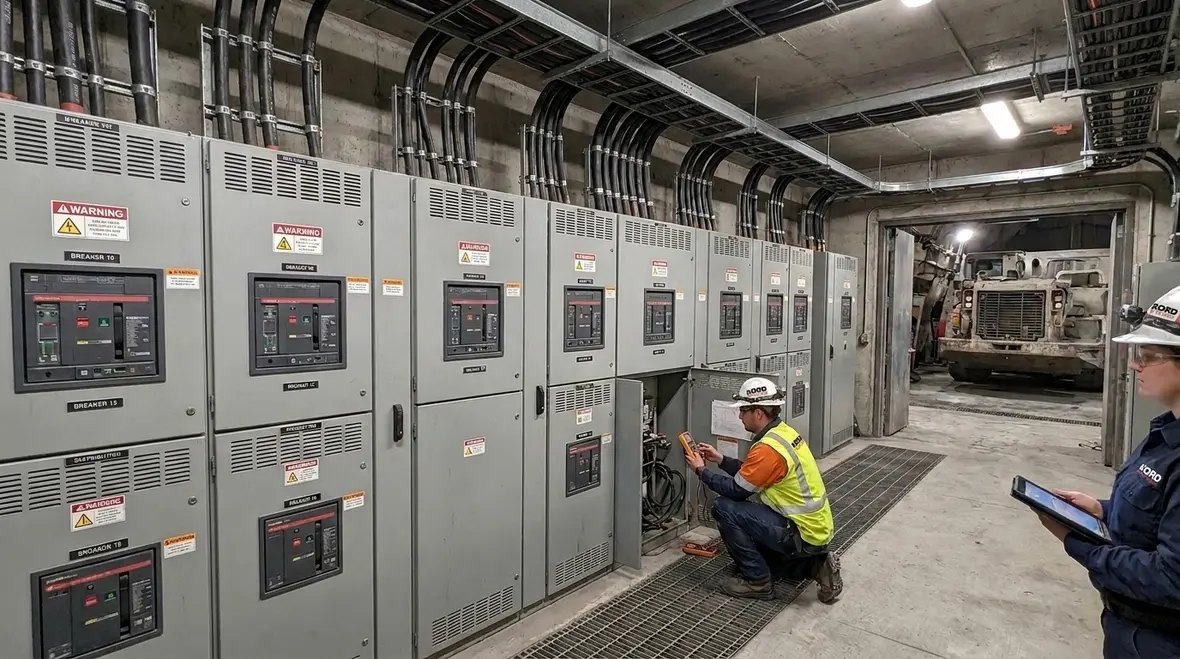
Once we finish design and installation, we validate performance through commissioning. We test protective coordination, verify transfer behavior, and confirm metering and alarm accuracy. We also check load behavior against expectations so the system matches the model.
Then we train the people who run the building. Our technicians and expert service staff explain operating steps, alarm meanings, and basic troubleshooting. We aim for calm confidence, not confusing manuals that read like ancient scrolls.
After commissioning, long term support keeps reliability steady. We support scheduled maintenance, review event logs, and help teams plan upgrades without disrupting operations. For commercial and industrial facilities, this means the data center keeps producing value instead of chasing avoidable failures.
And yes, we still include the boring parts, because boring is good in electrical design. Boring means the system works, the protection behaves, and the uptime stays where it should.
FAQ
Ready to plan a power system that stays up?
If your mining data center must run, you need a design that treats reliability like a requirement, not a wish. Kord Electric helps commercial and industrial facilities build clean power, coordinated protection, and practical backup strategies that match real loads. Our technicians and expert service staff support commissioning and training so your team understands what the system does and why. If you want a clear plan you can defend, reach out to Kord Electric and schedule a design review today.
For facilities in Southern California that want a partner familiar with local codes and mission critical work, explore our Los Angeles County electrical services, where data center and heavy industrial power reliability often share the same design mindset.
Source for design approach reference: Kord Electric Blog, Data Center Electrical Distribution Design for Reliability.