Data Center Electrical Infrastructure Essentials
In every mission critical room, data center electrical equipment has one job: keep power steady, clean, and available when it matters most. At Kord Electric, we break down the data center electrical infrastructure essentials so the whole system makes sense, from incoming utility power to the final circuits that feed racks and cooling gear. We explain how switchgear, transformers, UPS systems, generators, and distribution panels work together, and why each component must be sized, protected, and maintained with care. Then our expert service staff adds the human layer, walking owners and facility teams through the details in plain language. Think of it as the calm voice that tells you, “Yes, this can be reliable,” without the usual doom and drama. Others may treat power like an endless mystery box. We treat it like engineering.
1) Why stable power sits at the heart of modern data halls
Most commercial and industrial facilities understand that power is important. Still, data halls demand more than “it usually works.” To keep uptime high and risk low, operators must treat power like a coordinated system, not a pile of parts. Therefore, our technicians focus on how energy flows through the facility, starting at the utility feed and ending at critical loads. After that, they map the weak points, because weak points love to show up right when time gets tight.
We also see a common misunderstanding. People sometimes assume the UPS fixes everything. It helps, of course, but it does not replace good upstream decisions. So, we help others avoid that “it will sort itself out” mindset. In many cases, the real issue sits in transfer logic, protective coordination, or distribution design that does not match the true load profile.
2) Data center power path: from utility feed to final circuits
When we plan or upgrade data center electrical equipment, we look at the full path, not just one box. First, utility service enters the facility and passes through metering and protective devices. Then switchgear and bus systems distribute power to transformers when step down or isolation is needed. From there, the system feeds UPS modules or centralized UPS systems that condition power for critical loads.
At the next stage, transfer equipment moves loads between UPS output and generator or utility sources during planned events or outages. Additionally, distribution panels and bus ducts deliver power by zone, rack row, or critical area. Each step must coordinate with the next step so the system responds predictably.
Here is the calm truth: if any segment does not work in harmony, the rest of the chain pays the price. So, our expert service staff reviews design intent, checks short circuit withstand needs, and verifies settings so protective devices do not trip at the wrong time. That is the difference between “power is present” and “power is usable.”
If you want to see how this thinking plays out in real projects, our related article on data center electrical distribution design for reliability walks through how power paths and protection choices affect everyday uptime.
3) Essential components in the electrical lineup
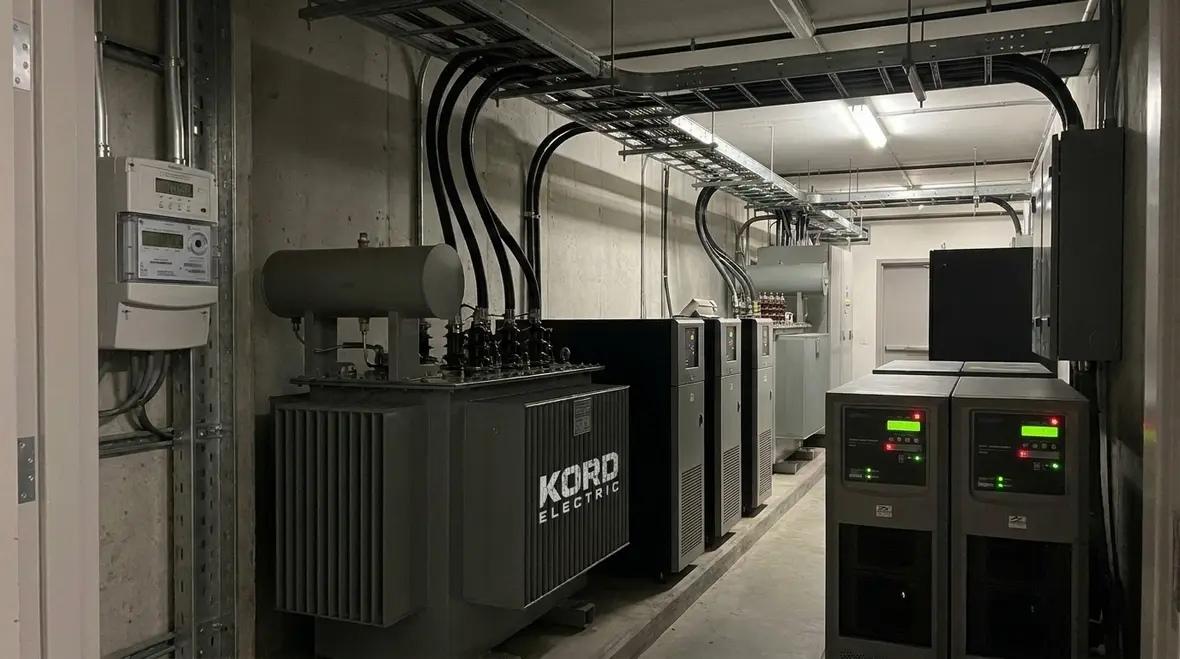
If you want a clear view of the core data center electrical infrastructure essentials, we outline the main pieces and what each one contributes. This is where planning becomes practical.
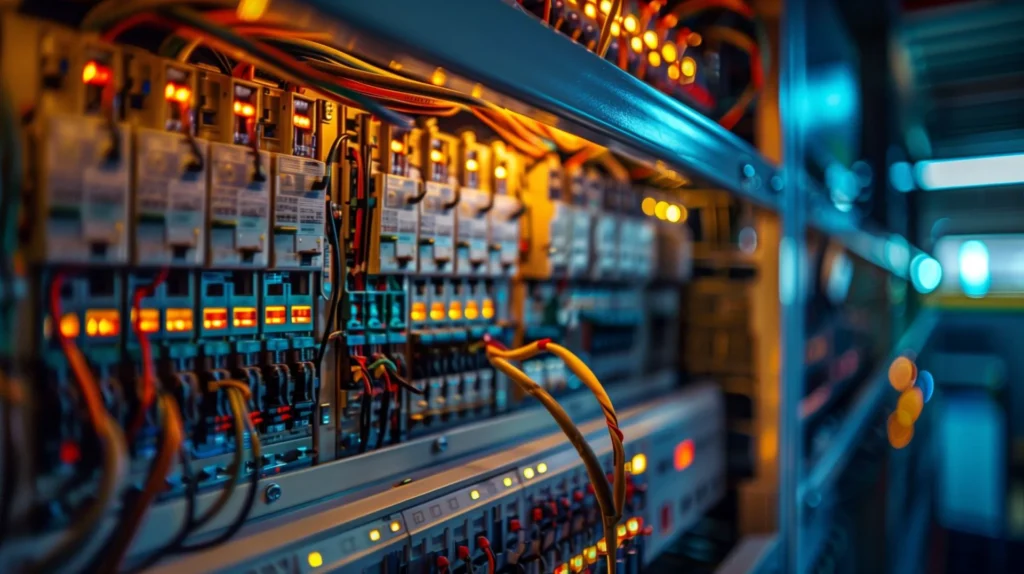
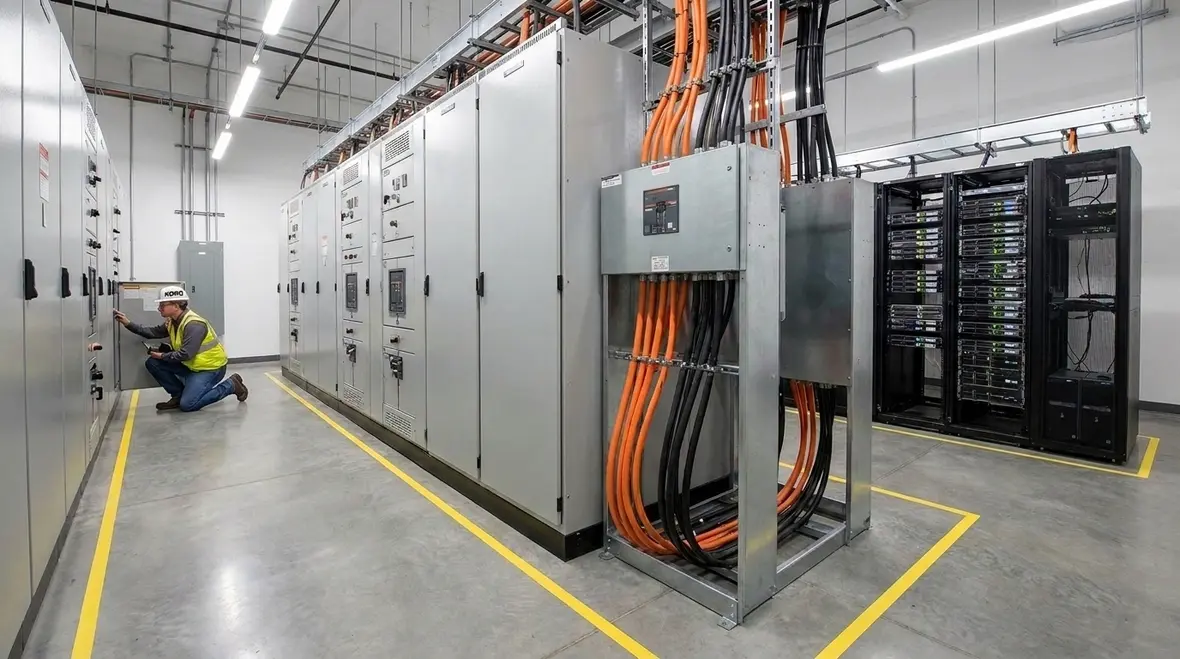
- Switchgear controls and protects incoming and internal power. It also supports fault isolation so repairs do not require shutting everything down.
- Transformers provide voltage matching and isolation, which helps align equipment needs and improves stability.
- UPS systems support ride through during short utility dips and maintain power quality for critical loads.
- Generators provide longer duration backup when outages last beyond UPS ride through.
- Automatic Transfer Switches and transfer systems manage switchover between sources with controlled timing.
- Power distribution includes switchboards, PDU networks, and branch protection to deliver energy where it is needed.
- Cabling and bus systems carry current reliably while meeting thermal and fault performance requirements.
- Monitoring and controls track voltage, load, alarms, and system health so teams can act early.
And yes, some facilities treat monitoring like optional trivia. That never ends well. When alarms fire, operators need context, not a mystery code. So, we help others connect the dots with clear documentation, test plans, and service procedures that match day to day operations.
Keyword Focus: Data Center Electrical Equipment: Essential Components Explained
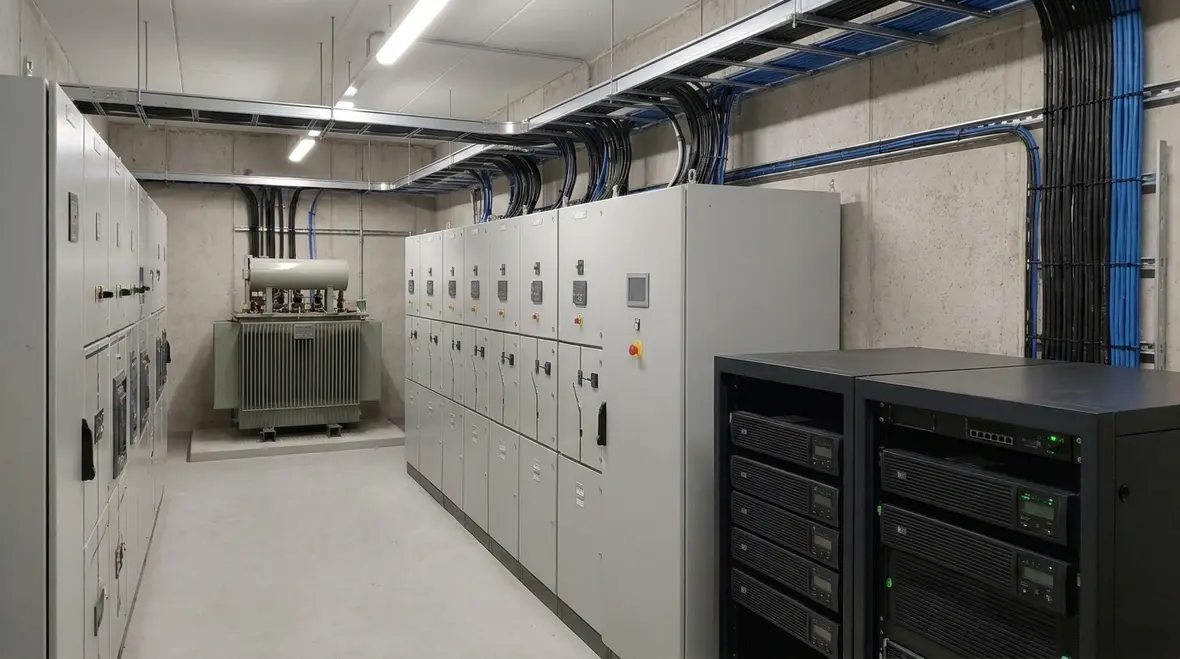
When teams ask for “Data Center Electrical Equipment: Essential Components Explained,” they usually want two things: clarity and confidence. Clarity means understanding how switchgear, UPS systems, generators, and distribution gear divide responsibilities without stepping on each other. Confidence comes from knowing the system has been engineered, coordinated, and tested so that when something fails, the rest keeps running. Our work connects those dots in real facilities, not just in diagrams.
4) Power quality, redundancy, and protection that actually works
Redundancy sounds simple until a short circuit or a switchover event exposes design gaps. Therefore, we stress the difference between having extra equipment and having correct system logic. For example, redundant paths still must coordinate so only the faulty section clears. Otherwise, a small problem becomes a major outage. Our technicians evaluate protective coordination, including breaker curves and relay settings, so the system clears faults in the right sequence.
Next, we focus on power quality. UPS output, transformer performance, and distribution impedance all affect voltage stability and harmonic content. When those factors drift out of range, sensitive equipment can suffer performance issues even if it stays “powered.” As a result, teams may see thermal stress, unexpected shutdowns, or higher maintenance needs.
We also consider how loads change over time. Data center expansion is common, and load grows like a plant that refuses to stay the same size. So, we help facility teams plan for future capacity, ensuring electrical infrastructure can expand without forcing disruptive redesign. The goal is not just to survive tomorrow, but to operate smoothly next year.
For a deeper dive into redundancy strategies, our guide on data center power redundancy for maximum uptime shows how N+1, 2N, and other configurations behave during real-world faults and maintenance events.
5) Maintenance, testing, and the calm discipline of uptime
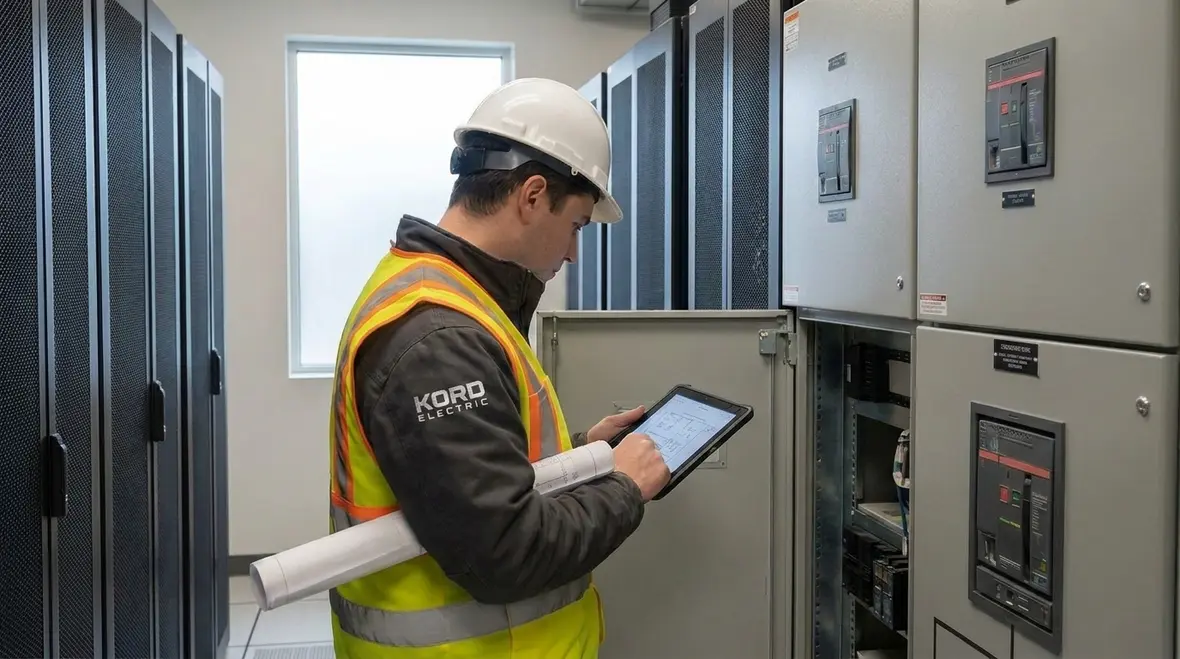
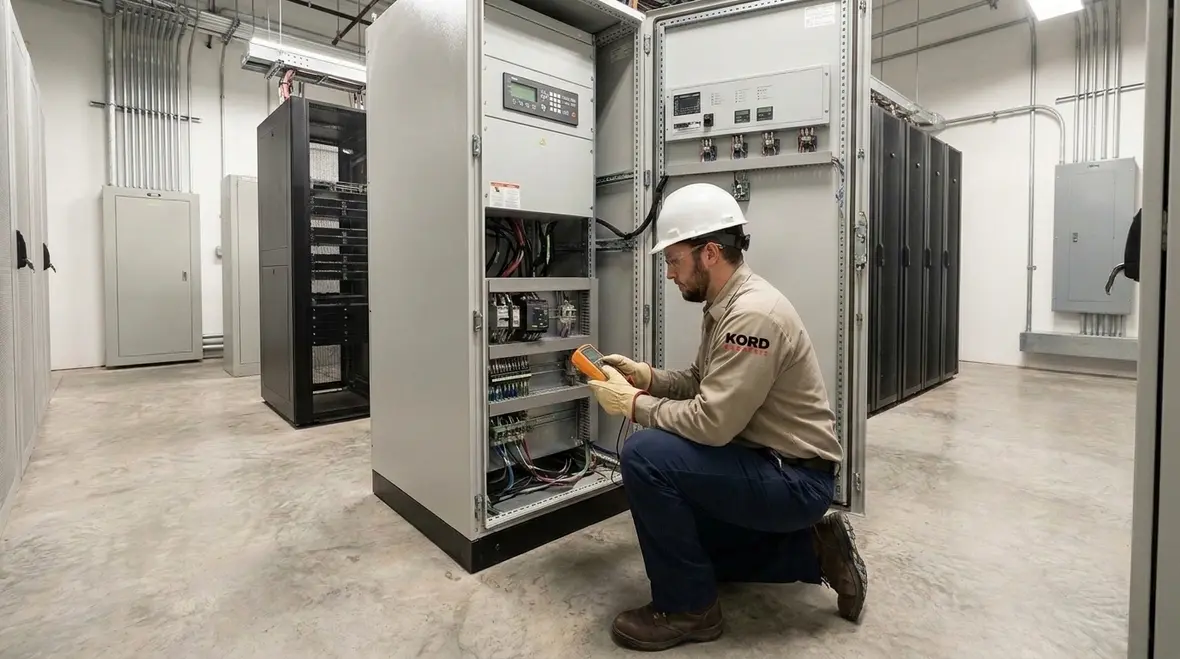
Many companies treat data center electrical equipment like a “set it and forget it” project. In reality, reliability requires discipline. That is why we support commercial and industrial facilities with service plans that include inspection, testing, and verification. Our expert service staff does not just replace parts. They confirm performance, document findings, and explain what the results mean in plain language.
For example, UPS testing should reflect real operating conditions, including transfer scenarios and battery health checks. Switchgear maintenance includes breaker operations, inspection of terminations, and evaluation of mechanical and electrical wear. Generator service covers fuel system integrity, load bank testing, and readiness checks so standby power does what it promises.
Moreover, we coach facility teams on how to respond to alarms. When staff understands the “why,” they act faster and avoid unnecessary escalation. That training matters because during an incident, people do not need a textbook. They need clear steps and steady guidance. We provide that, and we stay accessible because uptime is not a one-time event. It is an ongoing effort.
If you are building a program around preventive tasks, our data center electrical maintenance checklist offers a practical, field-tested structure you can adapt to your own site.
6) Compliance, safety, and coordination for commercial and industrial sites
For major properties and commercial and industrial facilities, electrical work must meet safety expectations and industry requirements. So, we align our approach with practical compliance needs, focusing on safe installation, correct labeling, proper clearances, and reliable documentation. Additionally, we ensure that protective devices and controls support safe operation during normal and abnormal conditions.
Coordination matters across trades too. When mechanical teams plan cooling upgrades, electrical load and breaker capacity must match the new reality. Therefore, our technicians collaborate with facility stakeholders to keep projects from stepping on each other. If one contractor changes a load profile without telling the electrical team, that can create surprises later. And surprises can be expensive, especially when they hit at the worst possible time, like a pop quiz during finals week.
We also manage handoff details. Owners need clear as built records, test reports, and operating instructions. Then, when an issue happens, the team does not guess. They troubleshoot with facts.
To see how resilient infrastructure, compliance, and day-to-day reliability fit together, our article on resilient electrical infrastructure for data centers ties design decisions directly to safety and uptime outcomes.
7) Smart upgrades that protect uptime during growth
Upgrades do not have to mean downtime, but they must be planned with care. First, we assess current load, power quality behavior, and equipment condition. Then we evaluate whether the site can support higher demand with existing capacity or if partial upgrades are required. After that, we select the least disruptive path, such as staged distribution additions, incremental UPS capacity, or generator enhancements.
We also help others think beyond the single project. A data hall that grows in phases needs an electrical plan that grows with it. That means future spare capacity, scalable distribution, and protective settings that do not become outdated. Otherwise, expansions can create a patchwork system where each change works today but limits tomorrow.
In practical terms, our technicians focus on transitions. We plan how power is rerouted during work, how testing validates performance, and how teams confirm safe operation afterward. That way, growth stays predictable, not chaotic.
For facilities in Southern California evaluating major upgrades, our Los Angeles County electrical services team supports data centers, industrial sites, and major properties with phased construction and modernization plans that respect uptime windows.
8) FAQ
Featured snippet style questions
- What are data center electrical infrastructure essentials? The key parts are switchgear, transformers, UPS systems, backup generators, transfer equipment, distribution panels, cabling or bus systems, and monitoring and controls.
- How do we reduce outage risk during upgrades? We stage work, plan transfers carefully, test after each step, and verify protective settings so the system stays stable.
- How often should UPS and generator tests happen? Testing should follow manufacturer guidance and site requirements, and we help define a schedule that matches operational needs.
Conclusion
When your facility runs mission critical operations, reliability is not a “nice to have.” It is the business plan. Kord Electric helps commercial and industrial teams design, maintain, and upgrade power systems with clear documentation, disciplined testing, and expert service staff who explain everything. If you are planning a new build, expansion, or a careful modernization, reach out to us now. We will review your data center electrical infrastructure essentials, identify risks, and propose a practical path forward.
If you want to explore how broader electrical infrastructure strategies apply beyond data halls, our resource on data center electrical infrastructure essentials connects the same reliability mindset to everyday facility planning. For a more specialized look at how this translates into critical computing environments, review our guide on Data Center Electrical Equipment: Essential Components Explained and how those choices affect long-term uptime.
For organizations building or expanding high-density compute, it also helps to zoom in on the technology stack itself. Our in-depth article on data center electrical infrastructure essentials pairs well with guidance on data center electrical infrastructure design for reliability, which explains how electrical infrastructure and IT architecture work together to support performance and resilience.