
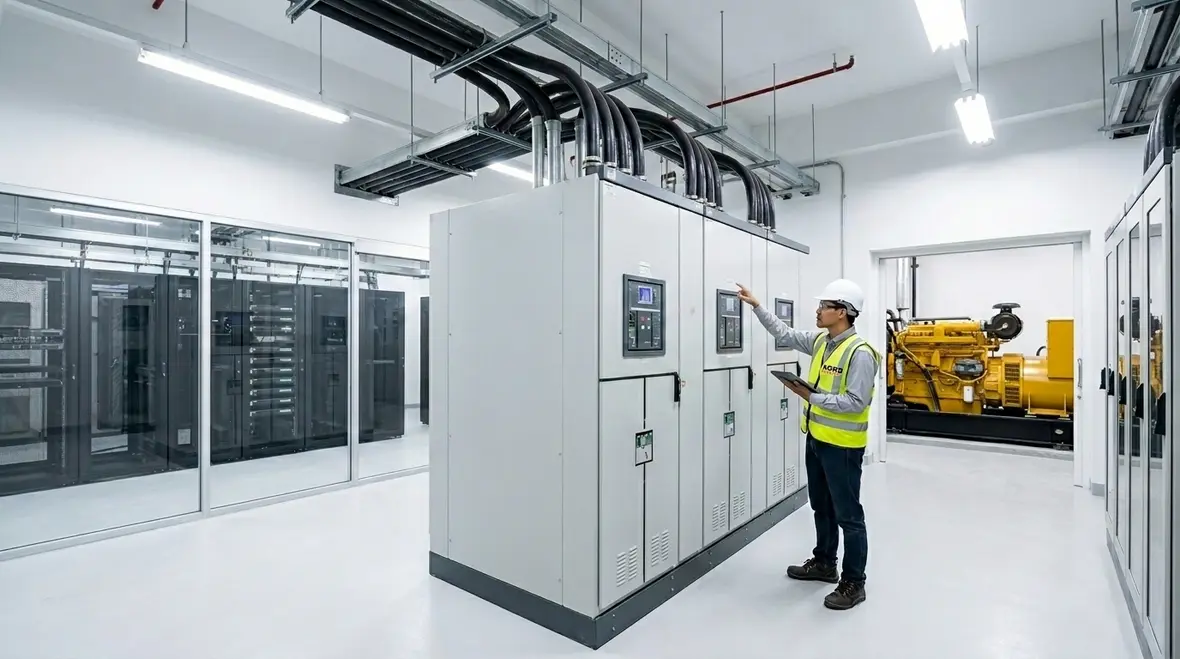
Resilient Electrical Infrastructure for Data Centers
Designing Resilient Electrical Infrastructure for Modern Data Centers: A Guide for Facility Managers
Kord Electric builds electrical infrastructure design for data centers that stays steady when life gets loud. We focus on the kind of planning that keeps mission critical loads online, even during storms, switch failures, or the day a breaker decides to “retire early” like it is in a sitcom. Facility managers in commercial, industrial, and major property environments need more than a one time install. They need a system that behaves predictably, protects assets, and supports fast recovery. In this guide, we outline how resilient power gets designed, verified, and operated using practical steps. Then our technicians and expert service staff walk through what to check, how to coordinate, and how to avoid costly downtime.
Start with load truth, not guesswork
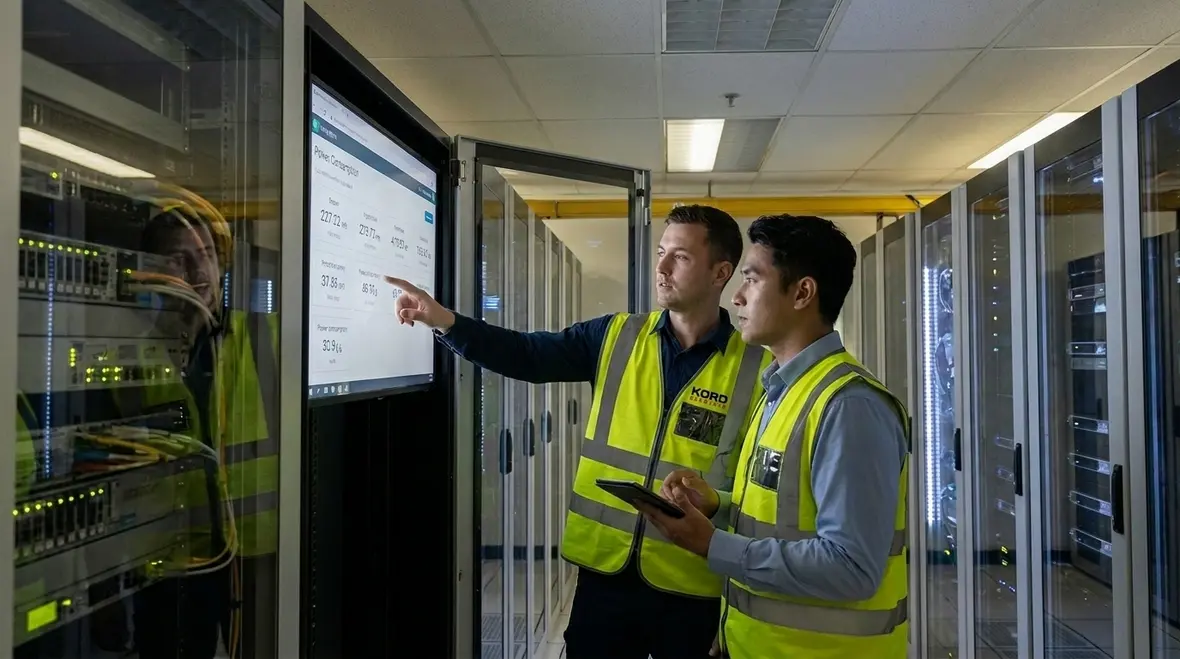
Most projects fail before the first conduit bends, and it usually starts with a vague understanding of power demand. To design resilient systems, our team begins by validating load types, run times, and start up behavior. Then we map the real world to the one line diagram. That means asking what truly powers the servers, networking gear, cooling plants, and life safety systems, and how those loads respond during transfer events.
Next, facility managers should require a load profile that includes diversity factors and worst case scenarios. For example, power draw often spikes during maintenance windows when IT staff do replacements in parallel. As a result, UPS loading and generator run time can change more than people expect. Meanwhile, some loads look small on paper but create high inrush current, which stresses switchgear and cabling over time.
We also recommend that the site team collects historical data, when available. Then the electrical engineer calibrates the design so the UPS, transfer switches, and distribution equipment match the actual operating pattern. This step reduces surprises later, and it keeps commissioning focused instead of “mystery hunting.”
For facility leaders who want to connect this planning to broader property strategy, reviewing how power profiles interact with capital projects like lighting upgrades can be helpful. When you understand both how your data center behaves and how your building consumes energy overall, it becomes easier to prioritize improvements and align with resources such as Kord Electric’s Commercial Lighting Upgrade Cost Guide for portfolio wide planning.
Build redundancy that matches the risk
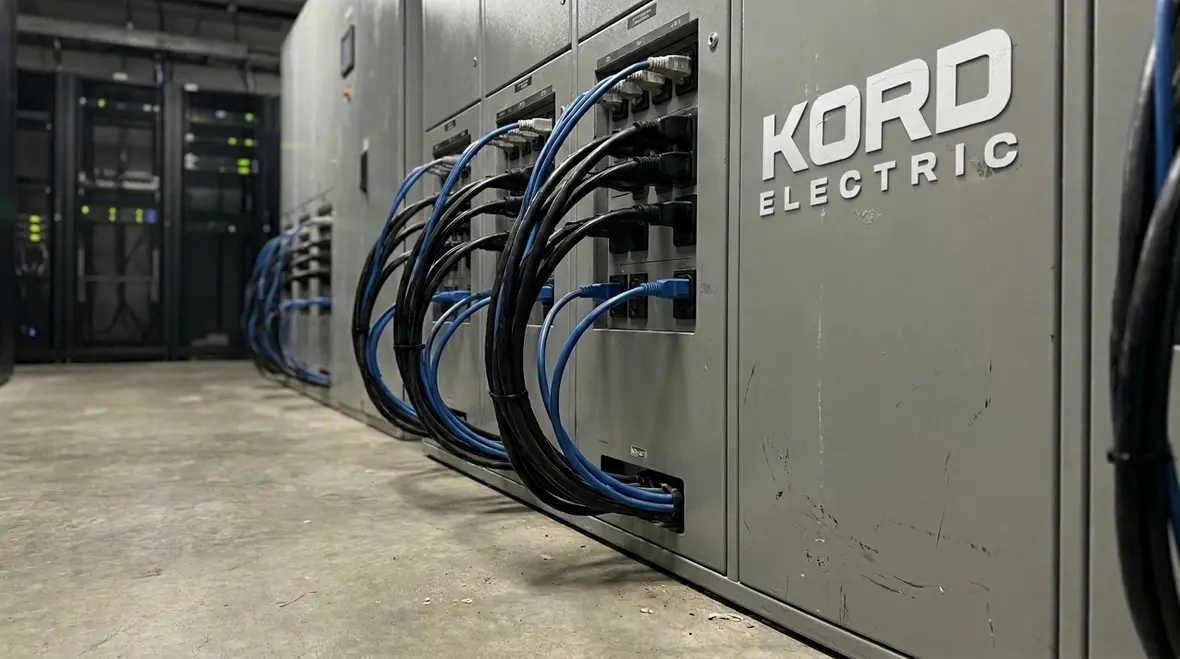
Once load truth is solid, Kord Electric helps teams choose redundancy strategies that align with uptime goals and budget realities. Not every facility needs the same level of duplication, and not every failure mode creates the same risk. Therefore, our electrical infrastructure design for data centers usually separates critical systems from less critical support circuits so a single fault does not cascade into a full outage.
In practice, that means selecting appropriate transfer schemes and distribution layouts. We help clients evaluate options like N plus one and other architectures while considering physical separation, cable routing, and maintenance access. In addition, we emphasize that “redundant” does not mean “indestructible.” It means that when one path fails, another path can carry the load without creating unsafe conditions.
Our expert service staff often explains this in plain terms during walkthroughs. They say, “Redundancy buys time, and good design uses that time well.” Then they show facility teams how to verify that each redundant component truly transfers under realistic conditions. This reduces the odds that a system looks good on paper but acts different during tests.
We also look at how redundancy interacts with real world constraints like generator refueling logistics, maintenance windows, and tenant expectations in major properties. Facility managers can connect these concepts back to broader electrical maintenance strategies, such as the preventive maintenance frameworks Kord Electric outlines for commercial and industrial sites, so that redundancy and upkeep reinforce each other instead of competing for attention.
UPS, generators, and transfer switches should work together
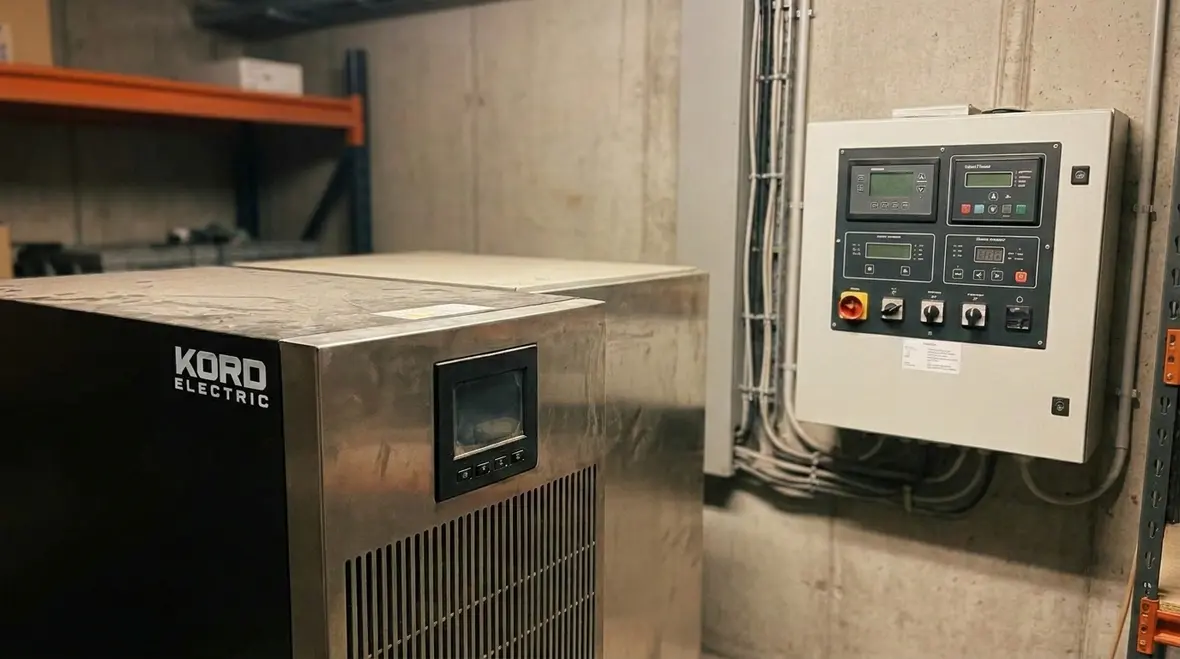
In resilient power design, components must behave like a coordinated team, not three separate vendors shaking hands for the camera. Kord Electric designs the UPS and generator interfaces so the facility avoids unstable transitions. That includes managing load steps, frequency and voltage behavior, and timing sequences across transfer devices.
First, we confirm how the UPS will support load during generator start. Next, we define the transfer logic so it does not create an overlap that stresses equipment, or a gap that forces unnecessary shutdowns. At the same time, our electrical infrastructure design for data centers addresses harmonic content and neutral loading, since many server loads increase distortion.
Then we verify that transfer switch ratings match actual load profiles. Many times, people select equipment based on nameplate values only. However, real operating conditions include power factor changes, transient events, and uneven phase loading. As a result, we prefer commissioning plans that include clear test procedures and performance measurements.
We also encourage facility managers to treat these interfaces as living systems. As IT hardware changes and load patterns evolve, coordination settings, timing, and even UPS configurations may need adjustments. Pairing that mindset with structured maintenance programs, such as Kord Electric’s dedicated electrical preventive maintenance services, helps keep the “team” of UPS, generators, and transfer gear playing in tune year after year.
Protect the system like you plan to keep it running for years

Facility managers know downtime costs more than people admit. Therefore, protection design needs to go beyond basic overcurrent coverage. Kord Electric focuses on selective coordination, arc flash mitigation, and fault containment so the system isolates failures quickly and safely. And yes, this is where the “fancy math” pays off in real life.
Selective coordination means the nearest protective device trips first. That keeps the rest of the distribution healthy and prevents broad shutdowns. Kord Electric works with project teams to set protective device curves and verify coordination across the hierarchy of switchgear, panelboards, and downstream breakers. If coordination fails, then a small fault becomes a site wide event, and nobody wants that kind of drama.
We also plan for cable and bus support quality, terminations, and environmental stress. Over time, heat and vibration degrade connections. So we design and verify torque and installation practices, then we document them. Meanwhile, arc flash planning supports safe maintenance operations. This reduces risk for technicians and keeps emergency response realistic.
Because these protections only work when they are regularly verified, many data center and major property teams layer them into formal maintenance plans. That might include breaker testing, infrared scans, and periodic fault studies, all of which align naturally with Kord Electric’s broader commercial and industrial maintenance offerings so that safety, uptime, and long term reliability move forward together.
Design distribution to reduce heat, voltage drop, and weak points
Electrical distribution often decides whether a data center feels stable or stressful. When engineers size conductors and route pathways poorly, voltage drops rise, thermal stress increases, and equipment ages faster. To avoid that, Kord Electric designs feeders and bus paths with the actual load and expected future growth in mind.
For example, we consider conductor sizing, insulation rating, maximum allowable temperature rise, and installation method. In addition, we evaluate how parallel feeders share current and whether balancing affects performance. As load increases, good distribution design helps maintain voltage within tolerance for sensitive equipment.
We also pay attention to weak points like terminations, splices, and transitions between cable types. In many facilities, these areas become trouble spots after repeated maintenance or expansion. So our technicians follow strict installation standards and verify results. Then our expert service staff explains what to monitor, what measurements matter, and which visual signs indicate a need for inspection.
Finally, we support phased build outs. Many commercial and industrial sites expand in waves, and the electrical system must handle those changes without forcing major shutdowns. Therefore, distribution design includes spare capacity planning and routing strategies so future additions keep downtime low. When that planning is paired with ongoing maintenance and documentation, facility teams gain the confidence to say “yes” to new loads without crossing their fingers every time someone spins up another rack.
Commission, test, and document like the building will matter in the future
Even the best plan fails without proof. Kord Electric helps facility teams run commissioning and testing that validate performance, not just installation. First, we review design intent, then we build test plans that reflect real operating modes. Next, we schedule tests so they align with tenant operations and maintenance cycles in major property buildings.
Testing should include transfer behavior under load, protective device operation, and verification of metering and alarms. Additionally, we confirm that monitoring points support actionable decisions. If the system alarms but does not explain what happened and what to do next, then it does not help. So our team supports clear documentation that facility staff can use during incidents.
Our technicians also train the onsite team so people know what to expect. They show how to interpret readings, what trends indicate aging equipment, and how to respond during minor anomalies. This matters because fast, calm decisions stop small issues from becoming major repairs. And if someone jokes that “alarms are just the building complaining,” we let them have that one. Then we remind them the alarms still point to real physics.
For long lived facilities, this mindset turns commissioning into an investment rather than a box to check. As systems change, documented test plans and historical results give future teams a roadmap, which lines up neatly with the kind of detailed reporting and preventive strategies used in Kord Electric’s commercial and industrial maintenance programs.
Common design mistakes facility managers can prevent
Facility teams often inherit issues from earlier phases or from rushed upgrades. We see repeating patterns, and they usually come from skipping key steps. First, teams understate load growth and fail to plan spare capacity. Then they discover too late that critical feeders reach limits at the worst time.
Another mistake is ignoring coordination between electrical and mechanical systems. Cooling controls can affect power consumption, and power events can affect cooling equipment. Therefore, coordination should include how the entire facility responds during utility loss or equipment transfer.
Next, teams select components without confirming compatibility with actual UPS and transfer logic. That can create unstable transitions or nuisance trips. Meanwhile, some facilities ignore harmonics and neutral considerations, which can lead to overheating and premature failures.
Finally, they treat documentation as optional. When labels, one line diagrams, and test reports are incomplete, troubleshooting becomes slow and expensive. So Kord Electric emphasizes clear records from day one, and our expert service staff helps keep those records usable for ongoing operations. Over the life of a data center, that discipline turns into measurable uptime and calmer nights for facility managers.
FAQ
Conclusion and CTA
Resilient electrical infrastructure design for data centers does not happen by luck. It happens when facility managers demand load truth, matching redundancy, coordinated UPS and transfer behavior, and protection that isolates faults fast. Then Kord Electric proves performance with commissioning tests and practical documentation that keeps your team confident during real events. If your site runs critical operations, reach out to Kord Electric today. We will review your current system, outline the highest impact improvements, and help you protect uptime with a calm, reliable plan.
If you are coordinating this work as part of a broader reliability strategy for a commercial campus, industrial facility, or technology heavy property, consider pairing your project with a structured preventive maintenance program built for critical environments. Kord Electric’s dedicated electrical preventive maintenance services help keep data center infrastructure, distribution equipment, and supporting systems operating in sync long after the initial design and installation are complete.


