Emergency Electrical Load Shedding for Industry
Kord Electric starts every industrial emergency electrical load shedding strategy with a simple promise: we help facilities stay safe, keep critical loads alive, and avoid the kind of shutdown that turns a production floor into a silent movie set. We build a plan that responds fast, works with your plant reality, and keeps decisions clear under stress. In this guide, we explain how our technicians and expert service staff design, test, and improve load shedding schemes for commercial and industrial facilities and major property buildings. And yes, we also remind teams that “lights on” is not the same as “operation stable.” Because sometimes the control logic needs more discipline than a Monday morning training video.
What is an emergency electrical load shedding strategy for industrial sites?
An emergency electrical load shedding strategy is a designed method to reduce electrical demand quickly when the power system becomes unstable. Instead of waiting for protection devices to trip everything at once, the facility sheds selected non essential loads in a planned order. This approach helps maintain voltage, frequency, and power balance long enough to protect people, equipment, and high priority processes.
In practice, Kord Electric treats this as a reliability project, not a checkbox exercise. First, we map what the facility must keep running. Then we identify what can safely go offline for a short time. After that, we build the logic in a way your switchgear, PLC, and relays can execute immediately. Finally, we test and tune it until the scheme performs the same way on paper and in real life.
To keep it human, our service staff often explains it like this: you do not remove every ingredient from a recipe during a fire alarm. You remove the parts you can live without so the kitchen stays functional.
Why industrial systems need load shedding that actually works
Industrial facilities face fast and messy events: generator start up delays, utility voltage dips, cable faults, busbar instability, or upstream protection clearing a fault. When these happen, the electrical system can lose the balance between generation and load. Consequently, voltage sags, motors stall, drives trip, and everything cascades.
Meanwhile, many sites already have protection, but protection acts to protect equipment and people, not to protect your production schedule. That means equipment can trip in a sequence that is too harsh or too broad. Therefore, a well built emergency electrical load shedding strategy keeps your priorities straight.
Kord Electric focuses on the industrial and major property buildings side where the stakes are higher. We work with process loads, HVAC systems, pumping stations, life safety support, and critical communications. Moreover, we coordinate with existing motor control centers and automatic transfer schemes, because load shedding that fights other logic will fail when you need it most. In other words, the system should obey a plan, not a mood.
Design steps we use to build a reliable scheme
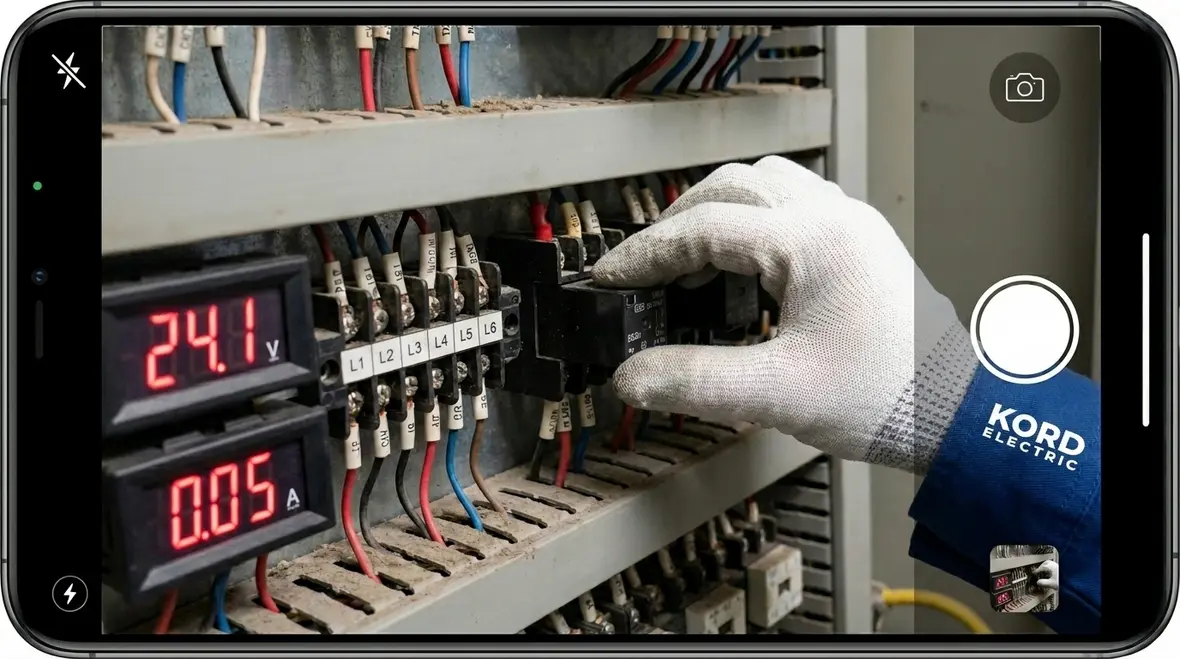
Our technicians follow a clear build process so the final system stays stable during real disturbances. First, we gather information about the site, because the “right” plan depends on real load behavior, not generic assumptions. Next, we identify critical loads and define allowable outage durations for non critical loads. Then we translate that into a control design with time delays, interlocks, and setpoints that fit your switching equipment.
At this stage, we also consider how your facility responds during normal disturbances. For example, does the plant already start standby generation automatically? If yes, what is the start time and acceleration period for generators and motors? If no, we set the logic to reduce demand quickly enough to avoid a full system collapse.
Then we decide the shedding steps. We usually recommend multiple stages because “all at once” is rarely graceful. Step one might shed large HVAC loads, step two might shed secondary process circuits, and step three might shed additional motors only if the event persists. Additionally, we assign priorities using simple criteria like safety, production impact, and restart complexity.
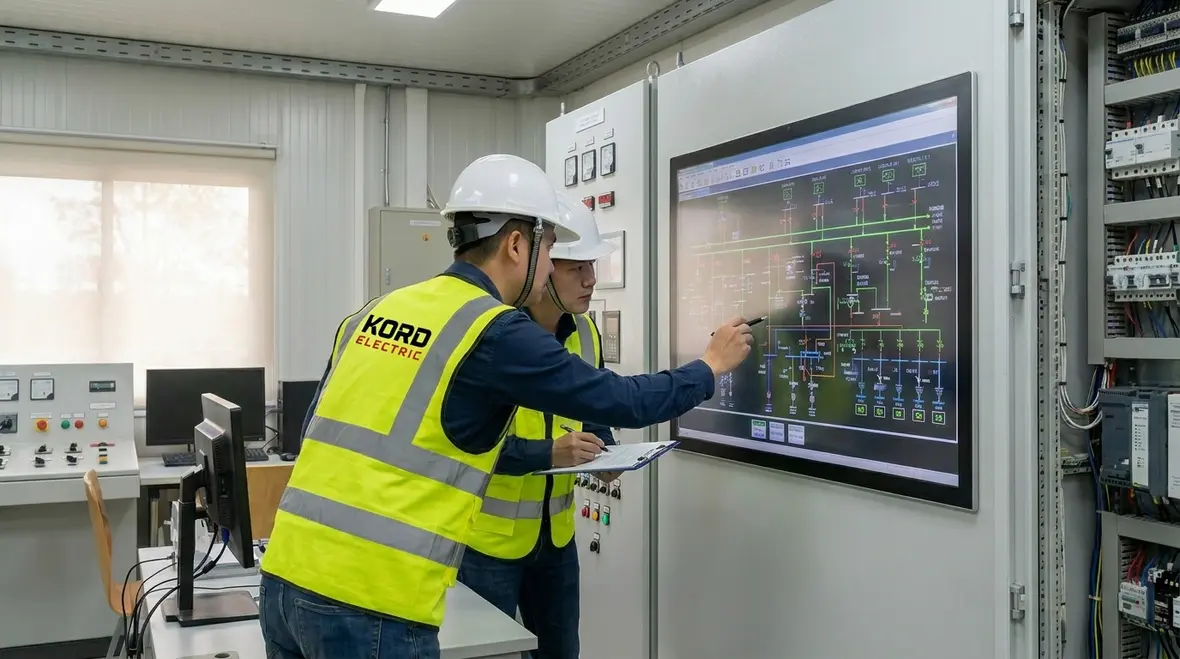
Throughout the design, our expert service staff documents the logic so operations teams understand what will happen. And yes, we include training language that fits real shifts. If it cannot be explained clearly, it will not be used clearly.
How we assign priorities to keep life safety and production stable
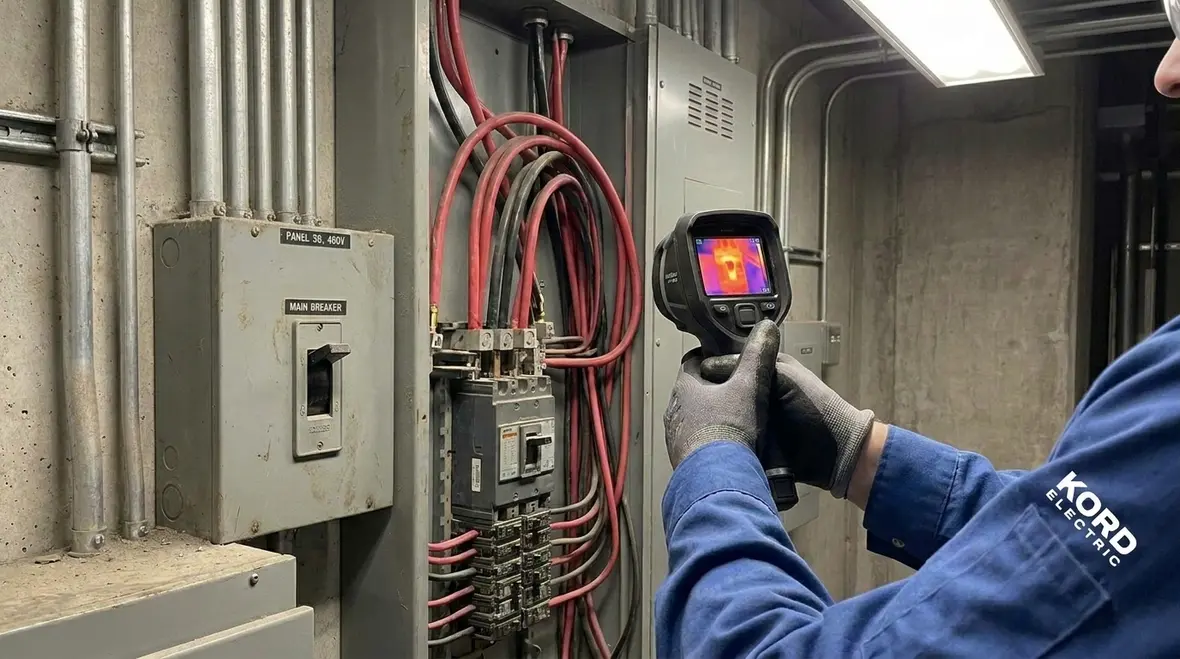
Priority assignment decides what stays on and what goes off. Kord Electric helps teams define load categories that match their facility risk profile. We typically sort loads into tiers such as life safety support, critical process control, essential HVAC, and non essential comfort or secondary services.
However, priority is not just about “what is important.” It is also about restart risk and time. Some loads can restart quickly, while others need sequences, valve states, or ramp down and ramp up controls. Therefore, we evaluate each load group based on how it behaves during outages and recovery.
For example, we often find that certain pumps and fans have longer run up times or create unstable pressure swings if they restart too aggressively. Then we place them into a controlled shedding stage rather than leaving them in a binary on off situation. Similarly, we treat large motor loads with care because their inrush current can pull down voltage when they restart after an event.
As a result, the emergency electrical load shedding strategy becomes a recovery tool, not only a protection tool. In our approach, we include logic that prevents rapid repeated starts and supports a stable sequence after the disturbance clears.
Controls, relays, and testing: where most plans either shine or stumble
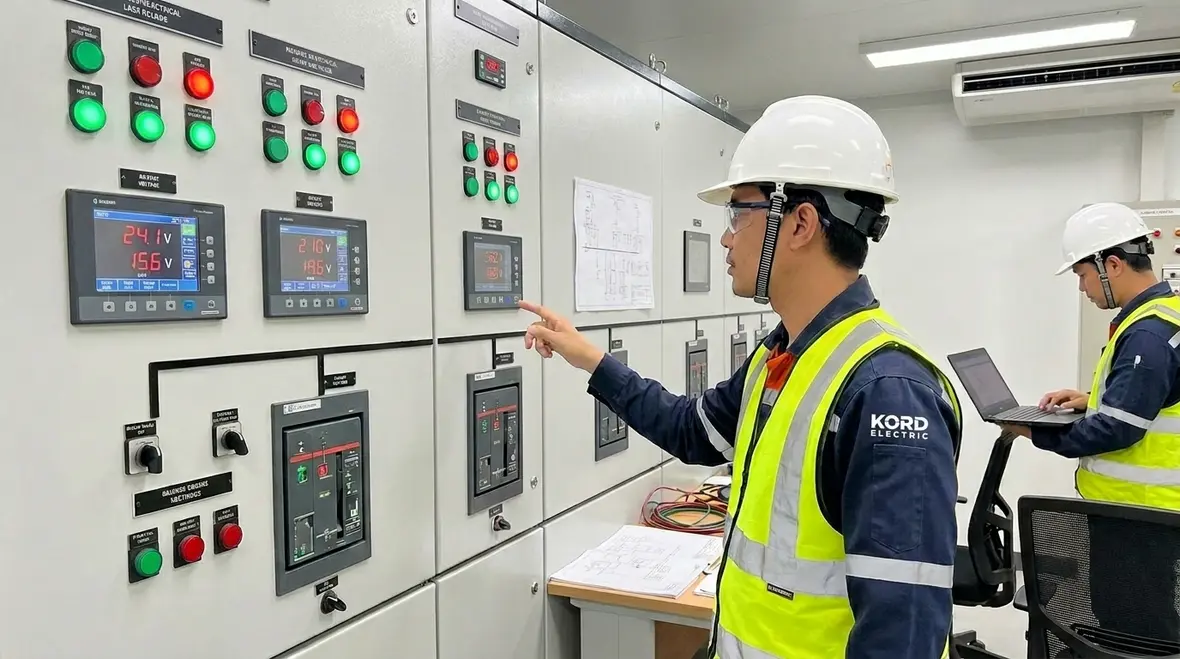
A shedding scheme succeeds only when the controls execute correctly under stress. Kord Electric designs the logic to work with your existing switchgear, protective relays, and generator controls. Then we validate the scheme with testing that mimics real conditions as closely as possible.
First, we define detection signals. These may include frequency deviation, under voltage conditions, rate of change of frequency, loss of utility supply, or generator availability status. Next, we connect those signals to discrete load shed commands. Then we add time delays, setpoint bands, and permissive checks so the scheme does not trigger from harmless dips.
Then comes the part people skip because it is not fun: testing and tuning. Our technicians perform functional tests and observe sequence behavior. We also review coordination to confirm that protective devices do not override the shedding steps in an unexpected way. If a feeder trips faster than the shedding stage can operate, we adjust the plan. If generator start signals arrive late, we adjust thresholds and delays.
Because this is an industrial environment, we also consider communication delays and control panel behavior. Therefore, we verify interlocks and alarms. We ensure the scheme logs events so engineers can analyze what happened, not just guess. After all, “we think it worked” is a terrible method for engineering.
Common failure points and how we prevent them
Facilities often face predictable issues. First, teams set thresholds that are too aggressive. Then the scheme sheds loads during events that do not threaten stability. That causes unnecessary shutdowns and frustration. Second, some plans use insufficient load data, so the calculated shed size does not match the real demand. Third, others ignore restart behavior, so the site struggles after the disturbance clears.
Another common risk involves interaction with other automation. If transfer relays, PLC sequences, or VFD enable logic compete with shedding commands, the system can behave unpredictably. Consequently, our service staff coordinates the shedding scheme with existing control strategies so the logic aligns across panels.
Finally, many sites rely on a plan that no one updated after equipment changes. A new production line adds motors. A renovation adds HVAC capacity. A generator maintenance schedule changes availability. Therefore, Kord Electric promotes review cycles so the emergency electrical load shedding strategy remains accurate across the facility lifecycle.
When done well, the scheme feels calm. During an event, it takes action quickly, and then it helps the facility recover. During an event, you do not need drama. You need a steady hand and correct logic. Like a good sitcom plot, but with fewer plot holes.
FAQ
Dual column approach: from assessment to commissioning
Assessment and design
We evaluate load priorities, disturbance scenarios, and existing control interactions. Then we build stage logic with clear thresholds and permissive checks.
During assessment, we look at power quality, past outage history, and voltage stability issues that may already be affecting your site. For facilities experiencing flickering lights, nuisance trips, or unexplained shutdowns, pairing your emergency electrical load shedding strategy with a deeper review of voltage fluctuations can reveal hidden weaknesses before they turn into outages.
We also review maintenance records and existing electrical preventive maintenance plans. If your facility team is already following a structured maintenance program, we align the shedding design with those routines so testing, inspections, and updates happen on a predictable schedule rather than in reaction to failures.
Commissioning and improvement
We run functional tests, verify coordination, and tune timing. Afterward, we support documentation and training so teams understand the scheme.
Commissioning includes simulated disturbance scenarios, staged generator tests, and confirmation that the right loads shed in the right order. Where possible, we capture trend data and event logs so engineers and managers can see how the system behaved instead of relying on memory after a stressful event.
Once the scheme is live, we treat it as a living part of your electrical infrastructure. As production changes, new equipment is added, or your facility invests in upgrades like EV charger installation or expanded lighting systems, we help you revisit the shedding plan so it continues to match your real load profile.
Call Kord Electric to build a shedding plan you can trust
Kord Electric helps commercial and industrial facilities and major property buildings build a dependable emergency electrical load shedding strategy that protects people and keeps critical work alive. We design with real loads, integrate with your existing controls, and test until the behavior matches the plan. Then we train your teams so recovery stays orderly. If your site has grown, changed, or outgrown its old logic, reach out to us now. We will review your current setup and propose a safer, clearer path forward.
For facilities that want to go even further, we often combine emergency shedding projects with structured electrical preventive maintenance programs. This keeps critical equipment inspected, tested, and documented while ensuring that your shedding logic stays aligned with real-world conditions.
If you are already facing recurring power quality issues, unexplained trips, or unstable voltage under heavy load, our team can also support you with targeted voltage fluctuation diagnostics and repairs. Addressing those root causes alongside a disciplined shedding plan gives your facility a stronger foundation for uptime, safety, and long-term reliability.
When emergencies do happen, having a trusted partner on call matters. Kord Electric’s dedicated emergency electrical services team is ready to respond, stabilize your system, and recommend practical improvements so the next event is easier to manage. If you are ready to turn “we hope the power holds” into “we know the plan works,” it is time to put a real strategy in place.
Whether you manage a single industrial facility or an entire portfolio of major properties, Kord Electric is prepared to help you map your loads, discipline your control logic, and build an emergency electrical load shedding strategy you can rely on—day, night, and during the events that matter most.