Commercial EV Charging Infrastructure Planning
Commercial EV charging station infrastructure planning for major properties
When large commercial and industrial facilities plan to add EV charging, they need more than chargers and a power cord. Our Kord Electric focuses on commercial EV charging station infrastructure planning in the earliest steps, because the electrical backbone usually decides whether the project runs smoothly or turns into a long, expensive delay. In the introduction phase, we help others define site needs, load expectations, network goals, and uptime priorities. Then we map the path from utility service upgrades to conduit routes and commissioning tests. And yes, we do it before anyone buys shiny hardware that cannot legally or safely run. Think of it like building a stage before the band shows up, not after the first note goes missing.
Site planning starts with real power, not wishful thinking
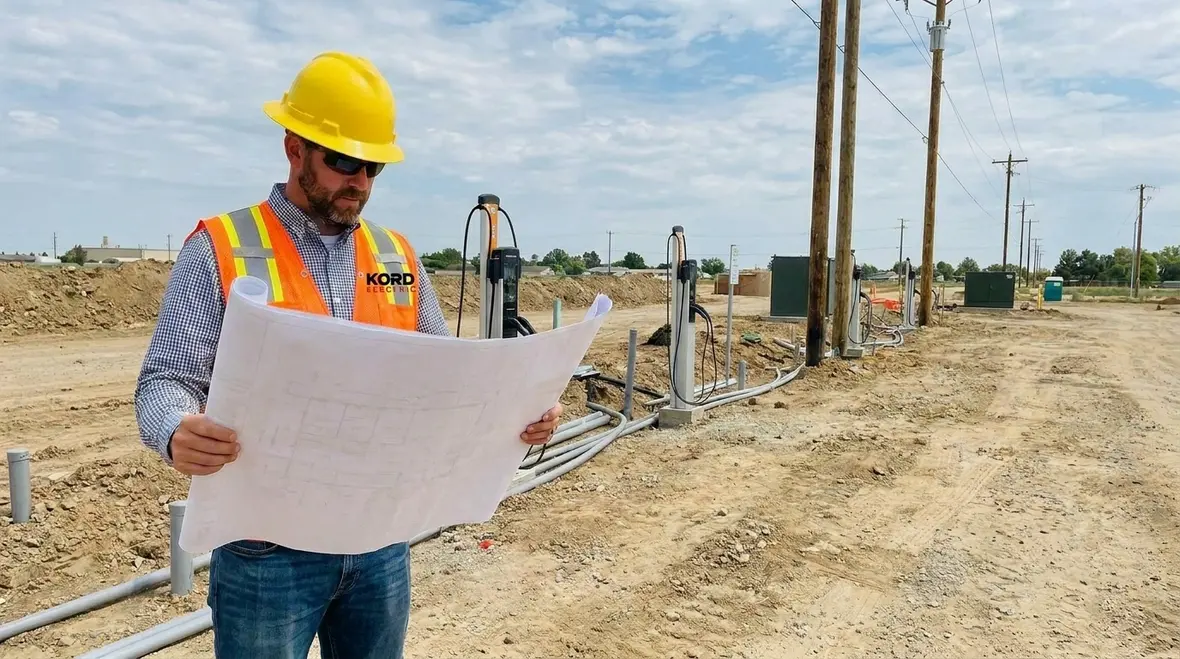
To set up charging for fleets, staff, and visitors, we first study the property like it is a living system. We look at parking layout, transformer locations, service entrances, and how vehicles actually arrive and depart. Then we evaluate load patterns, including lighting, HVAC, elevators, kitchens, and manufacturing equipment. After that, we forecast EV charging demand by considering peak usage times, charger power levels, and expected growth.
Many teams think, “We will just install chargers and let the utility handle the rest.” However, utilities do not run on hope. Utilities respond to capacity studies, lead times, and permit rules. Our technicians and expert service staff explain the options clearly, so stakeholders understand what changes and why. They walk through the tradeoffs between adding electrical capacity now versus enabling staged expansions later. And when someone says, “We only need a few today,” our team calmly reminds them that drivers love momentum, and fleets love scaling.
Thoughtful site planning also sets the stage for long term reliability. By pairing commercial EV charging station infrastructure planning with structured preventive maintenance practices, properties avoid the “install now, fix later” trap that can undermine uptime just when usage ramps up.
Electrical service sizing and load management that operators trust
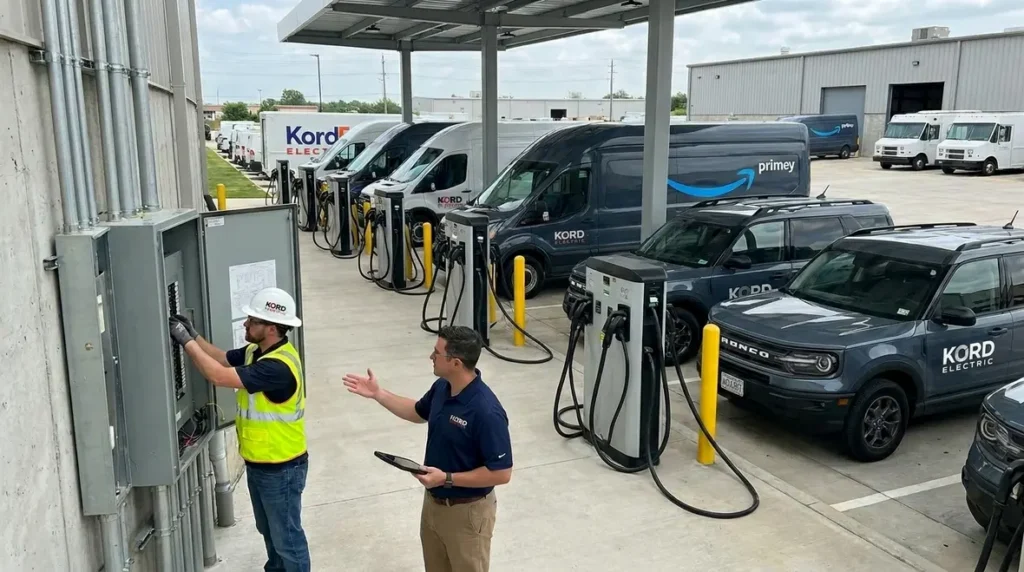
Large scale installs live or die by electrical service sizing. Therefore, we review utility tariffs, meter configurations, service voltage, and available fault current data. Next, we evaluate how many chargers can run at full output at the same time without violating code or manufacturer limits. We then design load management controls that coordinate charging schedules across multiple pedestals, stalls, or buildings.
At this stage, our experts often recommend a layered approach. We might use smart panels, dynamic load sharing, or energy management systems that reduce demand spikes. As a result, facilities can keep operations steady even during the busiest charging windows. Additionally, we plan for future growth by reserving spare breaker space, cable capacity, and conduit routes. In other words, we build a plan that does not force a redesign when the next fleet contract shows up.
Smart load management also supports cost control. By coordinating charging schedules to avoid unnecessary demand peaks, major properties can align energy use with the right utility tariffs and reduce long term operating expenses while still giving drivers the charging speed they expect.
Distribution, transformers, and panel layouts built for safe uptime
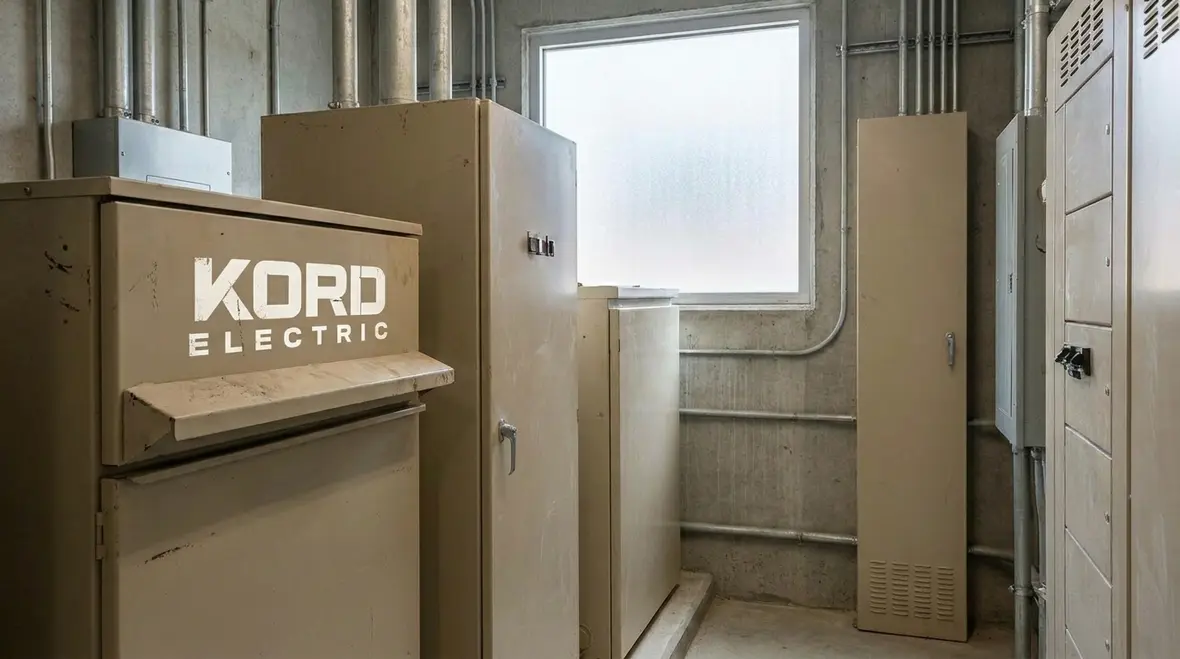
After we confirm site power capacity, we move deeper into distribution design. We coordinate transformer placement, feeder sizing, grounding, bonding, and protective device selection. Then we design panelboards and switchgear so the charging system supports safe operation under real conditions. If a facility has multiple buildings, we also consider how to distribute power between loads while keeping wiring lengths reasonable and losses controlled.
We pay close attention to routing and space constraints, because commercial and industrial sites rarely offer unlimited room. For example, equipment rooms may have existing busbars, gear, and critical process loads. Therefore, we create a layout plan that reduces cable congestion and supports future service access. Our technicians explain the rationale during walkthroughs, including why we place conductors where we do and how we maintain clearances for maintenance crews. And if someone asks, “Can we just squeeze one more conduit run in there?” our answer is usually yes, but not at the expense of compliance. We like our installations as much as we like our jokes. Both need standards.
For facilities that already rely on disciplined electrical maintenance programs, EV charging distribution can plug into that existing culture of reliability. A thoughtful layout makes it easier to inspect, test, and document equipment health over time instead of reacting to surprise outages.
Conduit, trenching, and weatherproofing for harsh real world sites
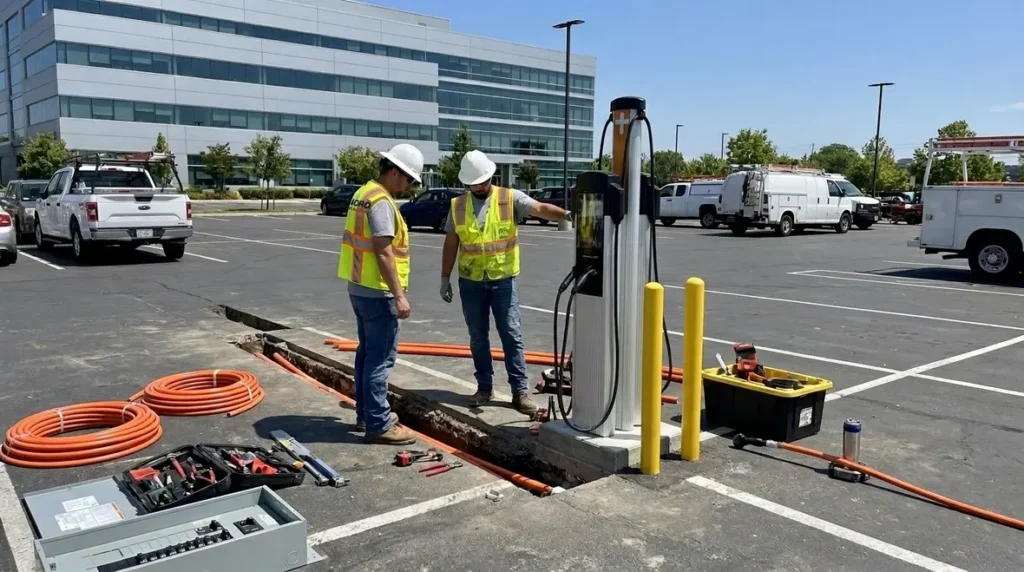
Installation durability matters as much as electrical design. We develop conduit, trenching, and cable protection methods that match the site environment. That means selecting appropriate conduit types, burial depths, and pull box locations. It also means planning for bollards, vehicle impact zones, and drainage so water cannot settle where it should not.
Because many properties have heavy traffic and ongoing construction activity, we schedule work to reduce downtime and protect existing utilities. In addition, we design cable runs to minimize future disruptions. For instance, we avoid routes that cut through areas planned for future paving, landscaping, or equipment upgrades. Then we document everything, so facility managers do not feel like they are playing EV charging “Where’s Waldo” during maintenance.
We also guide stakeholders on installation details that affect longevity. Our team discusses temperature impacts, UV exposure, and the importance of sealed connections. Meanwhile, our expert service staff explains how these choices influence warranty outcomes and service response times. That way, others do not learn lessons after the first storm or the first season of freeze thaw. We prefer lessons before the weather starts acting like it owns the place.
Permits, utility coordination, and code compliance without the chaos
Commercial and industrial facilities usually require multiple approvals, and the timeline can shift fast. Therefore, we handle utility coordination and permitting with a clear process. We help gather the right data for the capacity and interconnection steps, then we support the documentation that inspectors require. We also plan for compliance with electrical codes and manufacturer requirements so the system remains safe and maintainable.
Even when utilities move at their own pace, we reduce uncertainty by setting expectations early. We explain what information the utility needs, what submittals we prepare, and how we respond to questions from the field. As a result, stakeholders spend less time chasing status updates and more time planning operations.
Our approach stays practical. We do not drown clients in jargon. Instead, we explain each milestone in plain business terms. We tell them what comes next, which parties act, and what they can do to avoid last minute surprises. If a project feels chaotic, we treat that as a solvable problem, not a personality trait.
Commissioning, testing, and ongoing service for long term performance
When installers finish mounting chargers, the work still needs validation. Commissioning is where reliability gets proven, and we treat it as a core phase, not a checkbox. We test electrical continuity, insulation resistance, polarity, grounding, and protective device operation. Then we verify charging communication, correct power delivery, and safety behaviors under load.
We also perform functional tests with realistic charging scenarios. For example, we test coordinated operation when multiple chargers run at the same time, then we confirm the load management behavior matches the design. Next, we check monitoring and reporting so operators can track sessions, usage, and any fault events.
After commissioning, we do not disappear. Our service staff supports preventive maintenance planning, firmware updates, and response procedures. Therefore, facilities can keep uptime high and reduce downtime from avoidable issues. We also offer training sessions for site staff, so they know who to call and how to interpret basic alerts. In short, we help others move from install day confidence to everyday operational confidence.
When properties want a structured strategy that goes beyond EV charging alone, pairing infrastructure planning with dedicated commercial and industrial electrical maintenance plans helps keep the entire electrical backbone healthy, not just the newest hardware.
Cost drivers and project phasing for faster deployment
Stakeholders often ask about cost, but they usually want answers that reflect the real drivers. We help identify the main cost levers, such as utility service upgrades, transformer work, switchgear complexity, trenching scope, and network integration. Then we connect those items to operational outcomes. For instance, a higher upfront capacity plan can reduce future upgrade costs and shorten timeline for additional chargers.
In many major properties, we recommend phased delivery. We might start with core stalls that serve peak demand, then expand as usage grows. As a result, facilities can begin benefiting sooner while preserving the option to scale. Also, phasing helps align with budgeting cycles and construction schedules.
Our technicians and expert service staff make phasing practical. They explain which electrical components can be built as foundations for later expansion, and which components require full completion for safety. We also show how load management settings affect the experience drivers feel. Yes, someone will notice if charging feels slow. Even if we love sarcasm, we do not love angry drivers.
Connecting infrastructure planning with EV charger installation services
Infrastructure planning is where a successful project starts, but it is not where it ends. Once commercial EV charging station infrastructure planning is complete, major properties still need a team that can execute the field work, stand up the gear, and validate performance. That is why we align our planning process closely with our dedicated EV charger installation services, so design decisions translate cleanly into real world results.
By keeping planning, installation, and long term service under one roof, Kord Electric helps commercial and industrial facilities move from early concept to fully operational charging systems without handoff gaps, conflicting assumptions, or finger pointing when timelines get tight.
FAQ
Ready to build a charging system that holds up under pressure
Commercial and industrial EV charging needs a plan that starts with power, not just hardware. Kord Electric helps others handle electrical design, site routing, utility coordination, commissioning, and ongoing service so the system stays safe and scalable. Our technicians and expert service staff explain each step in clear terms, then we execute with discipline. If you are planning a major property project and want fewer surprises, contact Kord Electric today for an infrastructure assessment. We will map your path to fast, reliable charging.
When you are ready to move from planning into installation, our dedicated commercial & industrial EV charger installation services provide a clear path from drawings to energized, fully tested stations that your tenants, employees, and fleet operators can count on.