Commercial Electric Vehicle Charging Station Costs Guide
Commercial charging budgets: what the Commercial Electric Vehicle Charging Station Costs really look like
When a property team asks about Commercial Electric Vehicle Charging Station Costs, we do not start with guesswork. We start with the site. For commercial and industrial facilities and major property buildings, the budget can swing based on power availability, trenching needs, charger type, and how many ports you want to serve. And yes, the price can move faster than a Tesla on autopilot, but we still plan it like adults.
In this guide, we break down the infrastructure costs and the ROI path in clear terms. We also explain how our technicians and expert service staff evaluate each site, so decisions feel calm, grounded, and practical. You will see how charging stations connect to electrical upgrades, operations, and future growth.
Site power and electrical upgrades that drive cost

In the field, the biggest cost variable is usually not the charger itself. It is the electrical work needed to support it. First, our team reviews your utility service, the main panel capacity, and the layout of the building or lot. Next, we look at the distance from the utility meter to the charger location, because long runs increase labor and materials.
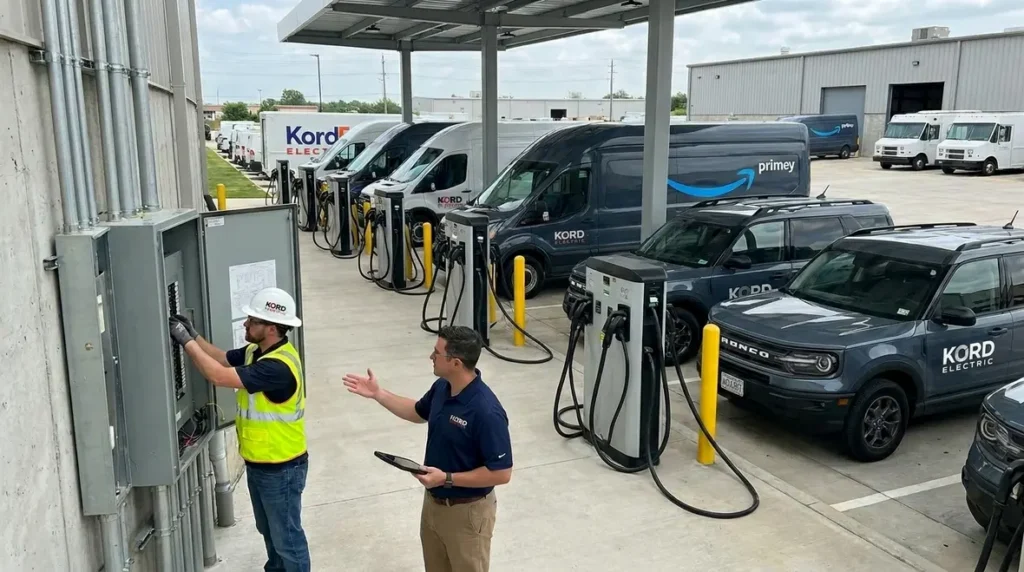
Then we consider whether you need a panel upgrade, a transformer, load management equipment, or new conduit runs. After that, we confirm if the site can safely handle the connected demand at the same time, especially during peak hours. If you have a fleet busier than a coffee shop at 8 a.m., simultaneous charging matters.
Our technicians explain the sequence in plain language: utility capacity first, then distribution, then charger installation. This order prevents expensive surprises. And when we map out the electrical plan, we also plan for safety, code requirements, and future expansion, because you will likely add ports later.
For properties where electrical infrastructure is already under strain, pairing your EV project with a structured upgrade plan can save both cost and downtime. When panel work, load balancing, and power quality improvements are coordinated together, you avoid scattered “fix it later” projects and build a cleaner path for long-term electrical reliability across your facility.
This is also where our broader commercial electrical experience comes into play. The same thinking that goes into rewiring cost planning for commercial electrical systems applies to EV charging: look at the whole load profile, not just a single new piece of equipment. A charging project that respects the rest of your infrastructure is far less likely to trigger nuisance trips, voltage issues, or late-stage redesigns.
Hardware, installation, and permitting for large properties

Next, we separate the job into clear parts so procurement teams can budget responsibly. Charger hardware varies by power level, brand options, and network features. Installation work varies by mounting style, weather protection, and whether we place chargers on an exterior pad, inside a garage, or near building entries.
Permitting is another real cost driver. Commercial and industrial sites often have multiple approvals. Therefore, we coordinate documentation early, so the project does not stall like a late-night meeting with no agenda. Our expert service staff also helps property managers understand which details inspectors care about most, including electrical ratings, signage needs, and grounding and bonding.
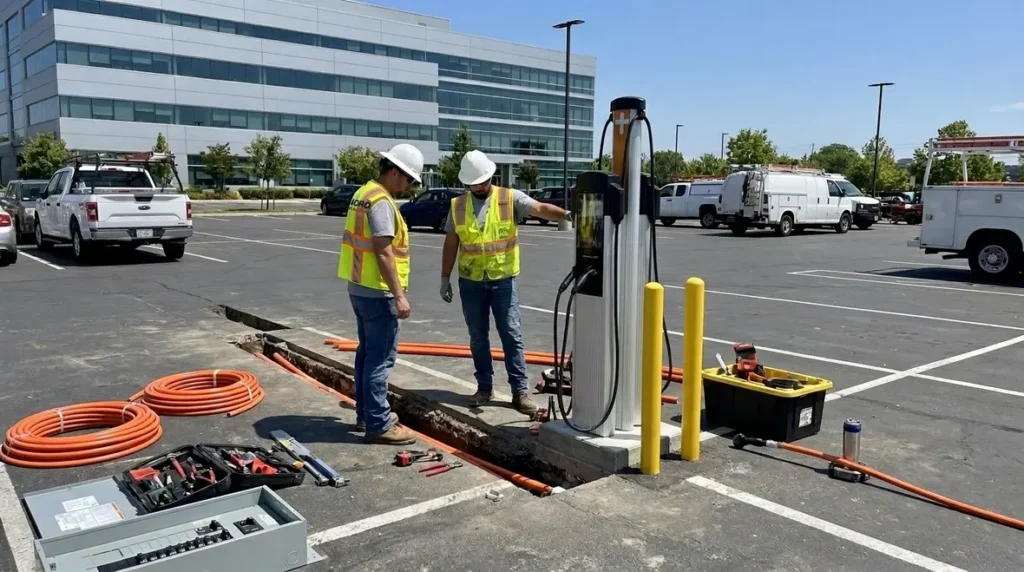
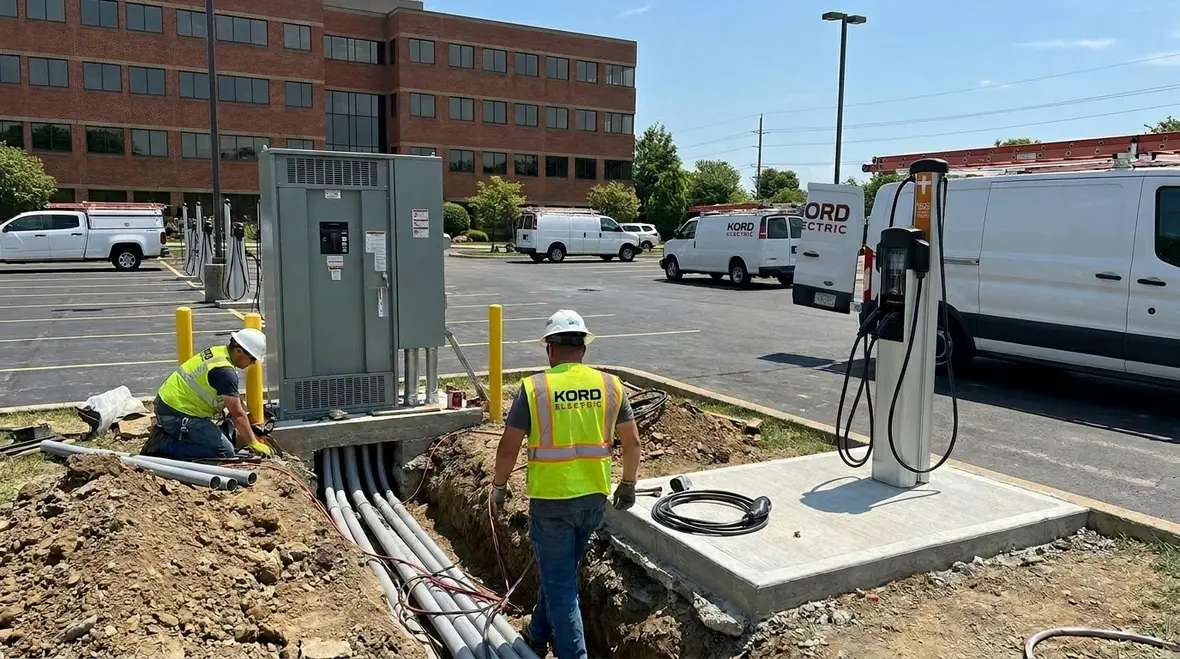
Additionally, we plan the civil scope. That includes concrete work, trenching, conduit placement, and restoration. If your property has existing utilities in the area, we identify conflicts early. When we do this well, we reduce change orders and keep timelines predictable.
Because many charging stations live side by side with upgraded lighting, controls, and signage, we also align our work with other projects on the property. The same disciplined approach we use for commercial lighting installation services—clear phasing, clean documentation, and coordination with other trades—keeps your charging installation from turning into a construction free-for-all.
Networked vs. non-networked chargers in the cost stack
For many sites, networked chargers add both capabilities and line items. Remote monitoring, user access control, billing, and reporting features can turn a simple outlet into an operational tool. Those features can also introduce subscription fees, warranty considerations, and integration work with your property management software. Non-networked options can work well in controlled fleet yards or private employee lots, but larger customer-facing sites often benefit from smarter visibility.
Dual use planning: fleets, customers, and employee charging demand

Commercial property teams rarely want charging for one group only. As a result, we help map demand for fleets, customers, and employees, since each group behaves differently. Fleets may charge overnight or between routes. Customers might charge during visits. Employees often need predictable access without queueing.
To make the business case stronger, we guide teams toward the right capacity mix. For example, we might plan slower charging for long parking durations and faster charging where turnaround times matter. Then we add load management considerations to avoid exceeding site limits.
This planning also affects the ROI math. When demand is clear, you can estimate utilization and revenue, or at least cost offset. If demand is fuzzy, the project becomes a hopeful poster on a wall. We prefer facts, charts, and a plan that holds up in a budget meeting.
Designing parking layouts that actually work
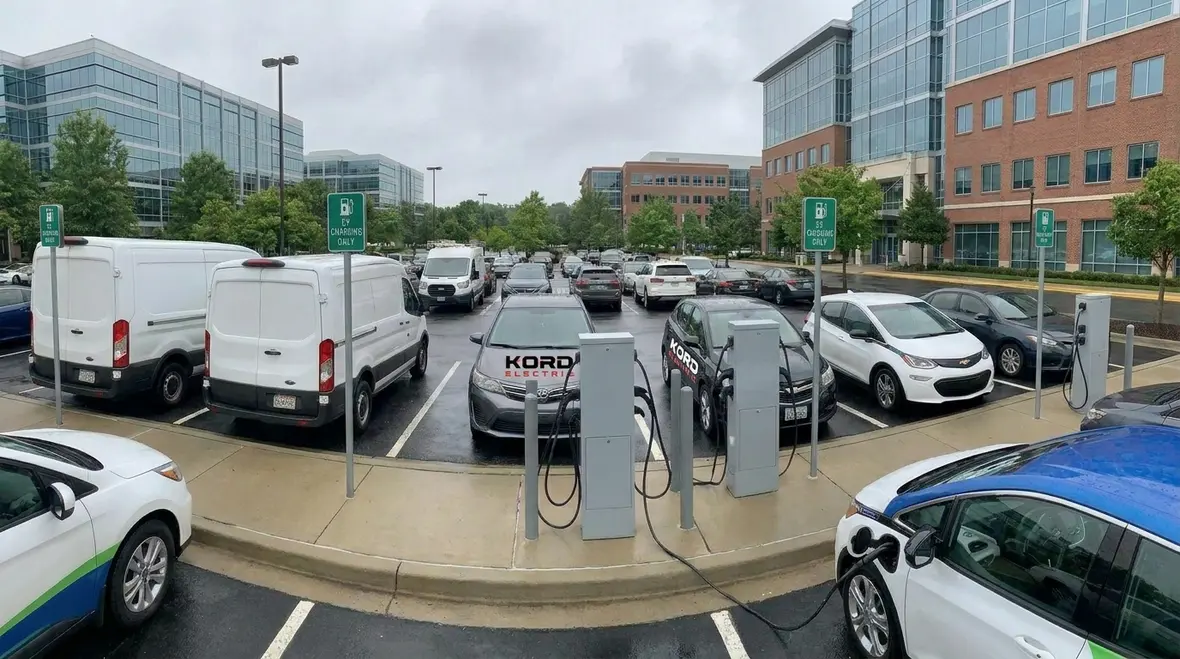
Parking layout is not just a site plan detail; it is a line item in Commercial Electric Vehicle Charging Station Costs. Poorly planned layouts lead to tangled cables, blocked access aisles, and frustrated drivers. We design stall groupings, signage, and walking paths so chargers feel intuitive to use. That can mean keeping fleet bays tucked away near loading zones while dedicating the most visible stalls to short-duration customer charging and reserving reliable spots for employees who anchor your daily usage.
Understanding uptime, service, and support costs over time
A charger is not a “set it and forget it” appliance. Reliability matters, and downtime hurts both customer trust and fleet operations. Therefore, we build service expectations into the overall cost picture. Our technicians focus on more than the initial install. We also plan how maintenance will work, including inspection schedules, component checks, and firmware updates when applicable.
Also, networking features can add ongoing value, but they must work smoothly. Our expert service staff helps teams understand what they gain from reporting, access control, and monitoring, and what it costs to keep everything functioning. When we align those factors with your operational needs, you avoid the classic scenario: the chargers look great on day one, and then nobody can find a problem report when it matters.
Furthermore, we recommend site practices that protect equipment. Good cable management, clear signage, and weather-aware mounting reduce wear. By improving these basics, we support long-term performance and reduce repeat repair cycles.
Integrating EV charging into broader maintenance programs
For large properties, EV charging should plug into a wider preventive maintenance strategy, not sit off on an island. Many of the same principles used in electrical preventive maintenance programs—regular inspections, documented testing, and proactive repairs—translate directly into healthier charging uptime. When chargers are folded into routine electrical walkthroughs and reporting, you spot issues while they are still inexpensive to correct.
ROI modeling: turning infrastructure spending into measurable value
Now we get to the part everyone cares about: ROI. We model it in a way that finance teams can explain internally, and that operators can actually use. First, we define your goals. Are you lowering operating costs for a fleet? Are you attracting customers and tenants? Are you meeting sustainability requirements? Each goal changes the ROI path.
Then we estimate total cost of ownership, not just the purchase and install. This includes electrical upgrades, installation labor, permitting, and expected service needs. Next, we estimate revenue or savings. Revenue could come from usage fees if your program supports it. Savings could come from reduced fuel expenses and optimized routing when fleet vehicles charge on-site.
After that, we estimate utilization rates. Utilization depends on your schedule, parking patterns, and whether you can provide access without bottlenecks. If charging time turns into an all-day parking contest, utilization drops, and ROI takes a longer walk than it should.
We also run scenarios for growth. Many commercial sites add vehicles or expand operations. So we model both the base build and future expansion. This approach helps you choose infrastructure that can scale without redoing everything later.
Linking EV investments to your broader electrical roadmap
When we talk about Commercial Electric Vehicle Charging Station Costs, we are rarely talking about a one-off project. We are talking about one chapter in your property’s electrical story. For many leaders, that story already includes panel work, lighting improvements, and sometimes full commercial rewiring initiatives. By aligning EV chargers with those longer arcs—capacity upgrades, resilience measures, and sustainability goals—you end up with an investment package your board or ownership group can understand in a single slide.
What our technicians do differently to control timeline and risk
In commercial work, timelines and risk control can make or break a budget. That is why our process stays structured. First, our technicians assess the site and confirm constraints. Then we develop an electrical and installation plan that matches the actual layout, not an idealized drawing. Next, we coordinate permitting steps so you avoid delays that land like a surprise invoice.
We also communicate during construction, because teams deserve clarity. Our expert service staff explains what happens next, why it matters, and how it affects cost and schedule. That means less guessing and fewer “we thought it would be different” moments.
Finally, we test the system before handoff and confirm performance targets. When the project transitions to operations, your team gets clear guidance on how to use charging effectively, and how to handle user requests. In other words, we do not just install chargers. We install confidence.
From first walk-through to final commissioning
By the time we energize your chargers, you will have already seen the layout, understood the power path, and reviewed the safety and operational details that matter. That same start-to-finish discipline is what we bring to every EV charger installation project we deliver for commercial and industrial properties across Southern California.
Industry FAQ for featured snippets
Ready to budget smart and deploy confidently
If your team is planning for commercial or industrial charging, do not gamble with incomplete numbers. We at Kord Electric help property leaders understand Commercial Electric Vehicle Charging Station Costs from power upgrades to long-term service, and we model ROI in a way that holds up in real operations. Schedule a consult with our technicians and expert service staff, and we will build a practical plan for your site, your timeline, and your next expansion. Let’s make sure your chargers work like they look.
If you are ready to move from research to implementation, our commercial EV charger installation services give you a direct path from concept to energized charging stations. We can also align your project with complementary services such as electrical preventive maintenance so your new infrastructure lives inside a stronger, more resilient electrical system.
Whether you manage a single facility or an entire portfolio, our goal is simple: give you commercial charging infrastructure that works on day one, scales on day two, and still fits your budget in year five. When you are ready, our team is here to walk your site, review your options, and turn “What will this cost?” into a practical plan you can approve.