Warehouse Lighting Retrofit Benefits for Safety
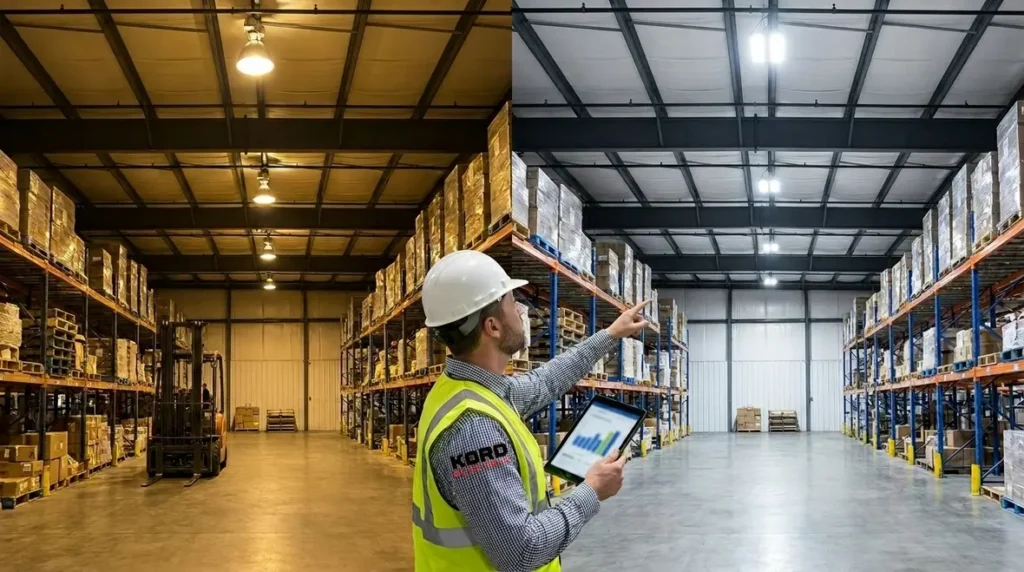
At Kord Electric, we see it every day: when a facility upgrades lighting, the Warehouse Lighting Retrofit Benefits show up fast, in safer movement, better visibility, and lower operating cost. In fact, modern LED retrofits can help warehouses run smoother because people can spot hazards earlier and equipment operators can work with more confidence. That is not just a “nice-to-have.” It is practical business. And yes, the lights feel brighter, but the real win comes from what the brighter light enables: fewer interruptions, fewer mistakes, and less waste from running outdated systems. While other teams treat lighting like background noise, we treat it like a tool that keeps production moving.
What a modern warehouse retrofit changes right away
In most commercial and industrial spaces, older fixtures were built for a different era. They may still work, but they do not work well. When we lead a Warehouse Lighting Retrofit Benefits project, we start by mapping what the building actually needs, not what the lighting catalog claims. Then we match the solution to the aisle layout, ceiling height, task zones, and the way forklifts and pedestrians share space. Next, we plan the replacement so we can keep operations running with minimal downtime.
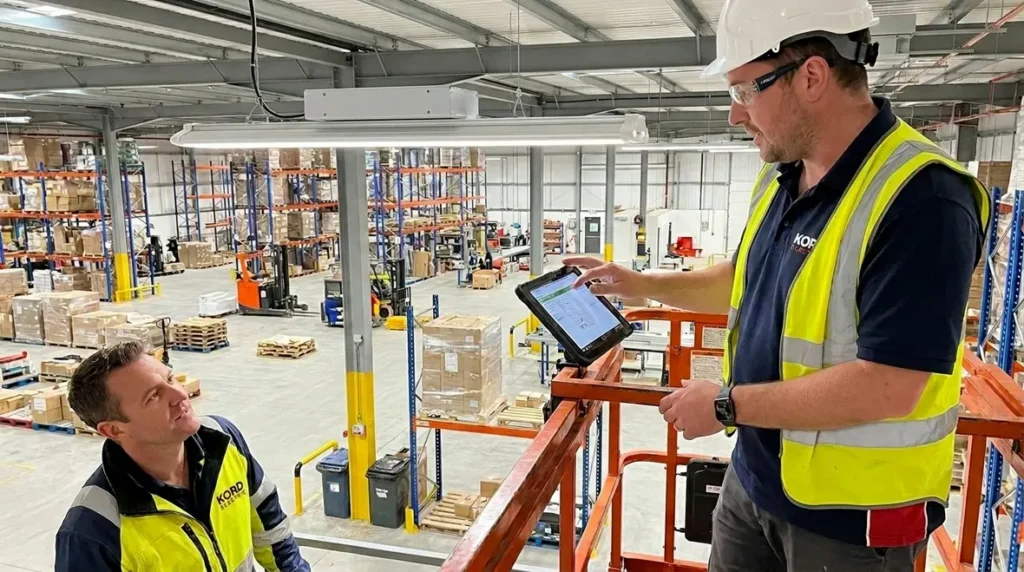
Our technicians explain the “why” during the site walk. For example, when light levels fall off near racks or along dock doors, it often points to fixture spacing, lumen output, or reflectivity problems, not just “weak bulbs.” Likewise, flicker from aging components can add discomfort for staff, and poor uniformity can make picking and packing slower. In other words, the retrofit does not just add brightness. It improves the way light behaves across the full working area.
And if anyone asks why we are so serious about lighting for a warehouse, we answer with patience and a small smile. Bright light helps people avoid mistakes. It is like reading glasses, but for an entire building. Without it, you do not just work less efficiently. You work with more risk.

How we audit lighting performance without guessing
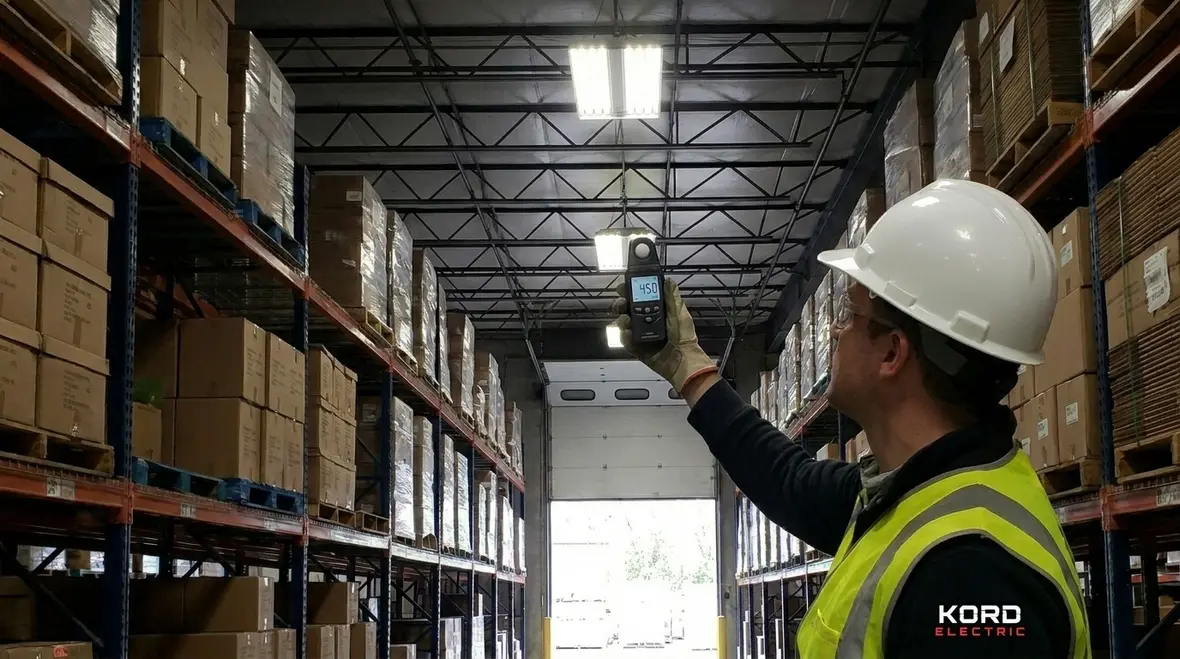
We do not rely on assumptions, because warehouses do not behave like perfect lab conditions. Instead, we perform an audit that measures what is happening now. Then we compare it with what the facility needs to run safely and efficiently.
Our expert service staff uses a practical approach. First, we review electrical loads, control strategies, and the wiring pathway. Then we evaluate fixture condition, mounting height, and shielding. After that, we measure illumination levels across key zones like order picking lanes, packing stations, maintenance bays, and staging areas. Finally, we consider how shifts change the lighting demand, so we can design controls that match real schedules.
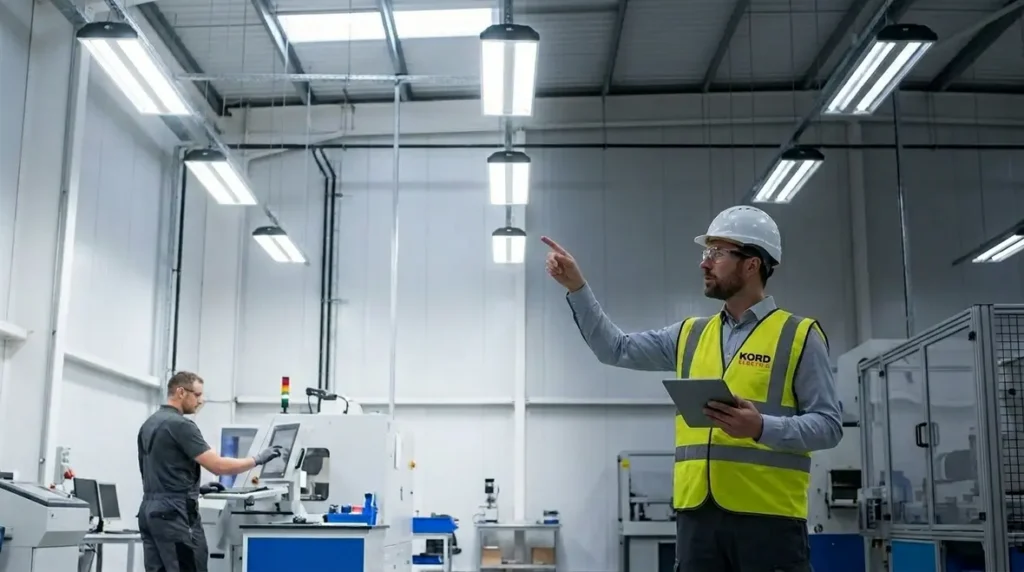
This is where many projects fail. Some teams sell upgrades based on a single average number. However, warehouse work involves lots of small tasks at different distances and angles. So, we focus on uniformity, glare control, and spill light near docks and exterior doors. That way, the retrofit improves visibility where people need it most.
Choosing fixtures and controls that fit commercial and industrial needs
LED retrofits work best when the fixture design and controls match the warehouse workflow. Therefore, we help facility leaders pick solutions that make sense for a major property or industrial building, not generic office lighting.
Here is how we think about it:
- Fixture type for the task zone: high-bay fixtures for larger spaces, linear and surface options for specific rack lanes, and targeted solutions for packing and quality areas.
- Color and optics: we select optics that reduce dark spots and keep glare down, especially near moving equipment lanes.
- Controls that reduce waste: occupancy sensing for intermittently used areas and scheduling for shift-based operation.
- Dimming where it helps: when layout and reflectance support it, dimming can cut energy use without harming visibility.
Next, we coordinate with the facility’s electrical system. We check drivers, compatibility with existing power, and whether the retrofit affects panels or circuits. We also look at how the building switches lights today, because controls only deliver value when they align with how people actually move through the space.
We also address a simple truth: warehouses are busy. So, our planning includes a realistic path for installation, including lead times, access needs, and safe work practices. No one wants a “light upgrade” that turns into an unplanned shutdown. That would be the lighting equivalent of forgetting your phone charger. You can get through the day, but you will not enjoy it.

Why planning the retrofit schedule matters as much as the hardware
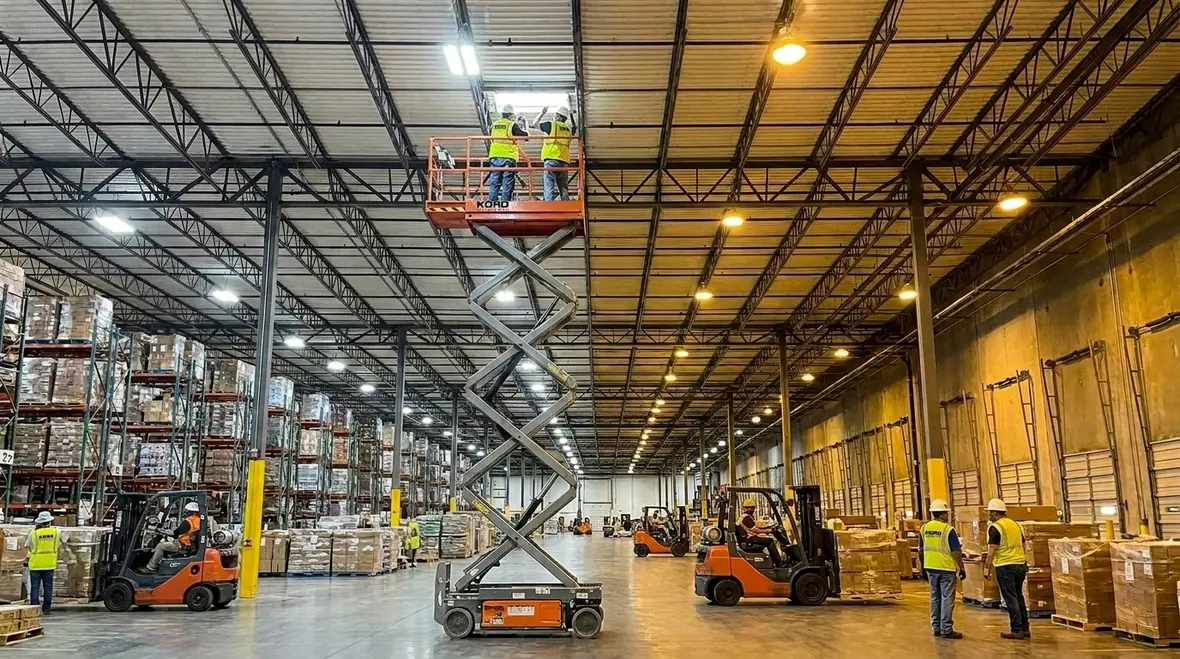
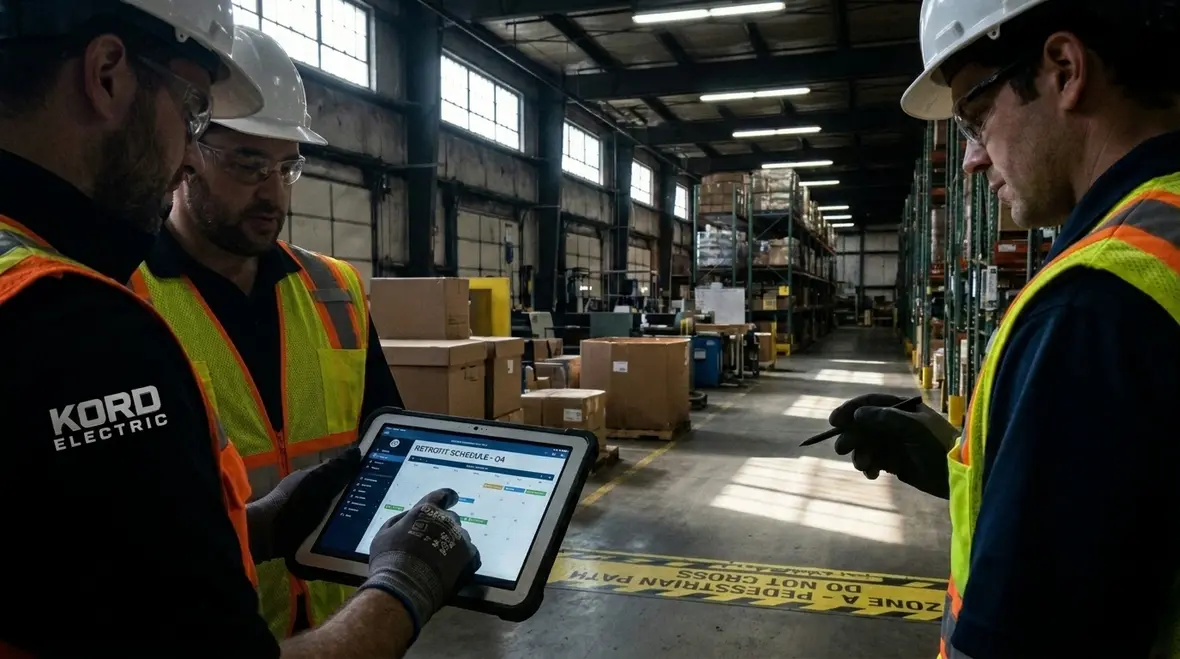
Even the best LED retrofit fails if the rollout disrupts operations. That is why we build the plan around your facility schedule. We set a sequence for replacing fixtures by zone and time window, so traffic patterns stay safe and productivity stays steady.
In practice, we also manage risk. For example, we confirm how existing fixtures are mounted and what access exists above racks and catwalks. Then we handle wiring changes carefully and keep work areas controlled. Additionally, we coordinate with stakeholders so safety teams understand the workflow. Our goal is simple: deliver results without creating new problems.
We also advise on when to do additional upgrades. Sometimes, lighting retrofits reveal wiring or panel limitations that must be handled for long-term stability. If we spot those needs, we explain the options in plain language. That way, decision makers can budget with clarity instead of surprise.
And just to keep it human, we remind teams that lighting work is like car maintenance. Nobody wants it, until the “check engine” light shows up at the worst time. Planning early helps the facility avoid that moment.
Electrical systems and building integration for modern warehouse lighting
Warehouses often sit inside larger commercial and industrial buildings, and those buildings use electrical systems in complex ways. Therefore, our work includes coordination with the broader electrical plan. When we reference the topic of commercial electrical systems for modern buildings, we focus on how lighting connects to the building’s power distribution, switching, and safety requirements. If the facility uses advanced monitoring or building management, we consider how lighting controls can integrate and still stay reliable. For property teams exploring this topic in more depth, we often recommend resources like Kord Electric’s guide on commercial electrical systems for modern buildings as a helpful companion read.
We also take seriously what happens when you change loads. Even LED retrofits can alter circuit behavior. So, we examine:
- Load profiles and panel capacity: we help avoid overload surprises.
- Switching and control compatibility: we verify dimming and occupancy settings can work as intended.
- Grounding and safety checks: we confirm the electrical system supports the new fixtures.
When teams ignore these steps, they often see flicker, unexpected shutoffs, or control issues. Then they blame the LEDs. But the LEDs were rarely the problem. The building system was. By handling integration early, we protect performance and keep maintenance straightforward.
Warehouse Lighting Retrofit Benefits for safety, speed, and energy
Once the retrofit is installed, the benefits tend to show up quickly. First, visibility improves. People can see work surfaces, labels, and packaging details more clearly, and drivers can navigate aisles with better awareness. Next, safety improves because hazards stand out and movement paths look more consistent. In addition, better light uniformity supports faster picking and packing workflows, since workers do not need to adjust their eyes or rely on “good enough” lighting.
Energy performance also improves. LED technology typically reduces operating costs compared to older lighting sources. Furthermore, controls and scheduling reduce run time in areas that do not need full output. As a result, facilities can lower utility spend while keeping production strong.
We also think about long-term maintenance. LED retrofits often reduce lamp replacement frequency, which helps keep labor focused on real work, not ladder time and replacement runs. And our technicians can help document what was installed, so maintenance teams can troubleshoot efficiently later.
So yes, you get better light. However, the real win is the chain reaction: safer movement, fewer stoppages, smoother shifts, and less energy waste. Lighting becomes a silent operator, like that reliable coworker who never disappears mid-crisis.
FAQ: LED warehouse lighting retrofit
What Kord Electric does next for your facility
If you run a commercial or industrial warehouse, you deserve lighting that supports real work, not guesswork. Kord Electric can audit your current system, recommend a retrofit plan, and coordinate the electrical integration so your facility upgrades safely and efficiently. Call us to schedule an on-site evaluation with our experienced technicians. Then we will map the best approach for your layout, your schedule, and your business goals. Get the light right, and your whole operation feels the difference.
For property teams planning broader improvements beyond lighting alone, exploring Kord Electric’s dedicated services such as lighting installation services and commercial electrical support can help connect Warehouse Lighting Retrofit Benefits with long-term electrical reliability across the entire facility.
When you are ready to turn safer, brighter aisles into a daily reality rather than a wish list item, partnering with a commercial and industrial electrical specialist makes the difference between a simple relamp and a true retrofit. Kord Electric’s technicians and expert service staff bring that mix of planning, field experience, and clear communication that keeps projects on schedule and facilities running smoothly.
From the first lighting audit to final commissioning, our team treats your warehouse like what it is: a live environment where safety, uptime, and clarity all matter. Warehouse Lighting Retrofit Benefits do not happen by accident. They happen because someone took the time to align fixtures, controls, and electrical systems with the real work your people do every day.