Signs of Commercial Electrical System Failure
Commercial buildings do not fail the way movies do. Instead, they give you time, small clues, and a little drama before the lights go out. At Kord Electric, we see it every week: the Signs of Commercial Electrical System Failure show up long before a total shutdown. Owners usually notice odd flickers, rising breaker trips, warm panels, strange smells, or sudden performance drops in key loads like HVAC, elevators, and security systems. And then, just like a sitcom character ignoring the warning label on a space heater, they keep postponing the fix. In this article, we explain the early warning signals and how our technicians help you spot risk before it becomes an expensive incident.
Think of this as a practical field guide, not a horror script. When you understand what your building is trying to tell you, you can act early, avoid downtime, and keep occupants safe while protecting your investment.
Common early warning signals in commercial power systems
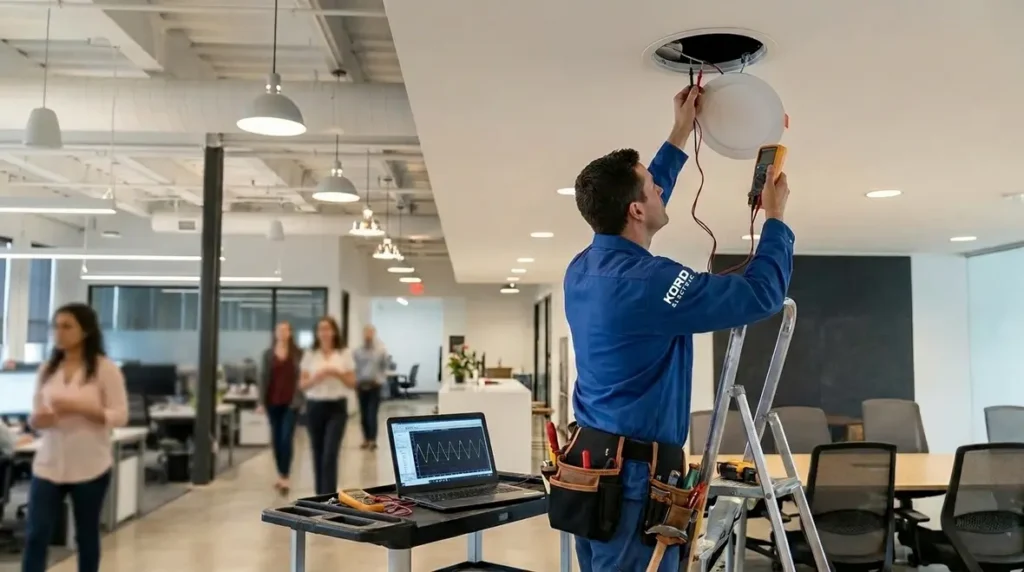
When electrical problems start, they rarely announce themselves with a brass band. Instead, we usually see patterns. First, a building may experience frequent breaker trips that feel random, even though they never truly are. Second, lights might dim or flicker when motors start, which often points to voltage sag or poor load balance. Third, facilities may notice inconsistent power to control systems, which can cause nuisance resets in relays, access panels, and energy management systems.
To make this practical, we ask our clients what they observe during the busiest hours. That is because load changes reveal hidden weakness. For example, if trips happen only during morning start up or shift change, we often trace it back to thermal stress, loose connections, or aging conductors. Also, if the issue appears after renovations, we check whether new loads or routing plans increased demand beyond what the original design could safely handle.
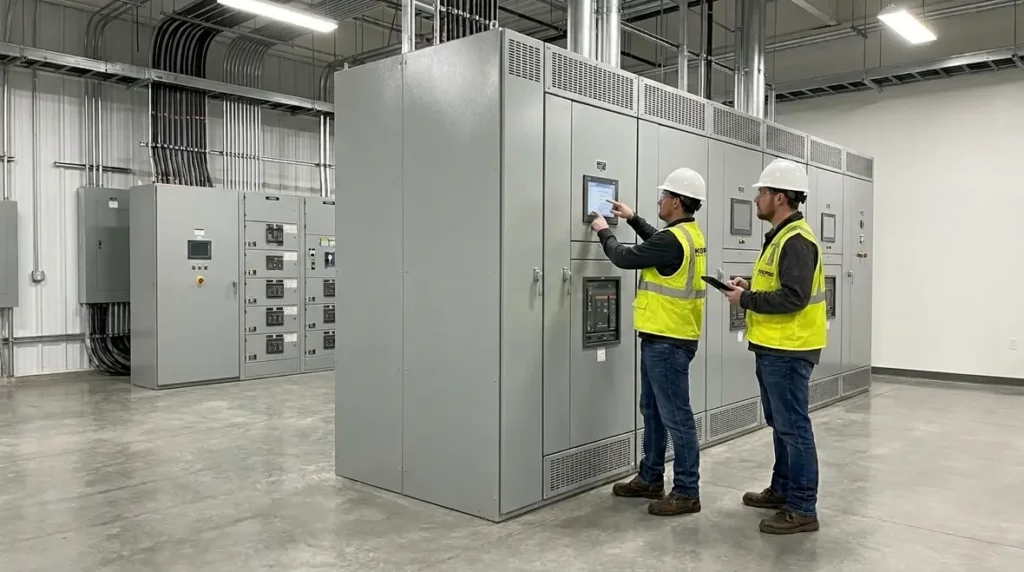
Finally, we pay close attention to the “small weird stuff.” That includes high humidity inside electrical rooms, dust buildup, and panel doors left ajar. Those details sound minor, until we connect them to heat, arcing risk, and failing insulation. In short, the Signs of Commercial Electrical System Failure often begin as comfort issues and end as safety issues.
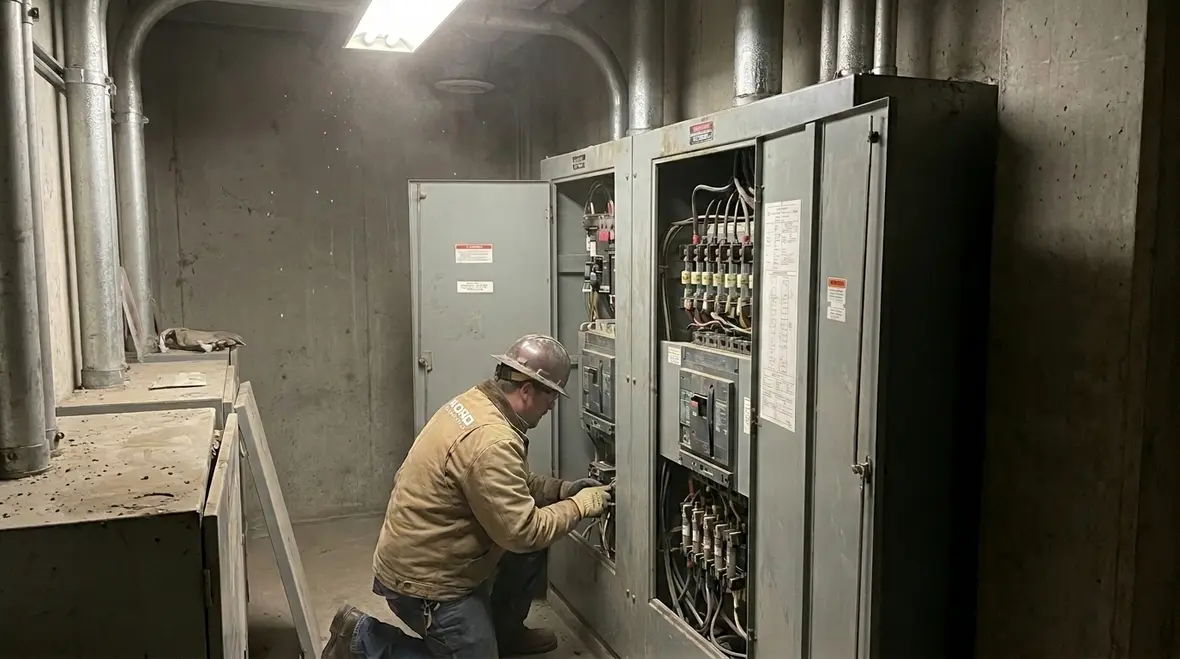
If you catch these clues early and bring in a commercial electrician, the fix is often straightforward: tightening terminations, rebalancing loads, correcting undersized circuits, or addressing environmental issues in electrical rooms. Wait too long, and those “small weird things” become downtime, damaged equipment, or worse.
Why heat and smell point to failure risk
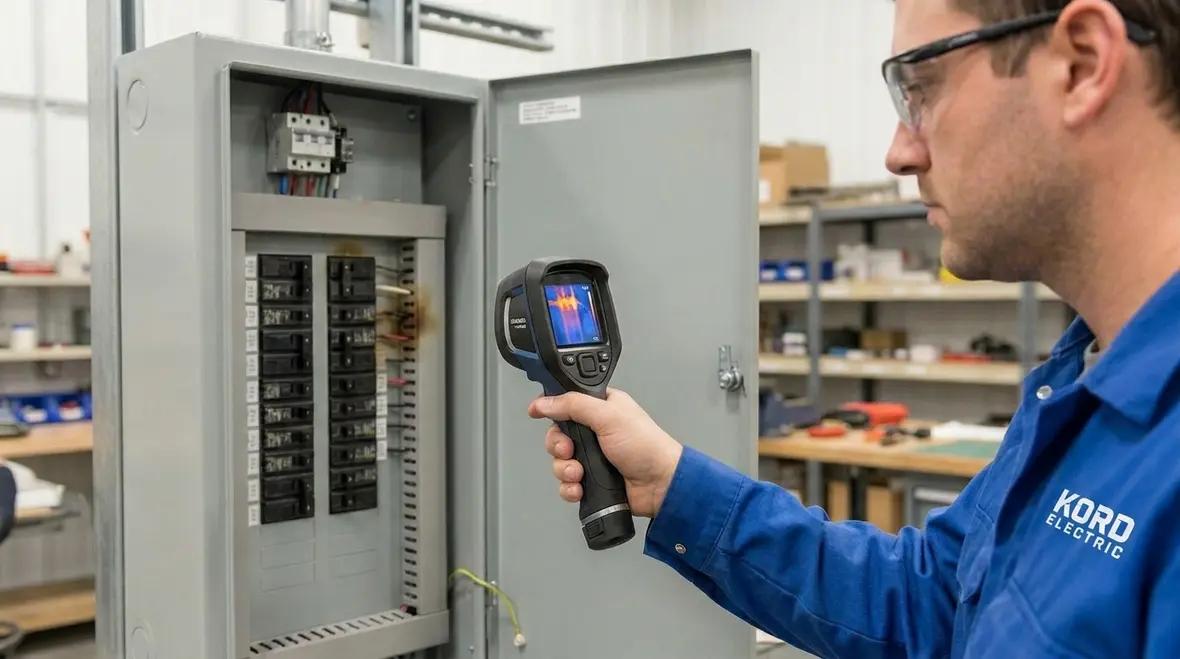
Heat moves first. Smell follows. And then the system pays the bill. In commercial and industrial facilities, we regularly find that overheated components often come from increased resistance at connections. When resistance rises, current turns into heat, and heat keeps rising. Over time, insulation weakens, and that can lead to arcing. If you smell something like burning plastic or you notice a warm electrical panel that stays warm after normal operation, you treat it like an emergency, not a “monitor it later” project.
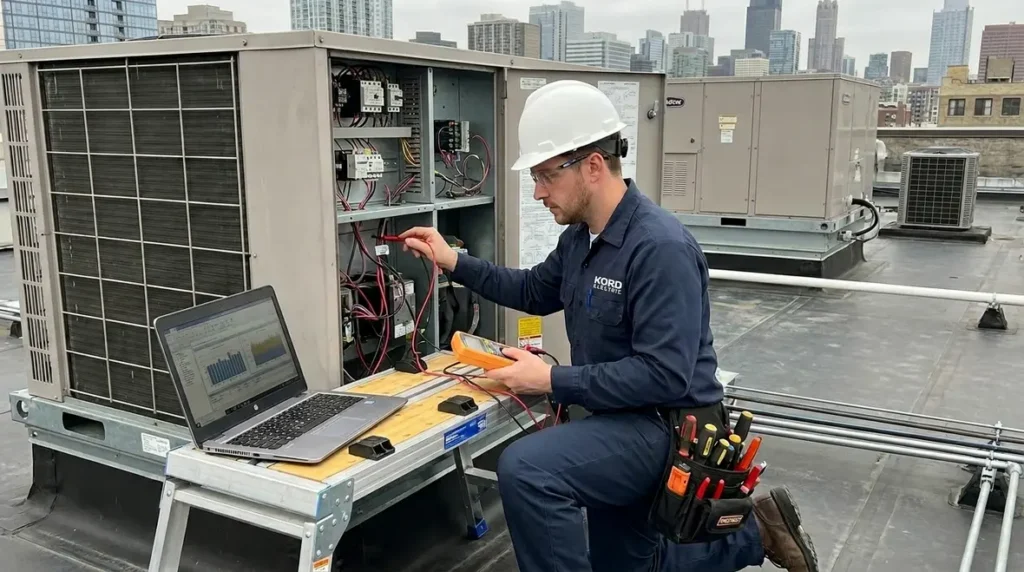
Our expert service staff also checks for telltale signs during routine inspections. They use spot temperature checks, visual inspection for discoloration, and tightness verification when appropriate. They also look for dust and moisture that reduce cooling. In many cases, the building gets blamed, but the real culprit is often a connection that loosened after vibration, transport, or repeated thermal cycling.
Now, a quick joke, because it helps people remember. Loose connections are like loose cabinet hinges. You can ignore them for a while, but eventually they fall in the middle of the night, and everyone blames the kitchen. In electrical rooms, the stakes are higher, so we never treat warmth as “normal.”
Any panel, transformer, bus duct, or cable run that feels hot to the touch, shows browning around terminations, or gives off that faint “hot electronics” smell is waving a flag at you. Pair that with flicker, nuisance trips, or unexplained equipment resets and you are looking at classic Signs of Commercial Electrical System Failure.
Heat, arcing, and equipment downtime
When heat and smell appear together, they usually sit at the front of a chain that ends with downtime. Arcing inside a panel can damage bus bars, destroy breakers, and even shut down major mechanical systems. Sensitive equipment like VFDs, PLCs, servers, and access control hardware do not tolerate dirty power and thermal stress for long. That is why a simple warm panel belongs on your to-do list now, not after the elevator or production line goes out of service.
Well-planned preventive maintenance, including infrared scanning and documented torque checks, turns these vague clues into clear action items. Instead of waiting for components to fail, you repair or replace stressed connections before they cross the line.
Load imbalance, surges, and the hidden stress on panels
Even when the building looks fine, the electrical system can run under stress. Large motors, chillers, compressors, and elevator systems can pull significant current. When loads change quickly, the system experiences surges and voltage dips. If protective devices or feeders are underrated, the stress grows over time. That is why we focus on how the facility actually operates across daily cycles.
Our technicians help clients spot these risks by reviewing event history from power monitoring gear and by inspecting equipment behavior. For instance, if a property sees higher than expected wear on contactors or if VFDs show frequent fault codes, we dig deeper. We also check whether neutral loading is increasing, especially in buildings with lots of computers, LED drivers, and electronic controls. In some installations, neutral issues look like “random faults,” when they actually come from harmonics and unbalanced phases.
And we also handle the “upgrade trap.” When a major property adds equipment, EV charging, new HVAC units, or additional parking loads without fully evaluating supply capacity, the electrical system takes on more stress. That is one reason we encourage planned load reviews instead of last minute add ons. If a facility brings in new demand, we make sure the electrical design supports it safely.
How load issues show up in daily operations
In the field, load imbalance and surges rarely show up as one dramatic event. Instead, they appear as:
Lights dimming every time large motors start or elevators move
Sensitive equipment rebooting when HVAC or compressors cycle
Random breaker trips on circuits that “never used to be a problem”
Overheating neutrals, especially where there are many electronic loads
Panels or feeders that run warm even under what should be normal load
Each of these is one of the Signs of Commercial Electrical System Failure in slow motion. With proper metering, data logging, and electrical preventive maintenance, those patterns turn into clear diagnostics instead of frustrating mysteries.
Arc fault, ground fault, and protective device behavior
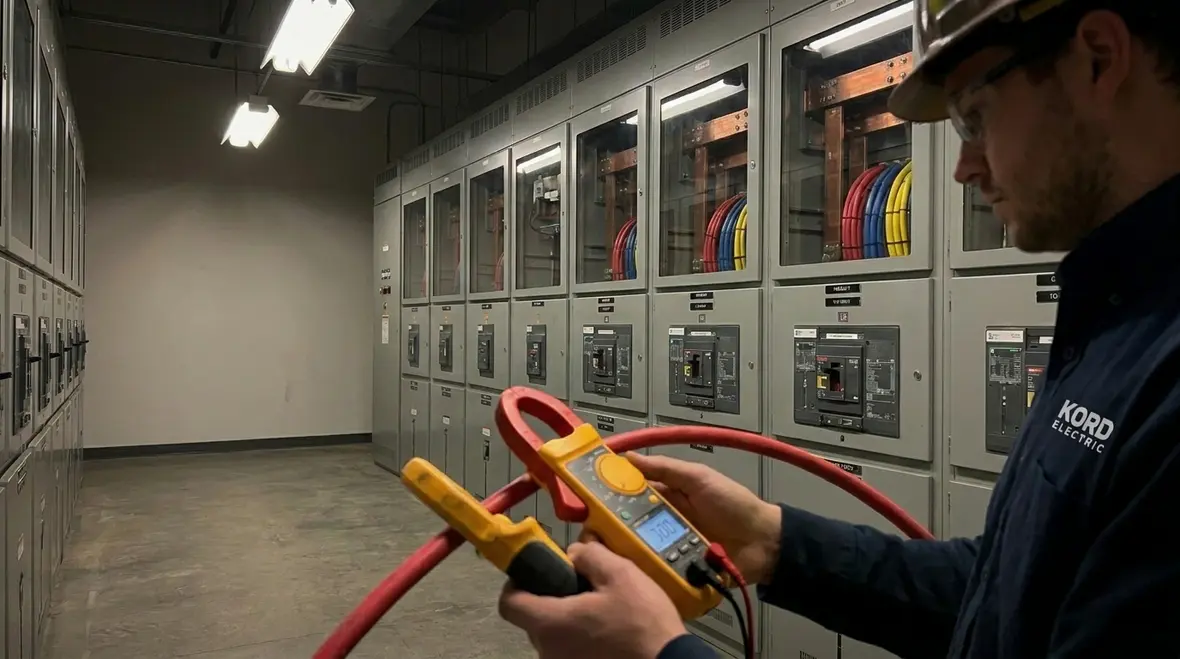
Protection devices act like the building’s seatbelts. When they start acting out, you should listen. Ground faults and arc faults can show up as intermittent trips, alarms during certain conditions, or sudden failure of a circuit that previously stayed stable. However, not every nuisance trip is a “real” fault, and not every silent circuit is safe. That is why we do not guess.
Our approach stays methodical. We test devices, inspect wiring terminations, and confirm proper grounding paths. We also evaluate whether devices match the load type and environment. Some modern loads produce noise patterns that make older device setups less reliable. For commercial and industrial facilities, the fix might require device coordination, selective tripping adjustments, or updated labeling and maintenance practices.
Transition matters here. First, we identify what device trips and when. Then, we trace upstream and downstream behavior. After that, we validate whether the issue involves insulation breakdown, moisture ingress, damaged conductors, or deterioration at terminations. Finally, we recommend corrective work that reduces both risk and downtime.
If you ever want a sign that the system is under stress, watch how protective devices respond during real operation, not just during quiet hours. The building will tell the truth when the loads show up.
When “nuisance” trips are not a nuisance
Facilities sometimes reset tripped breakers, silence alarms, and move on, especially when operations are busy. Over time, that habit turns nuisance trips into normalized behavior. The problem is that those devices are doing their job. They are telling you that the circuit is experiencing conditions it was not designed to handle. Treating every trip as an inconvenience instead of a diagnostic clue is one of the fastest paths to serious failure.
A better strategy is simple: document when trips occur, what equipment is running, and what changed recently. Then bring in a commercial electrical team that can perform coordination studies, insulation testing, and power quality analysis so your system protection matches real-world behavior.
EV chargers and other major load additions: avoid the domino effect
Major property upgrades can be a blessing, and they can also be the first domino in a chain reaction. We know many commercial facilities add EV charging stations to serve tenants, fleets, and visitors. That is a smart move, but it must align with the existing electrical capacity and protection plan.
In our EV charger installation work, we treat chargers as part of the broader electrical system, not as a standalone project. Our technicians explain what they find, how we estimate demand, and how we plan safe routing. Then, we coordinate the work so the new load does not overtax panels, bus bars, feeders, or grounding systems. We also help owners understand how charging behavior changes peak demand, especially when many users charge at similar times.
And yes, we say this gently, but firmly: “Just add another charger” is how people end up paying for a power study after the breakers start tripping at the worst possible moment. We prefer to prevent that. When we install, we plan for safety, capacity, and proper protection so the facility can grow without surprise downtime.
That same logic applies to other upgrades like new dock equipment, additional lighting controls, backup power, and HVAC expansions. When you connect new demand to an aging system without a full check, you create a risk that can appear months later. By the time symptoms show up as classic Signs of Commercial Electrical System Failure, the fix may involve more than a simple breaker swap.
Planning for future loads before they arrive
Future-ready planning looks beyond what you are installing this quarter. It asks what your property will require over the next five to ten years. If your organization expects additional EV chargers, more data equipment, expanded production lines, or higher density office usage, those plans belong in today’s electrical discussions.
That is why many owners pair new projects with a broader review of service size, panel capacity, and distribution layout. When needed, they invest in upgrades such as new panels, distribution equipment, or preventive maintenance programs that keep the entire system resilient.
What proper maintenance looks like for commercial and industrial buildings
Maintenance should not feel like a guessing game. It should feel like a system. First, our team starts with clear inspection goals. Then, we check terminations, inspect panels, verify torque where it applies, and review wear on protective devices. We also inspect for signs of heat, corrosion, moisture, and dust that block ventilation.
Next, we track performance over time. If a building experiences recurring trips, we build a timeline and connect events to operation schedules. That helps us focus on the true cause rather than treating symptoms. Third, we document findings in plain language so the property team can make decisions fast. Our expert service staff explains what the risks are, what the options cost, and what happens if the issue continues.
Because we work only with commercial, industrial, and major property buildings, we follow standards and practices suited for that environment. We understand that you need reliability more than you need last minute heroics. And when a facility depends on power for safety systems, access control, and operations, “good enough” is never a strategy.
We also align maintenance planning with building schedules. We coordinate work to reduce disruption, and we confirm that critical systems remain stable. In short, we keep the electrical system healthy before it reaches the point of failure.
For facilities that want a structured program instead of one-off emergency calls, pairing inspections with an electrical preventive maintenance plan keeps everything on a predictable, budget-friendly schedule. That kind of discipline dramatically cuts down on surprise outages and late-night repair calls.
Turning warning signs into an action plan
A strong maintenance plan takes all these early warning signs—breaker trips, hot panels, burning smells, flicker, nuisance faults—and organizes them into:
Immediate safety corrections for high-risk issues
Near-term repairs for aging or stressed components
Long-term upgrades that align with growth plans
Ongoing inspections and testing tailored to your facility
When you know what is happening in your system and what each risk really means, you can prioritize correctly instead of guessing. That is the difference between chasing problems and managing them.
FAQ for commercial electrical early warnings
Property teams, facility managers, and operations leaders often ask similar questions when they first start noticing the Signs of Commercial Electrical System Failure. Here are clear, practical answers you can share with everyone from maintenance staff to building ownership.
Request a commercial electrical check from Kord Electric
If your property shows early warning signals, don’t wait for the big failure. We at Kord Electric respond with a clear plan, careful inspection, and technician level explanations in plain language. When we find risk, we help you reduce it with practical next steps for commercial and industrial systems. Call us to schedule an electrical assessment and safeguard your operations. Let’s stop the small signs from turning into a shutdown you did not budget for.
Whether you are troubleshooting flicker and nuisance trips, planning new EV chargers, or building a long-term commercial and industrial electrical maintenance plan, a proactive visit from our team turns guesswork into a roadmap. Your building is already sending signals. We help you translate them into safer, smarter decisions.
If you are considering new EV infrastructure, explore our dedicated EV charger installation service page to see how we plan, design, and build charging systems that work with—not against—your existing electrical backbone.
And if you are ready to turn the Signs of Commercial Electrical System Failure into a solved problem instead of a recurring headache, request a preventive maintenance or voltage stability review today. Your future self, your tenants, and your equipment will all be grateful that you listened to the warning signs while there was still time to fix them on your terms.