Commercial LED Retrofit Upgrade Planning Guide
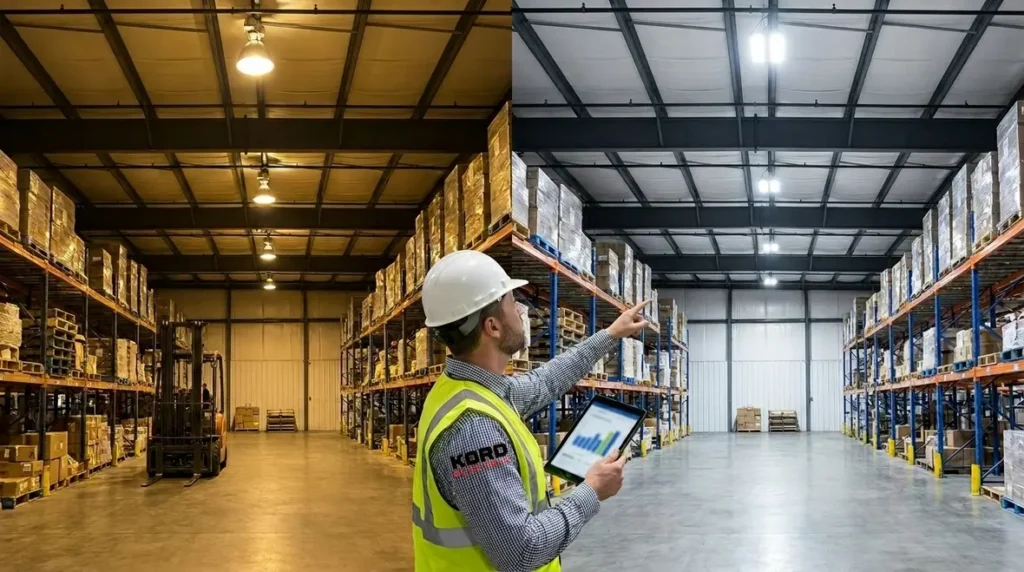
At Kord Electric, we see commercial LED retrofit work as a practical upgrade, not a science project that lives in a lab somewhere. For facility managers, commercial LED retrofit upgrade planning begins the moment someone asks, “Can we cut energy costs without touching the rest of our operations?” In the first phase, we help our clients map needs, check power and controls, and schedule work so lights come back on like nothing happened. Then, as the project moves forward, our technicians and expert service staff keep the work tight, safe, and predictable. And yes, we still hear the classic joke about LED upgrades: “So we just swap bulbs and everything gets better, right?” That is the plot twist. In real facilities, it is more controlled than that, and that is exactly why planning matters.
1) Start with the facility goals and a clear scope
Facility managers often begin with a target like “reduce electricity spend” or “improve brightness for safety.” However, we recommend that planning starts with the actual scope and operating reality. First, our team asks how the building functions: shift schedules, peak load times, occupancy patterns, and whether certain zones must stay fully lit at all times. Next, we break the scope by areas such as corridors, warehouses, loading docks, conference spaces, and exterior security lighting. This step matters because each space behaves differently, even when the fixtures look similar.
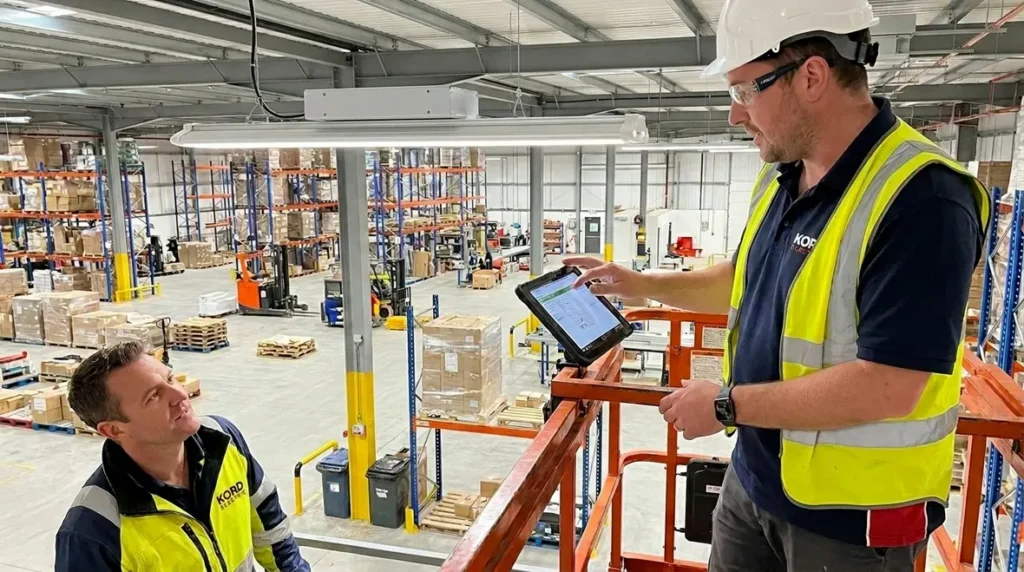
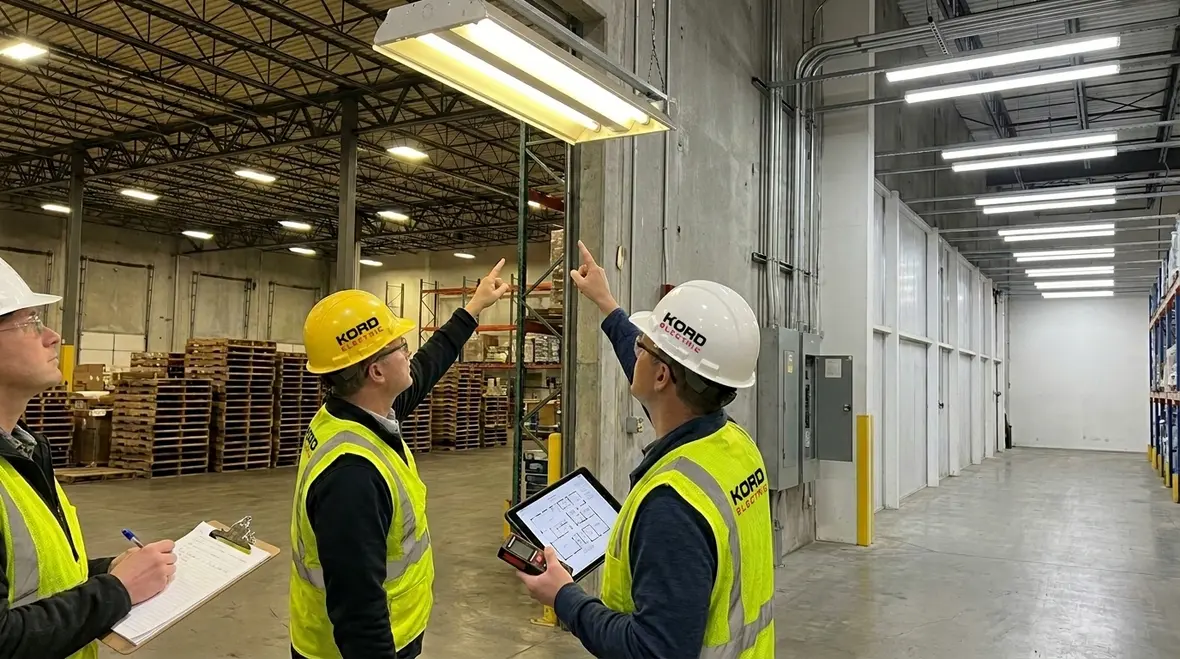
At this stage, our technicians explain what they look for during site walks. They review fixture condition, driver types, existing controls, and any signs of heat stress. Then they help others on the client side understand what will change and what will not. That clarity lowers risk. And it prevents the dreaded moment when someone says, “We assumed those lights were standard.” We do not assume. We verify.
Also, we align the plan with major property and commercial or industrial facility needs, including uptime requirements, safety compliance expectations, and how quickly areas must return to normal service after installation. For facility leaders exploring larger infrastructure improvements, we often connect LED planning with broader system strategies covered in our data center electrical infrastructure essentials guide, especially in buildings that support critical IT loads and 24/7 operations.
2) Conduct a lighting inventory and audit the electrical system
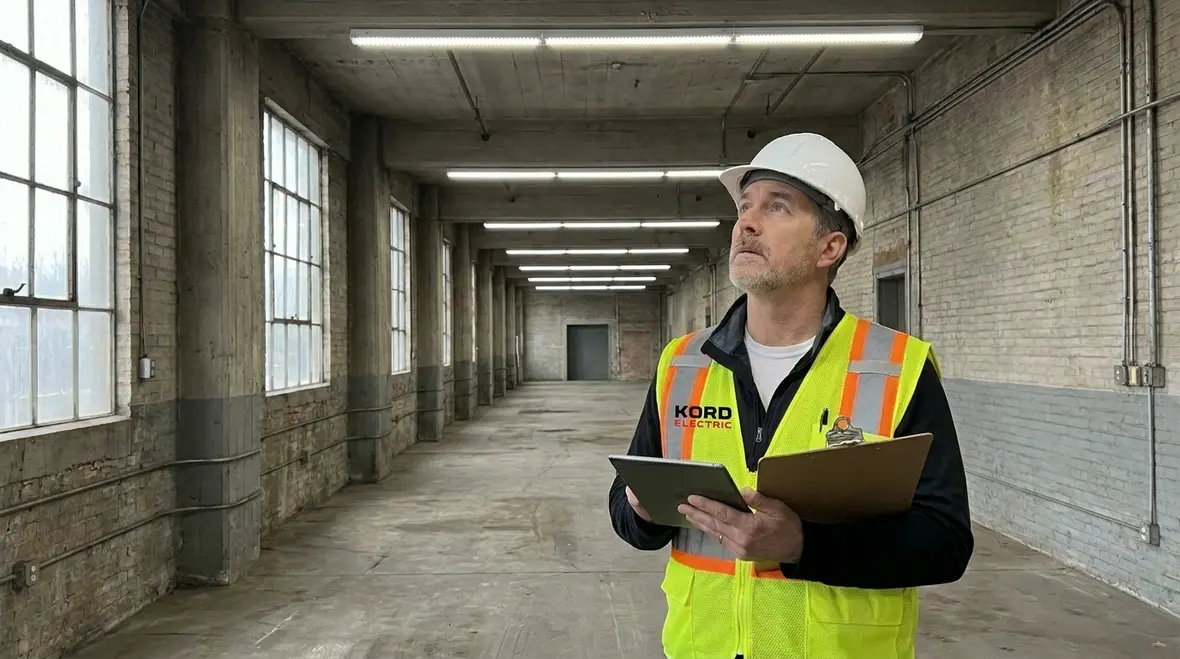
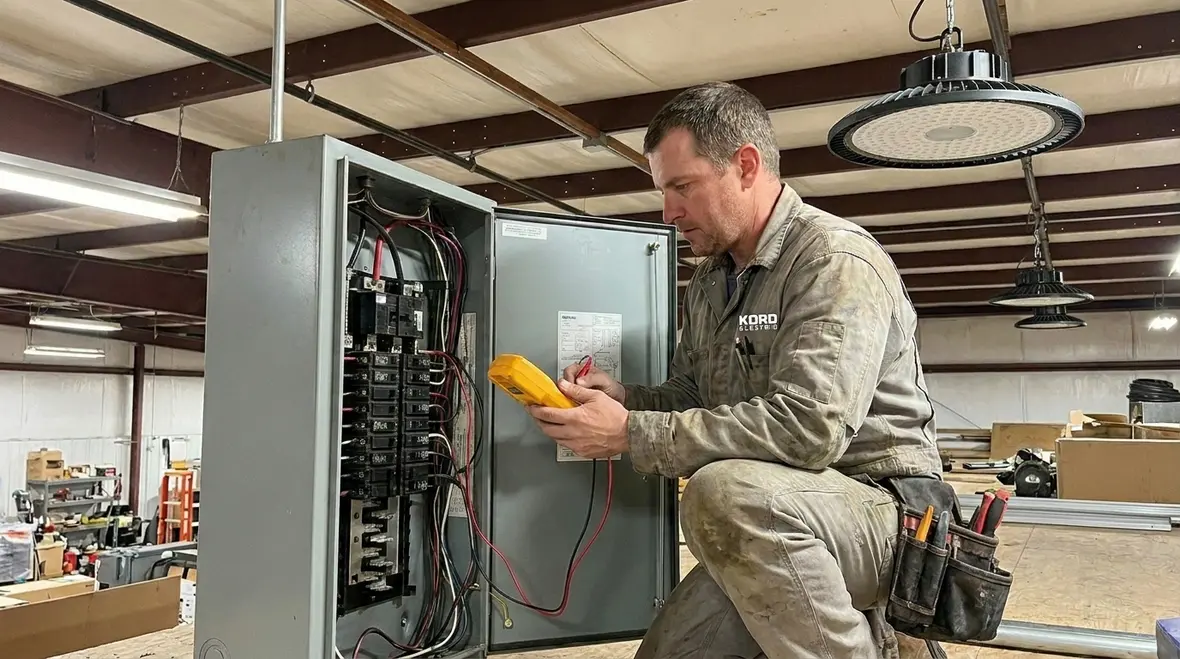
After goals get defined, we move into a lighting and electrical audit that gives the retrofit its backbone. We build a lighting inventory that includes lamp and fixture types, wattage, lumen output, beam spread, mounting height, and lens conditions. Additionally, we document circuit details such as breaker ratings, wiring types, panel capacity, and any existing dimming or lighting control systems.
Then we audit how electricity actually travels through your facility. For example, in older buildings, fixtures may draw power in ways that stress circuits, and some control circuits may be wired differently than expected. That is where smart planning becomes more than a spreadsheet. It becomes a way to avoid delays during installation.
Our expert service staff also checks whether any harmonics issues exist, since certain driver designs can behave differently in the field. So, before anything gets ordered, we confirm compatibility with the existing electrical setup or we plan the right upgrades.
Transition matters here. If you collect the right data early, you avoid guesswork later. And if you avoid guesswork, you keep the schedule from turning into a “soon, maybe, someday” situation.
3) Plan the controls strategy so savings do not disappear
Many teams focus on lumens and wattage, and that is fair. Yet in commercial spaces, the largest energy savings usually come from controls. We plan the controls strategy alongside fixture selection, not after the fact.
First, we identify the control approach already in place, such as occupancy sensing, photocells for daylight zones, time schedules, or dimming tied to building management. Then we determine whether new fixtures should use the existing system or whether a control upgrade is the better path. Next, we test for compatibility and set points so lighting responds correctly to occupancy and daylight.
Our technicians help facility managers understand what “works” means in real time. They consider whether sensors cover the right areas, how mounting locations affect detection, and how dimming ramps feel to occupants. We also review how controls affect emergency lighting behavior, since life safety rules take priority over convenience.
In short, controls planning keeps the project from delivering “pretty good” results. Instead, it delivers the savings you budgeted for, month after month, season after season.
4) Choose fixtures for performance, longevity, and site conditions
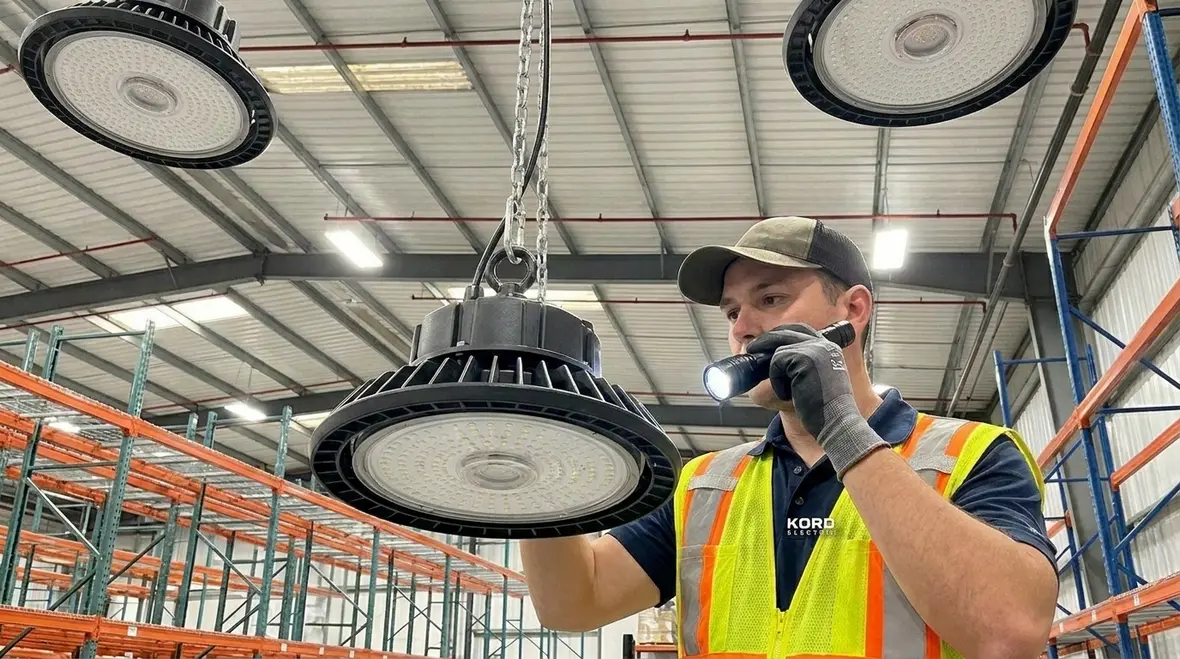
Now we get into the selection phase, where good planning turns into clear decisions. We choose fixtures based on photometric needs, durability requirements, and site conditions. Warehouses often need uniformity and higher mounting resistance. Loading areas need glare control and impact tolerance. Office and common areas need comfort, consistent color, and good visual quality.
We also look at lifecycle factors. LED performance depends on driver quality, thermal design, and the environment around the fixture. In facilities with dust, moisture, or temperature swings, the wrong choice can shorten life. So we match products to your conditions rather than forcing a one-size-fits-all solution.
And yes, we talk about color temperature and color rendering too. That is not marketing fluff. When a space looks off, people complain. Then operations get annoyed. Then the project turns into a meeting every two weeks. We aim to prevent that by selecting fixtures that meet both engineering and human needs.
Even the “boring” items deserve attention. Beam angle, mounting approach, shielding, and replacement access all affect how the upgrade performs long after the crew leaves.
5) Build a phased installation plan that protects uptime
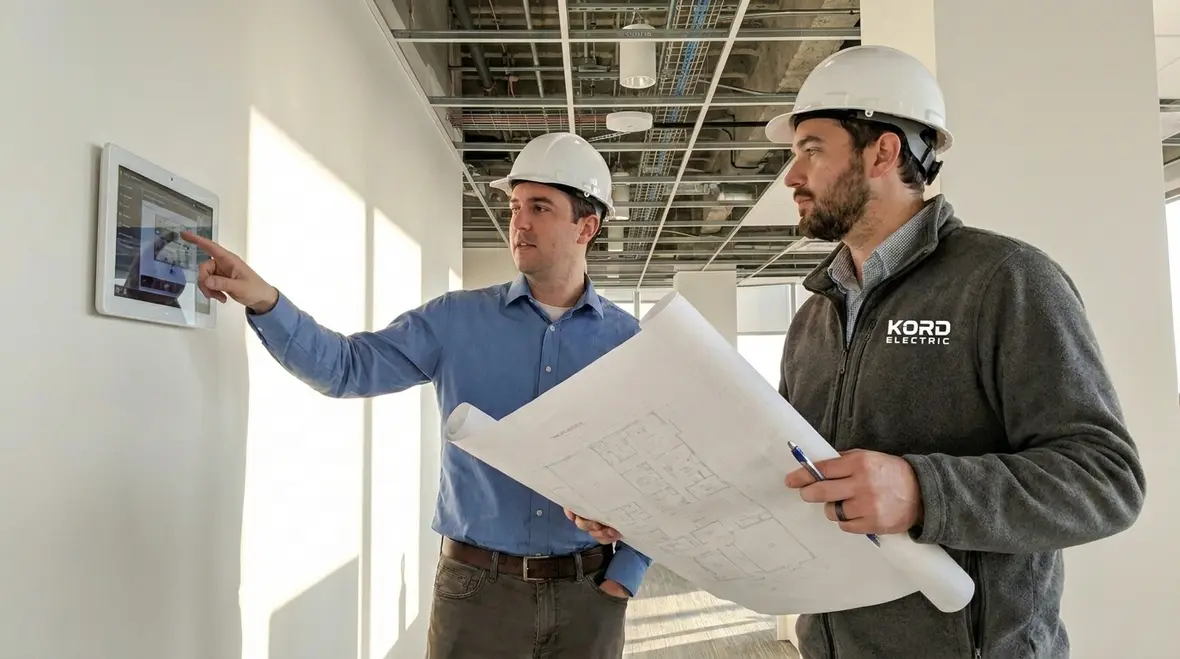
Once the selection and controls direction get set, we build a phased installation plan around uptime. Facility managers often run production, security operations, or customer service on tight schedules. Therefore, we sequence work by zone, circuit access, and priority areas.
First, we set a work window plan that includes nights or off shift hours when possible. Next, we group installations by electrical access so the team can move efficiently without repeated setup. Then we plan temporary lighting needs for areas where work will interrupt service. Finally, we schedule inspections and testing so acceptance does not drag into the next month.
Our technicians explain the day-to-day process so others in the building know what to expect. For example, we coordinate lockout tagout procedures, signage, and traffic flow around work areas. We also confirm which panels will be opened and which circuits get tested first. When the plan is clear, the work stays calm and controlled, not chaotic.
Also, we keep an eye on staff communication. Transition from one zone to another should feel smooth. That means clear labeling, consistent documentation, and quick updates for building leadership when a delay has a real cause, not just a vague feeling.
6) Verify electrical compatibility and test before handoff
We do not treat commissioning like an optional step. Instead, we verify electrical compatibility and test the system before handoff. During installation, our team confirms correct wiring, correct driver behavior, and stable operation under load. Then we check control response to occupancy and daylight inputs.
After that, we perform lighting performance checks in each zone, focusing on uniformity and intended brightness levels. We review dimming curves and look for flicker or mismatch across fixtures. If emergency interfaces exist, we verify behavior under test conditions. Then we document results so facility teams can maintain the system with confidence.
Because we operate in commercial and industrial environments, we also plan around real constraints, like how quickly a space must reopen and how safety checks must be handled. In other words, we make testing practical, not theoretical.
When verification gets done thoroughly, the upgrade stops acting like a surprise party. It becomes a predictable outcome.
7) Set up maintenance, spare parts, and data for long term savings
After the retrofit finishes, planning does not end. We help facility managers set a maintenance approach that matches the system design. That means we identify which components might need replacement over time, such as drivers, occupancy sensors, or control modules. We also set up spare part recommendations based on the fixture class and operating environment.
Additionally, we help others think about measurement. If the building targets energy reduction, we support the idea of tracking performance after installation. Even simple steps like comparing metered usage and control schedules can show whether savings meet expectations.
Our expert service staff also provides guidance on cleaning and inspection intervals. LED fixtures can last a long time, but they still depend on good care. Dirt buildup, damaged lenses, or blocked airflow around drivers can reduce performance. So, maintenance planning keeps the lights doing what they promised.
8) FAQ
Conclusion and CTA
Facility managers do not need guesswork, they need a plan that holds up on site. If your commercial or industrial building is ready for a clean, well timed LED modernization, Kord Electric can guide the process from audit to commissioning. Our technicians and expert service staff bring structure to every step, including electrical compatibility, control strategy, and phased installation. Reach out today to discuss your building, your uptime needs, and your target results. Then we build the upgrade plan you can trust.
If you are coordinating an LED retrofit as part of a broader reliability and safety program, our dedicated electrical preventive maintenance services help keep panels, feeders, and critical equipment performing the way your new lighting system expects. Integrating commercial LED retrofit upgrade planning with structured maintenance gives your facility a stronger, more predictable electrical backbone for years to come.