
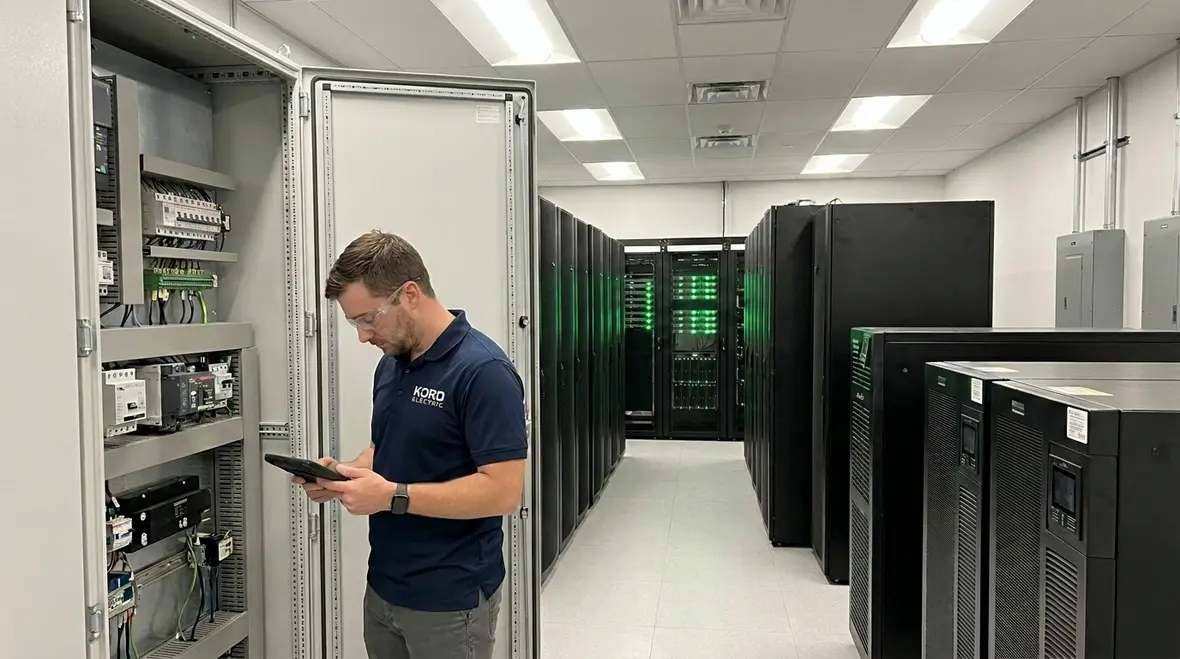
Data Center Power Redundancy for Maximum Uptime
Data center power redundancy that actually keeps the lights on
At Kord Electric, we build our approach around one goal: maximum uptime through data center power redundancy. When a facility runs on schedules that can’t be missed, power design stops being “just electrical” and starts behaving like a business-critical system. If redundancy is sloppy, it turns into a dramatic failure waiting for its cue. However, when we plan it well, we help our clients avoid downtime and keep critical loads stable through disturbances, maintenance, and faults.
In this guide, we share best practices we use with our technicians and expert service staff for commercial and industrial data centers and major property buildings. And yes, we explain it in plain terms, because nobody wants a power plan that reads like a sci-fi script. Let’s move calmly, step by step.
What reliability starts with in power distribution
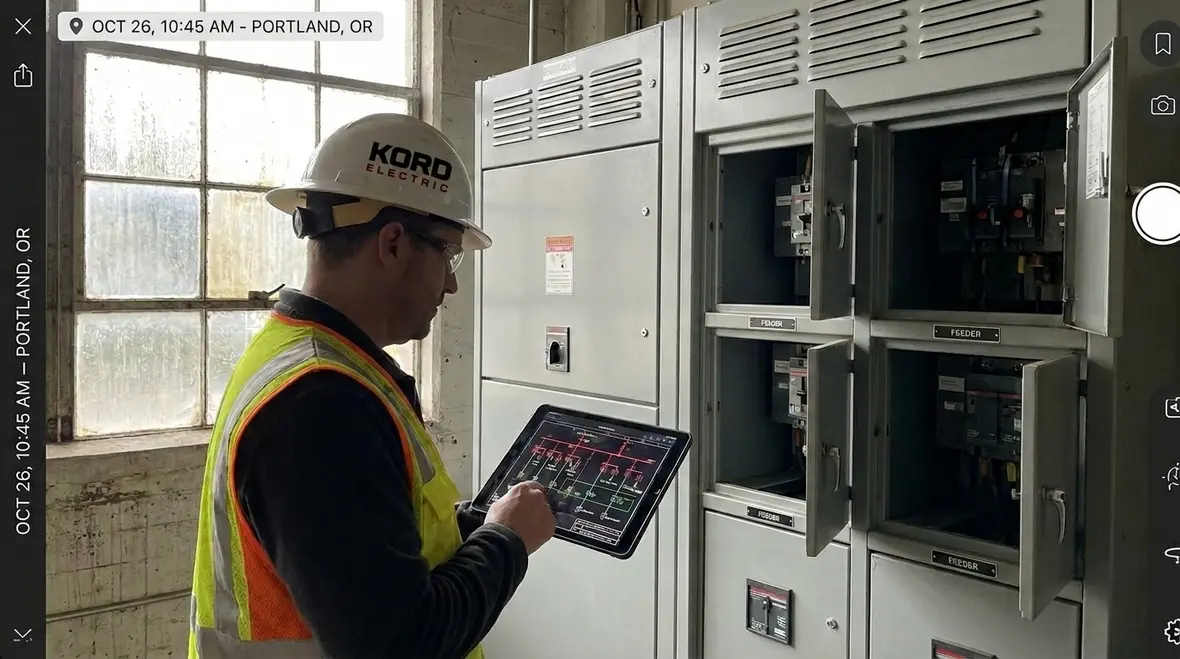
Others often treat redundancy as a switch that gets flipped after design. We treat it as something you build from the first block of the one line diagram. First, we verify the load categories and growth expectations. Then, we map how critical systems will ride through planned and unplanned events. After that, we align protection, switching, and distribution so each layer supports the next.
To make this real, our service teams review the architecture choices that shape reliability. For example, we look at whether feeders split early enough to avoid single points of failure. We also check whether switchgear, transformers, and distribution paths stay properly separated. If a fault in one path can steal power from the other, you do not truly have redundancy. And redundancy that fails during a fault is like a smoke alarm that only rings during thunderstorms.
Designing multiple paths without creating new weak spots
Many facilities want “two of everything.” We prefer “two of everything that stays independent when you need it most.” Therefore, we focus on separation of electrical paths, appropriate sectionalizing, and careful interconnections. We also ensure that bus structures and transfer schemes support the required uptime targets, without adding hidden coupling points.
Our technicians often find reliability issues in the details. For instance, two feeders might look independent, but they share upstream components or protection logic that trips both. Or a transfer scheme might allow a momentary interruption that a sensitive load cannot tolerate. Consequently, we validate coordination studies and test assumptions through realistic scenarios, not just theory.
When we discuss distribution design for reliability, we reference the practical concepts we outline in our Kord Electric blog about data center electrical distribution design for reliability, because the theme is consistent: design choices should reduce risk, not just increase equipment count.
Then we document the operational intent clearly. That includes what happens during maintenance windows, how operators should sequence actions, and what alarms and indications matter during a transition. The best system is useless if the staff can not operate it quickly and correctly under stress.
Switchgear, transfer schemes, and coordination that behave under stress
Switchgear is where reliability gets tested for real. We specify and arrange it so critical loads move through transfers safely, and we coordinate protection so the right devices clear the fault while keeping healthy systems alive. In other words, the system should fail gracefully, not catastrophically.
As part of our commissioning mindset, we pay attention to transfer schemes across the whole chain. For example, we evaluate how automatic transfer equipment handles source loss, how long it takes to restore power, and whether the scheme creates voltage or frequency dips that can trip sensitive IT loads. We also confirm that interlocks prevent unsafe conditions and that maintenance procedures do not require guesswork.
Coordination studies matter here. We confirm time-current coordination so upstream devices do not sacrifice entire sections when a downstream protection device should clear the fault. Then we check that the settings align with actual equipment characteristics. After all, one mismatched setting can turn a planned fault clearance into a site-wide event, and nobody schedules downtime for fun. Not even sitcom characters.
UPS, batteries, and generator strategy for real uptime goals
Power redundancy is not only about having sources. It is about timing, ride through, and seamless handoff. We design UPS and generator strategies together so each part covers the gaps the other part leaves. Therefore, we size UPS systems based on load profiles and operating modes, and we confirm that batteries support the intended runtime under realistic conditions.
Next, we align generator performance with UPS discharge behavior and transfer times. We make sure the generator controls and switchgear sequences coordinate so the system transitions smoothly. Additionally, we address fuel strategy and testing procedures so the generator behaves during real emergencies, not only during a “successful” weekly exercise.
Our team also plans for aging. Batteries do not last forever, and power equipment drifts over time. So we specify inspection and replacement cycles, and we include test protocols that uncover issues early. If you wait until the system fails, you lose the advantage of redundancy. We help clients manage that advantage through disciplined maintenance, and through clear operating guides for C&I facilities and major property buildings.
Maintenance, monitoring, and testing that keep redundancy honest
Even a well-designed system can lose reliability if nobody checks it. We build uptime into the operations plan. That means regular testing, monitoring of critical alarms, and scheduled inspections that match how equipment actually works. We also help define maintenance boundaries so a technician can perform service without causing an avoidable interruption to critical loads.
During site visits, our technicians and expert service staff often explain what they see in a way that operators can use immediately. For example, we review how protective devices respond, where heat or vibration may indicate aging components, and how transfer logic behaves during drills. Then we translate those findings into practical actions: repair, adjustment, replacement, or update of documentation.
We also emphasize monitoring beyond basics. It is not enough to see that a system is “up.” We track parameters that predict future issues, like thermal trends, event history, and the health indicators tied to UPS and switchgear. As a result, clients do not react only after alarms. They act while the system still has margin.
And yes, we use jokes sparingly. But when someone asks if they can “skip testing this one time,” we remind them that redundancy is not a lottery ticket. It is a design promise, and the system should keep that promise every day.
FAQ: power redundancy and uptime for commercial facilities
How Kord Electric supports uptime from design through service
We help commercial and industrial facilities build power redundancy that stays dependable through faults, maintenance, and growth. First, we support reliable distribution design choices that reduce single points of failure. Then, we help coordinate protection and switching logic so transfers behave as planned. After installation, our technicians and expert service staff keep redundancy honest with monitoring, testing, and documentation. If your facility needs higher uptime and calmer operations, contact Kord Electric for a reliability review and a power plan built to perform.
If you are planning a new facility or strengthening an existing one, pairing your redundancy plan with a broader reliability strategy can make each upgrade pull more weight. You can see how we approach this in our companion article on data center electrical requirements for uptime, which connects day to day operations with the electrical performance your loads actually need.
For properties that want their redundancy to stay effective year after year, we also align our recommendations with structured maintenance programs. That includes integrating strategies similar to those in Kord Electric’s guidance on commercial and industrial electrical maintenance plans, so testing, inspection, and documentation keep pace with how your building actually operates.
When your data center power redundancy supports both uptime and long term equipment health, you protect more than servers. You protect schedules, revenue, and the people who rely on your facility to work on time, every time. To turn that goal into a concrete project scope, explore how our dedicated troubleshooting and reliability services address real world issues in environments that cannot afford instability.
If you are experiencing instability, or simply want to verify that your redundancy design is doing its job, our team can help evaluate voltage performance, protection behavior, and distribution health. A good starting point is aligning your redundancy plan with a service offering such as Kord Electric’s support for resolving voltage fluctuations in commercial and industrial facilities, which directly affects how confidently your critical loads ride through disturbances.


