Commercial EV Charging Infrastructure Plan
Commercial EV Charging Starts With a Real Plan
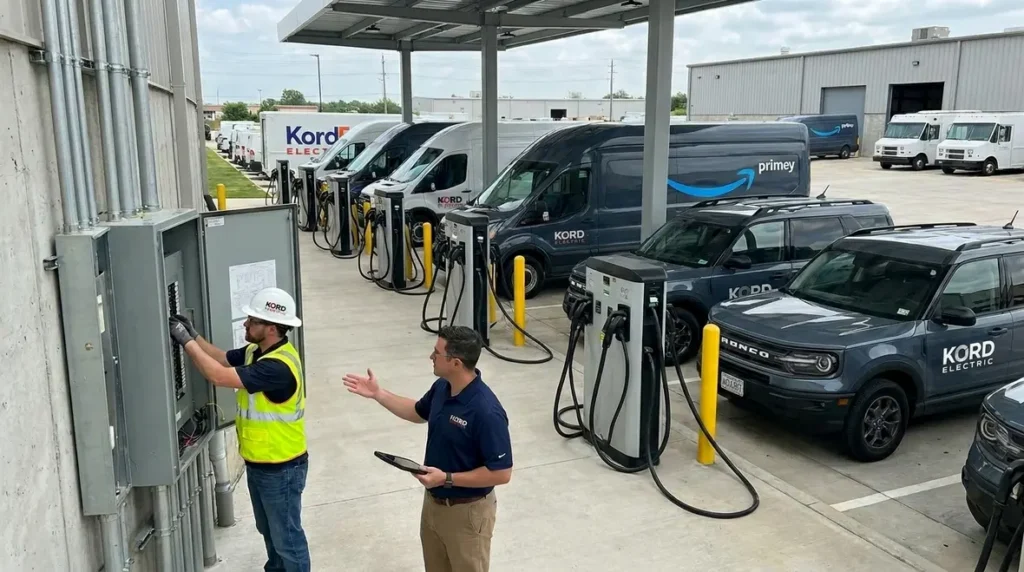
At Kord Electric, we help commercial and industrial facilities plan commercial ev charger infrastructure that still works when the company fleet grows, tenant needs shift, and the utility bills start asking for answers. Instead of guessing, we map power, access, and controls now, so the upgrades feel like a normal expansion, not a sudden emergency repair. And yes, planning early keeps you from playing “electrical roulette” with your parking lot. In the same way a good facilities team plans for HVAC seasons, others should plan for EV demand seasons too.
In this guide, our expert technicians and service staff explain what matters, what fails, and how we design for steady growth across major property buildings, warehouses, office campuses, and other high-usage sites.
Assess the Site Like a Facilities Lead, Not Like a Guest
When we plan EV charging, we start with the same mindset we use for other critical electrical work. First, we look at load reality. Then, we check site layout. After that, we verify that the chargers you want today do not quietly fight the building’s systems tomorrow.
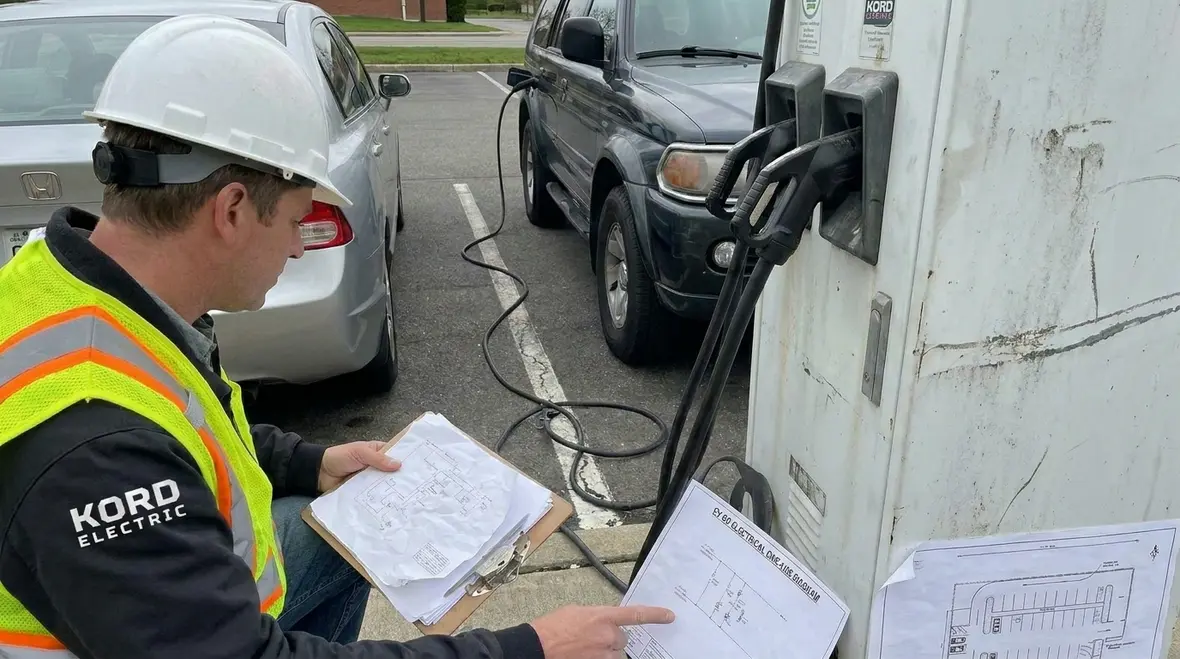
We ask others to bring the full picture: electrical one-line diagrams, recent utility bills, any planned equipment upgrades, and typical peak times. For example, a logistics center that runs heavy equipment late at night will not behave like a quiet office campus. Therefore, our team builds a plan around how power moves through the building, not around how a brochure markets the product.
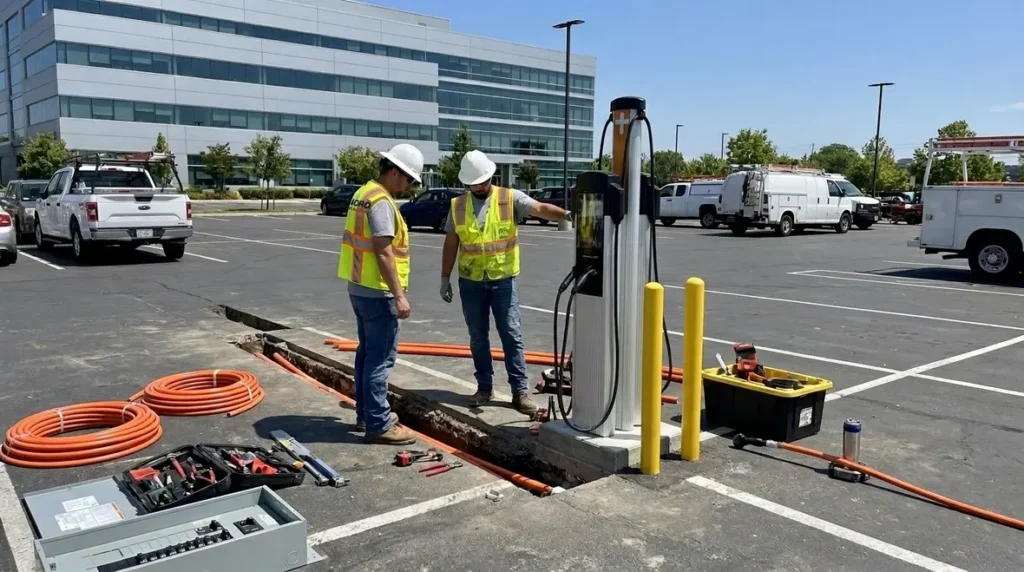
Next, we study where vehicles actually park and how they charge. If the walking distance is wrong, usage drops. If the power route is inefficient, installation becomes harder and more expensive. And if cable runs end up in spaces that flood, corrode, or get hit by equipment, your chargers become the world’s most expensive “broken promise.”
Build a Load Strategy That Can Grow
Future-proof planning starts with load planning. We do not just add chargers. We coordinate them with the facility’s electrical system so everything shares capacity the right way. At the center of our approach, we consider how to manage peak demand, how to expand safely, and how to keep the building stable during the heaviest charging periods.
So, we design for headroom. That means we avoid systems that sit at the edge of capacity the moment the first new charger comes online. Additionally, we plan for demand response and power management where it makes sense. This approach helps reduce strain on the service equipment and supports smoother upgrades later.
In many cases, we also plan the distribution pathway with expansion in mind. Conduits, panels, and switchgear are often the real bottlenecks. Therefore, we route power early in a way that still allows future additions without ripping up pavement like we are in a movie chase scene.

Design for Safety, Code, and Smooth Operations
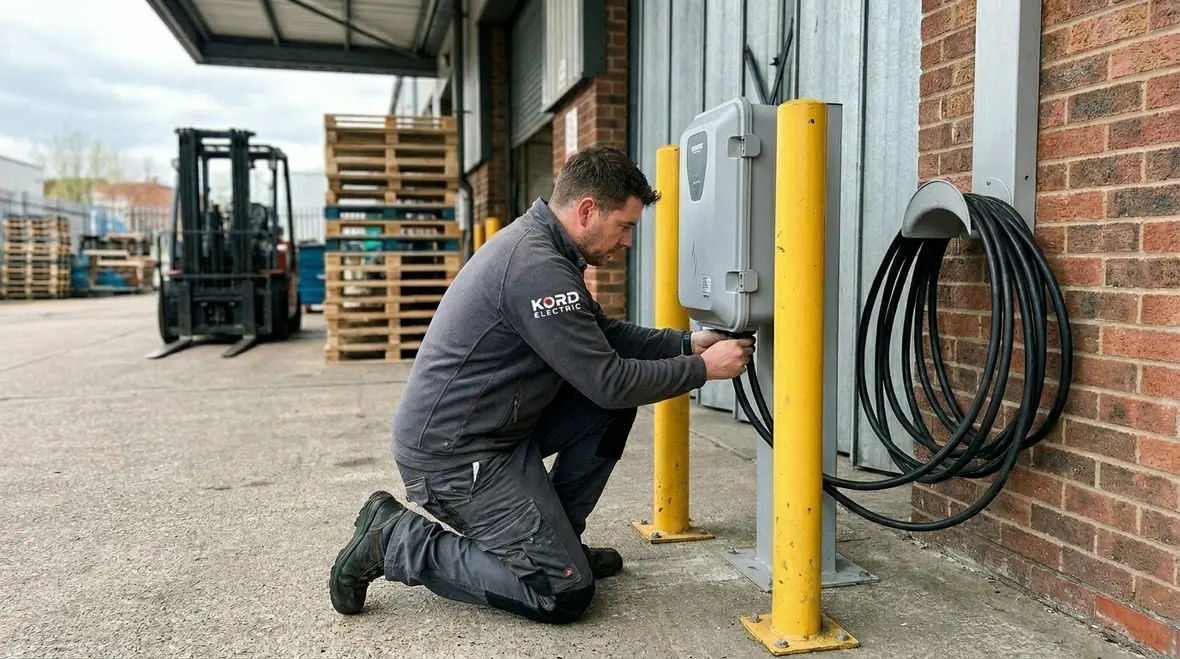
Charging equipment lives in the real world: weather, vibration, vehicle traffic, and the occasional forklift that does not know what a boundary line is. Because of that, our technicians design with safety and durability in mind. We follow applicable electrical requirements and we build systems that support safe access, clear labeling, and reliable grounding and protection.
Just as important, we design for day-to-day operations. That means providing clear cable management, secure mounting, and access paths that maintenance teams can use without creating more work. Then, we build documentation and labeling so others can service the system quickly instead of hunting for parts like it is an Easter egg hunt.
We also think about how the chargers connect to building power and how they respond when conditions change. If a facility experiences brief power dips or equipment cycling, the charging system should remain stable. So, our team checks compatibility with existing electrical infrastructure and controls.

Use Maintenance Plans to Keep Chargers Reliable
Even the best design needs steady care. Reliability comes from a maintenance plan that matches commercial and industrial site behavior. We point our clients to the same discipline outlined in our commercial and industrial electrical maintenance plans, because charging infrastructure is not “set it and forget it” anymore. It is mission-critical equipment for fleets, customer experience, and operational uptime.
Our service staff explains the plan in plain terms. For example, we review inspection cycles, test procedures, and what we track over time. Then, we adjust the schedule based on usage intensity. A high-traffic charging area needs a different rhythm than a location where cars charge once a day and park the rest of the time like they own the place.
Typically, our maintenance focus includes key checks that prevent failures before they become downtime. Therefore, we verify connections, check protective devices, inspect hardware, and validate that controls function as expected. We also look for early signs of wear linked to heat, water exposure, and frequent use.
Because charging equipment sits where people notice it, we also aim for fast troubleshooting. When a charger underperforms, we do not guess. We diagnose, document, and correct the issue so the site stays dependable.
Coordinate Controls and Data for Smarter Charging
Many facilities want charging that supports business goals, not just power delivery. So, we coordinate controls, payment or access approaches when needed, and performance settings so the chargers operate as part of the facility. Additionally, we set up the system to communicate properly, where supported. That way, others can track utilization, see events, and respond quickly.
In practical terms, this helps operations teams plan staffing and fleet scheduling. It also helps facility managers understand load patterns without guessing. When the facility sees spikes, we can adjust charging schedules or power management strategies. Thus, chargers help the business run smoother instead of adding mystery to the utility reporting.
We also plan for future upgrades in controls and software, when the site can support it. Because technology evolves, we avoid designs that trap the facility in one fixed configuration. This is where good engineering earns its keep. Or, to put it another way, it keeps your chargers from turning into museum pieces.
Plan the Upgrade Path and Budget for Reality
Future-ready does not mean “spend everything today.” It means choosing a path that lets you expand without chaos. We help major property buildings and commercial sites plan the phased approach: add chargers now, prepare for the next wave, and keep the electrical path ready for more capacity.
That planning includes the cost of expansion work, not just the price of equipment. We consider trenching and routing, panel upgrades, procurement timelines, and any utility coordination that may apply. Then we build a schedule that fits how the facility operates. For example, we aim to limit disruption in active loading zones or occupied office areas.
When our technicians explain this process, they do it with clarity. They show what gets installed, how power routes connect, and where expansion points exist. As a result, others can budget more accurately and make decisions with fewer surprises.
How We Ensure Power and Reliability Across Major Facilities
People often ask how a commercial charging project holds up long term. We answer with a simple truth: we treat EV charging as part of the facility electrical system. Therefore, our design, installation, and ongoing service stay aligned. We also understand that commercial and industrial facilities deal with higher loads, heavier traffic, and stricter uptime expectations than smaller sites.
That is why we keep our work focused on commercial and industrial environments. We do not try to stretch ourselves across every type of installation. Instead, we bring deep experience with the realities those facilities face.
Once the system goes live, we support the infrastructure with maintenance and service. And when requirements change, our team helps evaluate the best next move. In other words, we keep the system reliable and we keep the plan moving forward.
FAQ
Ready to Build a Charging Plan That Lasts?
If your commercial or industrial facility plans EV growth, we can help you build a system that stays reliable, expands cleanly, and supports real operations. Kord Electric brings expert technicians and service staff who explain the plan, design the power path, and maintain the infrastructure over time. Explore how our dedicated EV charger installation services support safe, future-ready commercial EV charging solutions that match your site demands.
Contact us today to discuss your site needs, review your capacity, and map the most practical upgrade route. Because nobody wants to hear “we can add more, but first we need to redo everything.” We can do better than that.
For facilities that also want long-term stability across panels, switchgear, and distribution equipment, pairing your commercial EV charger infrastructure with structured commercial and industrial electrical maintenance plans helps keep the entire system reliable as loads and operations grow.
When you are ready to move from “we should add charging someday” to a clear, phased roadmap, Kord Electric’s commercial and industrial electrical team is ready to help you design, install, and maintain a charging ecosystem that actually fits how your facility runs day after day.