Smart Commercial Lighting Control Integration
Streamlining commercial lighting with smart controls
At Kord Electric, we help teams streamline operations by integrating smart lighting control systems into commercial facilities. Instead of managing lights like they are trapped in the 1990s, we install solutions that sense, adapt, and report. As a result, building managers spend less time chasing switches and more time running the business. Meanwhile, our expert service staff guides the process from planning through commissioning, so the system matches the way your facility actually operates. And yes, if you are wondering whether “smart” means “complicated,” we hear that joke every week. Then our technicians explain it clearly, and the punchline becomes the savings on wasted energy and call-backs.
How smart lighting controls reduce wasted energy
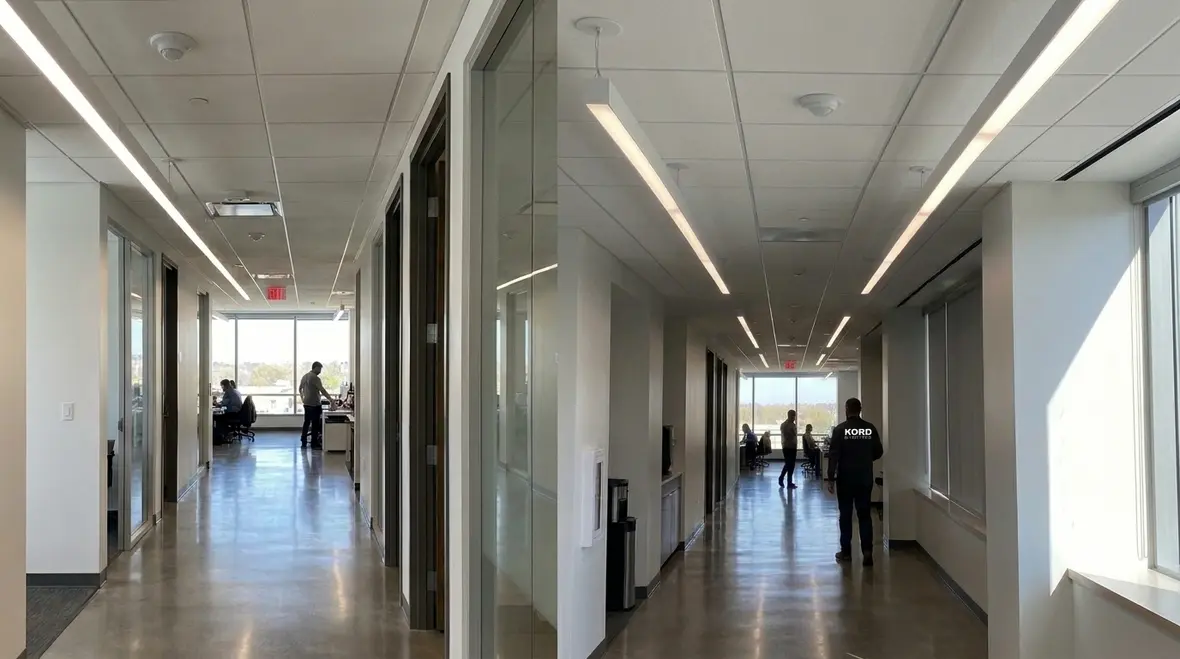
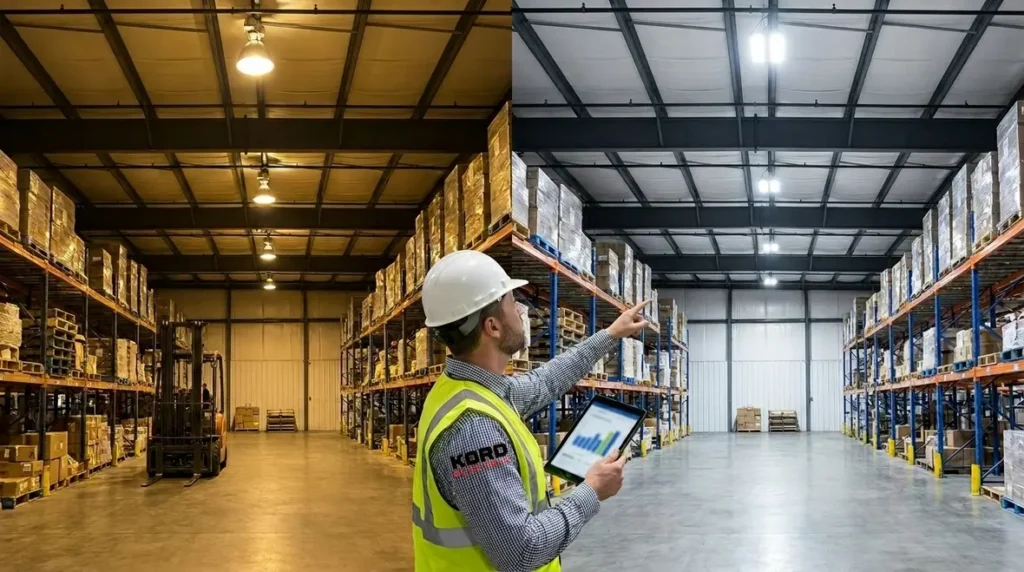
In many commercial and industrial spaces, lighting stays on because the schedule says so, not because the building needs it. However, real life is messier than a spreadsheet. People move, zones change, and daylight shows up like it owns the place. Therefore, a commercial lighting control integration can coordinate occupancy sensors, daylight harvesting, and time-based schedules to cut energy waste.
We typically break the strategy into layers. First, occupancy sensing prevents lights from running empty. Second, daylight sensors dim fixtures when natural light reaches the target level. Third, scheduling keeps common areas stable during predictable cycles. As those layers work together, your system avoids the classic “all lights all the time” problem that drains budgets.
Also, our technicians explain the logic to your team in plain language. So instead of receiving a system that feels like a black box, you get an operating model your staff can trust. That matters, because when operators understand the system, they make fewer mistakes. And fewer mistakes means fewer service calls. It is the rare win-win that both finance and facilities can appreciate.
Where automation pays off in warehouses, offices, and campuses
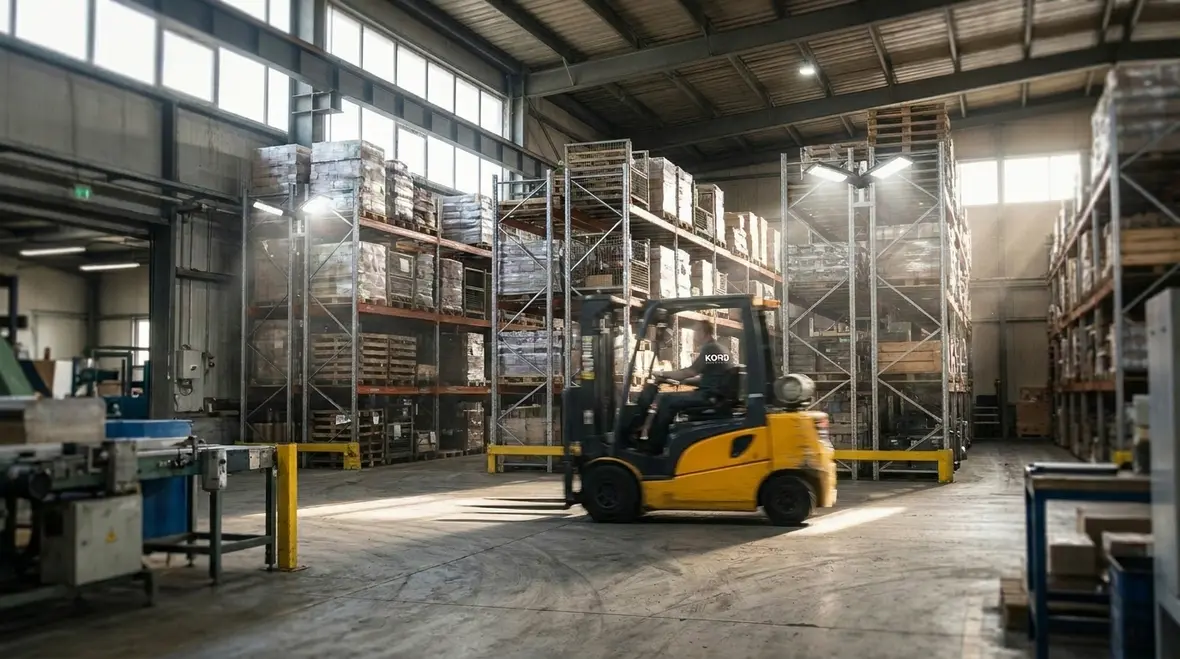
Commercial facilities differ in layout and activity, so we tailor the control plan to each area. For warehouses and plants, motion-based control works best in zones where people travel intermittently. For offices, demand drops after peak hours, so we combine schedules with occupancy and local dimming. For major property buildings and campuses, we use zoning and grouping so one control change does not disrupt everything.
At the same time, we align controls with how work flows. For example, if your loading docks see irregular shifts, we adjust the trigger rules rather than forcing one rigid schedule. Similarly, corridors and stairwells may need safe and consistent light levels, while conference rooms need flexible scenes. With the right tuning, the system supports operations instead of fighting them.
Our expert service staff also considers how your building’s other systems behave. Lighting controls must coordinate with access schedules, HVAC timing, and after-hours security. When that coordination is planned well, the facility performs like a team, not a pile of unrelated tools. And yes, your lights can behave better than some employees. That is a joke, of course. Mostly.
Streamlining maintenance with better visibility and fewer surprises
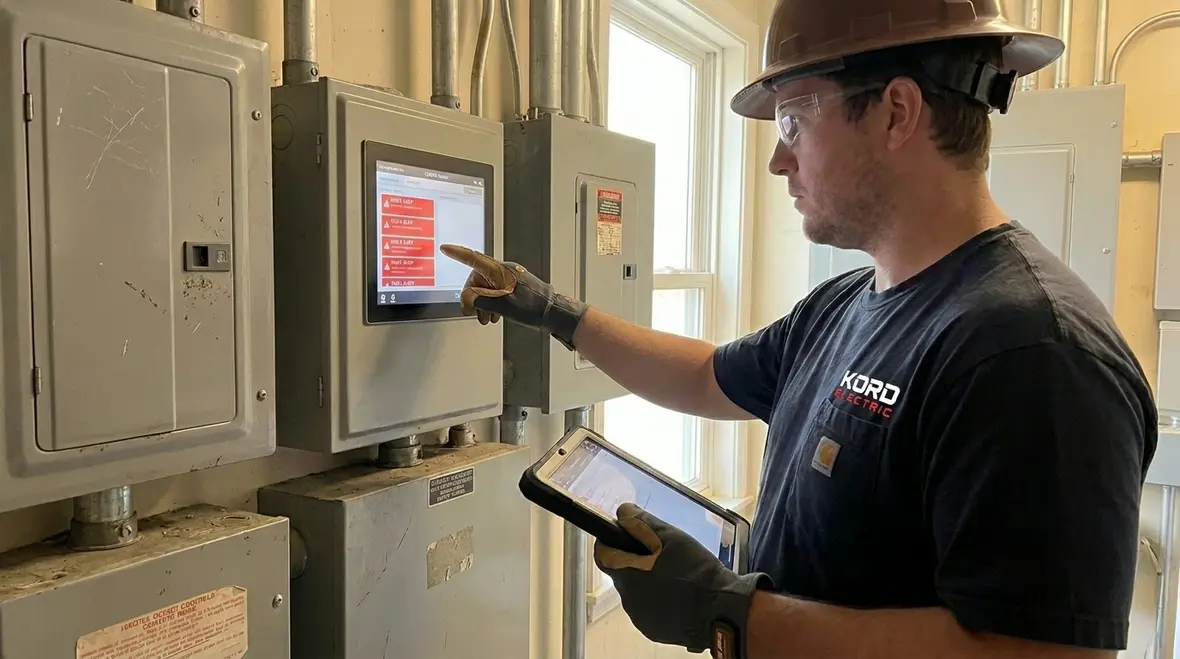
Smart lighting control integration does not only manage light output. It also helps you manage risk. When controls include monitoring and fault reporting, your team catches problems earlier than “the lights went out” moment. Instead of waiting for a complaint, you get alerts that point to the likely issue. This supports preventive thinking and reduces downtime.
Kord Electric supports this approach with our preventive maintenance focus described on our electrical preventive maintenance page. When we plan service around real asset behavior, we help facilities stay ahead of wear and aging components. You do not need a crystal ball, but you do need routine checks, inspection, and documentation that hold up during audits.
In practice, we pair control system commissioning with a maintenance plan. Then, we help your staff understand what to watch and when. As a result, technicians spend time fixing root causes, not just replacing parts in a hurry. Moreover, better visibility strengthens budgeting because repairs happen on a schedule, not during emergencies.
We also like to keep things calm. Facilities teams have enough going on. So we explain findings with clear steps and honest timelines, without drama. The only thing that should flicker is a movie projector, not your production floor.
Commissioning, training, and the day the system “clicks”
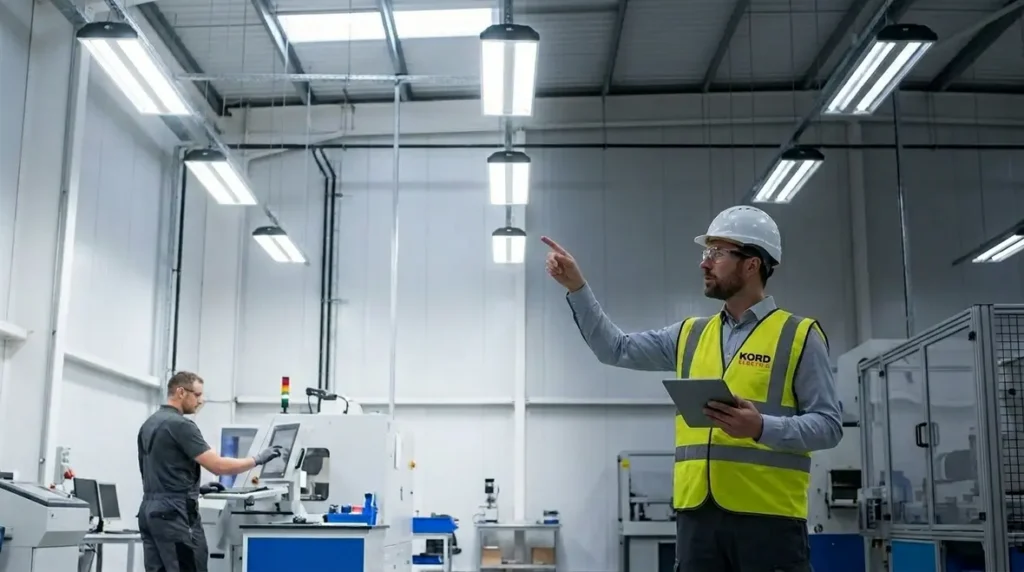
A smart system only streamlines operations when it behaves as designed. That is why we place emphasis on commissioning. Commissioning confirms sensor coverage, verifies zoning logic, checks daylight response, and validates scene control. Then we test outcomes by walking your facility with your stakeholders.
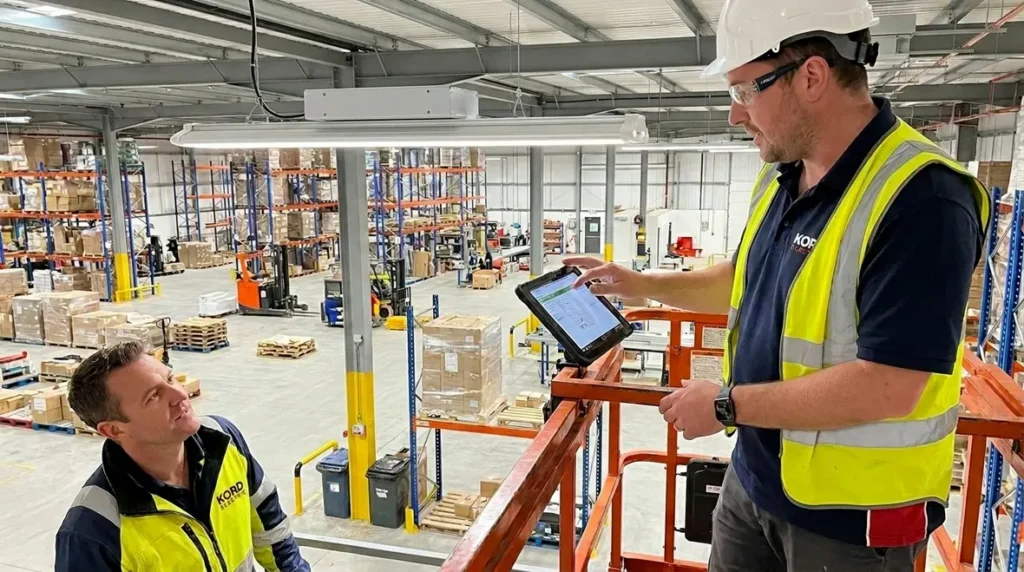
Once testing passes, our expert service staff trains your operations team. We show them how to adjust lighting scenes, how to interpret alarms, and how to handle common scenarios. For example, if a conference room uses occupancy sensing, your team learns how to set timeouts that support meetings without leaving lights on after checkout.
We also help with documentation. Your building may have multiple managers over time, and a system should not rely on one heroic person who “knows the settings.” Therefore, we organize the control map, schedules, and key thresholds. This keeps transitions smooth when staffing changes.
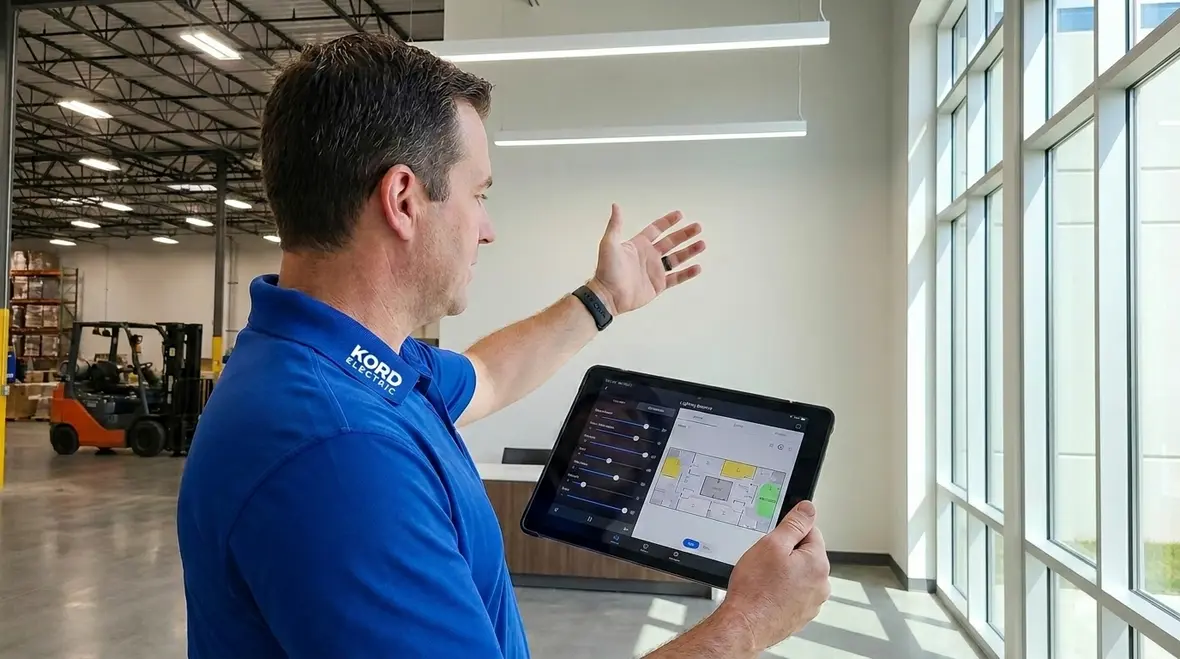
And to keep everyone engaged, we use real examples during training. We do not say, “This is how it works in theory.” We say, “Here is what happens when the south windows get sun at 2 PM.” That is the kind of detail that makes smart lighting control integration feel less like tech and more like a reliable tool.
Risks to watch and how we prevent control issues
Smart lighting control can deliver big results, but it needs careful planning for commercial and industrial environments. One risk is poor sensor placement, which causes inconsistent switching or unwanted dimming. Another risk is overlapping zones that confuse the control logic. Additionally, if controls do not match fixture types and wiring constraints, troubleshooting becomes harder than it should be.
Our approach reduces those risks before the system goes live. We review layouts, occupancy patterns, and fixture specifications. Then we confirm control panel design and communication pathways. After installation, we tune settings so the system respects your real operating conditions, not just a default factory profile.
We also plan for long-term stability. Lighting controls rely on sensors, drivers, and communication devices that age over time. So we align the system with preventive maintenance, which helps keep performance consistent. That is where our preventive mindset from electrical preventive maintenance supports the full lifecycle.
Finally, we address user behavior. If staff override schedules without understanding the logic, performance drops. Therefore, we set up a simple method for changes and we explain the effect of those changes. When people understand the system, they stop treating it like a prank.
FAQ
Ready to streamline your facility with smarter lighting?
If you manage a commercial or industrial facility, you do not need guesswork. You need a lighting control plan that fits your layout, your schedules, and your maintenance reality. Kord Electric integrates commercial lighting control solutions and backs them with our preventive maintenance mindset, so your system performs long after install day. Reach out to our team today to plan a walkthrough, map your zones, and build a control strategy your operators can run with confidence. Let us help your lights act like a well-run team.
If your project also includes broader electrical upgrades or lighting retrofits, explore how our electrical preventive maintenance programs and dedicated services for issues like voltage fluctuations in commercial and industrial facilities can support long-term reliability alongside your commercial lighting control integration.
For facilities planning larger lighting changes, our recessed lighting installation services and commercial lighting solutions combine code-compliant design, efficient fixtures, and smart control strategies so you can modernize your system with confidence.