Electrical Arc Flash Mitigation for Industrial Facilities
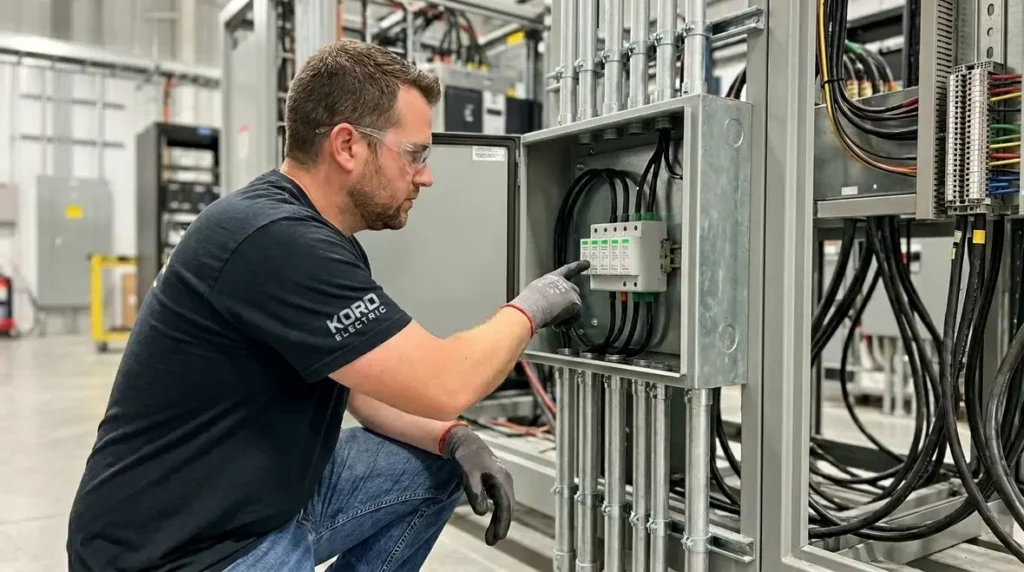
At Kord Electric, we focus on a practical kind of protection: our electrical arc flash mitigation approach helps facilities reduce the risk of severe injury during electrical faults. In a commercial or industrial environment, an arc flash event does not care about anyone’s schedule, or holiday plans, or how confident the last electrician looked. It just happens when energy meets a gap in safeguards. Therefore, we help our clients build a safer system through clear study work, smarter protective device coordination, better labeling, and field-ready training.
Why arc flash risk grows in commercial and industrial systems
In commercial and industrial facilities, electrical gear often gets shared across multiple loads, production zones, and tenant operations. As a result, the site evolves over time. One year a panel serves new HVAC drives. The next year a building adds distribution for process equipment. Even if nobody “changes” the main gear, the power paths and fault currents can shift, and protection margins can quietly shrink.
Meanwhile, arc flash risk rises when protective devices do not clear faults fast enough, when coordination drifts, or when equipment is misidentified or mislabeled. So we tell our customers to treat risk like a meter that keeps moving, not a snapshot you can take once and forget. Our experienced technicians and expert service staff evaluate how current and voltage behave in the real world, not just on paper.
And yes, you can “wing it” if you enjoy living dangerously. But most facility managers do not. They prefer a plan they can defend to leadership, insurers, and safety teams.
Arc flash mitigation begins with studying the system, not guessing
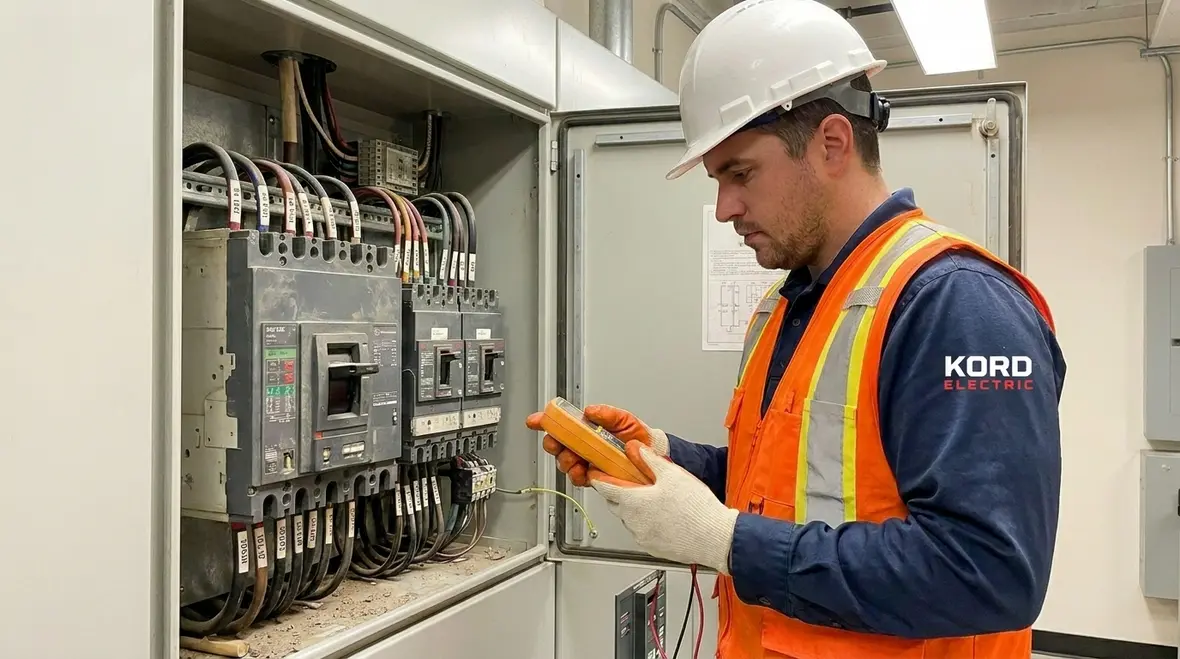
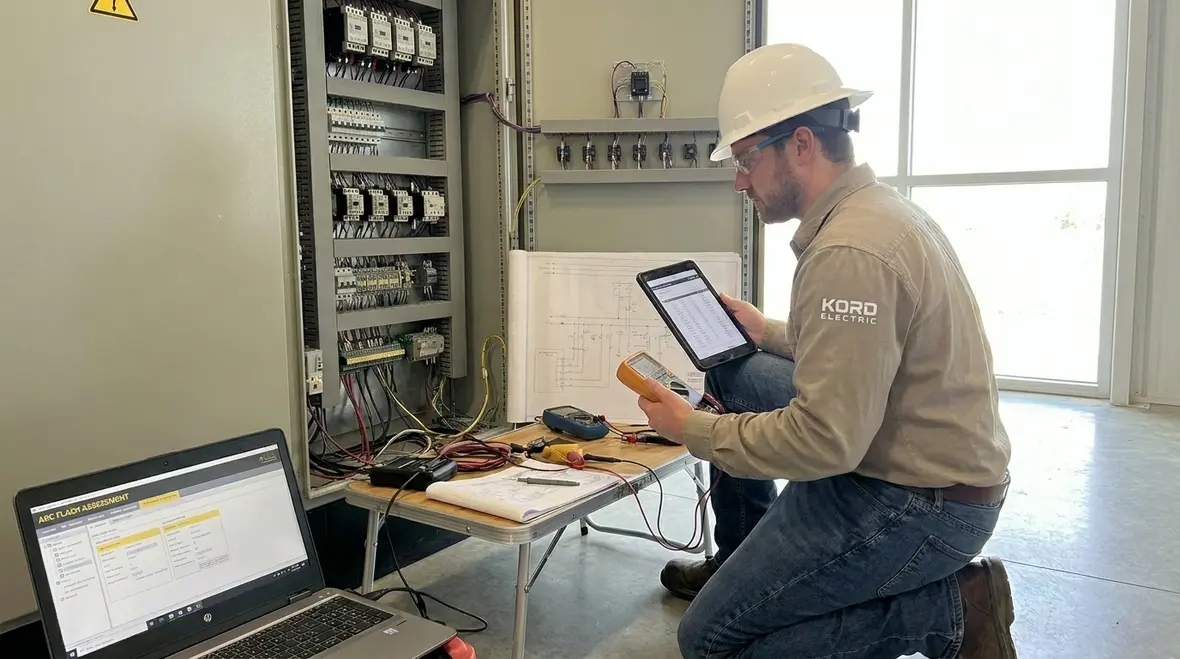
Strong electrical arc flash mitigation starts with data, because the goal is to know what energy is available and how fast it would be released under fault conditions. Therefore, we begin with an assessment that looks at equipment details, wiring paths, protective device settings, and operating conditions.
Next, we help identify where an arc flash could occur, and we estimate incident energy at likely working locations. Then we evaluate the protective device coordination so the system clears faults within safe time frames. In other words, we don’t just label hazards. We build a path to reduce them.
As our team explains during on-site reviews, a facility’s labeling and protective gear requirements depend on the study results. If the study is outdated, labels become fiction, and PPE becomes a costume. We make sure the numbers match the gear, the settings, and the way the building actually runs.
Protective device coordination that actually protects the team
Fault clearing speed matters. However, coordination problems often hide in plain sight. For instance, a circuit breaker may trip later than expected, or a downstream protective device may act inconsistently during faults. Then the energy has more time to push through the system, and that can increase incident energy.
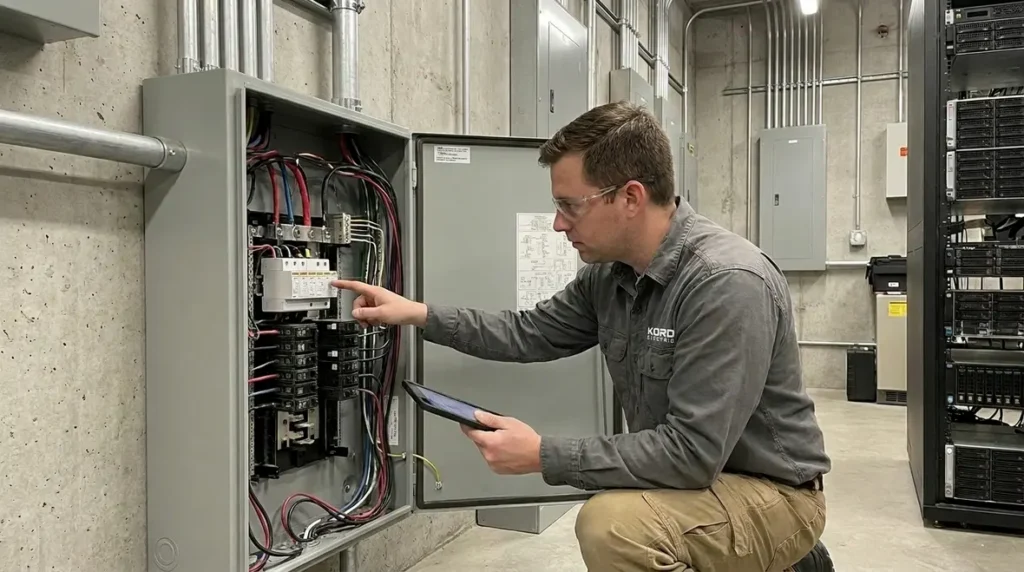
So we help clients review coordination across switchgear, distribution panels, and feeder protection. Additionally, we look for mismatched settings, improper grading, and protective elements that do not behave as intended during real faults. We also confirm that maintenance activities did not change trip units, settings, or replacement parts without documentation.
To keep this process smooth, our expert service staff translates the study findings into action items facility teams can follow. We outline what changes to make, which devices to verify, and how to recheck performance after updates. After all, a “fixed” coordination that never gets confirmed is like a locked door on a stage set. It looks good from far away.

Voltage fluctuations connect to fault behavior and protective performance
Electrical stability affects how systems behave. If voltage swings are frequent, equipment can see stress and protection logic may respond differently than expected. Over time, motor loads, drives, and transformer behavior can also change in ways that affect fault conditions.
Our team often references the realities described in our voltage fluctuation guidance for commercial and industrial sites. When voltage dips, spikes, or irregularities occur, the building can experience stress on components, and that stress can show up in how the electrical system performs during faults. Therefore, we treat electrical arc flash mitigation as part of a bigger safety picture: stable power, reliable protection, and controlled risk.
Even so, we avoid vague promises. We help customers understand what the fluctuation patterns mean, then align protective performance with those realities. That way, arc flash mitigation does not live in a binder. It lives in the facility.

Labeling, PPE boundaries, and training that people will follow
After the study and coordination work, we focus on the human side of electrical safety. Labels need to be clear, durable, and placed where workers actually operate. Additionally, the incident energy boundaries must match the conditions of the equipment.
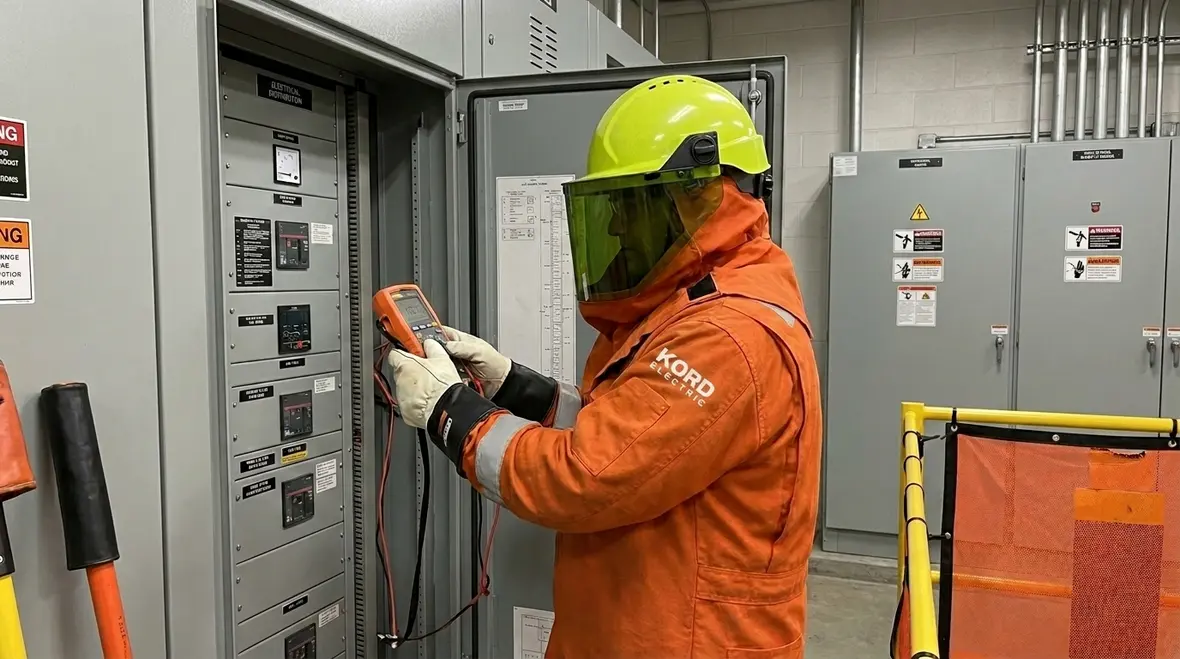
However, labels alone do not protect anyone. Therefore, our technicians support practical training for safety teams and facility staff. We explain the meaning of arc flash labels, how boundaries affect work planning, and why correct PPE selection matters. We also cover safe work procedures that reduce exposure time and limit risk during troubleshooting.
And if someone thinks training is just a formality, we gently remind them that arc flash does not care about compliance paperwork. It cares about current, time, and energy release. Think of it like a pop quiz, except the grade comes from physics, not from a teacher’s mood.
Maintenance, verification, and change control to stop risk from creeping back
Even after a strong mitigation plan, facilities change. Projects add feeders, upgrade transformers, replace breakers, and tune settings. Then the “current” conditions shift again. If someone updates gear and nobody updates the study inputs, the protective assumptions start to drift.
So we help implement verification steps that keep results accurate. That includes reviewing changes, confirming protective device settings after work, and updating documentation when configurations shift. Additionally, we recommend periodic checks so that protective behavior remains consistent with the arc flash study findings.
We also support change control practices. When our technicians perform maintenance for commercial and industrial facilities, we make sure the work aligns with safety documentation. In the same way that a major movie franchise needs continuity, safety needs consistency. Otherwise, you end up with plot holes you cannot explain to an incident investigator.
Choosing the right arc flash mitigation partner for major property buildings
For commercial and industrial facilities, you need a partner who understands operational constraints, safe field work, and documentation that stands up in real life. At Kord Electric, we keep our focus where it belongs: major property buildings and the industrial and commercial environments that run the world while it sleeps.
We work with facility stakeholders, safety teams, and operations managers to build a roadmap that fits budgets and timelines. Then we deliver execution with expert service staff who do the detailed verification steps, not just the talking. That approach reduces downtime risk and supports a safer system across switchgear and distribution equipment.
If you want mitigation that stays true after the next upgrade cycle, you need process, not guesswork. Our team provides both.
For facilities that want to keep risk low year-round, our dedicated electrical preventive maintenance services give arc flash studies and coordination a solid foundation, so protective devices behave predictably when it matters most.
FAQ
Final word from Kord Electric
Safety should not feel like a gamble. We help commercial and industrial facilities build reliable electrical arc flash mitigation through real studies, protective coordination, accurate labeling, and training your teams can use. Then we support maintenance and change control so the system stays aligned long after the work is complete. If you are planning upgrades, managing a busy facility, or tightening safety requirements, contact Kord Electric. We will review your setup and map the next steps in a clear, business-ready way.
If your facility is already seeing unstable power, pairing an arc flash review with targeted support for voltage fluctuations in commercial and industrial buildings can help stabilize your system before the next fault event tests your protection.
For facility leaders who want a structured path to safer distribution equipment, Kord Electric’s commercial and industrial services are built to support large properties, campuses, and production environments from assessment through long-term maintenance.
Ready to move electrical arc flash mitigation from a concern on your to-do list to a verified plan in the field? Our team can align studies, coordination, labeling, and training with your broader reliability strategy, including electrical preventive maintenance for commercial and industrial facilities, so your protection keeps pace with every new project and upgrade.