Data Center Electrical Distribution Systems Design Reliability
In commercial and industrial facilities, Data Center Electrical Distribution: Systems, Design & Reliability is not a “nice to have.” It is the backbone that keeps racks running, backups ready, and your uptime promises credible. At Kord Electric, we work with mission critical teams to build power pathways that behave during real conditions, not perfect lab scenarios. Our technicians and expert service staff explain the design logic in plain language, and they stay focused on reliability from day one through every maintenance cycle. And yes, we still laugh at power jokes sometimes, because if you cannot laugh at the grid, the grid will charge you for silence.
What is data center electrical distribution, and why it matters
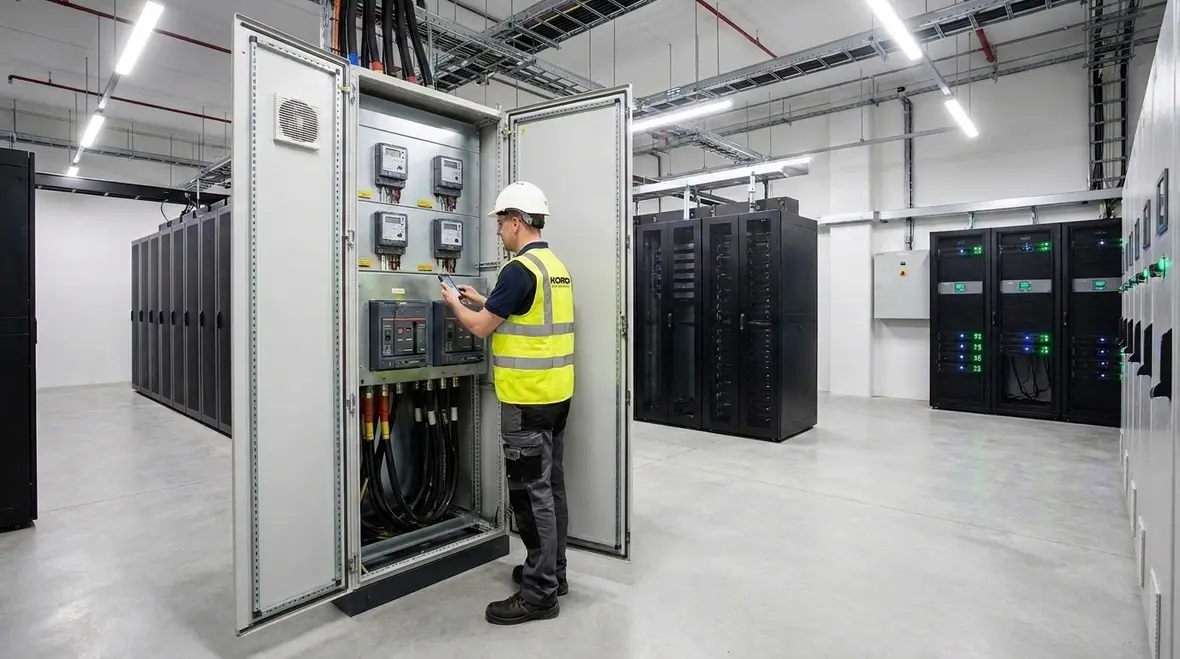
In simple terms, data center electrical distribution is how electrical power moves from incoming utility supply to critical equipment like UPS systems, switchgear, PDUs, cooling auxiliaries, and the servers themselves. However, the real story sits in the details. Power does not just travel. It travels with constraints, protections, and control signals that decide whether your operation continues or pauses.
When we design or upgrade electrical systems for commercial and industrial facilities, we think in layers. First, we map how power enters the building and how it gets routed. Next, we plan how power is conditioned and protected. Then, we confirm how switching operations happen during events like maintenance, faults, or load changes. Finally, we verify how the system recovers after abnormal conditions.
Because data halls cannot afford random downtime, reliability becomes the main design rule. Even small choices, like how sections are separated or how panels are fed, shape how fast power can be restored and how much risk accumulates over time.
Distribution architecture that supports uptime and maintainability

We often hear the same goal from clients: “Keep the lights on, and make it safe to work.” So we build distribution architecture that supports both uptime and maintainability. We separate power paths so one issue does not automatically cascade into a full outage. At the same time, we provide switching and isolation methods that allow technicians to service parts of the system without shutting down the entire operation.
In many designs, we use redundancy patterns such as multiple feed paths, sectionalized bus arrangements, and carefully planned transfer schemes. Yet redundancy is not a checkbox. It must match the facility’s risk tolerance and operating model. For example, a major property building that hosts a data center inside a broader campus needs coordination with general electrical loads and emergency systems, not just the server room.
Our expert service staff also trains facility teams on practical operations. They explain how switching sequences work, why interlocks exist, and what procedures prevent accidental parallel energization. This is where reliability becomes human, not only electrical. A system can be perfect on paper, but it fails when operations teams improvise under stress.
If you want to see how this thinking plays out at a system level, you can explore Kord Electric’s companion article on data center electrical distribution design for reliability, which expands on redundancy, topology, and restoration planning for commercial and industrial data centers.
How we design for faults, selective coordination, and protection
Power systems do not fail politely. They fail with faults: short circuits, ground faults, overloads, and equipment aging. Therefore, our design focuses on protection that responds in the right order and within the right time. We implement protective device settings that use selective coordination, so the nearest protective element clears the fault while other parts remain online.
At Kord Electric, our technicians review the entire protection chain. That means understanding breaker curves, fuse behavior, relay logic, and how upstream and downstream devices interact. Then we check how these settings support the facility’s actual operating loads, including starting surges from motors or transient behavior from electronic loads.
Now, here is the part people often skip until it hurts. Protection design also influences maintenance and troubleshooting. If a fault trips too broadly, operations teams lose power far beyond the problem area. If protection curves overlap incorrectly, nuisance trips become a rhythm, like a sitcom that gets cancelled but keeps playing reruns anyway.
So we help our clients verify outcomes with structured studies and reviews, and we document operating expectations. Then our team explains these protections during site walkdowns and service visits so engineers and operators can respond with clarity, not guesswork.
UPS, generator, and transfer schemes that work under real conditions

Most data centers depend on UPS systems and often on generators for extended outages. However, the best UPS plan still needs a transfer scheme that behaves under load and during maintenance. We design the relationships between UPS outputs, switchgear, and generator feeds so the system can ride through disturbances without producing chaos.
Transfer operations matter. A static transfer switch, a make before break approach, or a break before make approach affects how loads experience the transition. Furthermore, the sequencing logic must protect sensitive equipment and avoid unwanted interruptions.
Because facilities are different, we tailor this to the actual design intent: Are there parallel UPS units? Are there bypass modes? Does the facility require a maintenance bypass that keeps critical loads stable during service? We align the electrical plan to how the site runs and how crews actually work.
Our expert service staff adds another layer by translating design intent into operational steps. They explain what maintenance staff should verify, what alarms to monitor, and how to interpret events during commissioning and later during outages. In other words, we do not only build systems. We help teams understand them.
Reliability through redundancy, load design, and quality controls
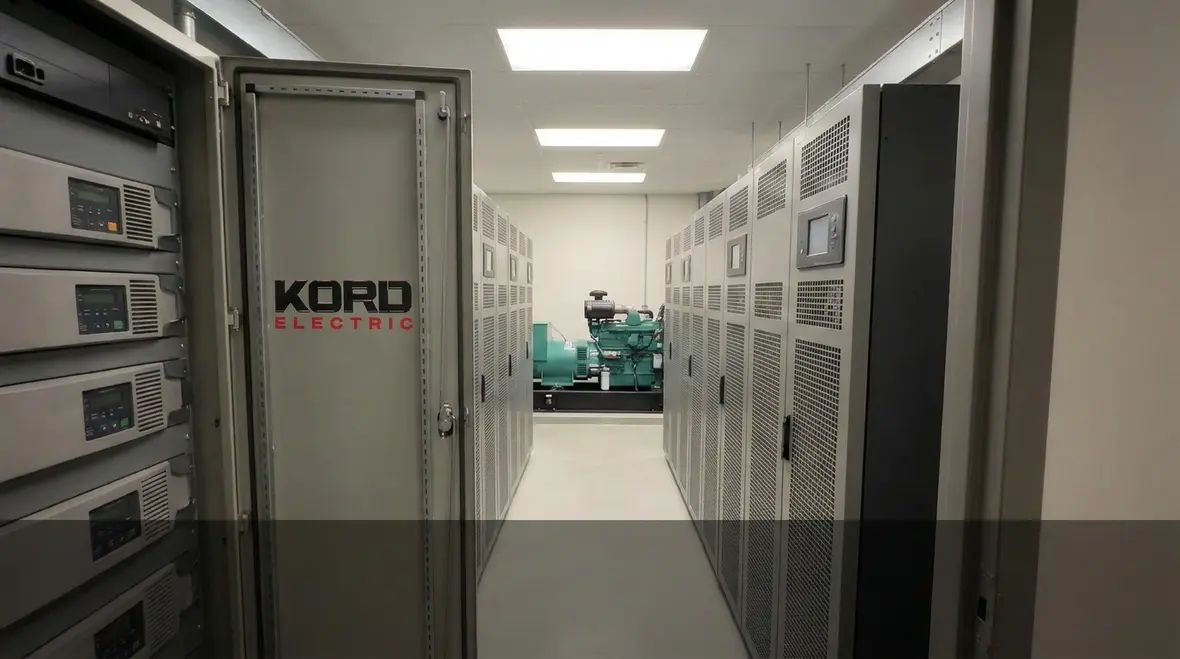
Reliability does not come from one feature. It comes from the full system behavior over time. That is why we help clients approach load design with care, including realistic demand profiles and growth forecasts. Then we size and route feeders so equipment operates within healthy limits, not at the edge of its comfort zone.
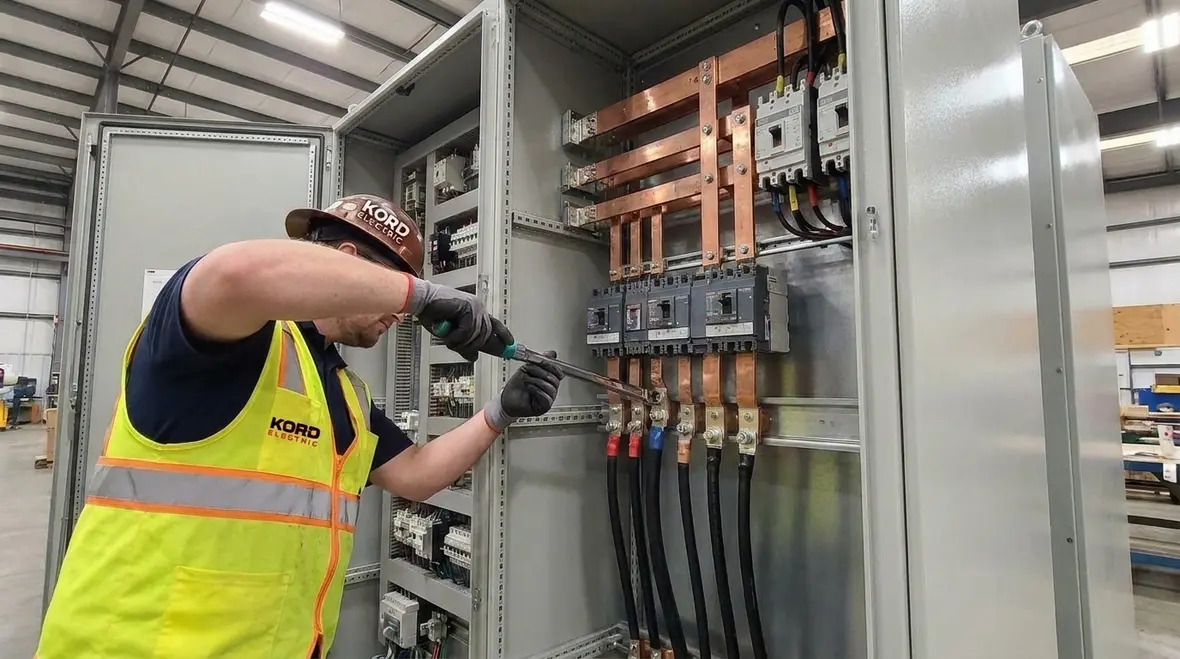
We also address quality controls. We guide specifications and installation practices that reduce long term risk. That includes proper terminations, correct torque procedures, verification of equipment ratings, and documentation that makes future maintenance easier. When the day arrives for expansion or troubleshooting, good documentation saves time and reduces confusion.
In a commercial and industrial environment, we also consider how the electrical distribution supports the building’s other critical systems. For major property buildings, a data hall does not exist in isolation. It shares the site with other loads and emergency power requirements. Therefore, we coordinate how distribution interacts with life safety power, tenant-critical loads, and facility-level controls, while keeping the data center’s priorities clear.
And yes, we remind clients of something simple: the best reliability plan includes both engineering and disciplined operations. If a team treats procedures like optional homework, then even a well designed system gets “graded” with downtime.
Commissioning, testing, and maintenance practices that keep systems stable
Design excellence is only the start. Commissioning and testing confirm that the field build matches the design intent. At Kord Electric, we support commissioning approaches that validate load transfer performance, protection settings, alarm points, and monitoring systems. We also focus on test plans that match the safety needs of the facility.
Then we shift to maintenance. A reliable Data Center Electrical Distribution: Systems, Design & Reliability strategy includes predictable maintenance intervals and clear procedures for inspection, breaker testing, and thermal checks. During maintenance, technicians need to know what can be isolated, what must stay live, and what must be verified before return to service.
Our technicians and expert service staff help keep maintenance grounded in reality. They explain what to check, why it matters, and how it ties back to the reliability goals. This reduces uncertainty and protects uptime. It also supports training for facility staff, so institutional knowledge does not vanish when schedules change.
As a result, reliability becomes a living system. It improves through feedback, updates, and responsible maintenance, rather than staying stuck in a commissioning binder no one opens.
How to choose a power partner for commercial data halls
Choosing a partner for electrical work in data centers and major property buildings requires more than reading a few brochures. Clients should look for teams that understand protection engineering, switching logic, and real-world operations. They should also value clear communication, because the fastest way to lose reliability is to misunderstand how the system is supposed to operate.
We work with commercial and industrial facilities, and our process reflects that focus. We listen first, then we map requirements to practical design steps. We coordinate with site stakeholders, including facilities teams, electrical engineers, and security and controls groups. And when the design changes due to growth or site constraints, we document and guide decisions so teams do not lose track.
Most importantly, our expert service staff stays involved. They do not vanish after installation. They explain what they see, why it matters, and how to keep systems reliable with planned service. That continuity supports long term stability, which is what every uptime program ultimately wants.
For facility leaders coordinating broader improvements across a property portfolio, it can also help to connect this work with regional expertise. Kord Electric’s Los Angeles County electrical services support data centers and major property buildings that need both day-to-day reliability and long-term planning across multiple sites.
FAQ
Ready to improve reliability in your distribution design?
If you want a calmer, safer path to uptime, Kord Electric can help you evaluate your current system and improve your plan for Data Center Electrical Distribution: Systems, Design & Reliability. Our technicians and expert service staff explain each step, then support commissioning and maintenance so your team understands how the system behaves in real life. Contact us to discuss your facility goals, growth timeline, and reliability targets, and we will map practical next actions you can trust.
When you are ready to connect Data Center Electrical Distribution: Systems, Design & Reliability with hands-on support, Kord Electric’s service teams can help you align distribution upgrades, testing, and maintenance across your entire site. From selective coordination reviews to scalable feeder design, the goal is simple: a power system that behaves when the stakes are high and the schedule is tight.
If your facility roadmap includes broader infrastructure upgrades as well, our data center-focused resources on infrastructure, redundancy, and power reliability can help you connect the dots between design intent and day-to-day operations, so electrical decisions support both uptime and long-term growth.