Data Center Electrical Infrastructure Key Components Best Practices
At Kord Electric, we build and maintain Data Center Electrical Infrastructure: Key Components and Best Practices with the mindset of people who have to answer the phone at midnight. In the first hour, we focus on the essentials that keep power steady and failures rare. We design and service systems that include utility feeds, switchgear, UPS, batteries, generators, power distribution, grounding, and surge protection. Then we add best practices for load planning, redundancy, thermal limits, monitoring, and commissioning, because the real enemy in a data hall is not “bad luck,” it is overlooked detail. And yes, we hear the joke every time: “It is just electricity.” Still, electricity runs the show, so we treat it like the lead actor, not the background extra.
How we map power flow from utility to rack
In commercial and industrial facilities, especially major property buildings that house IT or data operations, power cannot be treated like a single straight line. Instead, we plan it like a route with decision points. First, our expert service staff reviews the utility source, typical voltage, available short circuit current, and service limitations. Then they model how power moves through each stage, so nothing becomes a surprise during commissioning.
Next, we define the distribution architecture. Some sites use multiple feeds into main switchgear. Others use more layered switching and segregation, depending on critical loads, bus ratings, and planned expansion. After that, we confirm transfer paths from normal power to backup sources. If a UPS and generator system exist, we ensure the switchover logic supports ride through time and avoids nuisance transfers. Because when equipment restarts, it needs a stable rhythm, not a chaotic drummer.
Then we apply selection criteria that our technicians explain in plain terms. They tell teams why breaker coordination matters, how fault clearing time affects sensitive gear, and why busbar sizing is not a “nice to have.” We also talk about power quality. Voltage distortion, harmonics, and frequent sags can trigger nuisance alarms or reduce device lifespan. When our technicians walk the floor, they connect the electrical dots to real outcomes, and that is where most projects win or lose.
Key components that keep uptime from slipping
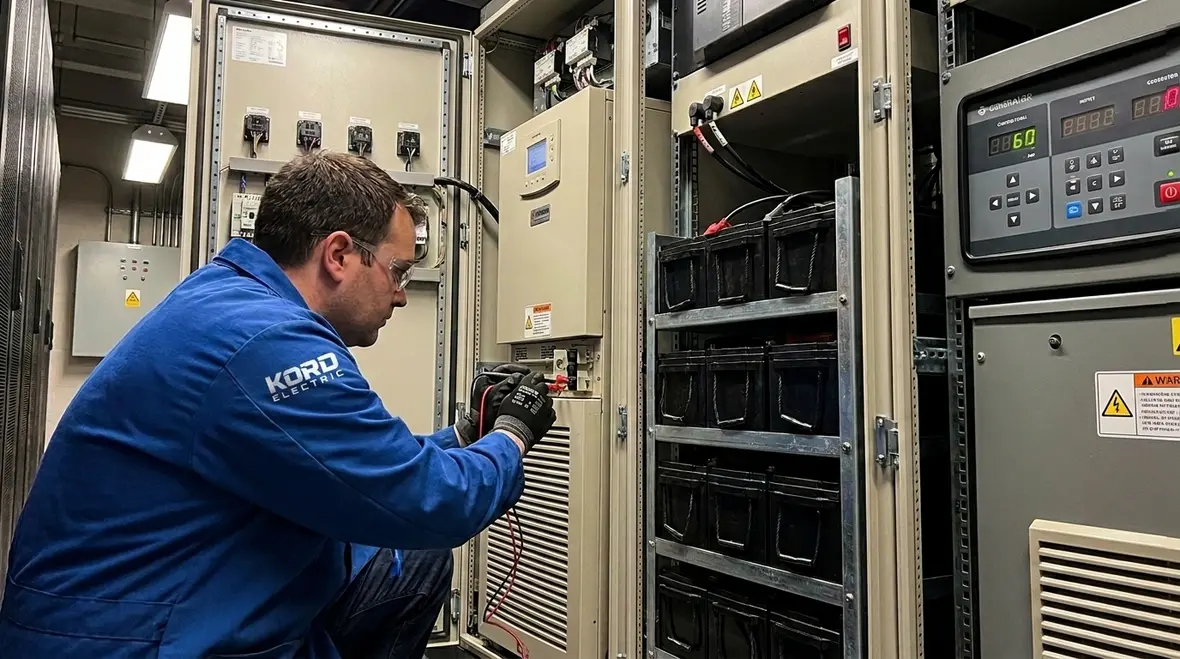
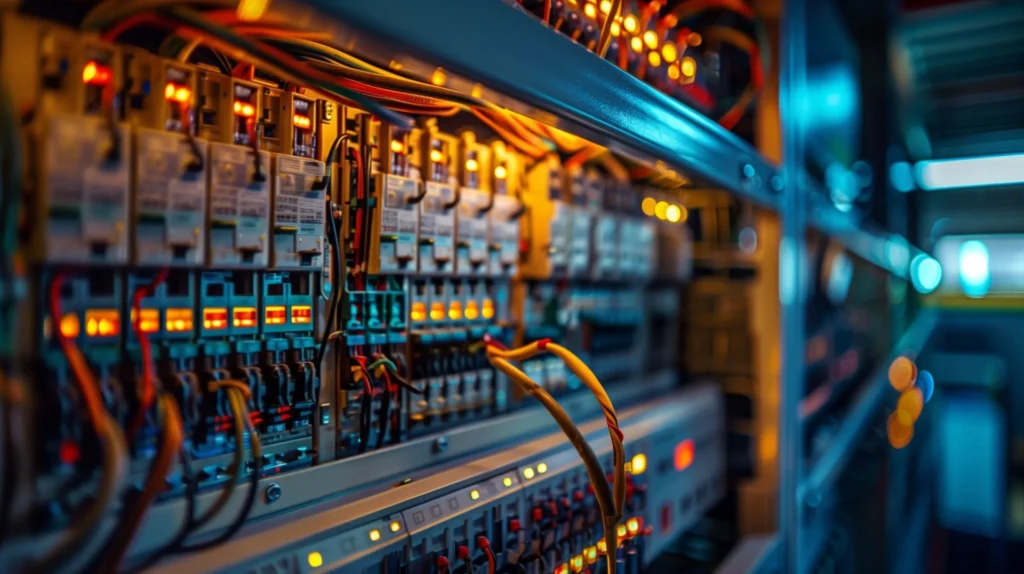
Let us talk components, but we do it in a way that helps your team make decisions, not just collect labels. In Data Center Electrical Infrastructure: Key Components and Best Practices, we start with utility service and metering, then we move to switchgear, transformers, UPS systems, batteries, generators, and distribution to loads.
UPS systems protect against short outages and ride through brief events. In practice, we check load profiles, power factor, harmonic impact, and runtime targets. Then we select the right UPS type and ensure battery design matches the real temperature and ventilation conditions. If someone says “the UPS will figure it out,” we gently remind them that batteries do not guess.
Generators handle longer outages. We plan fuel storage and maintenance access, and we validate start and transfer timing. Additionally, we coordinate with distribution panels and critical ATS units so switching does not create bottlenecks.
Power distribution includes PDUs, panelboards, switchboards, and branch circuits. We consider segregation for different risk categories, cable routing for resilience, and labeling for speed during troubleshooting. And yes, we make sure the physical layout supports safe maintenance. You cannot service a system you cannot reach.
Grounding, bonding, and surge protection prevent nuisance faults and protect equipment. We evaluate grounding methods, bonding points, and SPD placement. This reduces damage from lightning and switching transients, which show up when least expected.
If you are mapping out a larger strategy around uptime and reliability, pairing these components with a broader perspective like the one in Kord Electric’s Data Center Electrical Infrastructure Essentials article helps tie together design intent, operations, and long-term maintenance.
Redundancy design that does not waste capital
Many teams hear the word “redundant” and think “add more gear everywhere.” We do not build like that. We build like grown ups with budgets, schedules, and real business drivers. Therefore, we start by defining criticality tiers. Then we align redundancy level to those tiers, so the highest cost systems serve only the most mission critical loads.
Our technicians and expert service staff explain the practical difference between N plus one and other redundancy patterns, including how maintenance events should work. For example, if a UPS module needs replacement, we design for continued operation within acceptable runtime limits. Similarly, if a breaker or bus section requires isolation, we plan safe transfer paths.
We also coordinate redundancy across power quality and control paths. A redundant UPS that feeds a single weak panel still creates a single point of failure. So we model the whole chain, from protective device settings to downstream distribution. And because data halls scale over time, we plan for staged expansion without forcing a costly redesign.
Finally, we document the design intent clearly. That includes how alarms should route, what controls belong in which panel, and what operators should expect during transfers. In a real incident, clarity reduces stress. Stress, as it turns out, is bad for everyone, including the people troubleshooting.
Load planning, harmonics, and thermal limits you cannot ignore
Electrical infrastructure fails in predictable ways. One of the most common is mismatched load planning. If the site grows faster than the electrical design, margins vanish quietly. Then, when the system is stressed, protective devices trip or components overheat.
So we start with a load inventory: IT load, cooling support, lighting, and any shared infrastructure. Next, we forecast growth using realistic timelines. Then we verify capacity at multiple points in the distribution system. We do not just check nameplate ratings. We evaluate derating factors, ambient temperatures, and expected load cycles.
Then we tackle harmonics. Many modern data environments include power supplies that create harmonic currents. If harmonics go unchecked, they can overheat neutral conductors and reduce transformer efficiency. Additionally, harmonics can interfere with sensitive monitoring and control systems. Our technicians use measurements and vendor data to ensure the system design handles these realities, not hopes and vibes.
Thermal limits also matter. Switchgear, UPS rooms, battery compartments, and cable pathways all react to heat. If ventilation is off, performance drops and lifespan shortens. We coordinate electrical design with airflow assumptions and maintenance access. As a result, the system stays reliable even when the room gets busy.
Commissioning, testing, and monitoring for real-world reliability
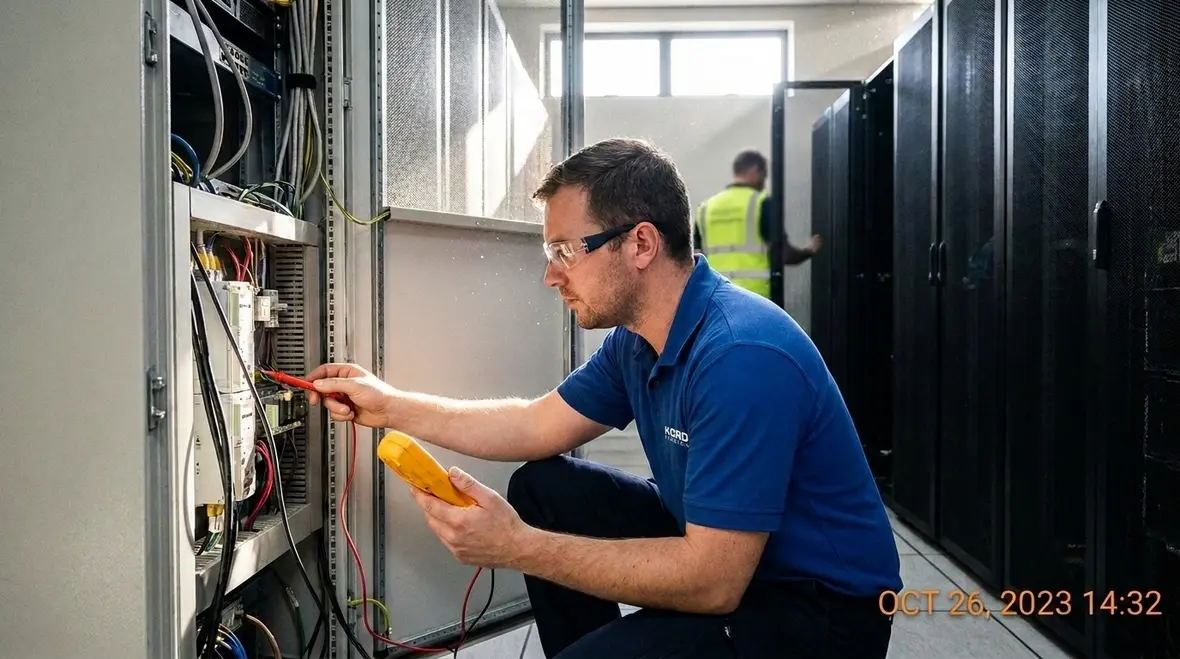
We treat commissioning like a final dress rehearsal. You can install quality equipment, and still have hidden issues. Therefore, we verify performance before the building hands you a surprise. That includes protective device testing, functional checks of transfer logic, and validation of UPS runtime under simulated conditions.
Our expert service staff also focuses on monitoring. We help teams plan what to measure and what to act on. For example, we track load levels, battery health trends, temperature readings, alarm states, and event logs. Then we ensure the monitoring system matches the operator workflow. If alarms show up but nobody understands the meaning, alarms become background noise.
We also recommend testing schedules that match business operations. Data centers rarely pause like office buildings. So we plan testing windows, coordinate with facility teams, and use procedures that reduce risk. When our technicians explain testing steps, they do not use mystery language. They show what the team should expect, why it matters, and what to do next if results deviate.
Monitoring plus testing becomes a feedback loop. It supports maintenance planning, improves troubleshooting speed, and helps teams spot degradation early. And early detection is where the real savings live.
Installation safety, labeling, and service access matters
In commercial and industrial facilities, safety is not optional. We build systems that technicians can service without guesswork. That begins with clear labeling and single line documentation that matches installed equipment. If the drawings do not match the field, the first person to fix the problem inherits the confusion. We avoid that.
Next, we look at physical routing. Cables need support, bend radius compliance, and protected pathways. We also consider segregation so critical circuits stay safe during maintenance or fault scenarios. Additionally, we confirm that access clearances meet safety needs for arc flash boundaries and routine work.
Our technicians also plan for service access during the design phase. We ensure there is room for battery replacement, breaker handling, and panel maintenance. Because even a perfectly designed system becomes unreliable when it cannot be serviced safely and quickly.
We also support process discipline. That includes lockout tagout procedures, coordinated maintenance plans, and training for facility operators. When others understand the system, the system performs better.
Featured FAQ for data center electrical infrastructure planning
Ready to strengthen your electrical backbone?
Data centers and major commercial or industrial buildings cannot afford guesswork when power quality and uptime matter. At Kord Electric, we plan, install, test, and service Data Center Electrical Infrastructure: Key Components and Best Practices with technicians who explain the details and expert service staff who keep operations grounded in reality. If you want fewer surprises, smarter redundancy, and safer maintenance, contact us now. We will review your current setup, discuss your growth path, and map the next steps with clear priorities.
If your facility is in or around Los Angeles and you need a partner who understands mission critical environments, explore how our team supports complex sites through our Los Angeles County electrical services and broader commercial and industrial solutions.
For operators planning future upgrades, high-density expansions, or new data hall builds, tying your strategy back to a bigger-picture view of reliability, redundancy, and emergency response with services like Kord Electric’s business continuity and emergency power solutions ensures your electrical backbone can handle both daily operations and the worst day on the calendar.
When you are ready to translate Data Center Electrical Infrastructure: Key Components and Best Practices into a specific roadmap for your building, our technicians can walk your site, review existing documentation, and align practical next steps with your risk tolerance, budget, and growth timeline.