Best Load Balancing and Power Quality Solutions for Large Buildings
Large commercial and industrial buildings do not fail quietly. They stumble, flicker, and surge in ways that make tenants notice and maintenance teams lose sleep. That is why we at Kord Electric focus on Best Load Balancing and Power Quality Solutions for Large Commercial Buildings that keep critical loads steady, reduce nuisance alarms, and protect sensitive systems. We align engineering choices with real building behavior, not just one line on a single line diagram. And while the electrical room may not be glamorous, we treat it like the backbone of the property. Because if power is unstable, everything else feels like a bad sequel nobody asked for.
Best Load Balancing and Power Quality Solutions for Large Commercial Buildings: what we prioritize
In our work across major properties, we start with one priority: keep real-world operations stable while the building’s electrical system does its work quietly in the background. That means we do not just size equipment on paper and walk away. We pay attention to how power behaves when elevators cycle, HVAC ramps up, production lines start, and tenants plug in more than anyone expected. Our approach to Best Load Balancing and Power Quality Solutions for Large Commercial Buildings combines field measurements, smart planning, and clear communication so facility teams can manage risk without guessing.
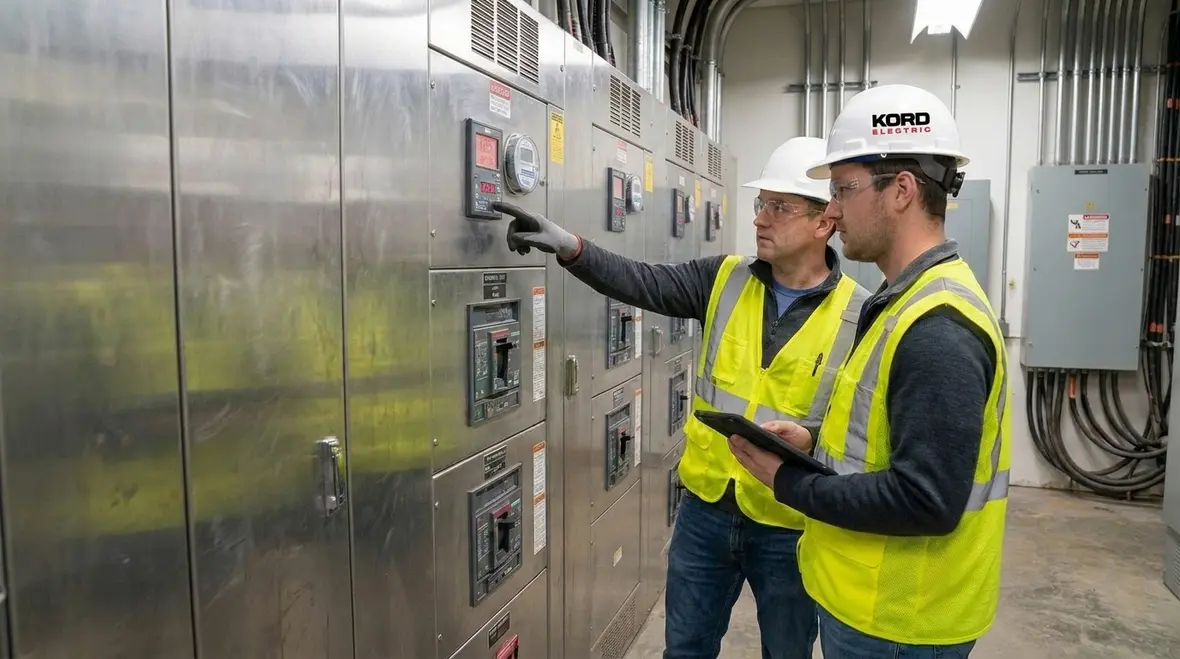
We also help building owners connect this work to broader reliability planning. For example, teams who want a deeper look at how service capacity and distribution decisions affect uptime often review guidance such as Kord Electric’s Commercial Electrical Load Capacity Assessment Guide and related distribution planning resources. Those concepts pair naturally with load balancing and power quality improvements, because all three shape how your building rides through everyday peaks and unexpected events.
Why large buildings need smarter load balancing
When a building grows, its electrical system grows in complexity faster than most people think. Different floors, wings, tenants, and process loads rarely operate in perfect harmony. As a result, phase currents can drift, neutral currents can rise, and equipment can experience uneven stress. That uneven stress shortens life, increases heat, and pushes breakers and transformers closer to their limits.
We look at the building as a living system. Therefore, our experts analyze demand profiles, starting patterns, and seasonal shifts. We also check how changes in occupancy affect balance over time. In other words, we do not design for an average day. We design for the real rhythm of the site.
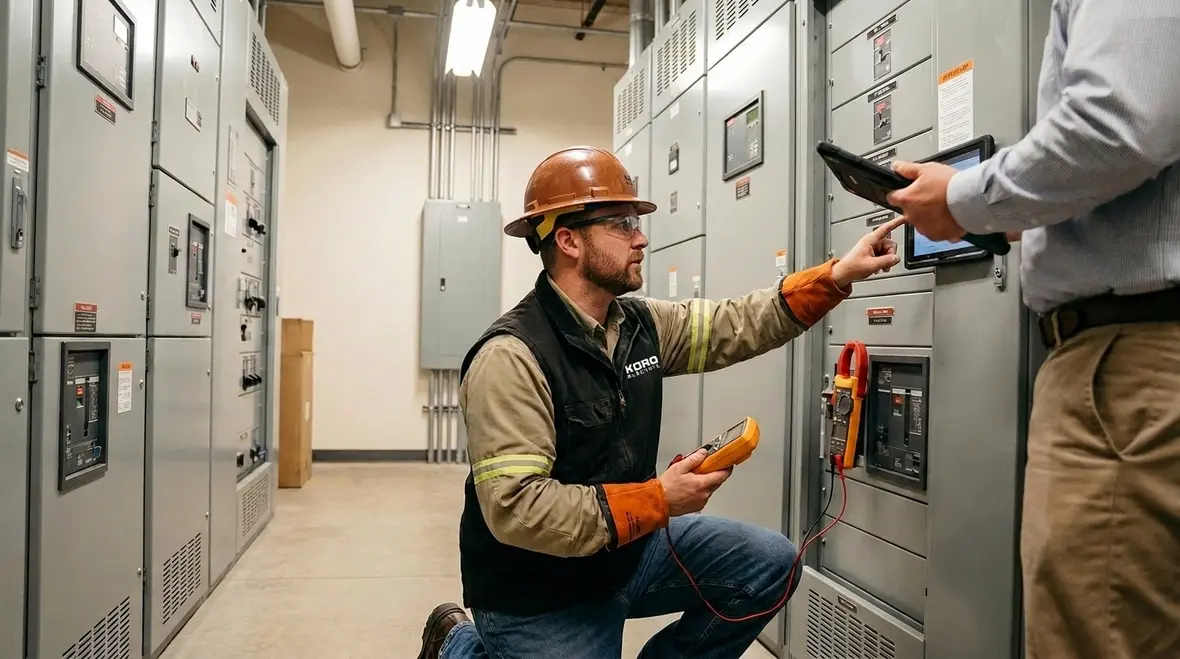
Our technicians and expert service staff explain what they find in clear language. They help property teams connect symptoms to causes, instead of playing guessing games that feel like solving a mystery with a flashlight that only works on Tuesdays.
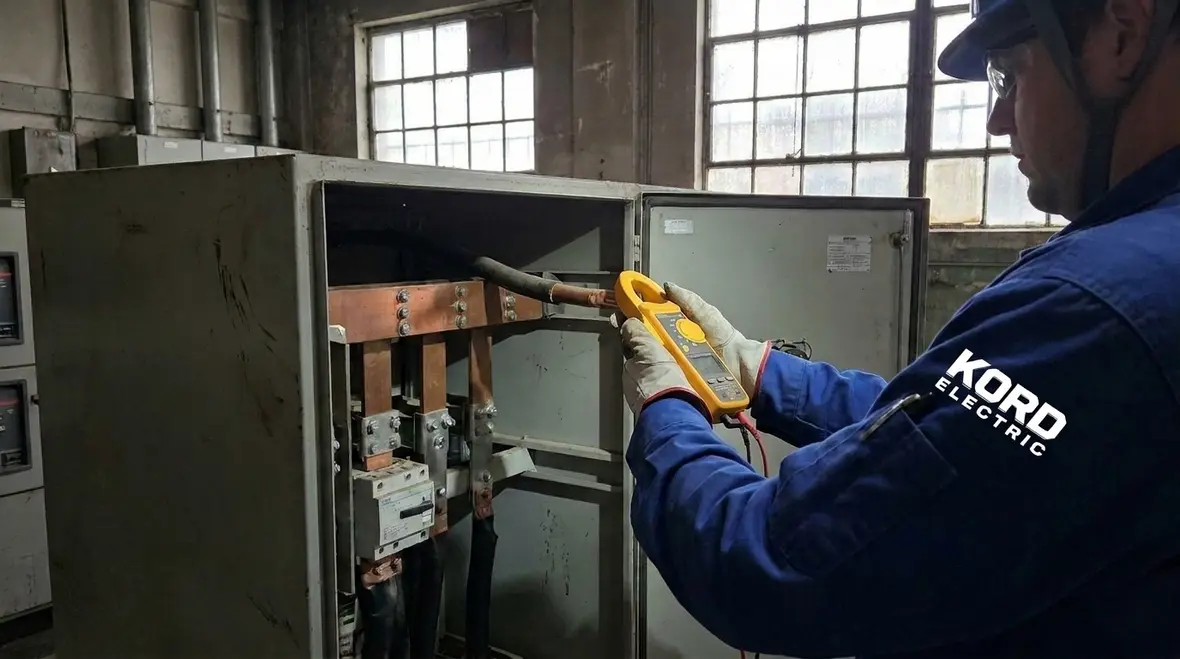
For many facilities, this “living system” view also overlaps with broader service upgrades. When we discover that phase imbalance and neutral stress are tied to panels that have been stretched past their original intent, we may connect load balancing work with structured expansion or service improvements. Resources like Kord Electric’s Commercial Subpanel Electrical Services Guide and Upgrading Commercial Electrical Service Capacity show how panel and service planning can support healthier load distribution over the long term.
How smarter balancing supports uptime and safety
Smarter load balancing is not just a comfort upgrade. It cuts down on overheating, reduces the risk of hidden conductor damage, and helps protective devices operate inside their intended ranges. When phases share the work fairly, breakers handle faults more predictably, transformers avoid chronic overloading on a single leg, and neutral conductors stop carrying the kind of excess current that quietly undermines insulation and terminations.
How we diagnose power quality problems in the field
Before we propose upgrades, we measure. Then we interpret. In large facilities, power quality issues often show up indirectly as overheating, nuisance trips, poor UPS runtime, motor noise, or control system resets. Those symptoms can point to harmonics, voltage sags, phase imbalance, or transients caused by switching and short duration events.
We use targeted field data collection to capture real waveforms and trends, including:
- Voltage sag and swell events and their frequency during normal operations
- Harmonic distortion levels and where they originate
- Phase current imbalance across switchgear and panelboards
- Transient activity from large motor starts, UPS transfers, and capacitor switching
Then, we translate the results into building actions. Next, we prioritize fixes based on risk and impact, so teams do not spend money in the wrong order. That approach keeps the project grounded, practical, and aligned with how commercial and industrial sites actually run.
Because uptime is usually the main scoreboard, we also connect findings to continuity planning. Teams interested in how load behavior, power quality, and redundancy work together often review system-level resources like Kord Electric’s guidance on Commercial Electrical System Uptime for Critical Facilities. That bigger-picture view helps facility leaders turn scattered symptoms into one coherent reliability strategy.
From measurements to a practical action list
Once power quality monitors, infrared scans, and field inspections have done their work, we turn data into a sequence of steps. That might start with simple corrections like tightening terminations and rebalancing panels, then move into targeted harmonic mitigation, surge protection, or feeder redesign. Each step is tied to a specific symptom and risk, so you can see exactly why a recommendation appears on the list and what it will change in daily operations.
Advanced load management strategies that reduce wear and surprises
Once we understand the root cause, we shift from “patching” to managing load behavior. In large buildings, the most effective solutions usually combine electrical design improvements with smart monitoring and operational coordination.
We typically focus on the following strategies, tuned to each facility:
- Panel and feeder load balancing to reduce phase stress and neutral loading
- Distribution redesign when multiple tenant or process loads keep shifting
- Staggered start sequencing for major motors and equipment to limit inrush peaks
- Harmonic-aware load planning for VFDs, LED drivers, data systems, and power supplies
To make this easier for our clients, our technicians walk through what each strategy changes and how it shows up in the electrical room. They also explain the tradeoffs, because every building has a budget, a schedule, and a limit on downtime. And yes, sometimes the limit is shorter than the patience of a late-night sitcom audience. We work within it.
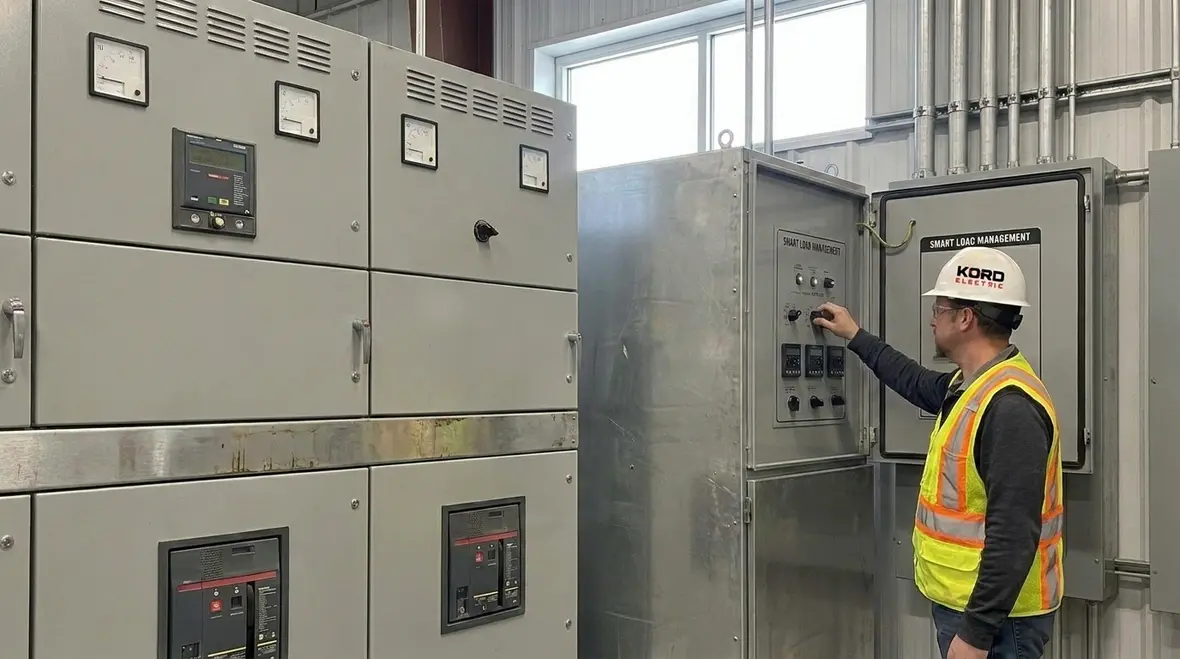
For facilities looking beyond a single project, we often connect advanced load management to longer-range planning. Articles such as Kord Electric’s Electrician Cost LOS Guide for Commercial Facilities and other budgeting resources help teams understand how phased upgrades, monitoring, and balancing work together across multiple fiscal years instead of just one capital cycle.
Coordinating load management with future growth
Smart load management also leaves room for tomorrow. When we know a site will add EV charging, more data equipment, or a new production line, we design balancing strategies that can expand. That may mean reserving breaker space, planning for future feeders, or installing monitoring in spots that will matter more later. The goal is simple: today’s solution should not become tomorrow’s bottleneck.
Power quality upgrades that protect sensitive systems and keep uptime
After we address imbalance and loading, we protect the building against the “bad moments” in power. Those moments include short voltage dips, harmonic buildup, and switching events that can disturb sensitive controls. Even when average voltage looks fine, a building can still suffer from power quality events that degrade performance.
Our expert service staff evaluates power quality solutions based on what the site needs, including:
- Harmonic mitigation to reduce overheating and control malfunctions
- Voltage regulation to stabilize supply during disturbances
- Surge and transient protection to guard equipment at the source and downstream
- Filtering and conditioning for non linear loads common in modern commercial spaces
We also align these upgrades with the building’s protection settings. Therefore, we confirm coordination so that mitigation does not create new nuisance trips. We want protection to work when it matters, not to act like a smoke alarm that goes off because someone burned toast.

When power quality work is part of a broader resiliency plan, we also reference concepts from emergency power and redundancy projects. Guidance such as Kord Electric’s Emergency Power for Business Continuity Design helps facility leaders see where UPS systems, generators, and filtering all support the same goal: stable power when it matters most.
Protecting controls, data, and life safety systems
The most sensitive loads in a large commercial building are often the quietest ones: control networks, safety systems, and data infrastructure. Power quality upgrades shield these systems from the kind of “almost invisible” disturbances that cause intermittent failures and hard-to-repeat alarms. By treating controls and life safety equipment as priority loads in every mitigation design, we help your building behave predictably during disturbances instead of turning routine events into mystery outages.
How advanced building systems work together across the electrical chain
The best outcomes come when load balancing, protection, and power conditioning connect as one system. In large buildings, equipment sits in layers: utility service, switchgear, transformers, UPS systems, ATS equipment, and distribution boards. If one layer behaves unpredictably, the rest must compensate. That compensation increases stress and can raise maintenance needs.
We therefore build a plan that covers the full electrical chain. First, we confirm how power enters the building and where it begins to shift. Next, we map where major loads land and how they move over time. Then, we decide whether the fix belongs at the source, the distribution point, or the equipment level.
In our guidance from the advanced approach we share with clients through our Kord Electric blog, we emphasize measured design decisions and clear documentation that helps teams operate the system safely for years. When we follow that approach, you gain more than better numbers on a report. You gain confidence when tenants ask why lights dim, why drives reboot, or why alarms appear at random.
This system-wide view also connects naturally with topics like transformer maintenance, panel upgrades, and emergency distribution for critical facilities. When readers explore articles such as Kord Electric’s pieces on commercial transformer care or data center redundancy, they see the same theme: the electrical chain only performs as well as its weakest decision.
Connecting load balancing to broader facility goals
For property owners and facility managers, the value of integrated load balancing and power quality work shows up in familiar metrics: fewer callouts, clearer alarms, more predictable utility bills, and less drama during planned shutdowns. When we tie these technical upgrades to business goals like uptime, tenant satisfaction, and compliance, it becomes easier for leadership teams to fund the right projects in the right order.
Because many of these projects happen in dense commercial markets, we also help teams connect building-level plans with local service expertise. For facilities across Southern California, Kord Electric’s Los Angeles County electrical services overview is often the first step in mapping regional support to a building’s long-term reliability goals.
Featured FAQ: quick answers for commercial facility teams
Facility teams often bring similar questions to the table when they first explore Best Load Balancing and Power Quality Solutions for Large Commercial Buildings. Below are some of the most common topics we address when we walk sites, review monitoring data, or plan upgrades with owners and operators.
Choosing Kord Electric for reliable electrical performance
We bring calm, clear expertise to complex electrical systems. Our technicians and expert service staff do not just install equipment and call it done. They explain what they see, why it matters, and how the recommended approach supports commercial and industrial uptime goals. And because every facility has its own realities, we design solutions that fit your operations and downtime needs. If you want measurable improvement, smarter monitoring, and power that behaves like it should, contact Kord Electric today for an assessment and a plan built for your building.
For facility managers who want to connect these strategies with broader planning, Kord Electric maintains a dedicated knowledge hub at the Kord Electric blog, where topics like distribution uptime, EV charging load management, and commercial safety audits all reinforce the same message: when you treat power as a core part of building performance, everything else gets easier to manage.
And if you are shaping a longer-term roadmap for your property, it can help to see how load balancing and power quality fit alongside transformer upgrades, subpanel strategies, and emergency power planning. That is why we design our Best Load Balancing and Power Quality Solutions for Large Commercial Buildings to plug directly into your reliability, expansion, and maintenance plans instead of living in a separate technical silo.