
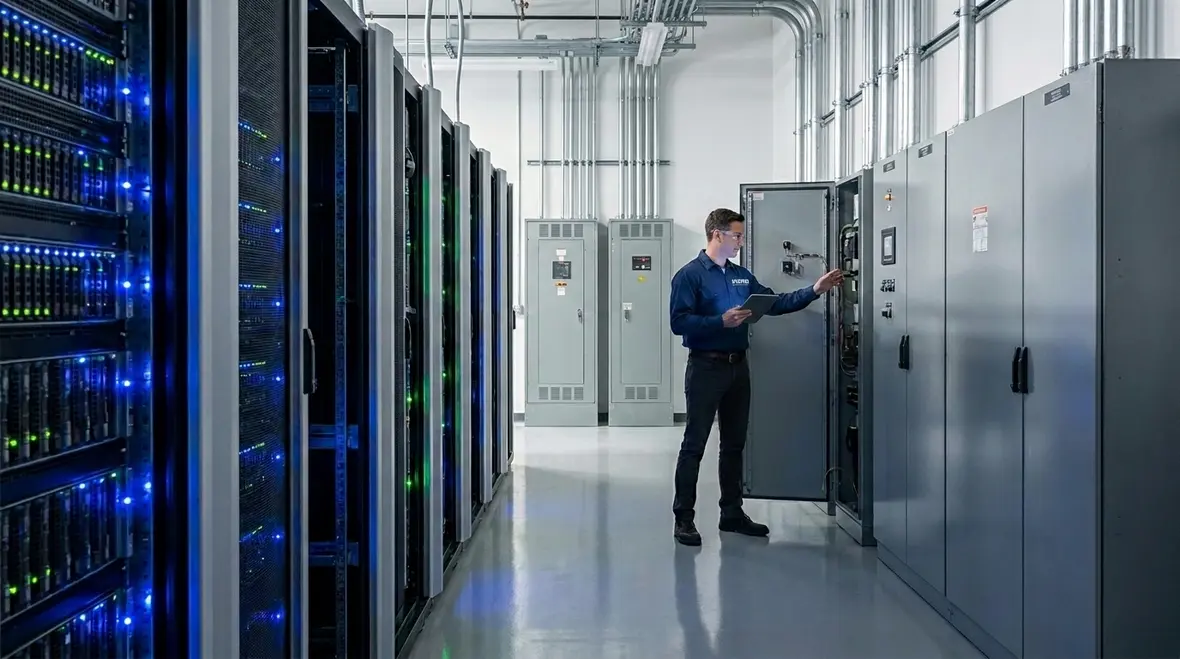
Commercial Electrical System Uptime for Critical Facilities
Commercial electrical system uptime is the lifeline for mission-critical buildings. When power holds steady, data stays online, operations stay safe, and teams can do their jobs without guessing what will fail next. At Kord Electric, we help commercial and industrial facilities, and major property buildings, protect that uptime with practical design, careful testing, and fast response when real life shows up.
In this article, we explain how we optimize reliability so critical loads keep moving. Then, we share the methods our technicians and expert service staff use to spot weak points early, fix them without drama, and keep downtime to a minimum. And yes, we will keep it professional. But we may remind you that electricity does not care about our feelings.
How commercial electrical system uptime keeps mission-critical facilities running
Commercial electrical system uptime is not just a performance metric; it is how you keep real people, assets, and data safe. Critical facilities do not get to pick their moment of truth. A storm rolls through, a utility event hits, a breaker somewhere upstream gets tired, or a contractor accidentally opens the wrong disconnect. When that happens, the electrical design, maintenance, and operational discipline either carry the day or expose every shortcut that seemed “fine” last year.
For our commercial and industrial clients, uptime means more than “the lights are on.” It means servers stay online, manufacturing lines keep moving, medical-adjacent support systems keep functioning, and building safety systems stay powered while everything else is catching up. The point is not perfection. The point is a system that rides through real events with controlled, predictable behavior instead of surprises.
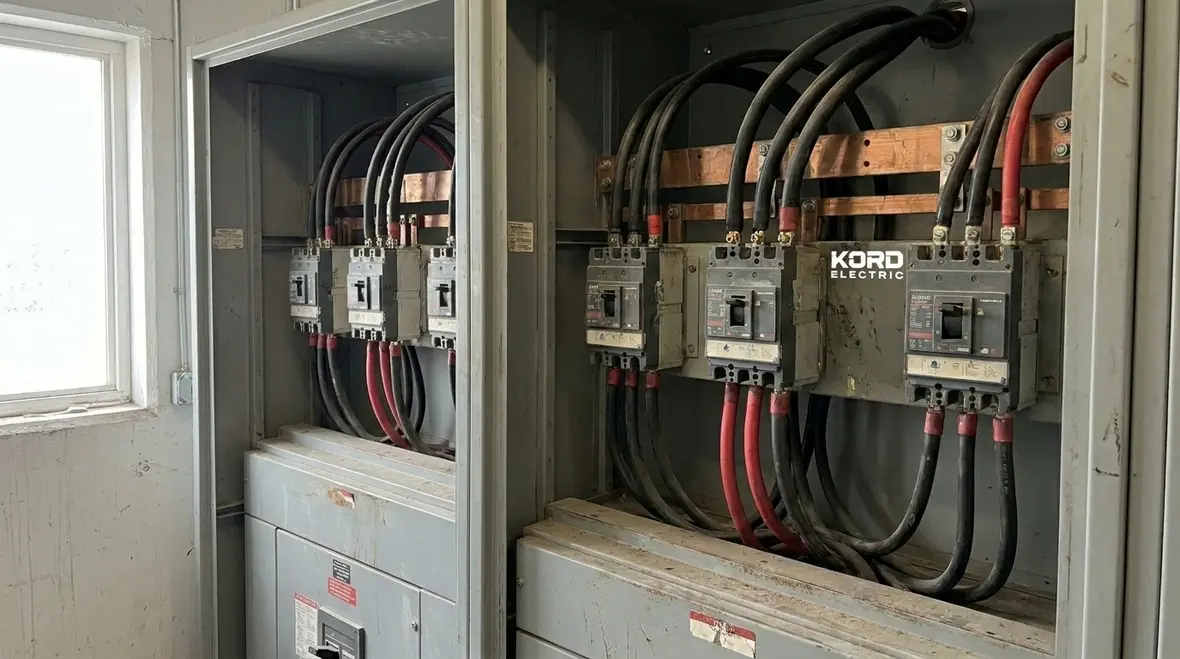
That is why we look at commercial electrical system uptime as a full lifecycle effort: design that avoids fragile single points of failure, installation that respects real-world conditions, testing that proves behavior under stress, and maintenance that keeps the system honest as equipment ages and loads change. When all of that lines up, a “bad day” on the grid becomes a manageable event instead of a building-wide emergency.
If you want to see how we handle this mindset in one of the most demanding environments out there, take a look at our companion article on data center electrical distribution design for reliability. The same principles that protect servers at scale also support commercial electrical system uptime for major property buildings, manufacturing sites, and other mission-critical operations.
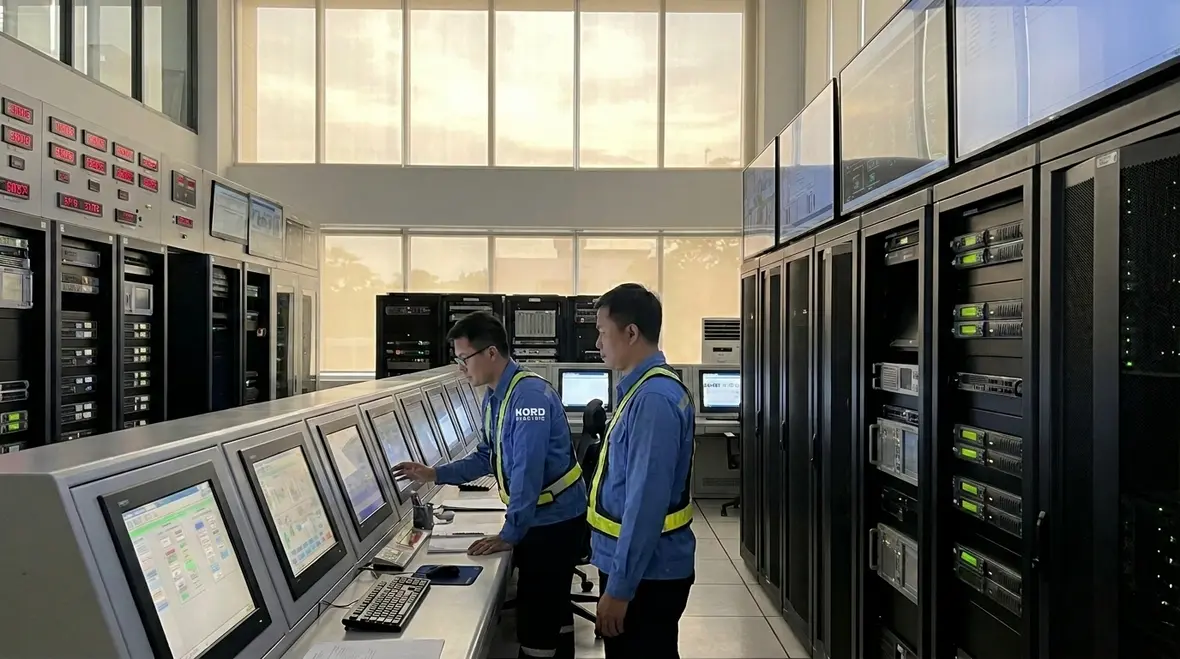
From there, we align settings, redundancy paths, and maintenance tasks with what your facility actually does. A property supporting high-density IT has different priorities than a logistics hub or a mixed-use tower, but the goal is the same: keep critical loads operating when everything else is trying to stop them.
Why reliability planning beats “hope and pray”
Third party outages rarely announce themselves with a polite email. Instead, they grow from small issues, like heat at a connection, aging insulation, or a switch that still works but no longer does it gracefully. Therefore, we plan reliability as a system, not as a collection of parts.
In our work for commercial and industrial sites, we start with the real operating goal: keep critical loads alive during events. Then we map how power flows, where it changes hands, and where risk concentrates. From there, we set clear targets for ride-through, transfer time, and failover performance. Because if a facility can tolerate a brief disturbance, it should be designed for that tolerance, not for fantasies.
Our expert service staff often describes this in plain language. They say, “We do not just ask if the equipment works. We ask if the building still works when one piece gets cranky.” In other words, we build for degraded conditions, not only ideal ones.
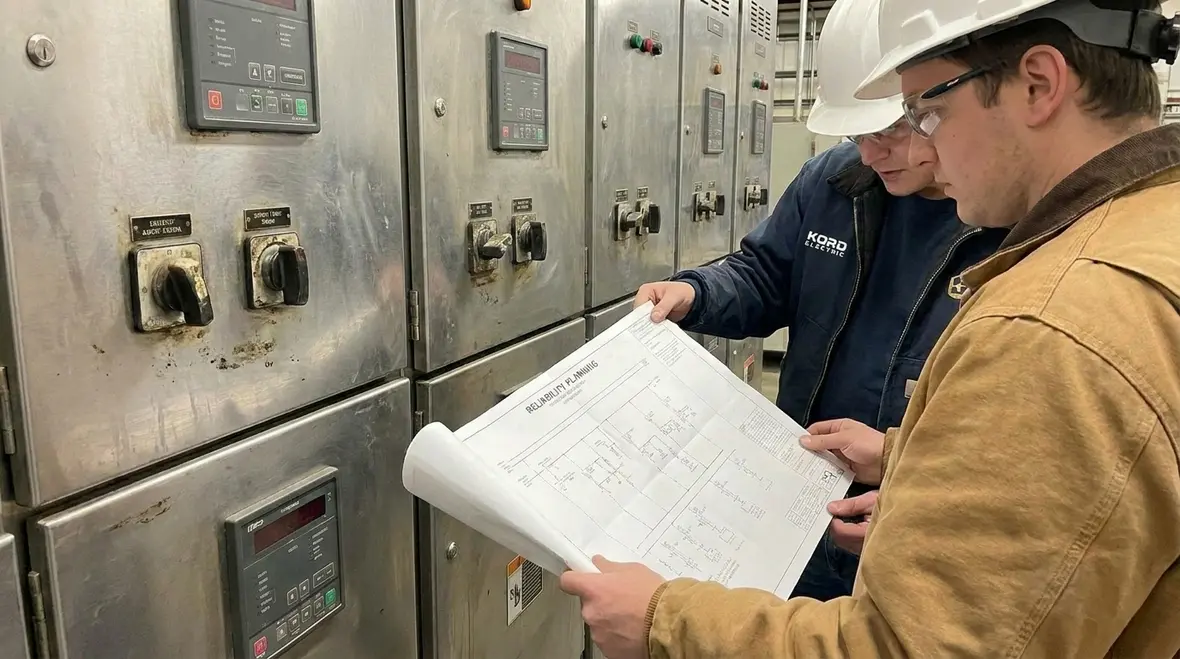
This planning mindset is what separates dependable commercial electrical system uptime from fragile setups that only work on good days. By treating failure modes as design inputs instead of afterthoughts, we help facilities avoid the “we will fix it when it breaks” strategy that always seems affordable—right up until the first major outage shows up.
Design for redundancy, not just backup power
Many people think redundancy means a generator and a prayer. That approach misses the point. We focus on distribution reliability, so power routes the right way during transitions. For mission-critical loads, we look at the electrical distribution design with a clear aim: reduce single points of failure and speed up stable transfer.
In the data center reliability work we have shared in our blog, we emphasize structured distribution design that supports continuity. We apply that mindset to other major property buildings too, because the physics do not change just because the building has a different label.
- Layered paths: critical loads get multiple ways to stay powered, so one failure does not collapse everything.
- Controlled transfer: switching and coordination aim to limit disturbance and protect equipment.
- Proper segmentation: distribution gets divided so faults stay local instead of spreading across the system.
- Coordination: protective devices work together, so the right protection trips at the right time.
As a result, the facility does not rely on one heroic event. Instead, it uses a plan that anticipates common failures and handles them in an orderly way. When backup sources, transfer logic, and distribution topology all work together, commercial electrical system uptime becomes a repeatable outcome, not a lucky break.
How we reduce risk in electrical distribution components
Even with a solid design, real uptime depends on details. Connections, breakers, bus systems, and controls face heat, vibration, load changes, and time. Therefore, we reduce risk by improving how components operate and how quickly we can detect issues.
Our technicians start with a close look at condition and performance. Then, we validate that field conditions match the design intent. After that, we update documentation so operations teams can act fast when something changes.
- Thermal issues: we address hotspots and loose connections that slowly degrade reliability.
- Breaker health: we verify operation and timing, because “it still trips” is not a reliability strategy.
- Voltage regulation: we ensure the system supports stable voltage for critical equipment.
- Control integrity: we check interlocks, controls, and signals that drive safe transfer.
To keep this calm and practical, we explain findings with simple comparisons. Our team might say, “Think of it like tire pressure. You can drive for a while with low pressure, but the odds only get worse.” Then we outline corrective actions and what each step changes for commercial electrical system uptime.
Maintenance programs that prevent failures before they happen
Preventive maintenance works when it targets the real failure modes. Otherwise, it becomes a checklist ritual, like showing up to a movie with the wrong ticket and still expecting popcorn. We build maintenance plans around risk and criticality, and we align them with operational schedules for commercial and industrial facilities.
When we implement maintenance, we also track results. That means we do not stop after the work is done. We document what we observed, what we repaired, and what we recommend next. Then we compare performance over time so patterns become obvious.
Our expert service staff often helps teams set priorities. For example, they may separate tasks into tiers:
- Immediate reliability work: fixes that directly protect critical loads.
- Planned reliability work: tasks that prevent likely failures in the next cycle.
- Verification tasks: checks that confirm devices still operate as expected after changes.
And yes, we also include the boring stuff that keeps power stable. Tighten, test, verify, and update. Without that, uptime becomes a guessing game, and nobody wants to play roulette with a server room.
For facilities that want a structured, ongoing way to handle this, our dedicated electrical preventive maintenance services give commercial and industrial sites a clear path to protecting commercial electrical system uptime year after year.
Testing and validation that prove the system will transfer correctly
Reliability is not a feeling. It is a measured outcome. Therefore, we verify that the electrical system performs during transitions, faults, and operational events. We test and validate how the distribution system behaves, not only whether each piece exists on paper.
Our approach includes reviewing coordination settings and then confirming that protective devices respond as intended. Also, we validate transfer logic and interlocks, because the system must switch safely under real load conditions and under stress.
We guide teams through the testing steps with clear communication. And we keep it business casual, because panic does not improve switchgear performance. Our technicians explain what they see, why it matters, and how to interpret test outputs. When something looks off, we do not hide it. We tell the truth early, then we fix it with a plan.
Finally, we help facilities close the loop by updating records and training. That way, the next time an operator needs to act, the commercial electrical system uptime strategy does not live only in a binder or in one person’s head.
Operational readiness: training, documentation, and faster recovery
Even with perfect equipment, uptime depends on fast, correct actions. When something shifts, teams need clear steps that reduce confusion and shorten recovery time. That is where readiness work matters.
We support commercial and industrial operators with documentation that reflects how the system runs today. Then we help align training with real scenarios. Our technicians walk through operational procedures so staff know what to check first, what to avoid, and how to confirm stability.
We also encourage teams to plan for change. Facilities evolve, loads grow, and new projects add complexity. Therefore, we ensure that updates do not break coordination, control logic, or protection behavior.
In short, we help turn reliability into daily practice. That lowers response time, protects equipment, and supports steady commercial electrical system uptime even as the building changes around it.
FAQ
Partner with Kord Electric for uptime you can trust
If your facility depends on steady power, do not gamble with reliability. Kord Electric builds and supports electrical systems for commercial and industrial facilities and major property buildings, with an emphasis on proven performance, careful maintenance, and clear operational readiness. Our technicians and expert service staff explain findings in a way your team can act on fast. Reach out to us for a reliability review and a practical plan to protect commercial electrical system uptime. Let’s keep your critical loads online, not on hope.
If you are planning upgrades, expansions, or a new build, you can also explore how we approach entire building infrastructure in our guide to commercial electrical systems for modern buildings. Pairing a resilient design with a structured service program such as our electrical preventive maintenance services gives your team a full strategy for commercial electrical system uptime—from day one through every retrofit that follows.
When you are ready to turn “we hope the power holds” into “we know how the system will respond,” our commercial and industrial electrical services are here to help you close the gaps. We design, test, and maintain systems so your facility can focus on its mission, not on whether the next disturbance will turn into a headline.


