Commercial Switchgear Maintenance Tips for Uptime
At Kord Electric, we treat commercial switchgear like the backbone of a building. We start with practical commercial switchgear maintenance tips: they begin with routine inspections, clean and dry enclosures, tight torque checks, and clear records that show what was done and when. Then we move beyond the checklist and focus on the small things that prevent big failures, such as identifying heat marks, watching for unusual noise, and verifying that protective devices work as intended. And yes, we also remind others that “it worked last time” is not a maintenance plan. It is just a hope strategy, and hope does not trip breakers. Below, our expert service staff explains the habits that keep commercial and industrial facilities operating safely, even when the schedule is packed like a subway at rush hour.
What safe commercial switchgear maintenance looks like on real sites
Third party standards and manufacturer guidance set the baseline, but we make sure the work matches the building’s reality. At many major property buildings, the switchgear lives in a space that sees dust, temperature swings, and constant traffic around it. As a result, we plan maintenance around actual risk. First, our technicians review the equipment history, including alarms, nuisance trips, and any prior component replacements. Then we define inspection intervals based on load profile, age, and operating conditions.
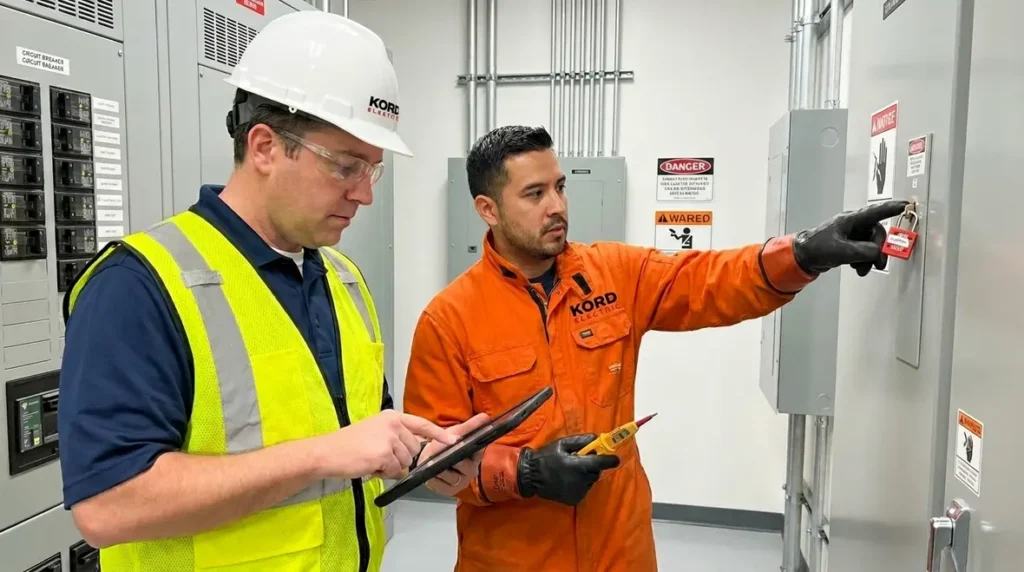
We also run the maintenance in a disciplined order. Instead of bouncing between tasks, we inspect, verify, clean, tighten, test, and document, all in a flow that reduces the chance of missed items. Next, we involve operations staff so they understand what we need the building to do during the work window. For example, we coordinate access, lockout procedures, and any required load transfer planning. That coordination matters because even a calm maintenance job can become chaos if communications break down.

How inspections catch problems before they turn into outages
Inspections do not just look for damage. They look for change. When others treat inspection like a one time event, they miss slow degradation. Our expert service staff focuses on condition trends. We check for signs of moisture, corrosion, loose connections, and insulation stress. We also evaluate airflow around ventilation systems and confirm that the area stays within acceptable temperature ranges.
Then we move to visual indicators that often show up early. Heat discoloration, spotting around terminals, or unusual cabinet residue can point to a connection problem. Furthermore, we listen for abnormal sounds during operation, because mechanical wear sometimes announces itself before it fails. If a device hums differently than it used to, we take it seriously. It is like noticing a familiar song played in the wrong key. The building is still “working,” but something is off.
After the inspection, we compare results to prior reports. In other words, we avoid relying on impressions. Instead, we use measured findings and documented observations so the next service visit builds on the last one. For a deeper look at how structured programs support reliability, you can explore our article on commercial and industrial electrical maintenance plans, where switchgear plays a starring role in uptime strategy.
Cleaning, torque, and connections: the basics that matter
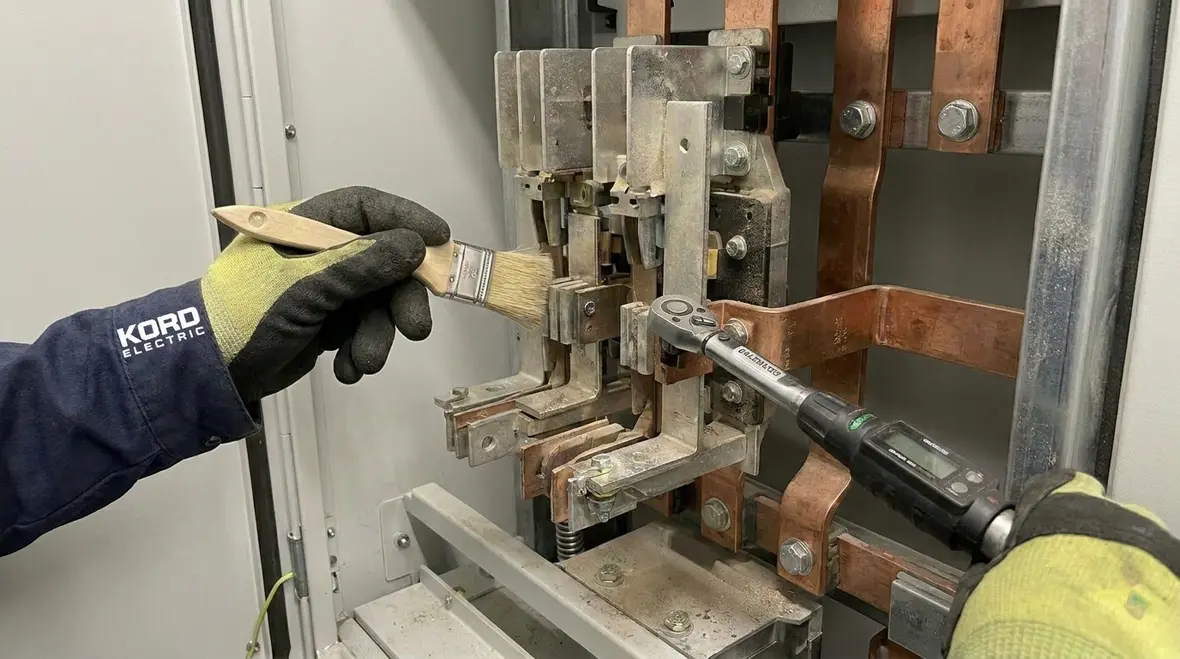
Commercial switchgear maintenance tips often start with cleaning, but we apply cleaning the right way. We remove dust and debris using safe methods that do not damage coatings, seals, or insulation surfaces. We ensure that moisture does not get trapped during or after cleaning, because water can become a problem later when humidity rises. Then we check gaskets and door seals so the enclosure keeps its intended protection level.
Next comes torque verification. Loose or improperly torqued connections can create hotspots. Those hotspots accelerate aging and lead to bigger faults. Our technicians use calibrated tools and follow the equipment specifications. If the torque spec calls for a sequence, we use the sequence. If the manufacturer warns about retorque intervals, we follow the warning. We do not “eyeball” torque, because eyeballs are great for art, not for electrical safety.
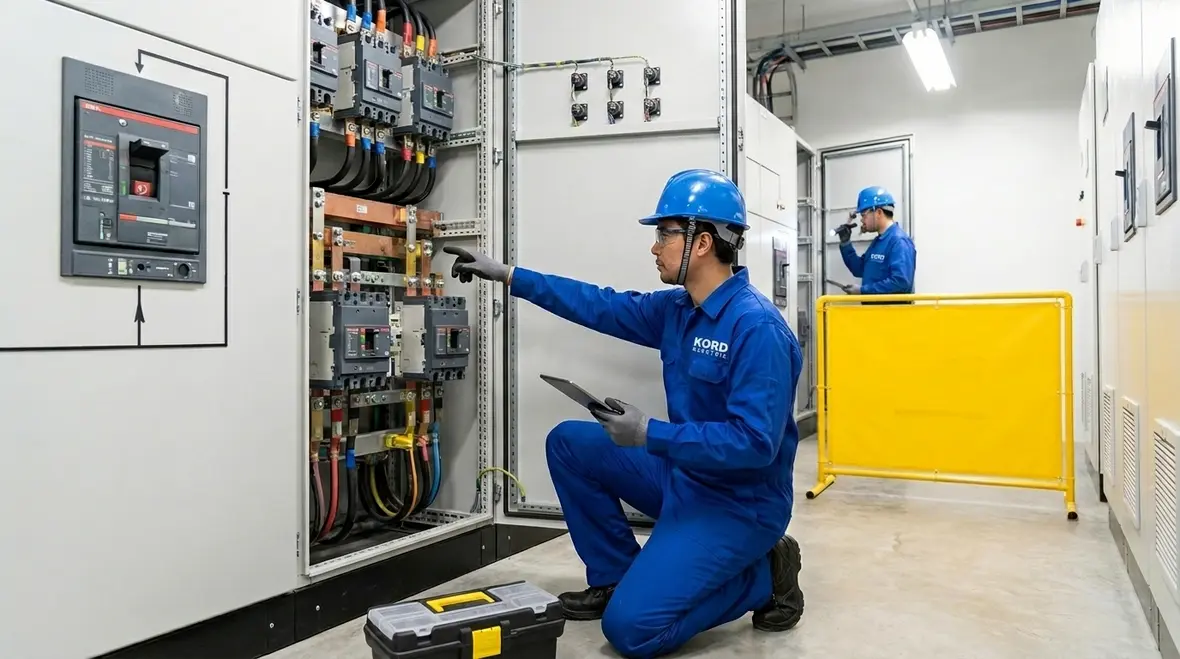
We also inspect bus bars, terminations, and contact surfaces. Where corrosion or oxidation shows up, we address it using approved processes. And because connections are the most common trouble spots, we prioritize them during each service cycle. Our work in this area aligns with the practices described in our NFPA 70B electrical panels and switchgear maintenance guide, which explains why these “simple” tasks carry so much weight for safety and uptime.
Testing and diagnostics that keep protective gear honest
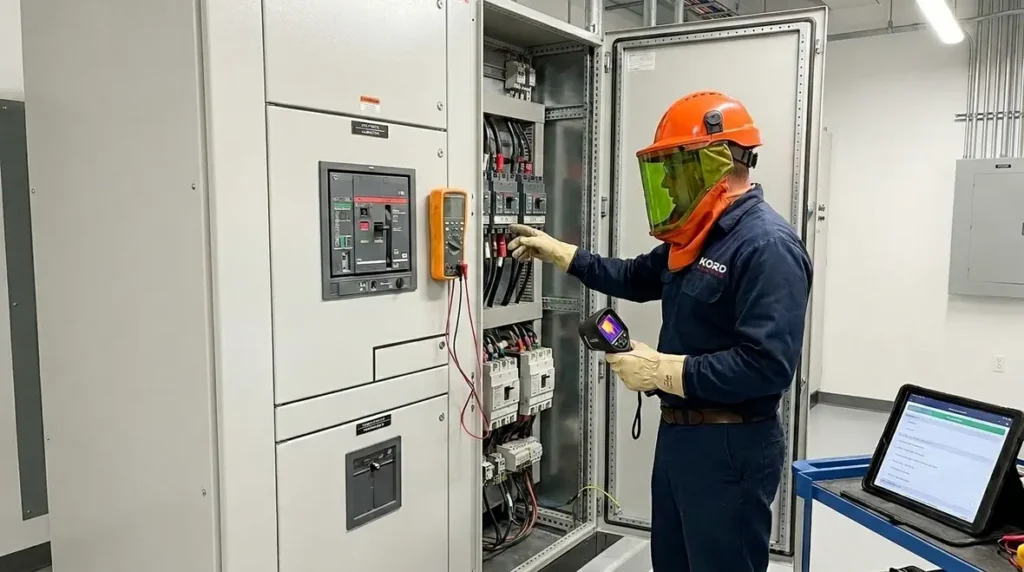
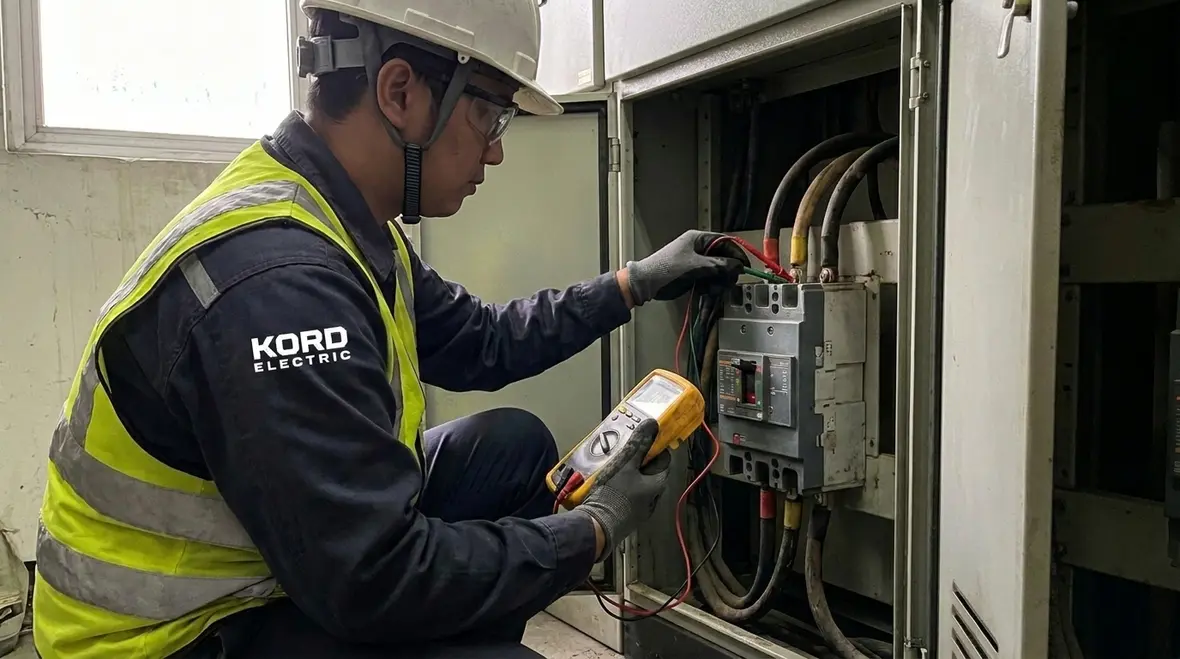
Protective devices exist to protect the facility, and that means they must act when they should. We do not treat testing as a formality. We treat it as a verification that the system responds correctly under the conditions it was designed for. Depending on the switchgear type and configuration, our technicians may support relay checks, insulation verification, and circuit breaker performance evaluation.
We also verify that settings match the as built design and current operating needs. Buildings change over time, and electrical loads evolve. Therefore, when a facility expands, adds data rooms, installs new HVAC controls, or upgrades process equipment, the power distribution behavior shifts. If the settings do not match reality, protection can drift into nuisance operation or, worse, incomplete protection.
Additionally, we review any event data from the protection system. If alarms or trip logs show patterns, we trace them back to likely causes. Then we connect the dots between operational history and test results. This is where our expert service staff stands out. We explain what the data means in clear language, so the facilities team understands why a test result matters and what action reduces risk.
Thermal, moisture, and airflow control for commercial buildings
Heat and moisture push equipment toward failure. So we focus on the environment around the switchgear, not only the switchgear itself. First, we confirm that ventilation pathways stay unobstructed and that fans, vents, and louvers operate correctly where equipped. Next, we evaluate temperature trends, because stable heat control often predicts healthier components.
Moisture can sneak in through small gaps, poor seals, or condensation cycles. We check enclosure integrity and verify that drains, where applicable, function as intended. Then we look for evidence of water intrusion and address the source, rather than just cleaning the symptom.
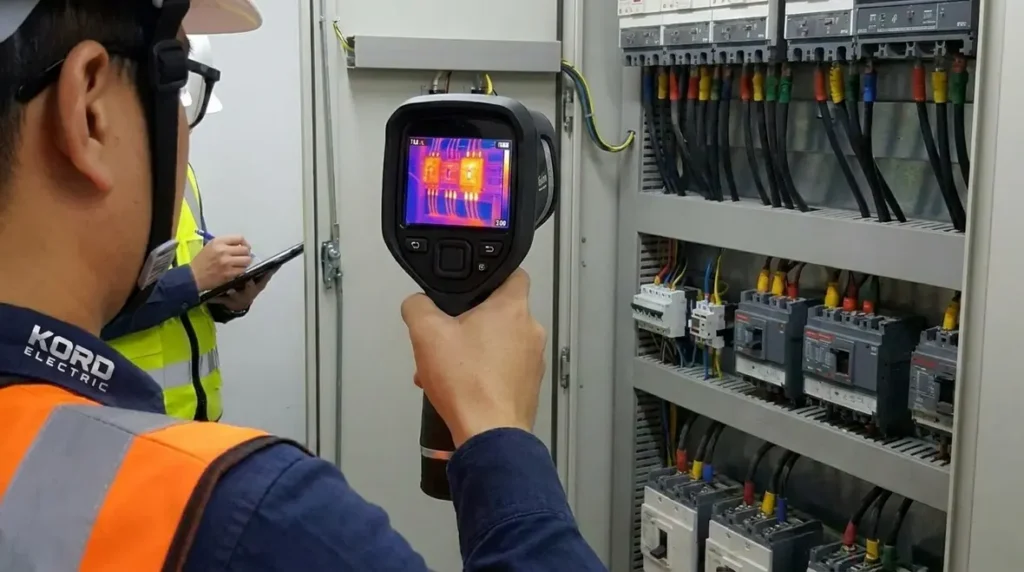
Thermal hotspots deserve special attention. If a terminal warms more than expected, it signals a connection issue, a contact problem, or a load mismatch. We support diagnosis by using test methods that help confirm where the heat originates. Then we recommend corrective action, such as torque correction, contact surface service, or component replacement based on the equipment condition. Nobody wants a “mystery heat” situation. That is the electrical version of a ghost story.
Outage planning, safety steps, and documentation that stand up
Maintenance becomes safer when it follows a clear plan. We coordinate lockout and tag out, confirm boundaries, and ensure the work scope matches the equipment lineup. Because major property buildings often run long operating hours, we schedule work during windows that minimize disruption. Still, we make sure the safety process stays strict regardless of the clock.
Documentation plays a central role. We log findings, record test results, and note any repairs or replacements. Moreover, we capture recommendations with reasoning, not vague notes. A facilities manager should not need a decoder ring to understand what happened. Our technicians label work clearly and support follow up so the next maintenance cycle starts with context.
We also help others prepare for the next audit or request from insurers and building stakeholders. When documentation is complete, it makes decision making easier. It also reduces the chance that an issue gets “handled” without a record, which is how problems quietly return later. For facility leaders who want to dig deeper into systemic risk, our post on hidden electrical risks in commercial buildings shows how overlooked issues inside panels and switchgear can evolve into real downtime.
Commercial switchgear maintenance strategy by building life stage
Different facilities need different rhythms. Newer installations may focus on early defect detection and correct commissioning verification. As equipment ages, the plan shifts toward deeper inspection, connection service, and more frequent performance testing. In older major property buildings, we often see mixed equipment conditions due to changes in renovations and upgrades over the years.
So we tailor the schedule. We set priorities for high risk sections, like bus compartments and frequently used breaker positions. We also align service with known operational cycles, such as seasonal load changes for large HVAC systems. As a result, maintenance work targets the times when failure risk is more likely.
Our expert service staff also recommends practical housekeeping routines that support the switchgear area. Keeping the room clean, dry, and properly ventilated reduces wear. Then, when our team returns, the equipment performs better and the maintenance task takes less time because fewer problems require emergency correction.
FAQ
Call Kord Electric for a maintenance plan that protects your uptime
If a major property building can keep tenants comfortable and operations moving, it can also protect its power distribution system with a disciplined approach. Kord Electric builds commercial and industrial switchgear maintenance programs that combine inspections, cleaning, torque verification, and diagnostics with clear documentation. Our technicians explain what we find and why it matters, so your team can act with confidence. Reach out to us today and schedule a site assessment. Then we will map the right service rhythm to your equipment condition and operating demands.
If you are planning a broader reliability strategy across panels, feeders, and critical equipment, our electrical preventive maintenance services help tie these commercial switchgear maintenance tips into a structured program that supports uptime across your entire facility.