
Industrial Power Surge Protection for Facilities
Commercial and Industrial Protection Starts Here
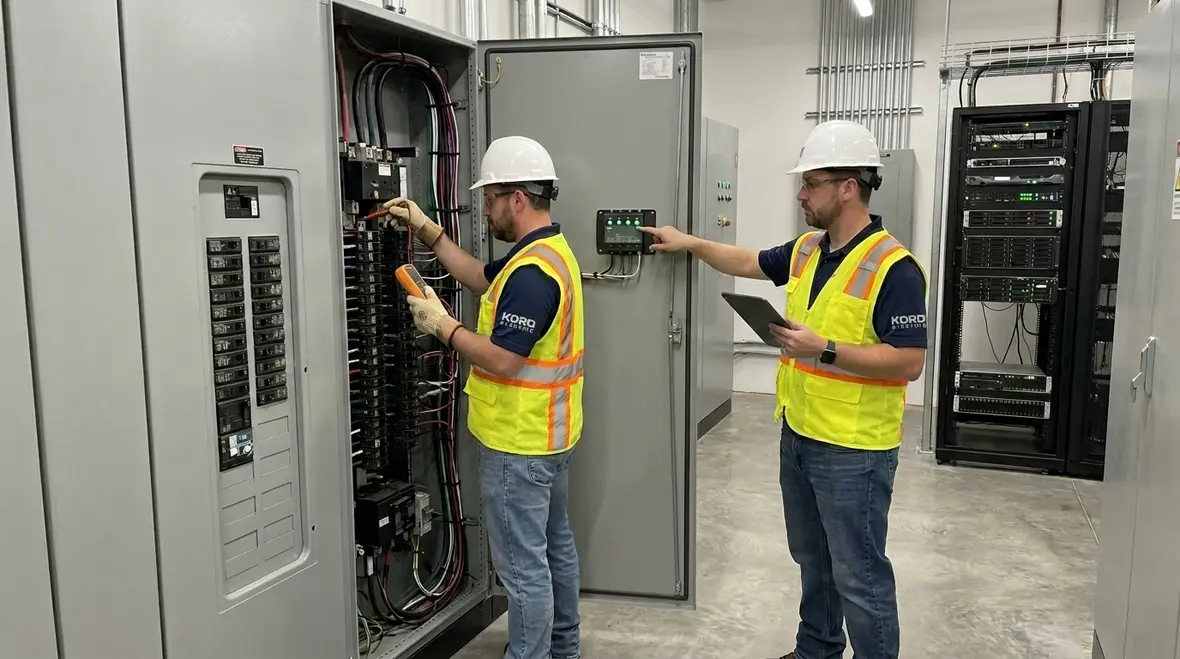
At Kord Electric, we take industrial power surge protection seriously because our clients live in the real world, where equipment does not get a warning before voltage chaos shows up. We design and install protection that helps defend sensitive systems like PLC controls, VFD drives, server racks, motor starters, HVAC controls, and specialized production tools. In other words, we help keep a single electrical event from turning into a multi day outage, a repair bill, and a “why did this happen” meeting that no one enjoys. And yes, surges can arrive fast and quietly, like a jump scare in a movie that nobody asked for.
Even so, prevention works best when we treat power quality like a system, not a one time install. Therefore, we start with understanding how your facility uses power, how it routes that power, and where risk concentrates. Then our technicians and expert service staff explain what we found and why it matters, in plain language you can actually use.
How Surges Find Sensitive Equipment
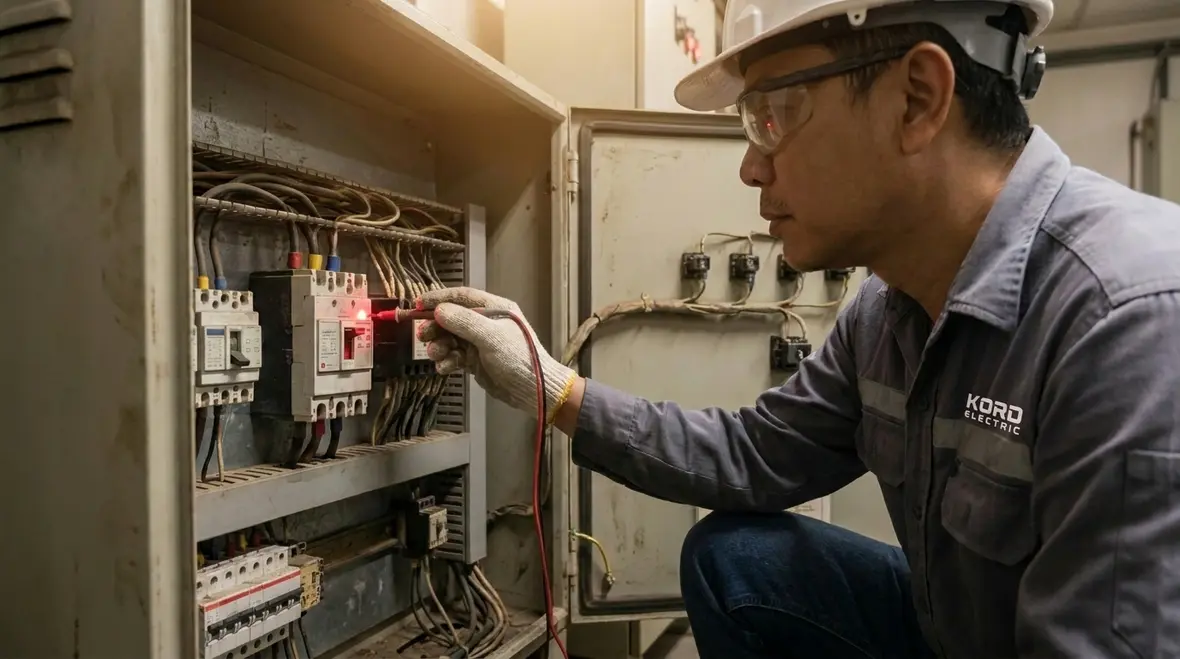
Surges do not always announce themselves with dramatic sparks. Instead, they often ride in through utility service, travel along building wiring, and then stress the electronics that control your process. As a result, sensitive equipment can fail immediately, degrade over time, or behave “almost fine” until the day it decides not to be fine anymore.
Most commercial and industrial facilities see surge exposure from several common sources. Lightning strikes or nearby strikes can push energy toward a building. Utility switching events can also create sudden voltage changes. Then internal events like large motor starts, contactor operation, capacitor switching, and even elevator cycles can cause transients that stress components.
We also see how grounding and bonding issues raise the risk. When grounding paths are weak or poorly connected, surge energy has less control over where it goes. Consequently, the voltage can rise at points that your equipment “sees” before it ever reaches a safe route. Our technicians explain this carefully, because understanding the path helps you protect the destination.
For facilities that have already seen unexplained trips, nuisance resets, or mysterious equipment behavior, pairing surge protection with a broader look at voltage stability can be especially helpful. Many teams explore solutions for voltage fluctuations in commercial and industrial facilities so that surges, sags, and other power quality problems get handled as part of one coordinated plan.
Industrial Power Surge Protection: What We Build and Why
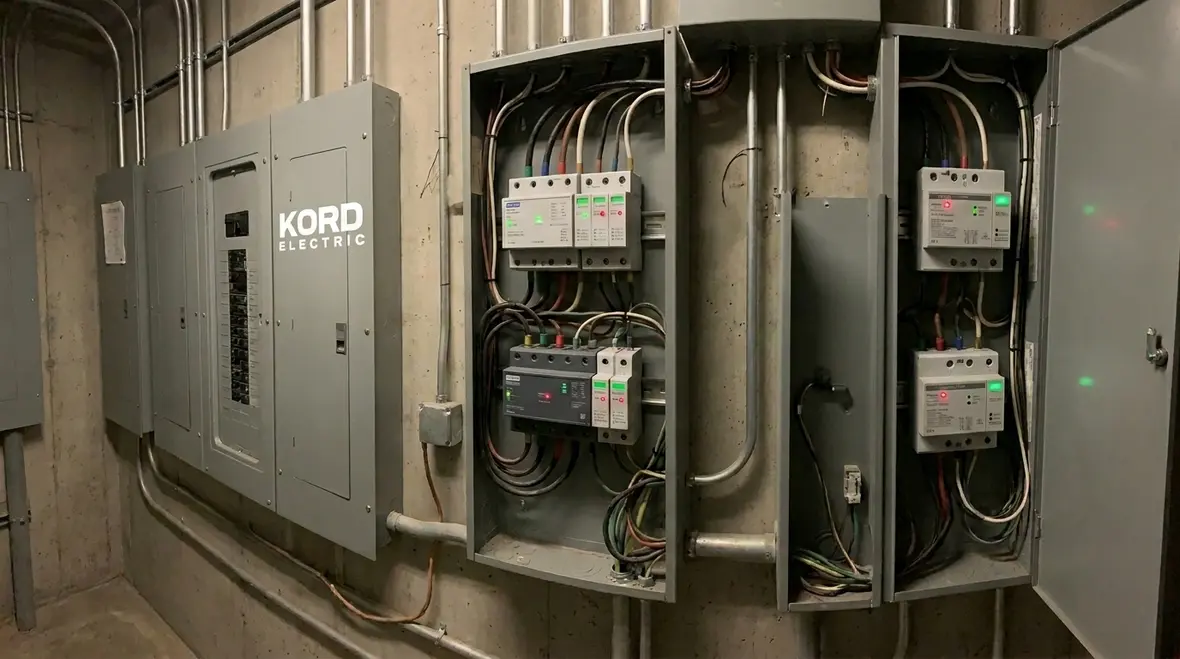
When we provide industrial power surge protection, we approach it as a layered strategy. First, we reduce the surge’s impact at the building entrance. Next, we manage transients along distribution panels and branch circuits where sensitive loads connect. Finally, we coordinate the protection devices so they work together instead of competing like guests at a holiday dinner.
That layered design usually includes surge protective devices at key points, coordinated with your panel layout, load types, and system voltage. We also consider device coordination timing, clamping level, and installation method. In practical terms, better coordination can reduce the “let through” voltage that reaches your equipment during a surge event.
We do not stop at equipment protection either. We pay attention to the full electrical environment. So, while a surge device plays a major role, the supporting elements like busbar layout, conductor routing, and grounding continuity help determine how well the surge energy gets directed away from your control systems.
In many facilities, surge work pairs naturally with structured electrical preventive maintenance. When technicians already have panels open, they can assess surge protective devices, check torque on critical terminations, and document conditions in one organized visit instead of multiple, disconnected trips.
Why Location and Wiring Method Matter More Than People Think
Many facilities assume that protection only depends on the device rating. However, placement and installation can change performance more than most stakeholders expect. To put it simply, a surge device installed in the wrong spot, or with unnecessary conductor length, can reduce effectiveness. And that is like installing a smoke detector in the hallway but only caring about smoke that happens in the basement.
For commercial and industrial work, we evaluate where sensitive equipment connects. We then install and configure industrial surge protection so it protects the circuits that matter. This includes distribution panels feeding servers, process controls, security systems, industrial lighting control, and critical HVAC electronics for large facilities.
We also check how conductors run inside your building. Shorter, straight runs and proper termination support better surge performance. Meanwhile, loose connections and poor terminations raise resistance and can turn protection into a decorative item. Our expert service staff reviews these details and explains what we see so the project makes sense to your team.
When lighting controls, sensors, and smart fixtures tie into the same distribution, we also coordinate surge strategies with broader lighting installation services. That way, high efficiency lighting and advanced control systems get the same level of protection as the panels that feed them.
What Our Technicians Check Before Installation
We start with a practical assessment, because guessing wastes time and money. Our technicians verify system parameters, including service configuration and voltage levels. Then we look at how power moves from utility service into switchgear, distribution panels, and end use equipment.
Next, we evaluate existing surge protective devices if your facility already has them. We check for aging, mismatched coordination, and installation practices that might reduce performance. Also, we identify any grounding and bonding concerns that can undermine protection.
As part of this process, we consider where surge risk concentrates in your environment. For major property buildings and commercial sites with multiple tenants or complex systems, this step becomes even more important. We map sensitive loads and then we align the protection plan accordingly.
Finally, our team documents what we recommend and why. We explain the logic behind the design choices so others on site can maintain the system confidently. And if you ever wondered why electricians speak in calm, measured sentences while your office techs speak in urgent ones, this is why.
In many cases, those same findings also inform broader commercial and industrial electrical maintenance plans. When surge risks are documented clearly, they become part of an organized roadmap instead of a list of “someday” projects.
Coordinating Protection With Ongoing Facility Operations
Surge protection does not live in a vacuum. Therefore, we plan installations around your operational schedule and electrical infrastructure. We coordinate with facility managers so we avoid unnecessary downtime and we keep work safe and controlled.
Additionally, we help you understand how protection interacts with other power quality systems. For example, if you also need solutions for harmonics, voltage regulation, or backup power, we make sure the surge strategy supports the broader electrical plan. Otherwise, you might solve one issue while accidentally complicating another.
We also emphasize maintenance and inspection. Devices can be exposed to repeated events, and performance can drift if connections loosen or if the system changes. Our service team can review your protection plan during electrical assessments and when equipment upgrades happen. This is how you avoid the “set it and forget it” trap that works great for coffee makers and poorly for industrial systems.
For facilities implementing formal programs based on NFPA guidance, surge strategies align naturally with structured efforts like NFPA 70B electrical panels and switchgear maintenance. When inspections, testing, and documentation already happen on a schedule, surge reviews become one more predictable part of keeping systems reliable.
FAQ: Industrial Power Surge Protection for Facilities
Final Thoughts From Kord Electric
Power events do not schedule themselves around your production plan, and neither should your protection. Kord Electric designs industrial power surge protection for commercial and industrial facilities and major property buildings, and we support it with careful assessment, clean installation, and clear explanations from our technicians and expert service staff. If you want fewer unexpected failures and less guesswork, contact us today for a site review and a protection plan built for your electrical reality. Let us handle the electrical drama, so your team can get back to work.
If your facility is also due for a broader electrical tune up, you can combine surge planning with a structured electrical preventive maintenance program. Coordinating these efforts keeps critical systems protected, documented, and ready for the demands of commercial and industrial operations.


