Scalable Commercial EV Fleet Infrastructure Plan
Planning a Scalable EV Fleet Infrastructure for Commercial Properties, Built for Real Life
Kord Electric helps commercial and industrial facilities plan a commercial ev fleet infrastructure that can grow with the business, not fight it. In the first planning pass, we map power capacity, charging layouts, and safety needs so fleets can scale without surprise downtime. Meanwhile, our technicians and expert service staff explain each step in plain language, because “mystery wiring” is not a business plan. And yes, we still hear jokes like, “Can we just plug it in and hope?” We smile, we document, and we build it right.
Now let’s walk through how a property owner or facility manager can plan for scalability, reliability, and cost control, while keeping the system easy to operate and maintain across multiple sites.
Start with the Load Story, Not the Charger Sticker
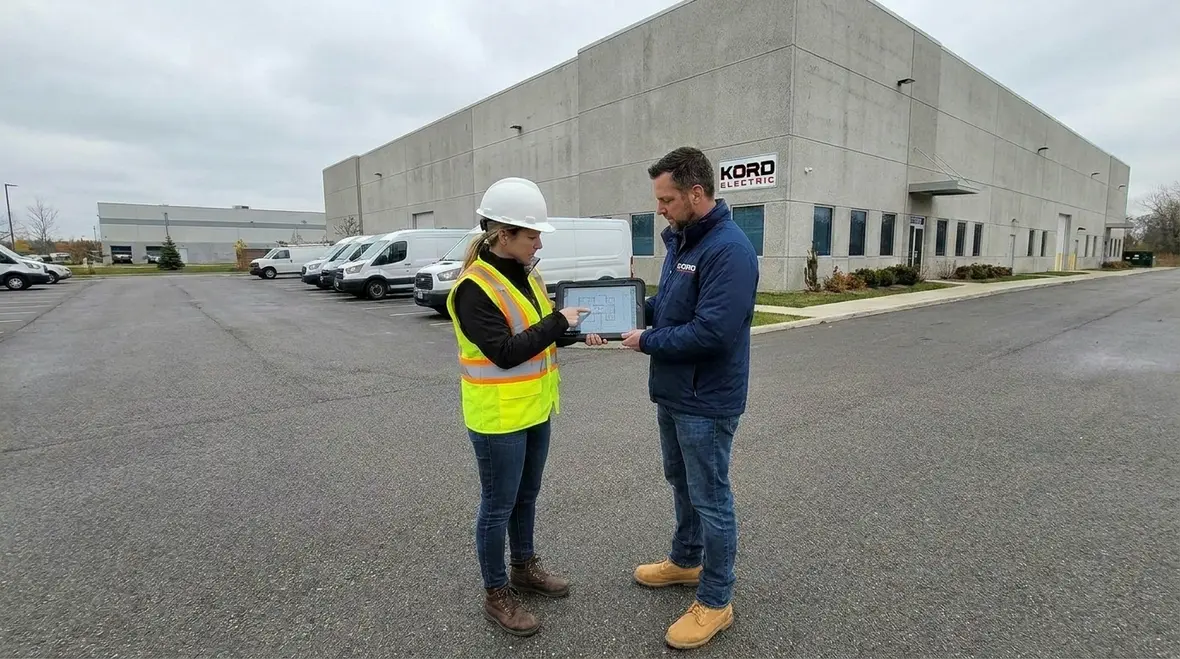
For scalable charging, we begin with the load story. That means we review site demand, transformer capacity, panel headroom, and utility service limits. Then we forecast growth in vehicles, charging patterns, and shift schedules. In other words, we stop guessing and we start modeling.
As our team explains during site discovery, most problems come from thinking the charger is the only big piece. In reality, the property’s electrical distribution decides how many charging ports can run at full power at the same time. Additionally, we consider HVAC cycles, lighting loads, kitchen equipment in logistics campuses, and other industrial loads that swing through the day.
So, when others propose “just add more chargers later,” we ask a calmer question: later needs a plan today. We help you define charging zones and power budgets so the system scales without triggering costly service upgrades.
If you are evaluating early steps and want to see how electrical design and capacity planning affect long-term charging performance, you can also review how Kord Electric approaches EV charging infrastructure scalability for commercial sites. It offers a broader look at how real-world site conditions, power paths, and future demand shape commercial EV projects.
How We Design for Growth with Zoning, Communication, and Control
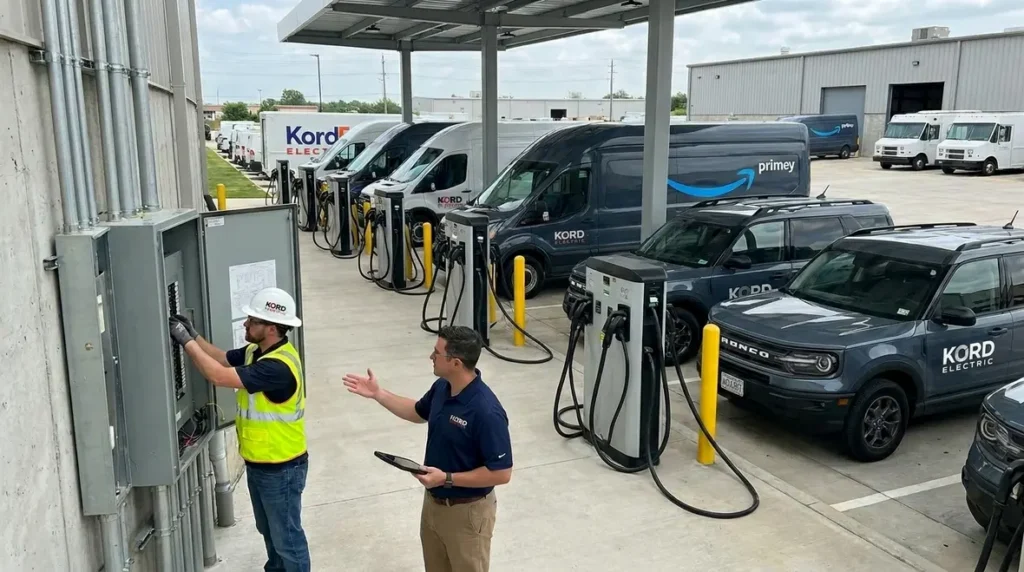
Scalable commercial ev fleet infrastructure relies on smart design choices. First, we create electrical zoning. That means the building gets divided into charging areas that match power availability and parking layouts. Next, we select charging equipment that supports load management and scheduling. Then we set up communication so chargers share information, rather than compete like kids in a candy aisle.
For example, our technicians often recommend a central energy management approach for larger facilities. Consequently, the system can throttle output when the building draws heavy power. This protects breakers, reduces peak demand costs, and keeps charging predictable for drivers.
Furthermore, we plan for future bay expansion. We do this by reserving conduit pathways, sizing panels with planned headroom, and leaving room for add-on equipment. It is like building a warehouse with extra dock doors. You might not open them this week, but you will be grateful next year.
These zoning and control strategies line up closely with the way Kord Electric handles full commercial EV charger installation projects. Design, installation, and commissioning are treated as one connected workflow, not a series of disconnected steps.
Site Power Upgrades, Done with a Schedule You Can Trust
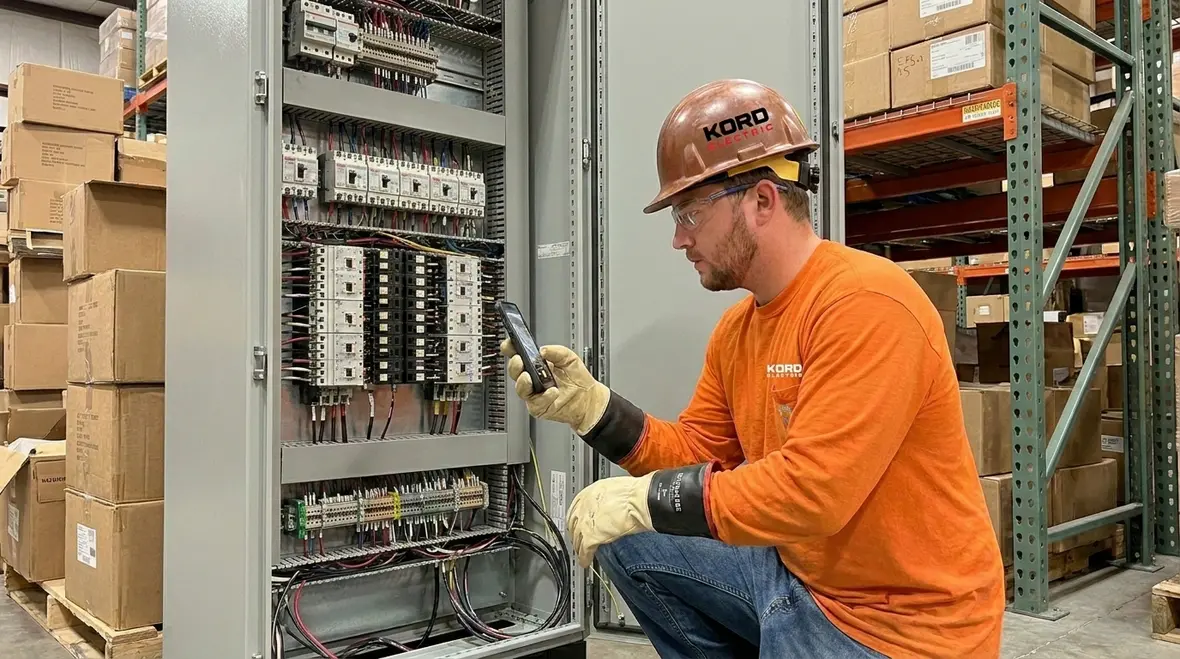
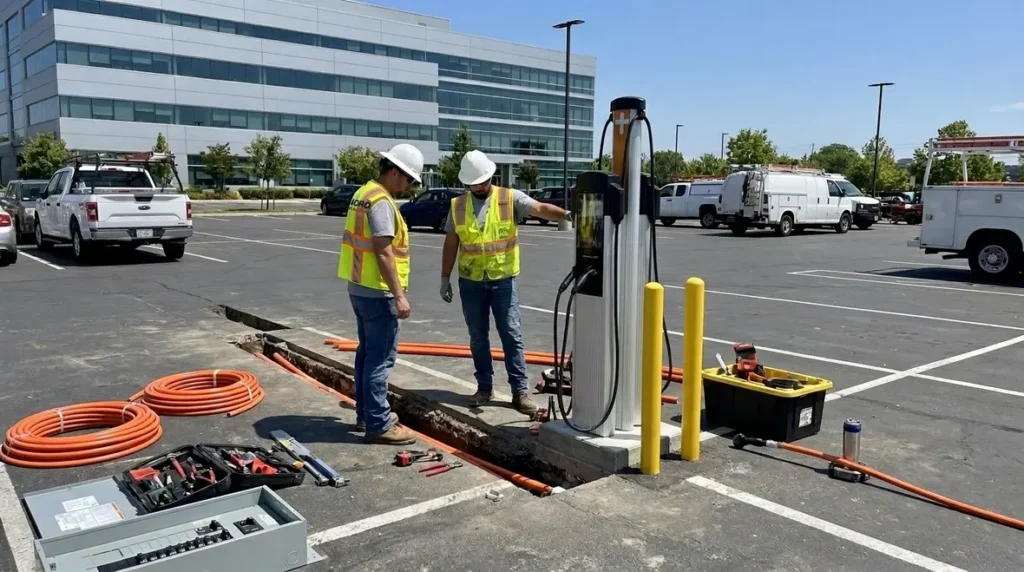
When sites need upgrades, we handle the work in a way that respects operations. We plan the work order around business hours, vehicle readiness, and any critical equipment that cannot go dark. Then we coordinate the electrical scope with civil work, rack or pole placement, and any parking layout changes.
Because every commercial and industrial property behaves differently, we review constraints such as utility transformer locations, duct banks, and existing service meters. After that, we propose phased installation options. For instance, we might energize a subset of chargers first, confirm actual demand behavior, and then expand as fleet growth becomes real, not theoretical.
Meanwhile, our expert service staff teaches facility teams how to read basic system indicators. That reduces call volume and shortens the “what happened” window when a charger reports a fault. Nobody wants a customer service ticket that starts with “I’m not sure.” We prefer a quick check, a clear explanation, and a fast return to service.
When the electrical backbone is stable and documented, your team has more confidence adding vehicles, chargers, and routes instead of worrying about whether the next load spike will trip a breaker at the wrong moment.
Safety, Code Compliance, and Protection for Busy Properties
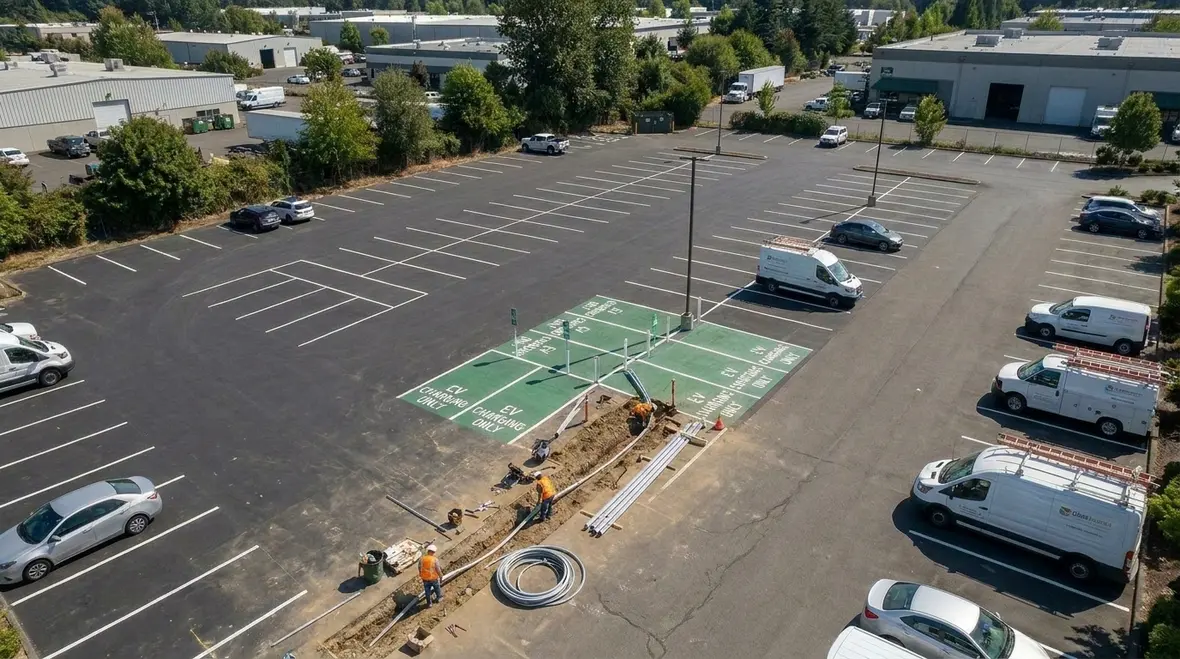
Charging systems must protect people, property, and equipment. To achieve that, we follow safety-first practices such as proper conductor sizing, grounding and bonding, GFCI and fault protection where required, and compliant disconnects and labeling. Additionally, we plan for weather exposure, physical impact risk, and proper cable routing through harsh environments common on industrial campuses.
Safety also includes protection against power events. We look at voltage stability, surge considerations, and how the chargers behave under load changes. Then we build a testing plan that verifies the system operates within expected ranges.
And since reliability matters, we support preventive routines. Our preventive maintenance approach helps keep charging equipment healthy over time, which reduces downtime and drives better uptime for fleets. When customers review our electrical preventive maintenance program, they see a structured way to maintain critical components and avoid failures that could delay vehicles.
We also keep documentation and labeling clear. That way, when utility representatives, inspectors, or internal safety teams review your site, they see a system that was built with intentional risk control, not just bolted-on hardware.
Preventive Maintenance That Prevents Costly Surprises
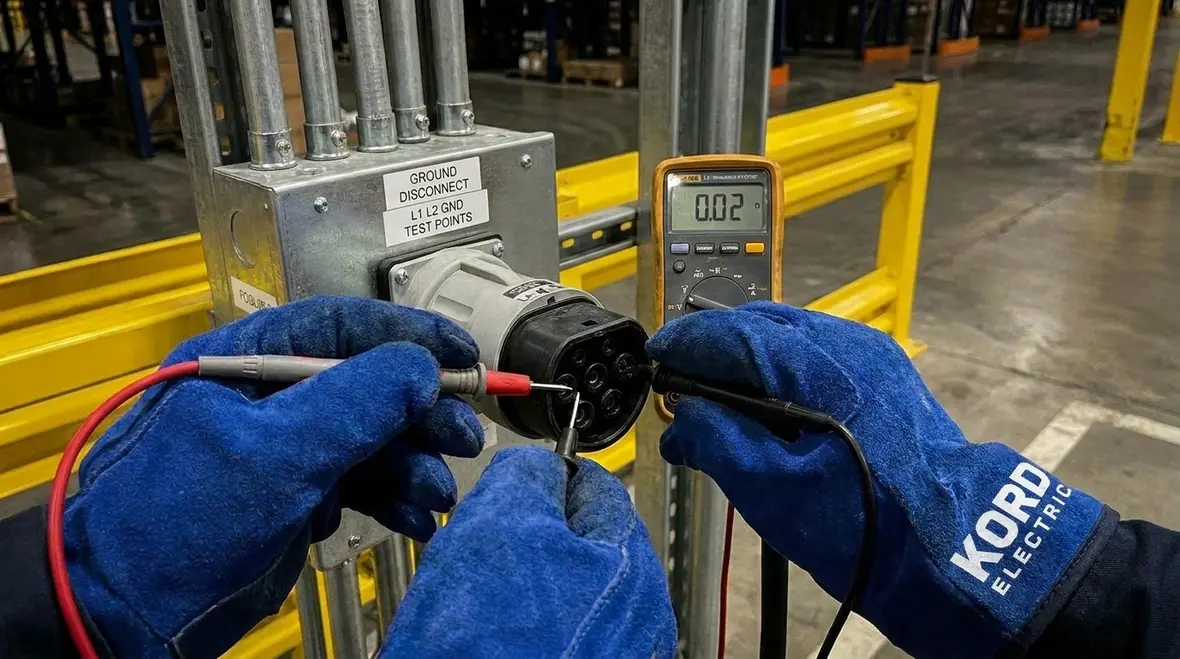
We treat EV charging like any other mission critical electrical system in commercial buildings. If you ignore it, it will eventually remind you, usually at the worst moment. That is why we build maintenance plans that align with your site schedule and fleet usage.
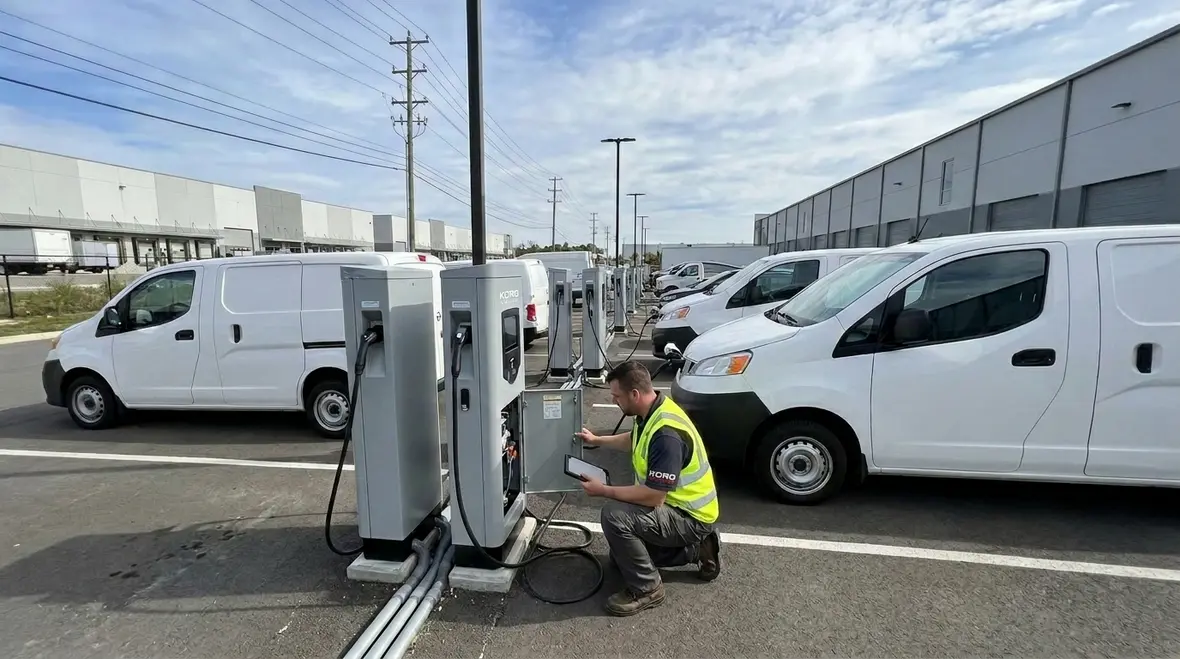
Our technicians typically focus on inspections, verification of connections, checks for thermal stress indicators, and review of system performance. They also look for early signs of wear on components exposed to weather or repeated vehicle traffic. As a result, issues show up as manageable fixes rather than full outages.
Moreover, we help teams understand what “good” looks like. Our expert service staff explains findings in a calm and practical way, so facilities managers can plan next steps without needing an engineering degree. In fact, most of the time, the best outcome is simply clarity. We say what we found, why it matters, and what we recommend, in business casual terms that actually make sense.
For large properties building out commercial ev fleet infrastructure, pairing charging maintenance with broader electrical preventive maintenance tightens the feedback loop between what the fleet needs and what the building can reliably deliver.
Multi-Site Rollouts and Standardization for Facilities Teams
Scaling across properties is where planning pays off most. When owners run multiple campuses, warehouses, or office buildings, each site cannot become a one-off experiment. Instead, we help you standardize parts of the system so operations stay consistent across locations.
We align electrical design assumptions, commissioning procedures, and documentation so your facilities team can troubleshoot faster. Additionally, standard labeling and reporting help everyone move in the same direction. That matters when fleet growth adds vehicles at different times across sites.
We also plan for training. Our goal is to ensure that your internal team knows the basic system workflow. Then our service staff covers deeper guidance when the environment calls for it, like during peak-season expansion or after a power event. Think of it as a playbook, not a mystery novel.
When multi-site operators standardize how they review data, document upgrades, and schedule maintenance, the entire commercial ev fleet infrastructure becomes easier to manage, even as more vehicles and drivers join the system.
FAQ
Conclusion: Let’s Build Your Fleet Plan So It Grows Smoothly
If your commercial or industrial facility wants EV charging that scales without chaos, Kord Electric can plan, install, and support a reliable commercial ev fleet infrastructure. We start with load capacity, design for growth, and add safety and control from day one. Then our technicians and expert service staff keep the system healthy through preventive maintenance. Contact us to schedule a site assessment and map a charging rollout that fits your property, your drivers, and your budget.
If you are ready to move from planning into execution, you can explore our dedicated EV charger installation services for commercial and industrial properties. We connect the dots between electrical design, field installation, and long-term performance so your infrastructure can support the way your fleet actually operates.