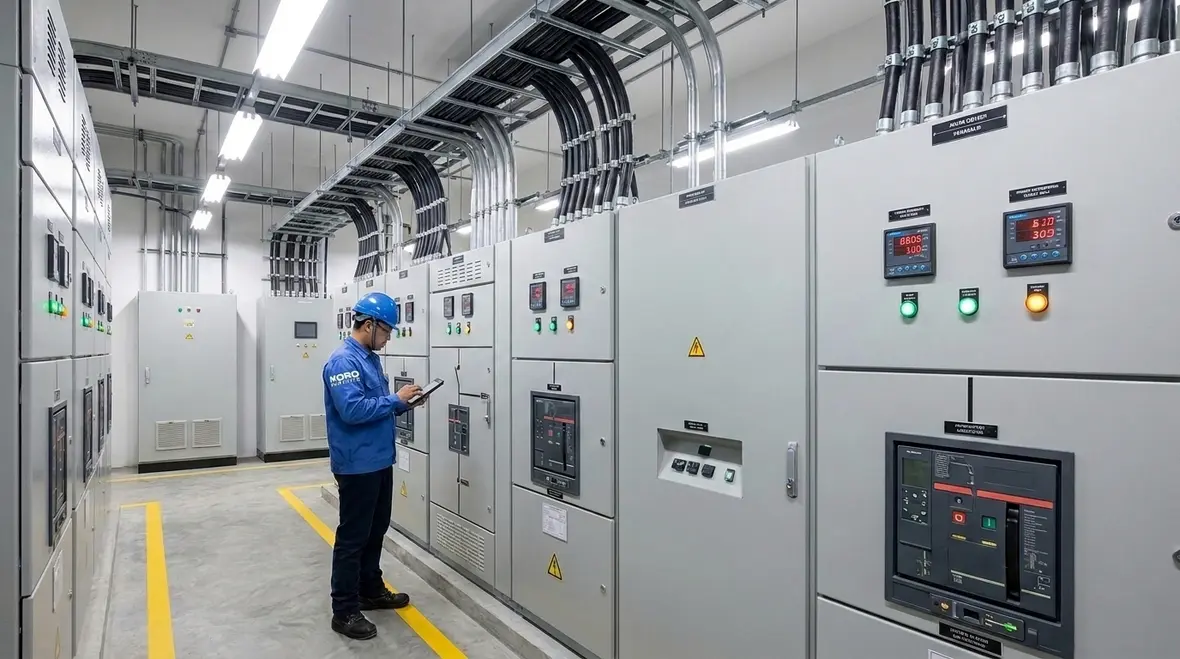
Data Center Electrical Infrastructure Design for Power Reliability
In this guide, we help commercial and industrial teams plan Data Center Electrical Infrastructure Design: Power, Redundancy & Reliability that stands up under real stress, not just in a neat spreadsheet. We start with electrical power paths that behave predictably, then we build in redundancy so your uptime goals do not rely on luck. Our focus stays practical: we map load, select equipment, and coordinate protection so faults clear fast and safely. And yes, while the work can feel like a mystery novel to outsiders, our technicians and expert service staff explain each decision in plain language. Because in our world, the lights must stay on, and the only surprise should be how calm the commissioning meeting feels.
Power planning that holds up when reality shows up
Data center power planning begins with understanding what you actually need, not what a past project spec sheet guessed. We ask for the load profile, operating schedules, growth plans, and cooling assumptions. Then we translate that into an electrical one line that reflects real behavior over time. For instance, we treat startup surges, IT expansion, and seasonal peaks as part of the design, not as footnotes.
From there, we define voltage levels, bus arrangements, and distribution stages so power reaches critical loads without unnecessary detours. When we build the system, we aim for stable voltage, controlled harmonics, and clear fault boundaries. We also coordinate grounding and bonding so the protection scheme works as intended. In plain terms, we keep the power system from acting like a confused playlist that shuffles the wrong track at the worst moment.
Our technicians review the design logic step by step. Additionally, our expert service staff explains the “why” behind each selection, so your team knows what changes when you scale up, swap a UPS string, or add a new equipment row.
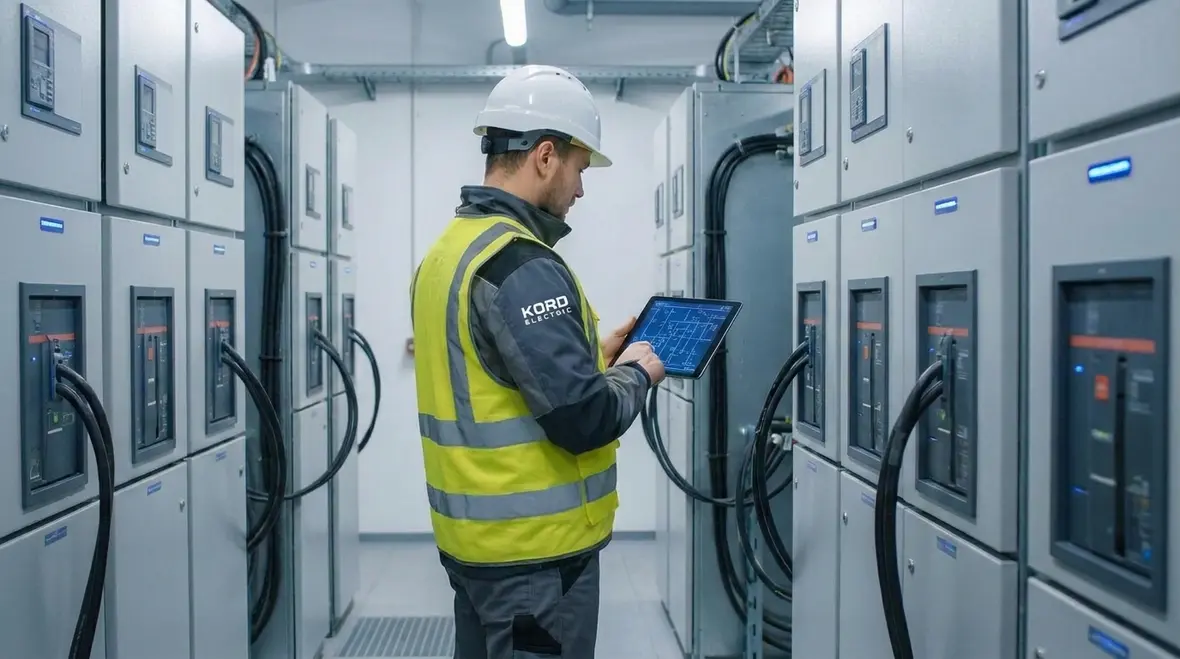
If you want to connect this planning step to the bigger picture of how distribution supports uptime, you can also explore our related article on data center electrical distribution design for reliability, which focuses on how everyday operating conditions shape long-term power performance.
How we design redundancy for dependable operation
Redundancy is where many designs either shine or stumble. We design so reliability does not depend on a single component performing forever. Instead, we use multiple layers of support, aligned with the facility’s operational needs and risk tolerance.
First, we separate critical power paths so a failure in one segment does not cascade into a full outage. Then we configure distribution so maintenance activities do not force a shutdown. After that, we confirm the transfer behavior so switching is smooth and timed correctly. This includes analyzing power interruptions during source changeover and ensuring that protection settings support the intended sequence.
We also account for parallel equipment interaction. When two paths share load, the system must balance current and keep voltage within acceptable limits. Otherwise, redundancy becomes a “sounds good on paper” situation, like a superhero team that only works when the script says so.
To keep everything grounded, our team documents operating modes clearly. Then, during commissioning, our technicians validate that the system behaves exactly as designed, including alarms, interlocks, and switching logic.
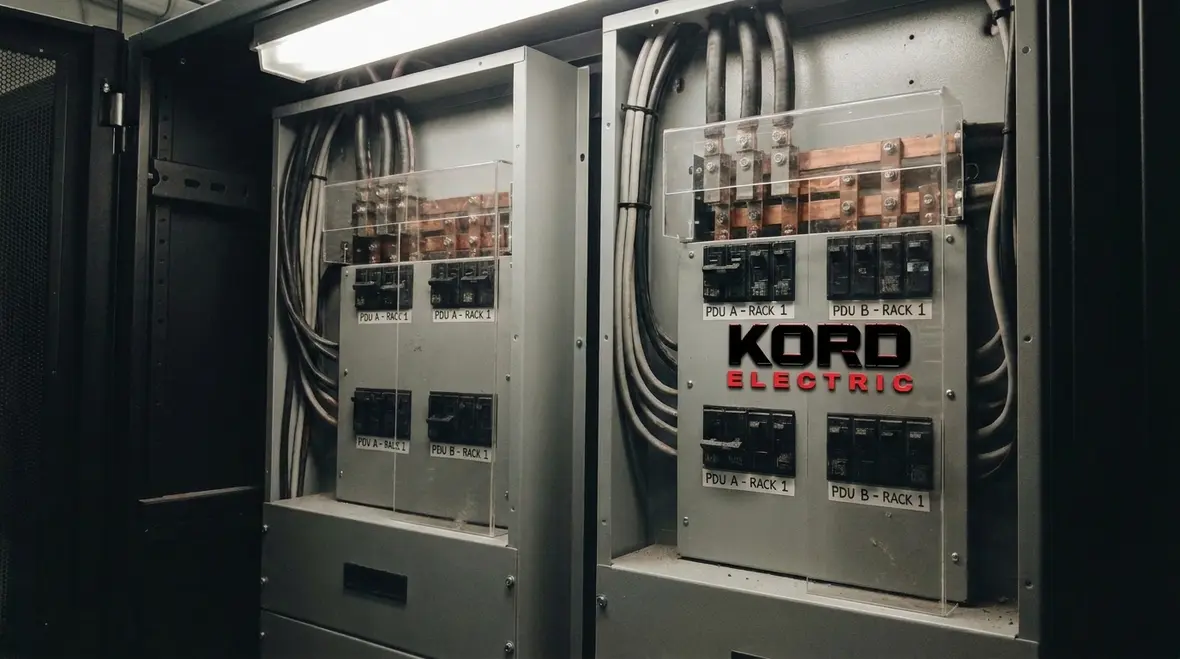
Aligning redundancy with uptime goals
Not every data center needs the same level of redundancy, but every mission critical operation needs a clear, intentional plan. We help teams choose redundancy strategies that match their uptime targets, from N+1 arrangements to more complex topologies, without turning the system into an overbuilt puzzle that nobody wants to operate.
Distribution design that prioritizes reliability and safety
Distribution design determines how reliably the facility delivers power from the service entrance to the final critical load panels. We build the electrical distribution architecture with selectivity in mind, meaning each protective device clears faults in a controlled way. As a result, one small fault should not shut down an entire hall of servers.
We also address cable routing and load density. In many buildings, physical pathways limit options, so we coordinate equipment placement with realistic routing constraints. We then evaluate thermal and ampacity needs, including derating factors that can affect long-term performance. Even if the equipment “fits” on the plan, we confirm it fits electrically for years of operation.
Protection coordination sits at the center of this work. We set and verify protection curves so devices work together during faults. Furthermore, we test assumptions about system impedance, fault current levels, and the response time of each device. That process reduces nuisance trips and supports safe operation.
Our expert service staff often explains these details in workshops for owner teams and facility managers. We walk through selectivity and coordination, so the team understands what happens when something fails. That way, the first time they see a fault behavior should not be the first time they hear an explanation.
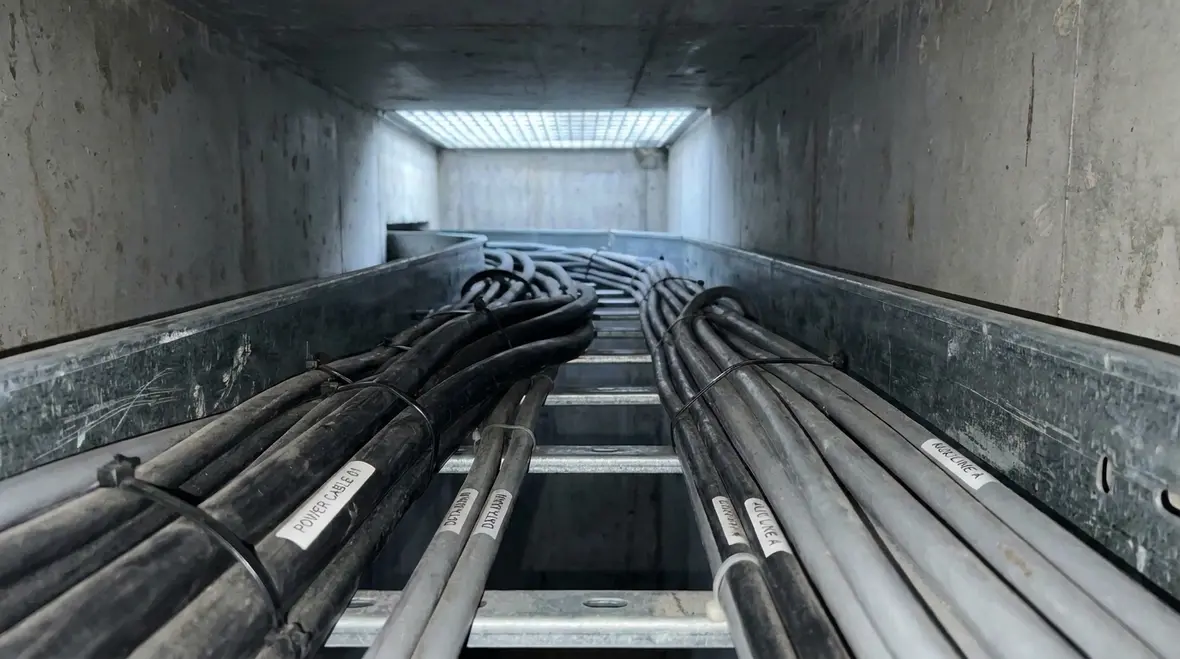
Integrating distribution with broader infrastructure decisions
Because distribution never exists in isolation, we coordinate these decisions with the broader infrastructure strategy. For a deeper look at how distribution fits into the whole, you can review our guide on Data Center Electrical Infrastructure Design: Power, Redundancy & Reliability, which ties together power paths, monitoring, cooling coordination, and long-term reliability planning.
UPS and backup integration that does not create new problems
Uninterruptible power supplies and backup systems act as a bridge between your primary sources and your long term power strategy. We integrate UPS and standby generation so the electrical system stays stable through transitions. That means we model runtime, battery behavior, and charging dynamics, not just the headline capacity.
Additionally, we consider how UPS systems interact with upstream breakers and downstream switching. We check that the bypass mode and maintenance mode operate safely. We also verify that the UPS output and downstream distribution panels handle expected load characteristics.
If your facility includes critical monitoring, we also align metering and controls so alarms are useful, not overwhelming. Nobody wants a dashboard full of alerts like a pop quiz that never ends.
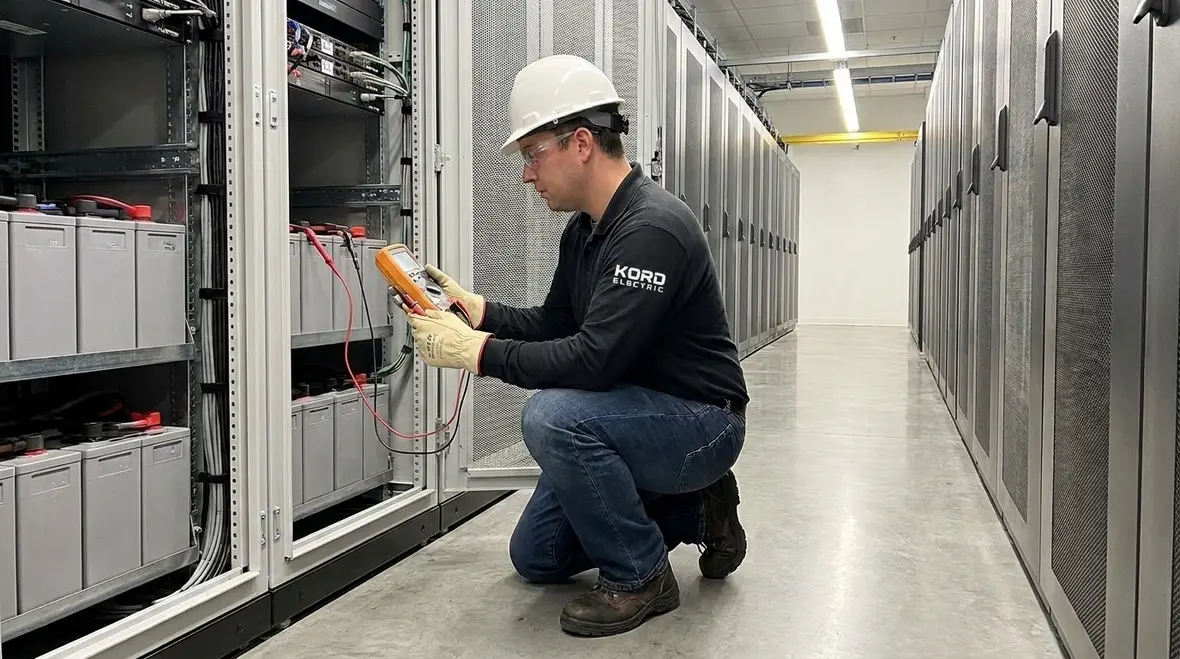
Our technicians coordinate the interface points and confirm control sequences. During installation and commissioning, we verify settings, interlocks, and communications so the UPS system behaves like a reliable servant, not an unpredictable actor who changes lines at curtain call.
Connecting UPS design to emergency power strategy
UPS and backup integration also connect directly to emergency power and business continuity. When organizations are planning their broader resilience strategies, we often pair this work with concepts from our emergency power design approach, so the facility’s standby systems, distribution, and UPS behavior all support the same uptime objectives instead of competing with each other.
Protection, metering, and controls for fast fault clearing
Reliable power also depends on fast detection and safe interruption. Therefore, we design protection schemes that identify abnormal conditions and isolate them quickly. This protects people, equipment, and operations, and it limits the knock on effects of a fault.
Our approach uses coordinated devices, well planned fuse or breaker selection, and careful setting philosophy. We consider cable impedance, system configuration, and fault current levels so the protection system operates as expected. Moreover, we confirm that the devices operate in the right order during worst case scenarios.
For metering and controls, we align data needs with operational decisions. Facility teams need visibility into load, power quality, and equipment health. We plan metering points that match maintenance and reporting requirements, and we ensure the readings support real troubleshooting. We also integrate control logic so transfer operations and permissives work safely.
Our expert service staff then walks the owner team through the control logic. In other words, we do not hide the ball. We explain what each input and output does and how alarms will appear. That clarity helps teams respond calmly instead of guessing during an event.
Designing visibility that operators can trust
Protection and metering only help if operators can trust what they see. That is why we align the layout of meters, alarms, and control points with everyday work. Instead of scattering vital data across confusing screens, we place key readings where decisions happen, so operators can act quickly when a breaker misbehaves or a feeder begins to drift off its normal pattern.
Commissioning, documentation, and ongoing service for stability
Electrical reliability does not stop at energization. We insist on commissioning that validates design intent through tests, checks, and functional verification. That process confirms equipment settings, verifies wiring and control sequences, and checks that the system responds correctly to abnormal conditions.
We also focus on documentation. We create clear records that show how the system is built, how it operates, and how it changes across modes. This includes one line diagrams, panel schedules, protective device details, and operation narratives. When your staff can read the system quickly, they can troubleshoot faster and avoid downtime.
Then, we plan for ongoing service for commercial and industrial facilities and major property buildings. Our technicians stay involved through phases that matter: inspections, performance checks, and corrective actions when the field tells us something needs adjustment. Like tuning an instrument, the goal is to keep the system performing in tune across time.
Linking infrastructure design to long-term service
For many facilities, the best results come when design and service stay connected. That way, the same team that built your Data Center Electrical Infrastructure Design: Power, Redundancy & Reliability can help you monitor performance trends, plan upgrades, and avoid surprises as the data center grows.
What does Data Center Electrical Infrastructure Design: Power, Redundancy & Reliability include?
Teams usually mean several coordinated parts when they say “infrastructure design.” We include power distribution architecture, redundancy strategy, protective device coordination, UPS and standby integration, and the control and metering plan. Then we confirm everything through commissioning so the system operates reliably from day one and stays dependable after expansions.
We also manage the design process with the needs of commercial and industrial facilities in mind. Our work targets mission critical operations where downtime costs money and trust.
Connecting design with broader facility goals
Because many data centers sit inside larger properties, we align infrastructure decisions with other priorities like emergency power, upgrade timelines, and energy strategies. This integrated view helps owners plan across an entire portfolio instead of treating each room as a separate project.
FAQ
Final call for reliable power planning
If your organization operates a commercial or industrial data center, you need a system that performs under real conditions, not just on paper. Kord Electric designs Data Center Electrical Infrastructure Design: Power, Redundancy & Reliability with practical power paths, coordinated protection, and commissioning you can trust. Our technicians and expert service staff explain the choices clearly, so your team stays confident during every phase. Contact Kord Electric today to discuss your power goals, your redundancy needs, and the timeline for a dependable build.
For facilities in Southern California and surrounding areas, our team also supports broader Los Angeles County electrical services, so your data center infrastructure design can align with the rest of your commercial and industrial electrical needs across each property.
When you are ready to move from planning to action, we help you prioritize phases, schedule work around operations, and coordinate with other projects so your power upgrades deliver reliability without unnecessary disruption.