Industrial Electrical Preventative Maintenance Facility Guide
Industrial Electrical Preventative Maintenance: A Complete Facility Guide for commercial and industrial sites
Kord Electric delivers Industrial Electrical Preventative Maintenance: A Complete Facility Guide for the facilities that keep money moving, production running, and safety intact. In this article, we explain how industrial electrical preventative maintenance protects motors, switchgear, panels, grounding, and controls before small issues grow into costly outages. Our approach is practical, calm, and methodical, because we have seen what happens when maintenance becomes a “someday” project. And yes, we get it. Sometimes “someday” means “right after the lights go out,” like a dramatic TV finale. We help our team plan the work, document the results, and keep systems reliable across major property buildings and commercial and industrial sites.
Why industrial electrical preventive work beats emergency repairs
Third person professionals often describe maintenance as a “nice to have,” but Kord Electric treats it as risk control. When a site runs 24 7, every unexpected trip, heat event, or control fault can delay orders and strain budgets. Additionally, emergency repairs usually happen under pressure, which means fewer options and less time to verify root cause.
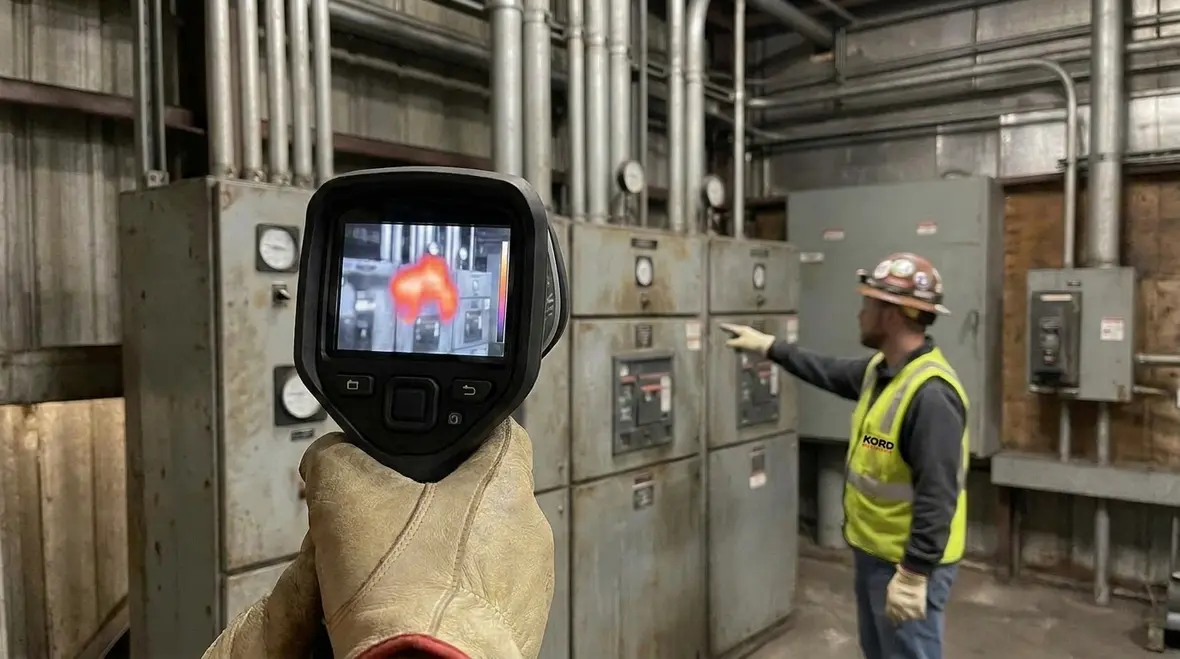
Our technicians and expert service staff follow a clear logic. First, we find early warning signs. Next, we correct them before they turn into failures. Then we confirm improvements through tests and field checks. As a result, the facility sees fewer shutdowns, steadier performance, and safer electrical conditions for workers and visitors.
In many cases, the biggest threat is not the obvious one. It is the slow drift: loose terminations, insulation aging, moisture buildup, or contact wear. Over time, those small changes can increase resistance and create heat. Heat then damages components, and damaged components start to misbehave, like a sitcom character who refuses to learn lessons after the third episode. Preventative maintenance stops that cycle.
For facility teams that want a structured program beyond a single checklist, it also helps to align this work with a broader plan such as Kord Electric’s commercial and industrial electrical maintenance plans, so inspections, testing, and corrective actions all move in the same direction.
What Kord Electric checks during scheduled maintenance visits
During visits, our team uses a structured plan designed for commercial and industrial facilities. We align activities with system layout, loading patterns, and operating hours. Even so, we do not treat every site as identical, because conditions vary by environment, age, and duty cycle.
Typically, the work includes inspection and verification across these areas:
1) Switchgear and distribution
- Visual checks for corrosion, dust, and signs of overheating
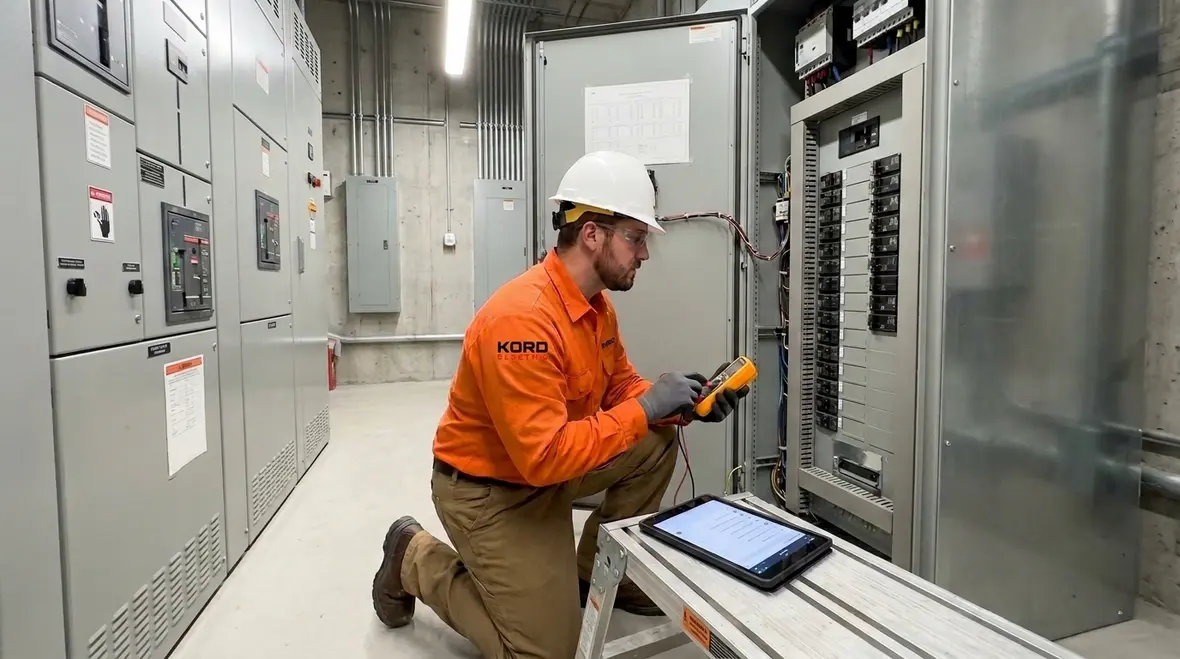
- Inspection of bus bars, connections, and enclosure integrity
- Functional checks of indicators and interlocks where applicable
2) Panels, breakers, and terminations
- Torque verification or inspection of mechanical connection points
- Verification of breaker operation and trip characteristics when needed
- Assessment of panel labeling, gaps, and physical wear
3) Motor control centers and starters
- Contact condition checks and control device verification
- Inspection of control wiring and terminals for heat or aging
- Review of overload settings and protection behavior
4) Motors and rotating equipment support
- Checks for vibration indicators and abnormal noise reports
- Inspection for proper ventilation and cooling flow
- Evaluation of cable routing and strain relief conditions
5) Grounding and bonding
- Verification of grounding continuity pathways
- Inspection of bonding points and corrosion control
- Review of system grounding integrity to support safety
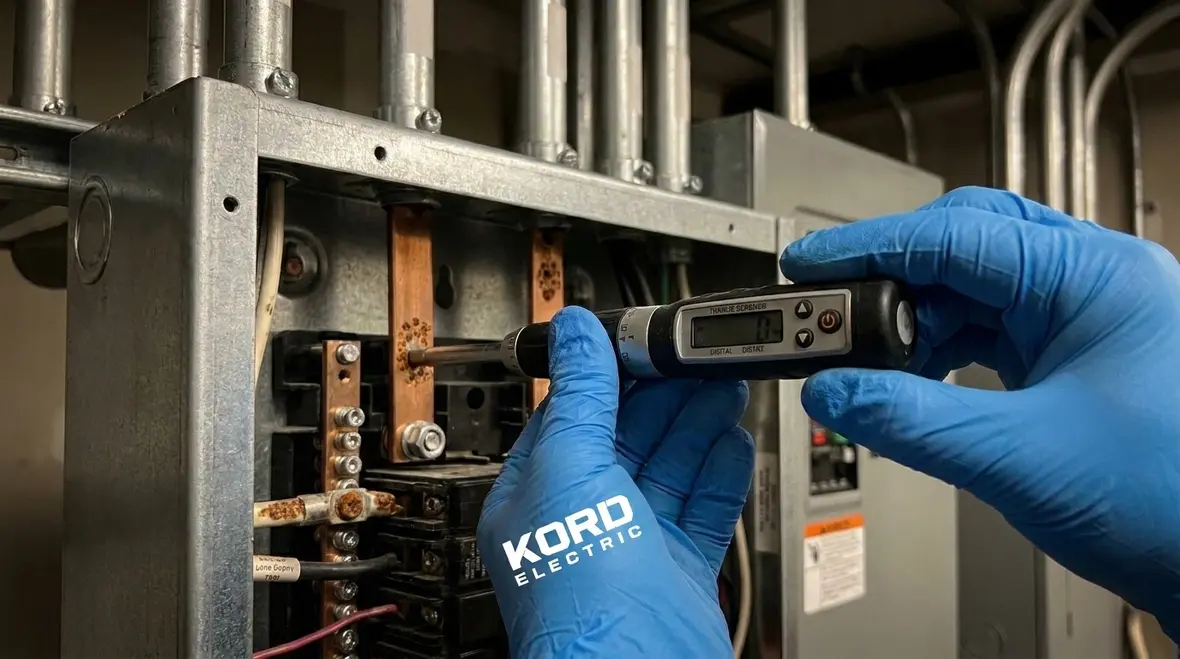
To make sure the work stays clear and useful, our technicians explain what they see and why it matters. They also translate test results into plain language so facility managers can make decisions confidently, without a pile of confusing jargon.
If you are formalizing this approach across multiple buildings or campuses, pairing it with a structured checklist such as Kord Electric’s commercial electrical preventative maintenance checklist helps keep “good” maintenance consistent across every property.
How we reduce heat, noise, and arcing risks before they escalate
Electrical failures often leave clues. However, those clues get harder to catch as damage grows. Therefore, Kord Electric focuses on the conditions that commonly lead to heat and electrical stress. When connections loosen or insulation degrades, current path resistance can rise. Then temperature climbs, and the equipment starts acting like it is running hot, even if the load has not changed.
Our technicians look for patterns. First, they review past trip history and maintenance logs. Next, they inspect components that experience higher thermal cycling, such as feeders, switchgear connections, and motor starter circuits. Then they use field checks and tests that support safe operation.
We also address arcing hazards by verifying barriers, covers, and clearances. When enclosures protect components from dust and moisture, the system stays cleaner and less likely to form conductive paths. Additionally, we help sites manage cable routes and strain relief so vibration does not loosen terminations. If you have ever seen a cable rubbing against metal, you know it is not a “fancy lighting effect.” It is a failure path.
As our expert service staff explains onsite, preventative maintenance does not only find problems. It also helps confirm that prior repairs worked and that the electrical system operates within expected conditions.
For facilities where power quality issues and sensitive equipment overlap, work like this also pairs naturally with deeper studies such as Kord Electric’s industrial power quality analysis for throughput, which feeds better data into the preventive maintenance plan.
Planning schedules that fit the facility, not the other way around
Every commercial and industrial facility has a schedule, and every schedule has constraints. That is why Kord Electric builds plans around operating realities. We coordinate with site leadership so maintenance work supports production and avoids unnecessary downtime.
In practice, this planning includes:
- Mapping electrical system zones and critical loads
- Setting visit frequency based on equipment type, age, and usage patterns
- Scheduling work during planned shutdown windows when possible
- Sequencing tasks so the crew can complete the job safely and efficiently
- Documenting findings and tracking corrective actions to closure
Then, we help others understand the “why” behind timing choices. For instance, some systems can be inspected without taking production offline. Meanwhile, certain corrective actions require targeted outages or controlled conditions. Our staff walks clients through these tradeoffs, so decisions feel grounded, not rushed.
Also, good scheduling improves budget stability. Instead of surprise spending, a facility can plan parts, labor, and potential crane time. This matters for major property buildings where electrical downtime can affect multiple tenants, life safety systems, and shared infrastructure.
For industrial sites across Southern California, this kind of planning often connects with broader upgrades and service coverage through Kord Electric’s Los Angeles County electrical services, so preventive maintenance, troubleshooting, and project work all line up behind the same objectives.
Documenting results and explaining next steps clearly
Inspection alone does not protect a facility. Follow up does. Kord Electric provides documentation that helps facility teams move from “we found something” to “we fixed it and verified it.” We capture observations, test outcomes when used, and recommendations tied to risk and urgency.
Our technicians explain the findings in a way that supports fast decisions. They do not just point to a problem and disappear. Instead, they show the likely cause, the potential impact, and the options to correct it. Then, they help plan what comes next, including parts lead times and safe scheduling for corrective work.
When we coordinate this process, we reduce guesswork for others on the operations side. Additionally, documentation helps support compliance efforts and internal audits. It also creates a reliable history, so the facility can spot repeating issues and address root causes rather than only treating symptoms.
In other words, we keep maintenance from becoming a guessing game. Even great coffee cannot replace clear records, and we would rather save the beans and get the electrical work done right.
For organizations that want to take this to the next level, Kord Electric also outlines structured strategies in resources like our industrial electrical system troubleshooting guide, which connects preventive work with smart fault-finding and long term reliability.
How does Industrial Electrical Preventative Maintenance: A Complete Facility Guide handle aging equipment?
Industrial Electrical Preventative Maintenance: A Complete Facility Guide thinking must evolve when equipment ages. New installations often fail differently than older systems. Older units may show more wear in insulation, more corrosion exposure, and more mechanical looseness. Therefore, Kord Electric tailors the inspection focus based on equipment condition, environment, and known operating stress.
For aging equipment, our expert service staff commonly increases attention to:
- Connection integrity and signs of heat damage at terminations
- Breaker and control response behavior that suggests wear
- Enclosure integrity, moisture control, and corrosion prevention
- Grounding pathways and bonding points that may degrade
- Cable stress, routing, and insulation condition indicators
Then we prioritize corrective actions based on risk. Some items demand immediate attention because they relate to safety and high probability failure. Others can follow a planned sequence. Either way, we explain the decision logic clearly, so facility leaders do not feel like they are reading tea leaves.
If your facility is also working through modernization, this preventive lens ties in well with guidance like Kord Electric’s industrial facility electrical upgrades plan, so older gear, new installations, and day to day maintenance stay aligned.
FAQ: Industrial preventative maintenance for electrical systems
Conclusion and call to action
Electrical preventative maintenance protects people, uptime, and budgets, and we treat it that way. Kord Electric brings expert service staff, structured inspection practices, and clear documentation to commercial and industrial facilities, including major property buildings. If your systems have grown in complexity or age is catching up, it is time to stop guessing and start planning. Contact Kord Electric to request an assessment and a maintenance plan built around your equipment, schedule, and risk profile.
To take the next step, many facilities pair this kind of program with focused guidance like our article on preventive maintenance for industrial electrical systems, which expands on how Industrial Electrical Preventative Maintenance: A Complete Facility Guide supports long term reliability across complex sites.