
Industrial Power Quality Analysis for Throughput
Industrial Power Quality Analysis: the quiet lever that boosts manufacturing output
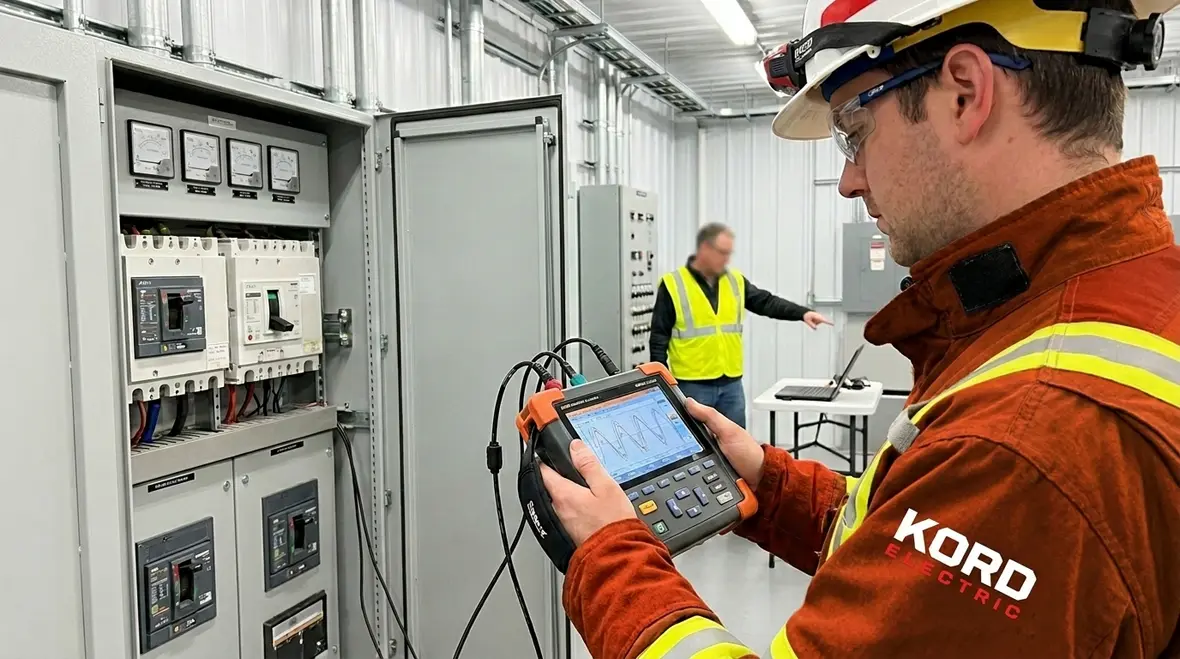
At Kord Electric, we begin with industrial power quality analysis because it spots the hidden electrical issues that slow production before they cause downtime. In fact, when we review voltage stability, harmonics, and fast events, we often find the kind of problems that do not show up on a basic meter. Then, using clear reports and real field data, we help others plan fixes that protect motors, drives, and control systems. And yes, we also explain it in plain terms, because nobody wants a power issue that sounds like it belongs in a sci fi movie.
From there, we connect power quality to manufacturing throughput, maintenance planning, and day to day operating decisions. So, the line keeps moving, the alarms stay quiet, and our technicians do what they do best: get you answers, not mystery.
Why power quality issues throttle throughput in commercial and industrial sites
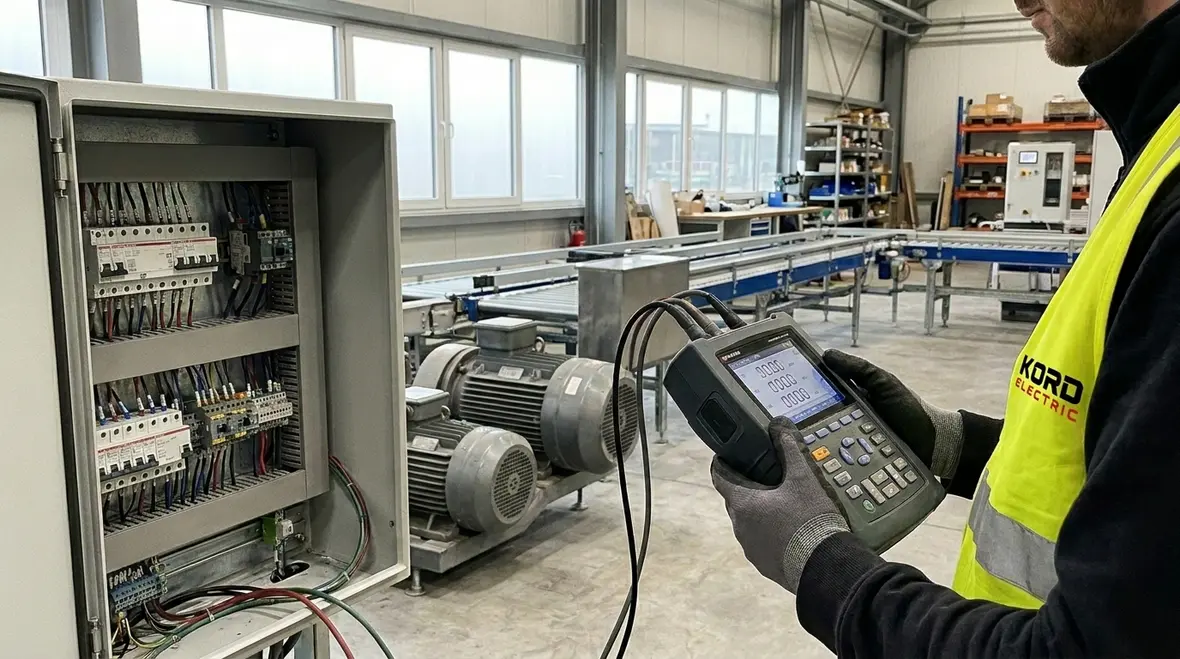
Third person teams often ask why a plant can run “fine” until it suddenly does not. Usually the answer sits in the power profile. Even when the incoming utility voltage looks acceptable, power quality problems can still stress equipment. Harmonics can overheat transformers and motors. Voltage dips can reset programmable logic controllers and variable frequency drives. Fast transients can degrade sensitive electronics over time.
As a result, small events stack up. A short stop becomes a long recovery. Operators spend time troubleshooting instead of running product. Then maintenance gets reactive, which is like buying groceries after the fridge already broke. It works once, but it is a terrible system.
Kord Electric focuses on commercial and industrial facilities and major property buildings, so we look at real loads: production equipment, HVAC systems, pumps, conveyors, charging stations, and building automation. We treat power quality as a production factor, not just an electrical compliance item.

What industrial power quality measurements should cover first
To improve manufacturing throughput, we tell others to measure the right things first. Otherwise, you collect a lot of data and learn very little. In practice, our technicians capture signals that show both the steady state and the disturbances that happen during normal operations.
Here is the approach we see work across plants and large buildings:
Voltage stability to catch sags, swells, and intermittent disturbances that cause resets or nuisance trips.
Harmonics to identify distortion from drives, rectifiers, and non linear loads that raise temperature and losses.
Unbalance to detect uneven loading across phases that can overheat motors.
Fast events and transients so control systems and power supplies do not get damaged silently.
Frequency and long term trends so issues do not return season after season.
Then we compare what we measure with equipment sensitivity. In other words, we connect the electrical signature to the machines that suffer. That is where value shows up for owners and facility managers.
Turn analysis into action with preventive maintenance that does not guess
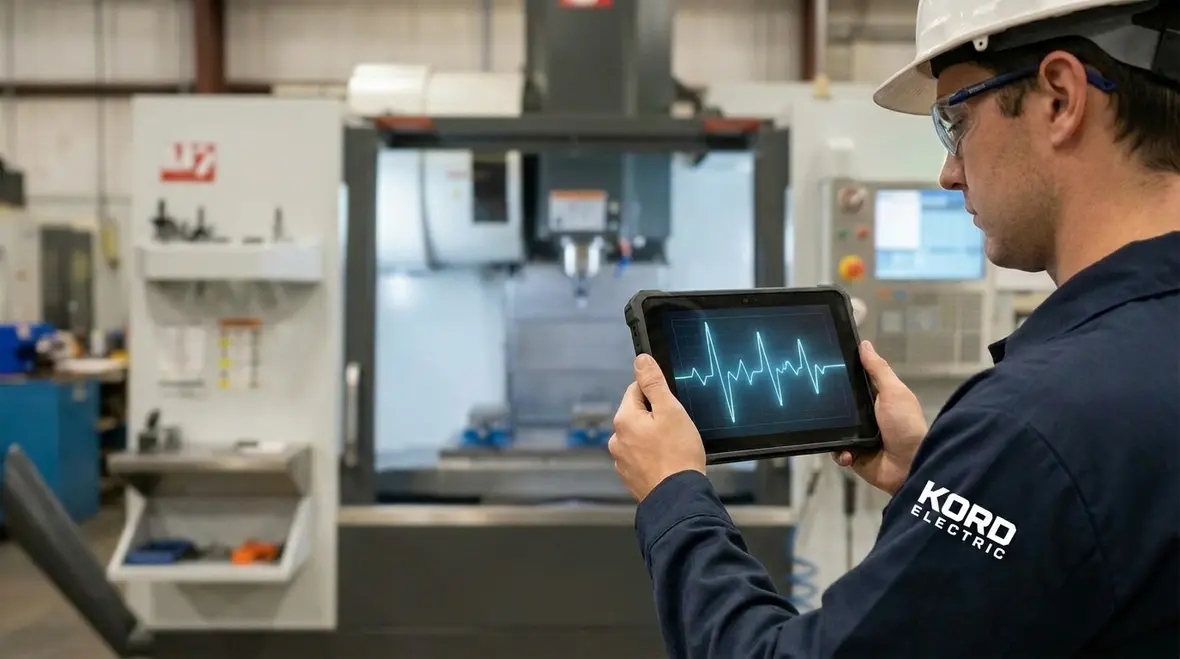
Many programs call it preventive maintenance, but others still treat it like “check it and hope.” Our industrial power quality analysis adds facts to the plan so teams stop guessing. When Kord Electric supports your electrical preventive maintenance, we align inspection, testing, and targeted corrections with the electrical events you actually experience.
For example, if measurements show harmonic stress on a motor control area, the plan may include drive settings review, filter evaluation, and load balancing actions. If the data shows voltage dips around certain production steps, the plan focuses on how that process ties into starting currents, utility interface performance, and distribution impedance. And if unbalance appears during specific shifts, the plan addresses panel distribution and load behavior.
We also lean on our field experience and documentation. Our technicians explain what the numbers mean, and our expert service staff translate results into steps that operational teams can schedule. Because if your maintenance plan cannot fit the production calendar, it will not survive reality.
Case driven throughput gains: where problems show up most
When others run industrial power quality analysis across large facilities, they often find patterns that match operating cycles. However, the key is to interpret those patterns correctly. A team might blame “bad luck” when the truth is a predictable electrical trigger.
Common throughput impact points include:
Motor starting and acceleration where frequent start events cause dips and resets in nearby controls.
Drive load changes where speed changes create harmonic shifts and affect thermal margins.
Lighting and control circuits where transients damage power supplies and shorten component life.
Transformer performance where harmonics raise losses and contribute to aging faster than expected.
UPS and critical loads where disturbances stress runtime and can lead to nuisance alarms.
Then, once the trigger is clear, the fixes become more precise. We do not just suggest “upgrade everything.” We help owners prioritize improvements that reduce stops, reduce callouts, and extend component life. That translates into more uptime, steadier output, and fewer production interruptions that wreck the schedule.
And yes, sometimes the culprit is a single panel feeding the wrong branch, like a sitcom twist where the “mysterious problem” is simply a loose connection with a dramatic entrance.
How Kord Electric supports teams with clear reports and expert guidance
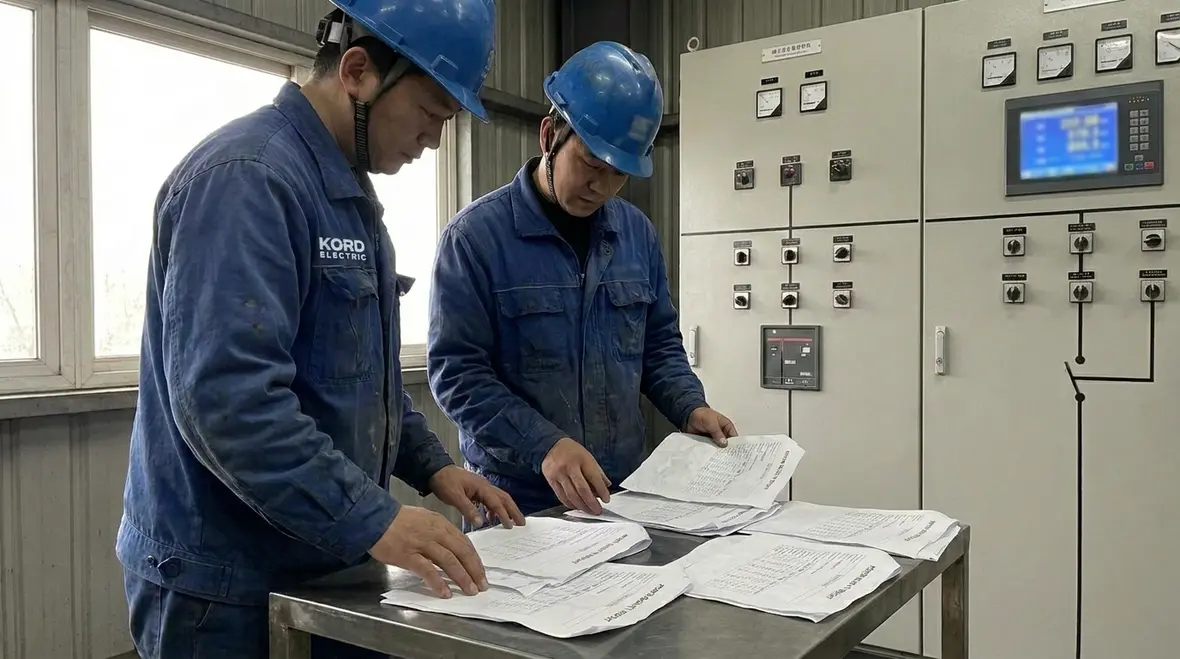
At Kord Electric, we do not treat power quality data like a locked treasure chest. We share what we find in business friendly language, and our technicians walk teams through the story behind the waveform. That matters because operations staff and maintenance supervisors need to act fast, and executives need to understand risk without reading a textbook.
Our expert service staff help others connect findings to practical decisions, such as:
Which loads deserve immediate attention based on measured events and equipment sensitivity.
How to schedule corrective work during planned production windows.
What to monitor after changes to confirm the improvement and prevent repeat issues.
How to document results for audits, insurance requirements, and long term planning.
So, instead of a report that sits in an email folder like a forgotten coupon, you get an action path. And because we focus on commercial and industrial facilities and major property buildings, we tailor recommendations to the real systems that keep these sites running.
Best practices to keep power quality stable over time
Measuring once helps. Managing continuously keeps value. To keep throughput steady, teams need habits, not just equipment. First, we align power quality work with your electrical preventive maintenance cycle. Then we confirm that changes in process, occupancy, or production do not quietly reintroduce risk.
We recommend a simple operating rhythm:
Perform baseline industrial power quality analysis after major electrical or process changes.
Use trending to catch drift, especially in distribution, motor control centers, and critical panels.
Verify load behavior during peak production and during shift transitions.
Document corrective actions and keep measurement results accessible for future work.
Train teams to recognize symptoms, such as frequent nuisance trips, repeated resets, or short cycle stops.
When others adopt these practices, downtime becomes less of a surprise. In that calm, steady environment, maintenance feels like a plan instead of a fire drill. And our technicians and expert service staff remain ready to support follow up so the improvements hold.
FAQ
Ready to protect uptime and speed production with power insight?
If your facility experiences nuisance trips, resets, or equipment wear that seems to come out of nowhere, it is time to get a clear electrical picture. Kord Electric helps commercial and industrial facilities and major property buildings improve throughput by using industrial power quality analysis and pairing it with practical electrical preventive maintenance. Contact us to schedule a site assessment, review your power profile, and build an action plan your team can actually run. Let us turn those hidden electrical issues into measurable uptime.
For facilities already working through broader electrical strategies, this kind of power quality insight pairs naturally with structured programs like electrical preventive maintenance and targeted services for managing voltage fluctuations in commercial and industrial facilities. Together, these efforts create a longer term roadmap for safer operation, better uptime, and more predictable production.
If your site needs support beyond diagnostics, Kord Electric also delivers dedicated response work through services such as emergency electrical services that help stabilize systems, protect equipment, and restore power when unexpected events still occur. That way, your team has a partner for both planned improvements and urgent situations.


