Warehouse Energy Saving Retrofits ROI Guide
Kord Electric supports commercial and industrial facilities with practical upgrades, including warehouse energy saving retrofits that cut energy use without slowing down day to day operations. We have seen it happen again and again: teams change lighting, stabilize power behavior, and then watch the utility bill stop acting like a jump scare. In this guide, Kord Electric explains the ROI of warehouse LED retrofits and lighting upgrades in clear business terms. More importantly, our technicians and expert service staff walk through the details step by step, because no one should guess at electrical risk, or guess at savings. We prefer numbers, measurements, and calm explanations that leave facilities safer and more predictable.
Why lighting upgrades pay back faster than people expect
In commercial and industrial buildings, lighting often runs longer than most other equipment. Therefore, even small efficiency gains can turn into meaningful savings. LED systems use less power, waste less energy as heat, and maintain better output over time. Then, when a facility also fixes control issues like outdated switches, misaligned occupancy logic, or missing dimming schedules, the results improve again.
Most teams assume the payback is slow, mainly because they focus on equipment cost. However, the ROI improves when the facility counts the total picture: lower kilowatt demand, reduced maintenance labor, fewer bulb replacements, and less downtime from relamp work. In addition, our service staff at Kord Electric helps clients quantify those factors using site specific data, not generic spreadsheets. We also draw on lessons from other large projects, including Title 24 warehouse retrofits where better controls and code aligned design significantly accelerated payback compared to the original estimates.
ROI math that facilities can actually trust
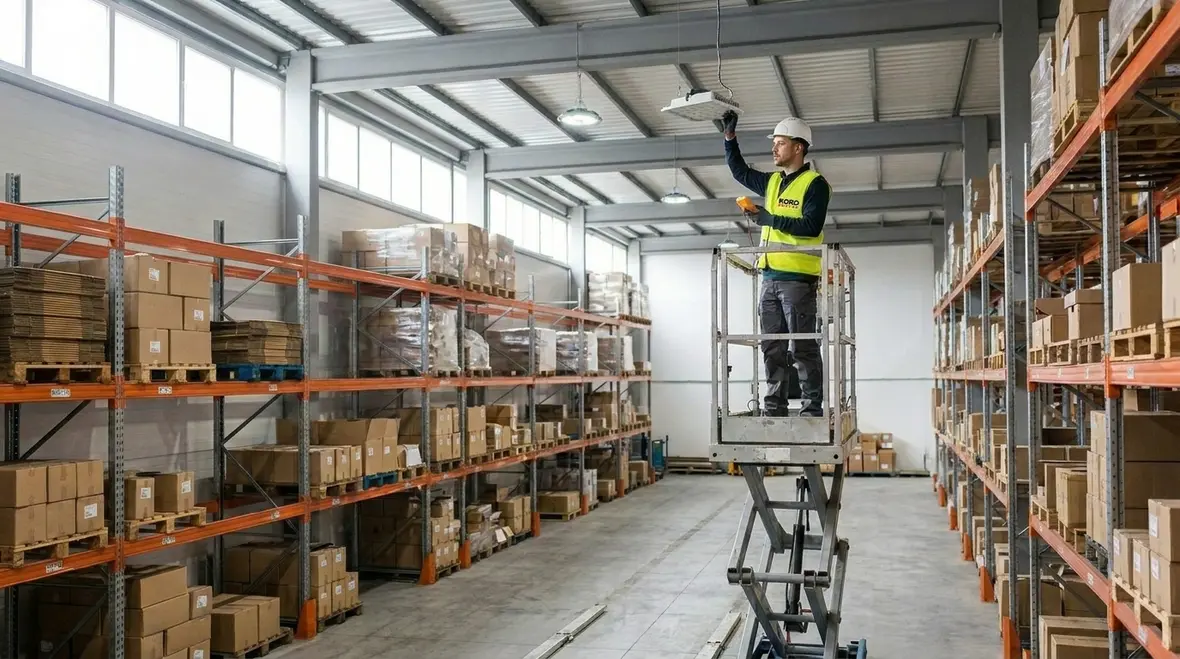
When Kord Electric evaluates a warehouse or a major property building, we treat ROI like a business decision, not a lighting makeover. First, we estimate baseline usage by looking at current fixtures, operating schedules, and measured conditions where possible. Next, we model the new LED system including driver efficiency, control strategy, and expected output over time.
From there, we build a simple payback view. We typically focus on three ROI drivers:
- Energy savings from lower wattage and better controls
- Maintenance savings from longer service life and fewer relamp events
- Risk reduction from fewer failures in critical areas and cleaner electrical behavior
At this point, our technicians explain how each line item behaves in the real world. For example, a facility that operates nights and weekends gets stronger savings from controls and consistent lumen delivery. Meanwhile, a facility with variable tasks benefits from dimming and tuning. And yes, we still include the boring details, because boring details are how you avoid expensive surprises. Pop quiz style, but with fewer pencils.
We also compare the retrofit plan with broader electrical strategies. If the site is exploring larger upgrades such as panel replacements, NFPA 70B driven maintenance, or even commercial solar integration, we show how lighting improvements can align with those investments instead of competing with them.
How lighting controls multiply savings in distribution environments
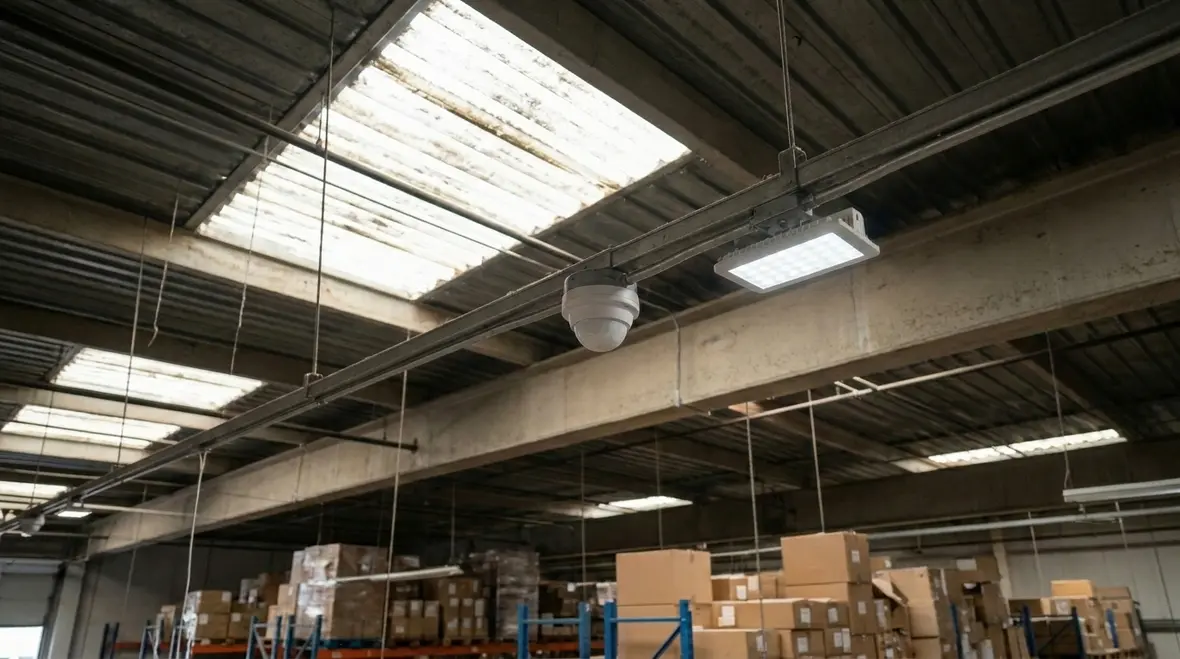
LEDs alone reduce consumption, but controls make the ROI repeatable. In warehouses and large commercial industrial spaces, lighting needs change by zone, task type, and time of day. So, Kord Electric often recommends a lighting control approach that matches how the space actually works.
When occupancy sensing works with correct placement and settings, lights avoid staying at full output when areas sit idle. Likewise, daylight harvesting supports zones near dock doors or skylights. Then, step dimming and scheduled dimming can hold output steady during slow periods while still meeting safety needs.
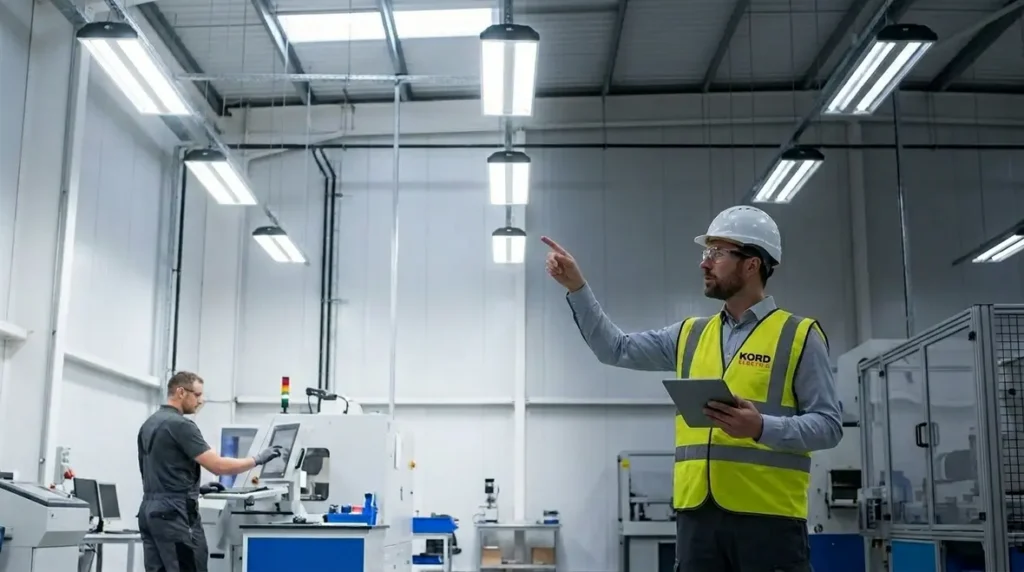
Our expert service staff explains controls in plain language, including how zoning reduces energy waste and how controls interact with motion detection. In other words, we do not just install equipment. We help clients understand why the system delivers savings month after month, not just on the day the electrician leaves.
For facilities working under California Title 24 or similar energy codes, this becomes even more important. Properly commissioned controls support compliance, protect against failed inspections, and give operations teams confidence that savings will show up on the bill instead of just in the proposal.

Voltage fluctuations and why they matter for payback
ROI does not live only in the light fixtures. It also lives in the electrical environment that powers them. For commercial and industrial facilities, voltage stability influences lamp performance, driver efficiency, and equipment longevity. If voltage fluctuates, drivers can work harder and components can age faster, which quietly drags ROI down over time.
Kord Electric addresses this issue for facilities that experience instability. As detailed in our guide on voltage fluctuations commercial industrial conditions, power irregularities can create operational headaches such as flicker, nuisance failures, and reduced equipment reliability. When LED systems depend on driver quality and stable supply, addressing electrical behavior strengthens both performance and the projected savings.
So, before a facility assumes the retrofit will pay back exactly as modeled, we look at the power side too. We explain what symptoms to watch for, why the problem can appear intermittent, and how to avoid turning a lighting upgrade into a “mystery maintenance” situation that everyone blames on the wrong thing. Because in warehouses, mystery problems do not disappear. They just grow up and demand a meeting.
If diagnostics reveal broader issues like overloaded circuits, aging switchgear, or hidden panel risks, we can coordinate solutions ranging from targeted repairs to structured preventive maintenance plans so that your new lighting does not plug into an old problem.

Maintenance savings that stack up over the years
Warehouses do not love downtime, and they do not love repeated relamp labor. Traditional lighting systems often require frequent replacement cycles, which means pulling crews, lifting equipment, and coordinating access. In contrast, LED systems deliver longer service life, and that shift changes the maintenance rhythm.
Kord Electric helps facilities calculate maintenance ROI using realistic assumptions for labor time, access costs, and disruption. Then we factor in that fewer failures mean fewer emergency calls after hours. Additionally, if controls reduce runtime in low traffic areas, the entire system experiences less wear.
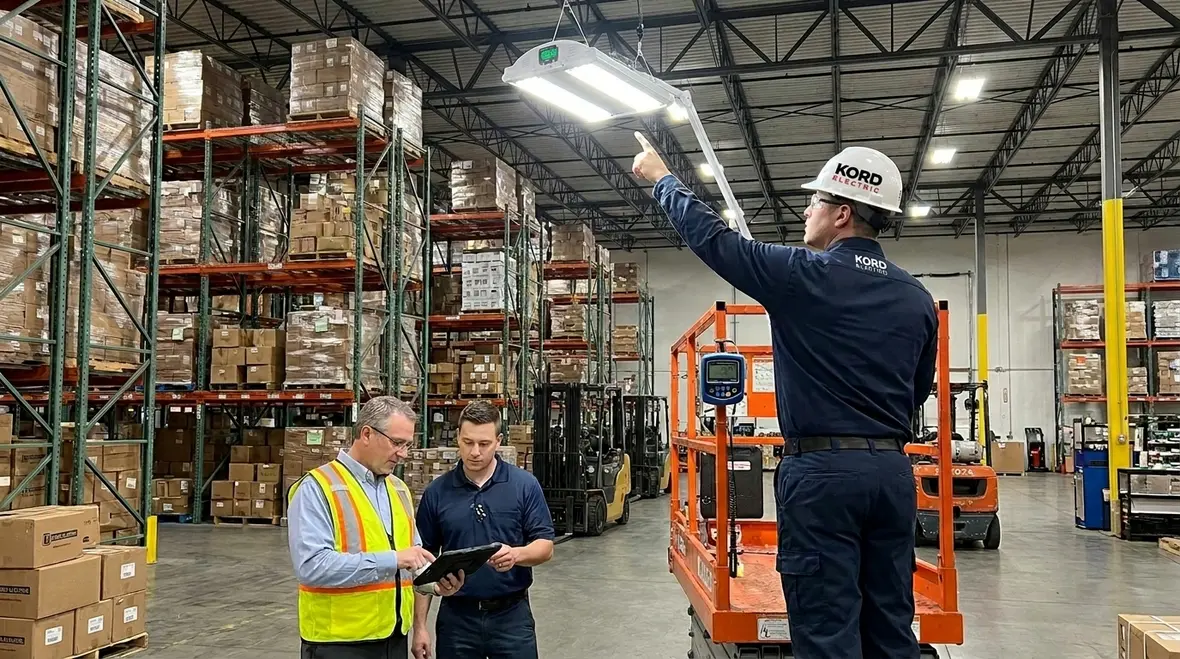
Our technicians walk owners and operators through practical scenarios. For instance, a facility with high ceiling heights or difficult access will see stronger maintenance advantages. Meanwhile, a facility with many zones can also reduce replacement events by controlling how and when fixtures operate. The key is to match the maintenance plan to the lighting design, so the facility stays efficient without trading energy savings for operational headaches.
Some facilities pair lighting upgrades with broader electrical maintenance strategies so they can coordinate lifts, shutdowns, and inspections in a single, predictable window instead of scattering disruption throughout the year.
Examples of maintenance driven ROI in warehouses
Consider a distribution center with high bay fixtures over racking that requires specialized lifts and detailed safety plans every time a lamp fails. Moving from legacy lamps to LED retrofits with longer life and well tuned controls can cut the number of required access events dramatically. Over a multi year horizon, those avoided trips show up not just as line item savings, but also as fewer schedule conflicts and less risk for teams working at height.
Or take a multi building industrial campus with different tenants. When each space upgrades to efficient LED systems on a shared schedule, the property team can coordinate inspections, maintenance, and even documentation for all buildings together, which simplifies planning and helps everyone see the combined value of warehouse energy saving retrofits instead of treating each upgrade as a one off expense.
Steps we use to secure accurate savings projections
ROI gets messy when measurements start late or assumptions run wild. Therefore, Kord Electric follows a clear process that suits commercial and industrial clients and major property buildings.
- Site evaluation to confirm fixture types, mounting conditions, reflectance, and operating schedules
- Load and control review to identify opportunities for dimming, zoning, and smarter switching
- Electrical context check to consider power quality impacts that can affect system performance
- Upgrade design sized to meet lighting needs without overspending
- Commissioning support so controls behave as expected, not as “close enough”
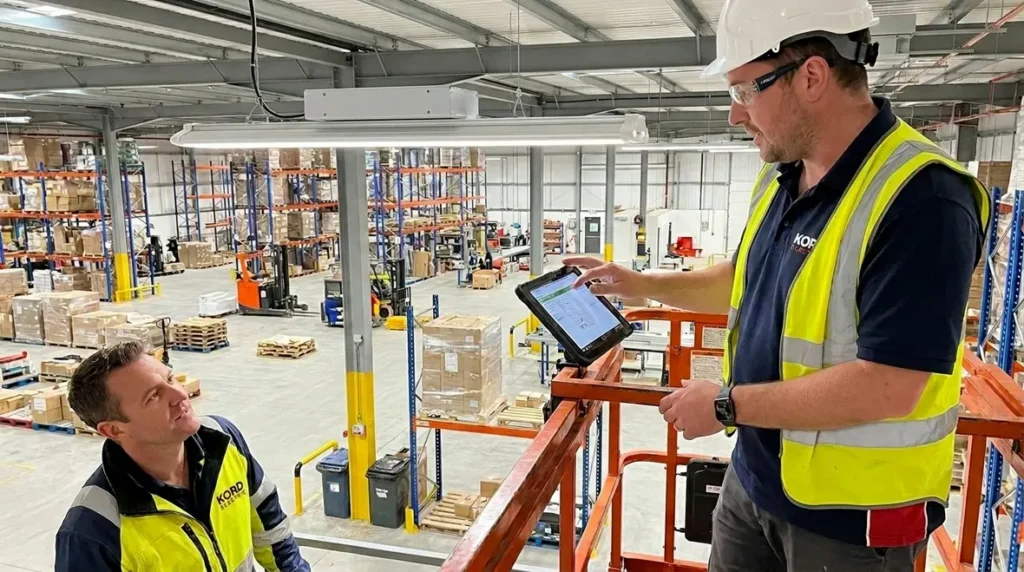
Because our expert service staff explains each phase, teams understand why decisions get made. And since clients can review the logic, approvals move faster. After all, the ROI conversation works best when everyone agrees on the inputs. If the facility does not trust the model, it will not trust the outcome. We handle that early, not after the lights are already installed.
Bringing warehouse energy saving retrofits into a broader strategy
Lighting retrofits rarely live in isolation. We often coordinate them with projects like commercial lighting upgrade cost planning, panel upgrades, new equipment feeds, or even EV charging and solar integration. By looking at the electrical system as a whole, we help facilities avoid duplicated work and design choices that collide later.
For example, a facility that plans to add EV charging or future solar may benefit from aligning lighting upgrades with those timelines so that main distribution, capacity planning, and controls networks support everything from day one instead of needing a second round of disruption.
What results look like after warehouse energy saving retrofits
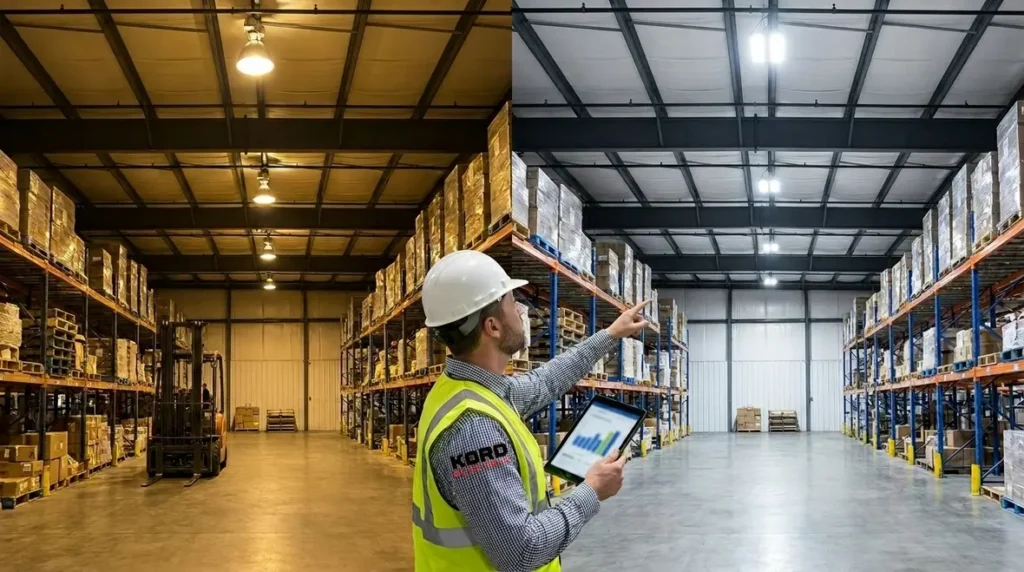
When commercial and industrial facilities implement warehouse energy saving retrofits with smart controls and solid electrical awareness, the results tend to show up quickly and then hold steady. Typically, facilities see utility reductions in the first billing cycles, while maintenance improvements build over time as relamp events decline.
However, Kord Electric also sets expectations beyond the bill. Many teams report better light uniformity, improved comfort for forklift and pick areas, and fewer complaints about glare or uneven coverage. Then, when facilities monitor the system, they can verify that controls respond correctly to occupancy and schedules.
Our technicians help facilities interpret early performance so no one panics when a sensor behaves differently than expected. Sometimes the warehouse door traffic shifts, or schedules change. That is normal. We adjust settings when needed, because the goal is stable savings, not a one time win that fades like a bad sitcom revival.
For multi site portfolios, consistent lighting and control strategies can also simplify operations. Facility teams in different buildings speak the same “language” when they talk about scenes, schedules, and sensor behavior, which makes it easier to train staff, share best practices, and roll out improvements as codes and technology continue to evolve.
Connecting retrofits with ongoing electrical reliability
Once lighting upgrades are in place, many property teams use early savings to support other reliability projects. That might include enhanced panel and switchgear maintenance, targeted rewiring in older sections of the building, or expanded monitoring so that power quality issues and hidden risks do not sneak back into the picture. In that sense, warehouse energy saving retrofits often become the first visible step toward a calmer, more predictable electrical environment across the entire facility.
FAQ
Conclusion: let us map the ROI before you buy the fixtures
ROI should feel clear, not hopeful. Kord Electric evaluates the warehouse, the electrical environment, and the control opportunities, then we help you model real savings tied to how your facility actually operates. Our technicians and expert service staff explain each decision in a calm, straightforward way, so you can approve with confidence. If you are ready to reduce energy use and tighten maintenance plans for a commercial or industrial site, contact Kord Electric today and let us build your upgrade roadmap.
If your project involves new fixtures, layout changes, or a full redesign for multiple buildings, you can also explore Kord Electric’s dedicated lighting installation services. Their commercial and industrial lighting specialists design, install, and commission systems that balance performance, safety, and efficiency across warehouses, campuses, and major property portfolios, giving your warehouse energy saving retrofits a strong technical foundation from day one.