Commercial Backup Power Solutions for Continuity
When the grid hiccups, businesses do not pause. At Kord Electric, we plan for that reality with commercial backup power solutions designed for commercial and industrial facilities, plus major property buildings where downtime turns into real money and real risk. We help others stay calm when alarms start blinking, because we know the lights, the HVAC, the elevators, the access systems, and the process loads still need to run. And while some people treat outages like surprise plot twists, our approach is more like a well rehearsed play, with backup power in place before the audience even buys the tickets.
Commercial backup power solutions as part of continuity planning
In business continuity planning, backup power is not a single purchase. Instead, it is a system of decisions that work together. First, we define what must stay on, then we select the right transfer method, and finally we set schedules for testing that does not disrupt operations. Our technicians and expert service staff explain each step in plain language, because a plan that no one understands is like a fire extinguisher stored behind a “maybe later” sign.
Moreover, commercial and industrial electrical environments differ from site to site. A logistics warehouse may prioritize dock doors, lighting, and network gear. A manufacturing facility may need specific process equipment to avoid product loss. Therefore, we start with a load and critical circuit review so the backup power can carry the right weight, at the right time.
Aligning power strategy with real facility operations
A good continuity plan starts with honest questions: What absolutely must stay on? What can pause without creating safety or data problems? Which operations cost the most when they go dark? By walking through those questions with facilities and operations teams, we build backup strategies that match real life instead of generic templates.
For some properties, that means prioritizing life safety systems, core building services, and key communications gear. For others, it means protecting process lines, environmental controls, and specialty equipment where a single misstep can ruin product or disrupt tenants. In either case, commercial backup power solutions become a practical framework, not just a line item in a budget.
If you want to see how continuity ties into structured service, Kord Electric has already laid out a detailed approach in their commercial and industrial electrical maintenance plans, which show how proactive maintenance and backup preparation work together for long term reliability.
How continuity plans reduce downtime risk
Downtime risk does not only come from losing power. It also comes from the delays that follow, like manual workarounds, failed restarts, and missed data capture. When a facility has continuity planning, it reduces those cascading problems. Then, it supports a faster return to normal operations, because the electrical system behaves predictably under stress.
For example, if a facility relies on computers, card access, security monitoring, and communications, the transition has to be timed and managed. If it is not, operators end up doing troubleshooting while the building is already under pressure. In contrast, a properly designed and maintained backup setup limits chaos, and it helps staff follow a clear sequence rather than improvise like a late night talk show guest.
At Kord Electric, we also align our electrical maintenance approach with continuity goals. We do not just test equipment for the sake of checklists. We test so the next outage does not turn into a long meeting about what went wrong.
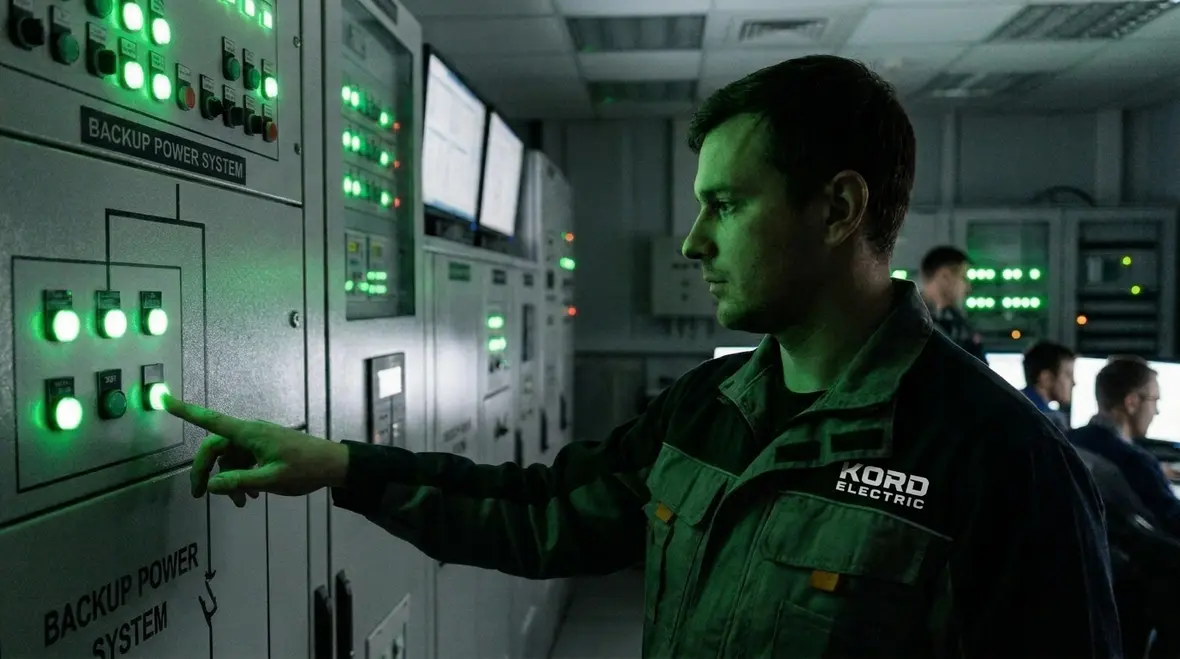
Reducing the hidden costs of electrical chaos
Unplanned downtime rarely shows up on a single line of a budget. Instead, it hides in overtime hours, production loss, missed SLAs, damaged inventory, tenant dissatisfaction, and the slow drag of staff attention pulled away from their real work. Continuity planning reduces those hidden costs by turning “scramble mode” into a sequence the whole team understands before anything goes wrong.
That is why we connect the dots between backup power, protection settings, and maintenance activities. When utilities glitch or weather gets ugly, we want the building to move through each step calmly: detect, transfer, run, and then return to normal without creating new headaches.
What our technicians include in a commercial and industrial maintenance approach
We support continuity by pairing backup power readiness with disciplined electrical maintenance. If you want to see how this fits into real planning, our commercial and industrial electrical maintenance plans lay out a structured approach that major property buildings and industrial sites can count on.
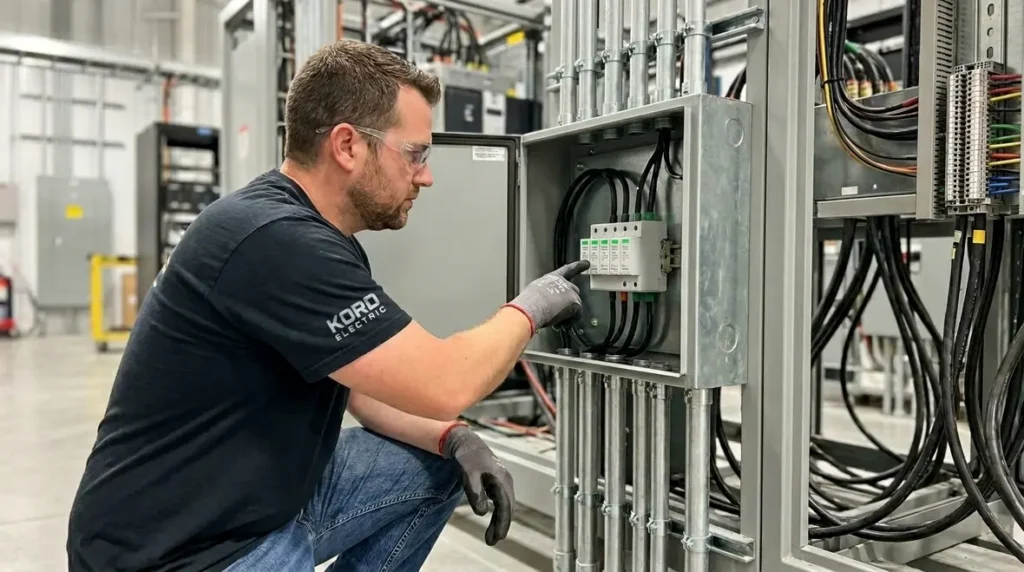
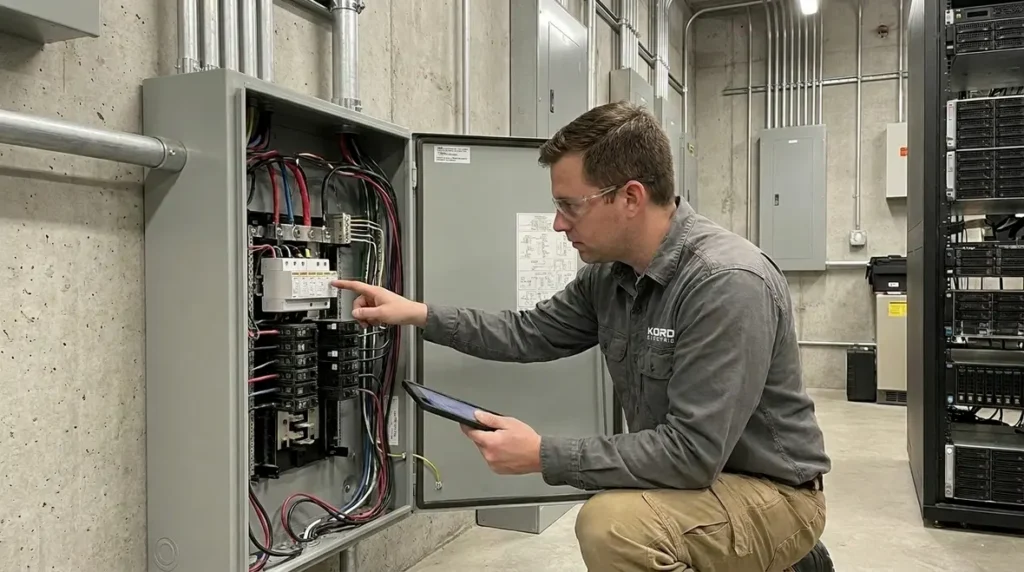
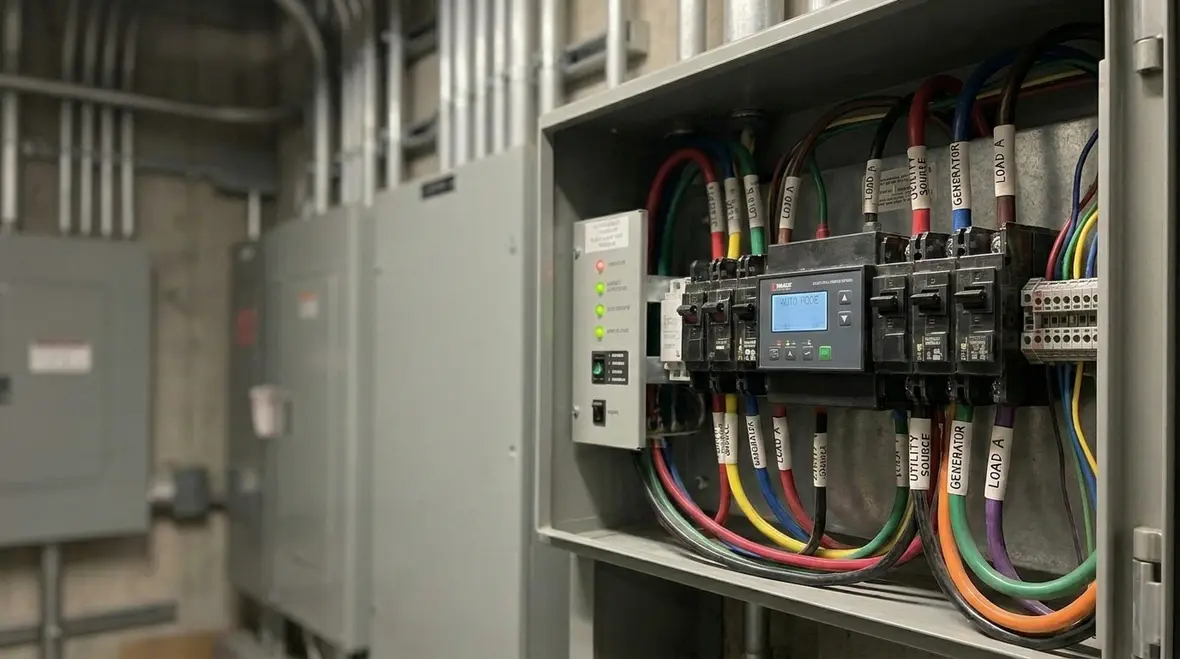
Our team typically focuses on the details that keep systems dependable. That includes inspection of transfer equipment, review of protective devices, and verification of control settings. Also, we check for signs of wear that can grow into failures during a real event, not during a calm afternoon with no alarms.
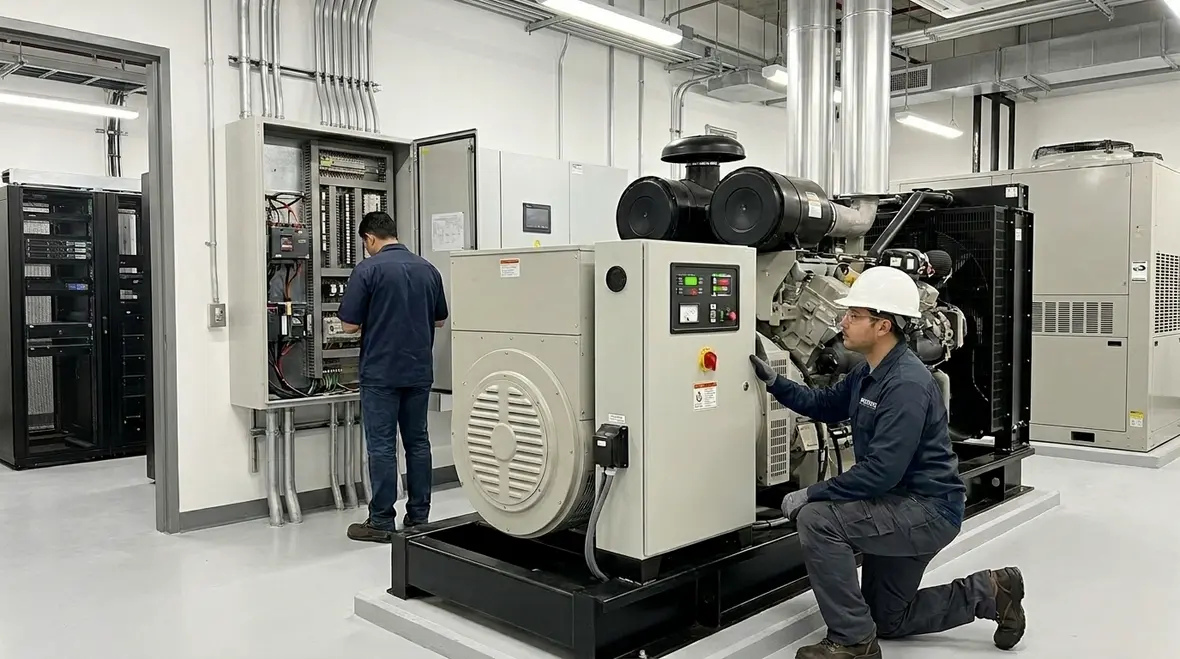
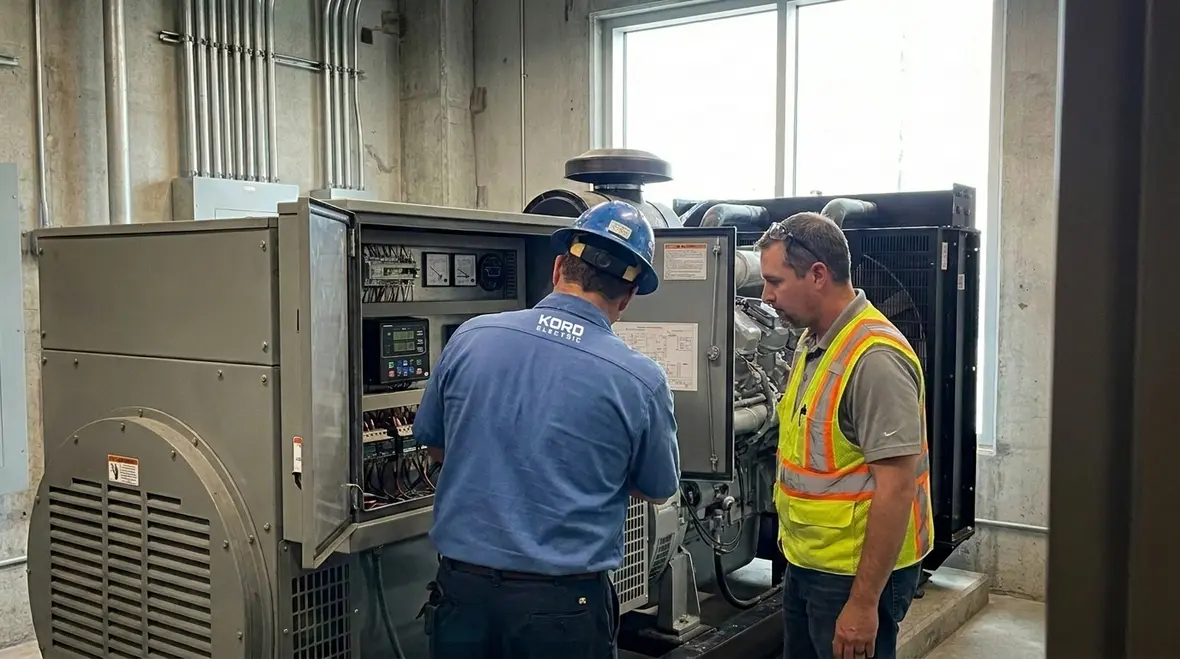
Just as important, our expert service staff documents what we find and what we recommend. Because while a backup generator might look fine from across the parking lot, the controls, connections, and operational logic determine whether the system will actually perform when called upon. In other words, we look past appearances, because electricity always tells the truth, eventually.
From inspections to actionable reporting
An inspection that ends with a shrug does not help anyone. So our technicians pair field work with reporting that actually informs decisions. We highlight issues that need immediate attention, note patterns we are watching, and flag opportunities to strengthen your continuity posture before the next disturbance hits.
That way, when leadership asks, “What are we doing about outage risk?” your team can point to clear documentation, not just a stack of cryptic notes from the last service visit.
Load management: choosing what the backup system really powers
Even strong commercial backup power solutions fail when they carry the wrong loads. So we help facilities set priorities using a practical method. First, we separate essential loads from non essential ones. Then we build a plan for how the system should respond during the transition period.
To do this well, we pay attention to starting currents and time based loads. Some equipment pulls surge power during startup, which can stress the system even if it seems “small” on paper. Therefore, we review panel schedules, equipment data, and operational sequences. After that, we recommend strategies like load shedding and staged start, so the most important functions stay alive without overloading the backup source.
And yes, we keep it realistic. A building does not need every outlet on during an outage. It needs the right things to keep people safe and operations stable. If that sounds obvious, good. Most outages are not caused by complex mysteries. They are caused by priorities that were not written down.
Turning one-line diagrams into real-world priorities
On paper, every load can look important. In practice, some circuits are “nice to have” while others protect life safety, data integrity, and core revenue. We translate drawings and panel schedules into clear tiers of priority, so when an outage hits, your backup system is not trying to be everything to everyone all at once.
That careful sorting also makes future improvements easier. When you add equipment or remodel a space, we can quickly see how those changes affect backup capacity and suggest adjustments before the next storm or grid event tests your system.
Transfer systems and controls that behave during an outage
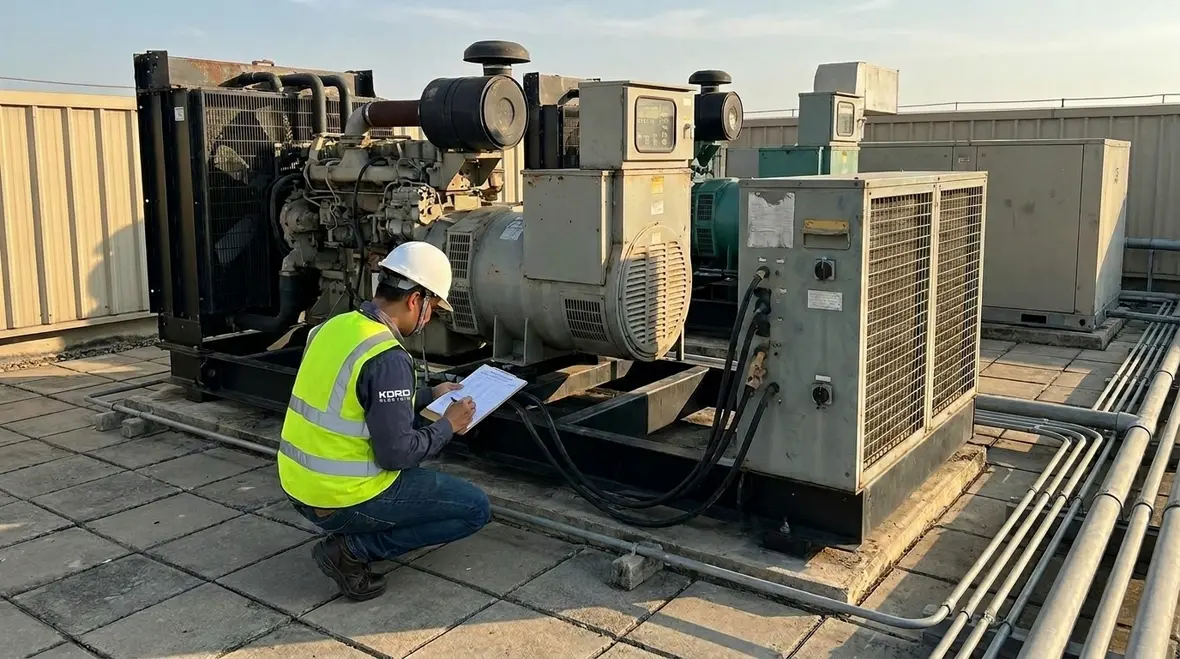
Backup power is only half the story. The other half is the transfer. The transfer switch, its logic, its sensing, and its timing determine whether equipment switches smoothly or stumbles. When transfer control behaves correctly, the building experiences a controlled transition rather than a sudden electrical event that triggers fault alarms.
Our technicians inspect transfer equipment and control pathways to ensure proper operation. In addition, we review settings that affect how the system detects utility power, how it times delays, and how it responds after voltage returns. This matters because return to normal power can be as disruptive as the outage itself, especially when controls do not coordinate with building electrical systems.
Also, we examine the interface between backup power and facility systems like HVAC controls, elevator power, and security networks. This coordination helps avoid situations where backup power runs, but critical systems remain offline because controls never reset properly. Our expert service staff explains the why behind each recommendation, so the facility team understands how the system will behave under real conditions.
Fine-tuning transfer logic for real-world disturbances
Not every power event looks like a clean outage and a clean return. Brownouts, short blips, and unstable voltage can confuse poorly tuned systems. We calibrate transfer logic so it responds appropriately, minimizing unnecessary transfers while still protecting your operation when conditions genuinely cross the line.
That balance reduces wear on equipment, keeps lights and systems from constantly flipping between sources, and makes the building feel calm even when the grid is not.
Testing, documentation, and the maintenance rhythm that keeps systems ready
Continuity planning depends on testing that mirrors real life. Monthly and seasonal tests matter, and so do load bank evaluations where appropriate. We develop schedules that align with facility operations so tests do not interrupt production or create unexpected downtime. Then we document outcomes in a way that helps owners, facilities, and operators track trends over time.
Over time, components drift. Batteries age. Control boards change behavior. Connections loosen with thermal cycling. Therefore, regular maintenance prevents small issues from becoming expensive “surprise failures” that show up during a storm, a grid event, or a high demand period.
When we perform service at commercial and industrial facilities, we treat documentation as part of the job. That way, if a facility experiences repeated events or recurring symptoms, others can trace the pattern and act before the next outage. And while nobody wants to read maintenance reports like they are novels, clear records make decision making faster and calmer.
Building a consistent test-and-review cycle
A single successful test is useful. A consistent history of well-documented testing is powerful. We help facilities move from occasional, ad hoc exercises to a predictable rhythm: run the test, capture the data, review the findings, and adjust settings or maintenance targets as needed.
That cycle turns backup power from “equipment we hope works” into “infrastructure we know, measure, and trust.”
Planning for major property buildings: safety, compliance, and coordination
Major property buildings bring extra complexity. They have multiple tenants, shared life safety systems, and long equipment lead times. They also often operate with schedules that do not flex, meaning downtime windows are tight. So our continuity planning focuses on coordination across building electrical systems and the staff who run them.
We emphasize safe installation practices, correct protective coordination, and clean labeling. We also coordinate with building stakeholders so the plan matches operational reality. As a result, facilities avoid last minute scramble when they need the backup source to serve people safely and keep critical operations stable.
Finally, we make sure the backup strategy fits the facility. Commercial and industrial electrical maintenance is not a one size model. The right commercial backup power solutions depend on how the building operates, what loads are truly critical, and how the facility team expects to respond during an event.
Coordinating continuity across tenants and systems
In larger campuses and vertical properties, one outage can touch dozens of tenants and shared services at once. We help owners and managers think through how backup power, life safety, elevators, data connectivity, and mechanical systems work together, so each group knows what to expect when the building switches from utility to backup and back again.
That level of coordination reduces confusion in the moment and builds trust between ownership, facility teams, and the people who rely on the building every day.
FAQ
Call Kord Electric for a continuity ready plan
If your facility depends on power, you deserve a continuity plan that holds up under pressure. Kord Electric builds and supports commercial backup power solutions for commercial and industrial facilities and major property buildings, then we maintain them with a rhythm that keeps performance steady. Reach out to our team to discuss critical loads, transfer behavior, and a maintenance approach that matches your operations. Let us handle the electrical details, so your staff can focus on running the business instead of chasing alarms.
To connect your backup strategy with proactive maintenance, explore our structured electrical preventive maintenance services, built specifically for commercial, industrial, and major property buildings that cannot afford guesswork when it comes to uptime.