EV Charging Infrastructure Planning for Commercial Growth
In this article, we focus on ev charging infrastructure planning for commercial growth. Kord Electric helps owners and facility leaders expand charging networks with a clear roadmap, built for how businesses operate today and how they will operate tomorrow. We take a slow, deliberate approach, because the best time to plan is before the first vehicle plugs in, not after the breaker trips like it just heard a bad joke. Our team, including trained electricians and expert service staff, explains the steps in plain language and backs every decision with field experience. And yes, we still love making it simple, even when the job involves panels, demand charges, and power studies that sound like they belong in a sci fi movie.
Why commercial EV rollout needs a real plan, not a guess
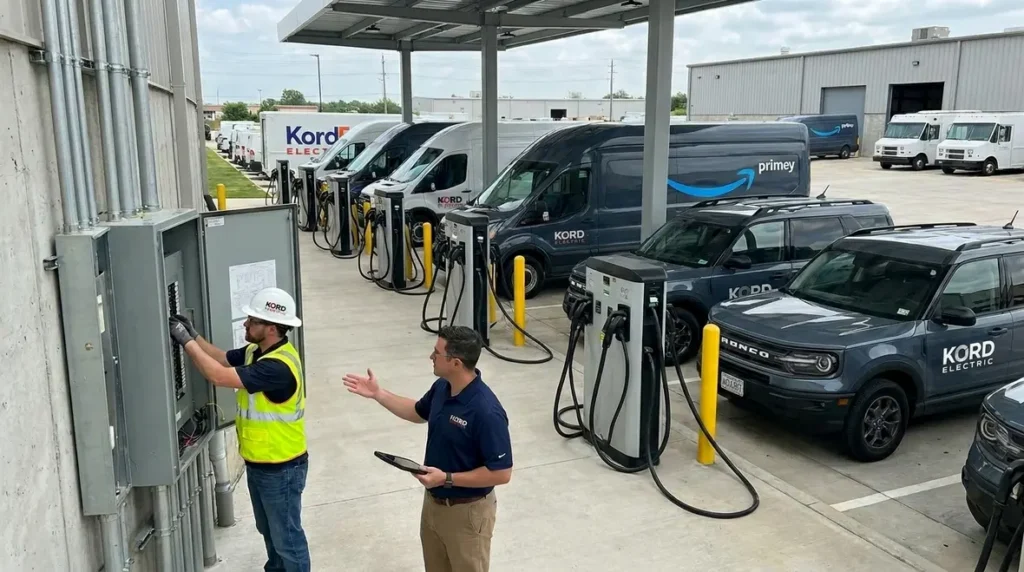
When others rush, they usually pick chargers first and deal with power later. That is where problems hide. Commercial and industrial sites face unique loads, long operating hours, peak demand windows, and strict reliability needs. Therefore, good ev charging infrastructure planning starts with demand reality, not wishful thinking. We help owners map charging needs to the facility’s actual electrical capacity and operating schedule, and then we build a phased plan that keeps sites working while upgrades occur.
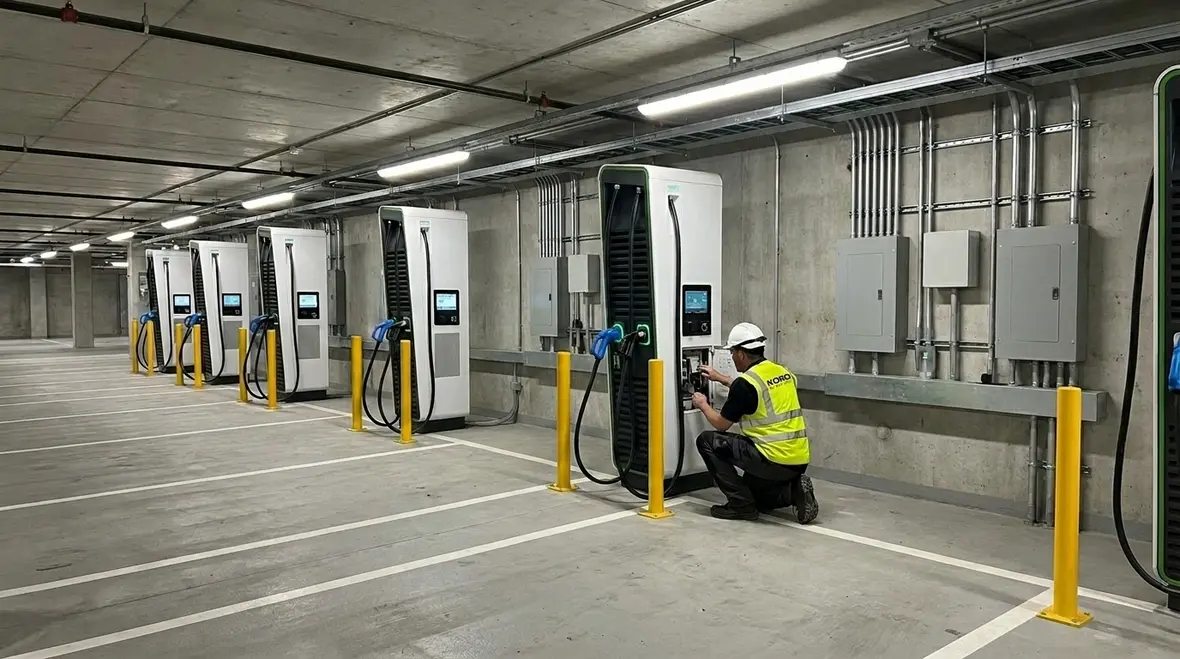
Next, we think about growth. Fleet sizes change, tenants move, and corporate policies evolve. So we design for future expansion: we evaluate space for conduit runs, cable routing paths, panel capacity, transformer headroom, and switchgear options. This is not just “put in chargers.” It is building a system that can scale without turning every expansion into a fire drill.
Finally, we consider the human side. Others may see chargers as a single product. We see chargers as part of a broader power and operations workflow. So we plan for signage, access control, user flow, uptime expectations, and service response times. In other words, we plan for the whole experience, not just the hardware.

Site survey and load mapping that avoids hidden electrical risks
One reason commercial rollouts fail involves electrical conditions that look fine until they meet sustained new load. Kord Electric has explained these hidden electrical risks in commercial buildings because they show up at the worst time. For example, aging wiring, overloaded panels, loose terminations, and mismatched protective devices can create heat buildup and unstable performance. And when EV charging adds steady demand, those risks stop being “future problems” and start becoming “current problems.” To dig deeper into how these issues behave in the field, see the full breakdown in Hidden Electrical Risks in Commercial Buildings.
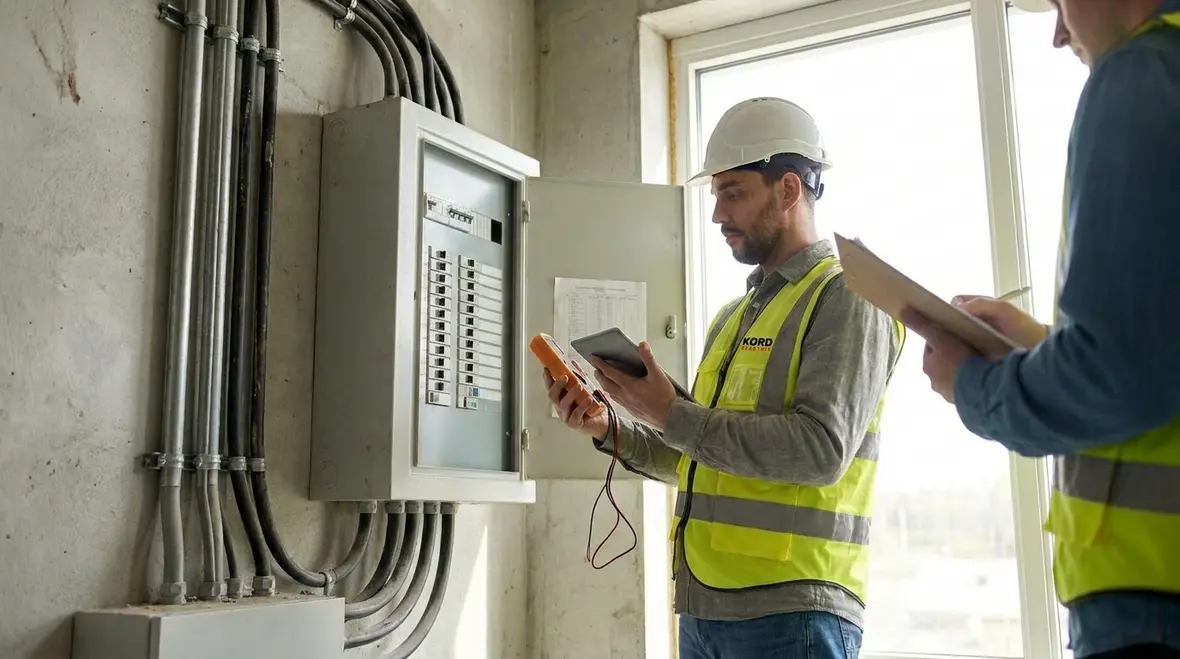
To prevent that, our technicians begin with a structured site survey. We examine one line diagrams, panel labeling, available feeder capacity, transformer ratings, and the history of prior electrical modifications. Then we align that with expected charging use: number of vehicles, charger power level, daily charging windows, and whether demand will be steady or spiky.
Next, we coordinate with facility operations. Many sites run HVAC, production equipment, refrigeration, elevators, and lighting on schedules that overlap with charging. Therefore, we map expected load profiles so the charging system supports business needs instead of competing with them.
And when we discover risk areas, we explain the findings clearly. Our expert service staff does not just say “this needs work.” Instead, we describe what could happen, why it matters, and what we recommend to make the site safer and more reliable. That way, owners can budget with confidence rather than guessing after the fact.
Tying EV planning into broader maintenance programs
These surveys also connect naturally to broader preventive strategies. Many of the same conditions that affect EV charging capacity also affect critical equipment, lighting, and production systems. By integrating charging projects with structured electrical preventive maintenance, owners can reduce surprise failures across the board and keep expansion aligned with long term reliability goals.
Phasing strategy for expansion without shutting down the business
Commercial properties rarely have the luxury of full downtime. So we structure installations in phases that protect operations. First, we prioritize upgrades that reduce risk and increase capacity. Then we install charging in stages, aligning each phase with vehicle adoption and customer or employee demand.
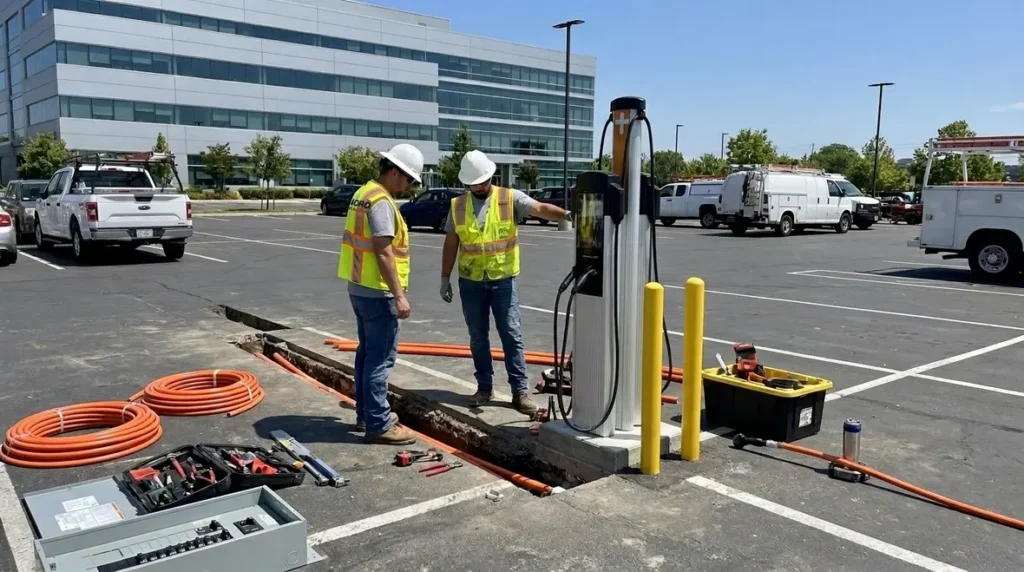
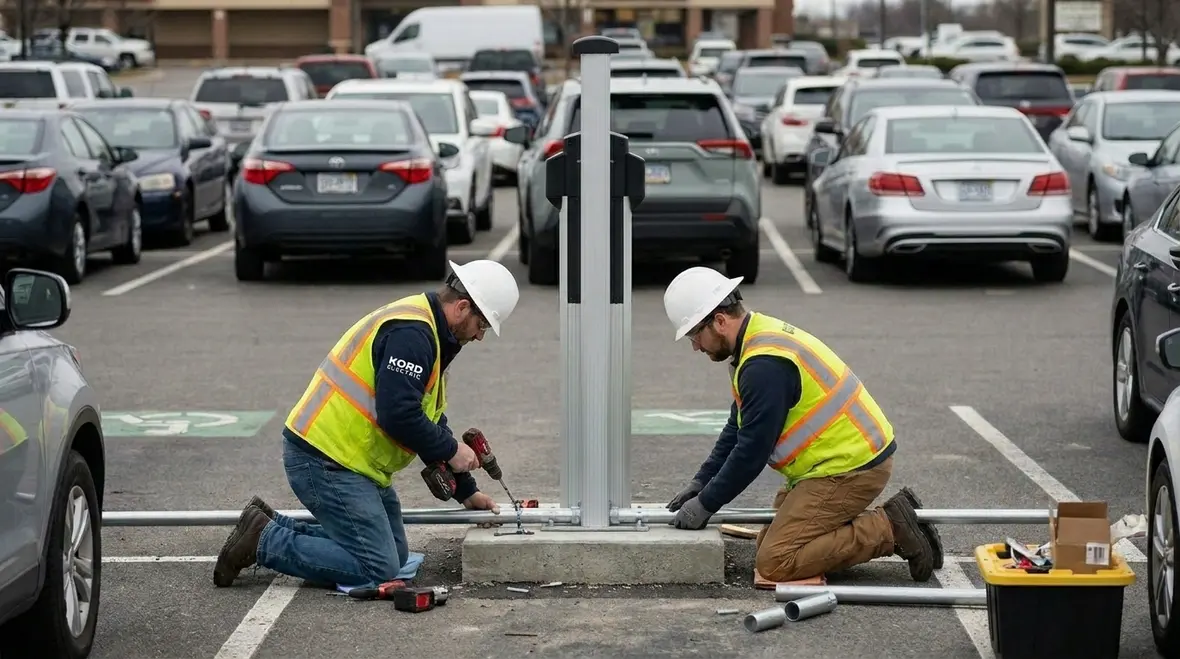
For example, we may start by preparing conduits, anchoring equipment pads, and upgrading electrical infrastructure that unlocks capacity. Afterward, we commission a smaller number of chargers and monitor real performance. Then we expand to the next set once the site confirms assumptions about usage and demand.
Meanwhile, we coordinate timing around peak operational periods. That means fewer disruptions to maintenance teams and less downtime for tenants. And because we plan the routing and equipment layout in advance, each future phase has a clearer path rather than requiring demolition every time someone wants another port. Think of it like building a parking garage instead of moving cars with a tow truck every week. One approach is calm. The other is chaos with extra paperwork.
Scalability and phased EV growth
Phasing is also where scalability really shows its value. Instead of overspending on day one or under building and scrambling later, a phased roadmap lets commercial properties align capital spend with real adoption curves. For more ideas on how to combine flexible design with staged rollouts, explore Kord Electric’s perspective on EV charging infrastructure scalability for commercial sites.
Capacity, power quality, and smart controls that protect reliability
Capacity is the heart of successful commercial deployments. We help others avoid the common mistake of assuming “more chargers equals more customers.” In reality, electrical systems behave like budgets: you can spend more only when the total plan allows it. Therefore, we evaluate available capacity and apply strategies that manage load during peak times.
We also look at power quality. EV charging draws significant power and can influence how voltage and current behave, especially on older systems. Thus, we confirm protective device compatibility, grounding requirements, and correct charger settings. Then we use smart load management where appropriate to reduce the chance of overloading. This helps facilities meet charging demand without causing nuisance trips or stressing infrastructure.
In addition, we plan for communication and monitoring. When chargers are visible in a management platform, owners can track utilization, uptime, and faults. As a result, they can plan service visits proactively. Our expert service staff supports commissioning and ongoing maintenance planning, so “out of service” does not become the default user experience. Nobody likes a charger that behaves like a vending machine with trust issues.
Protecting systems from voltage and load issues
Because EV charging can amplify existing weaknesses, projects often go hand in hand with targeted power quality improvements. From balancing loads to stabilizing voltage, the same data that informs ev charging infrastructure planning can also guide corrective work that keeps sensitive equipment running smoothly and reduces nuisance shutdowns across the facility.
Permits, compliance, and documentation that keep projects moving
Commercial and industrial sites operate under strict requirements. Kord Electric supports projects with a focus on compliance and clear documentation. We help teams understand what approvals they need and how to coordinate them with the property schedule. Then we prepare the paperwork that keeps stakeholders aligned: single line updates, equipment specs, installation details, and testing records.
Because rules vary by location and project scope, we treat documentation as part of the technical solution. Consequently, owners can submit complete information the first time, reducing back and forth that delays the install.
We also plan for long term accountability. That means labeling, panel identification, and accessible pathways for future service work. If a facility manager needs to maintain chargers later, they should not need a scavenger hunt to find the right circuit or conduit run.
Documentation that supports long term service
Good documentation pays dividends long after the last permit is closed. Clear records support future upgrades, simplify troubleshooting, and help new facility teams understand exactly how the system was built. When commercial EV work is aligned with broader electrical maintenance plans, those documents become a shared roadmap instead of a stack of forgotten PDFs.
Budgeting and ROI models owners can actually trust
When others budget with only equipment cost, they miss the real cost drivers: electrical upgrades, demand management, trenching or surface restoration, installation labor, commissioning, and service planning. That is why we build budgeting around the full scope of ev charging infrastructure planning for commercial sites.
Next, we help owners translate charging demand into expected utilization. We look at site type, user behavior, access patterns, and expected adoption timelines. Then we consider how pricing models interact with demand charges and peak usage. If a property pays for demand based on peaks, then smart load controls and phasing can protect margins.
After that, we set a clear maintenance plan. Chargers require inspections, software updates where applicable, and checks for wear and weather exposure. When service is scheduled correctly, downtime drops. Therefore, ROI improves because revenue opportunity remains available and repair surprises become less frequent.
And yes, we keep it business casual. The math matters, but nobody needs a lecture. We present options in plain terms and help decision makers compare scenarios with confidence.
Linking EV charging to overall electrical strategy
For many properties, EV charging is one piece of a much larger electrical strategy that also includes lighting upgrades, power quality improvements, and preventive maintenance. Treating these as connected decisions instead of isolated projects helps owners stretch budgets further and keep infrastructure aligned with how the business actually grows.
FAQ
Conclusion
If you run a commercial or industrial property, your EV charging plan must be built like the rest of your business systems: with data, capacity planning, and clear execution. Kord Electric helps you expand with confidence through structured site surveys, phased installs, compliance support, and expert service from our technicians and staff. Don’t wait for the first breaker trip to learn what your electrical system was trying to tell you. Contact Kord Electric today to map your next charging phase and move forward safely.
When you are ready to turn planning into real hardware on the ground, Kord Electric’s dedicated EV charger installation services connect this roadmap to code compliant, field tested builds that keep your property ready for the next wave of drivers.