Signs You Need Commercial Panel Board Replacement
When a business power system starts acting up, people usually blame “the building” like it is a cranky tenant with a grudge. In reality, the root cause is often the commercial panel board. At Kord Electric, we handle commercial panel board replacement for commercial and industrial facilities and major property buildings, and we do it with the kind of care that keeps electricians, managers, and tenants calm.
Because here is the thing: a panel board does not fail politely. It fails when you need it most. And if you wait for a dramatic outage, you will often pay for that drama with downtime, repeat callouts, and rushed repairs. So, we will walk you through the real signs that your panel board needs a professional replacement, and we will explain what our technicians notice on site, step by step.
Why a commercial panel board becomes a risk over time
Panel boards are built to manage loads, route power, and protect circuits. Over the years, however, heat, vibration, moisture, and inconsistent electrical demand wear down components. As a result, even a panel that looks “mostly fine” can develop hidden damage inside.
We commonly see these issues in high use buildings like warehouses, office towers, retail plazas, and industrial spaces where equipment cycles on and off all day. Additionally, if the facility has upgrades, new tenants, or HVAC changes, the panel can become overwhelmed. In turn, that overload increases heat and stress, which accelerates wear. And yes, electricity loves shortcuts almost as much as a sitcom character loves a bad decision in the first five minutes of an episode.
Our expert service staff explains the “why” in plain language during site visits, so decision makers can act early instead of chasing symptoms after the fact.

Signs of overheating, discoloration, and hot spots
One of the clearest indicators is heat damage. When a panel board overheats, you may notice discoloration, a burnt smell, or surface scorching around breakers and bus bars. Moreover, you might find that certain circuits trip more often during peak hours, even if the load seems normal.
In many buildings, maintenance staff also reports a recurring “hot spot” near specific breaker positions. Then, as the problem grows, the panel can develop arcing conditions. That is when tiny sparks form inside the panel even if no breaker has fully failed. Consequently, the heat and damage spread faster than most people expect.
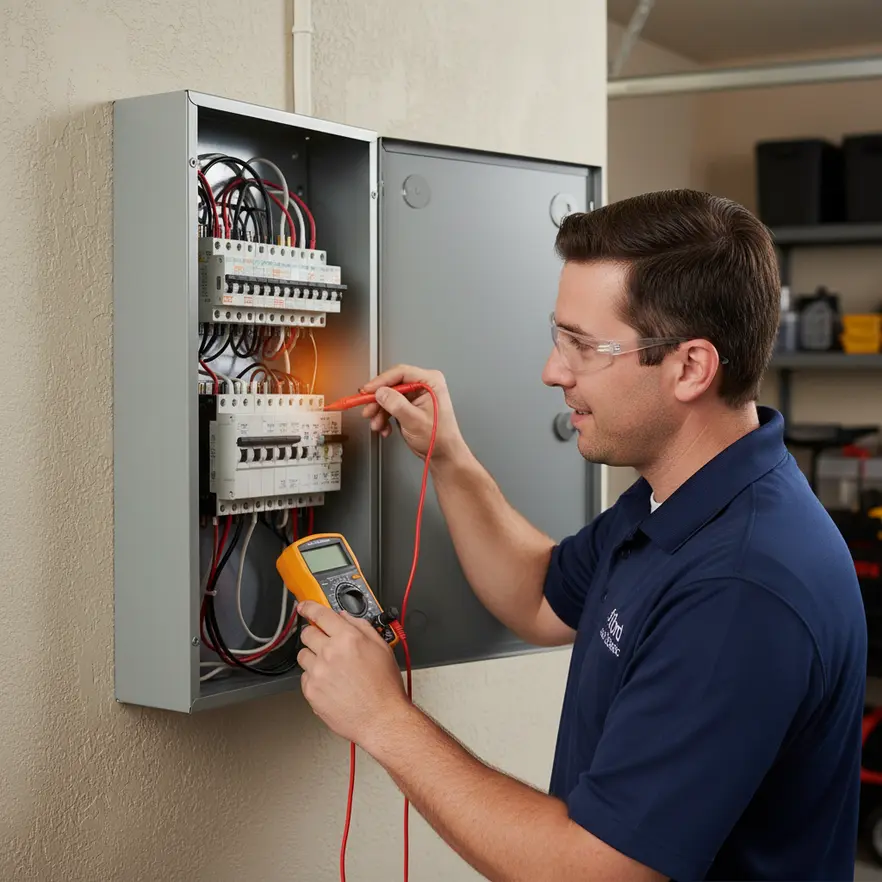
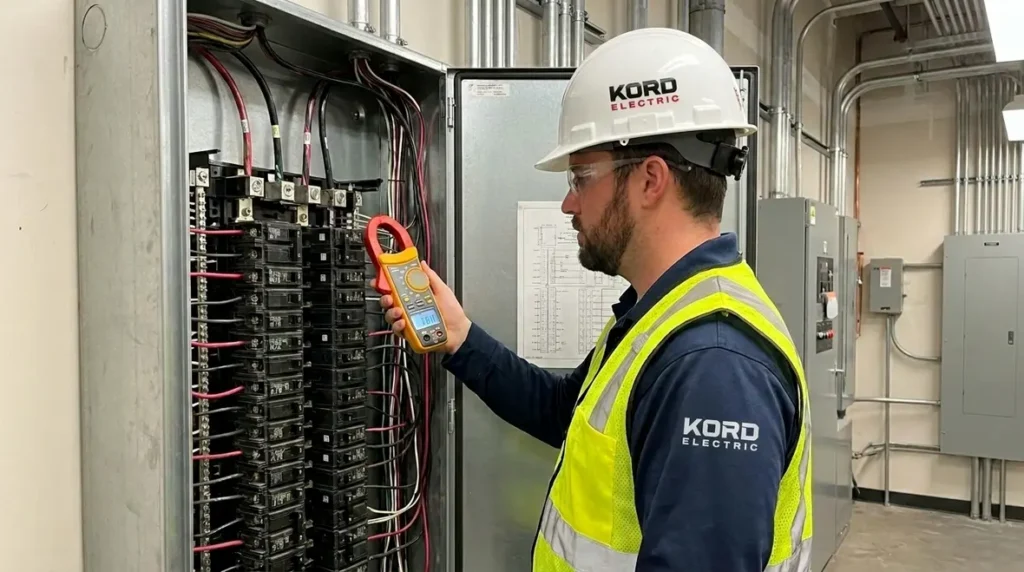
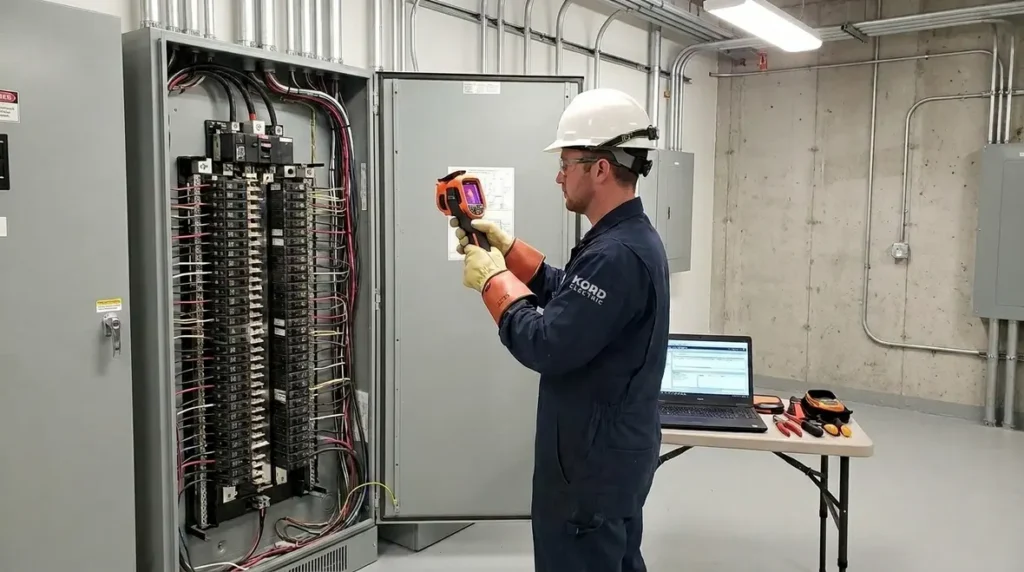
When our technicians inspect, they do not just look. They measure and evaluate. For example, they may check for signs of thermal stress, inspect breaker fit and condition, and review past service records. If the panel shows a pattern of heat damage, replacement is often the safer and smarter step.

If you are noticing unusual warmth or odor around your panels, it is worth pairing this guide with a deeper look at hidden risks behind the equipment. Kord Electric covers these patterns in more detail in their Hidden Electrical Risks in Commercial Buildings article, which explains how subtle warning signs often point back to overloaded or aging panels.
Frequent breaker trips and nuisance outages
Not every nuisance trip signals replacement, but frequent trips often point to deeper problems. If breakers trip repeatedly, the causes can include worn components, loose terminations, failing protective devices, or insulation breakdown.
Furthermore, some facilities report “selective” outages. That means only certain areas lose power, but the rest of the building stays on. This pattern can happen when a failing breaker or a damaged bus section can no longer handle the load consistently. Over time, the panel can become unstable, and the building’s power protection becomes less reliable.
Instead of treating every trip like a separate fire drill, we recommend an electrical diagnosis that looks at trends. Our team helps facility managers understand which circuits are involved, how often trips occur, and what it means for electrical safety. Our technicians also explain the difference between a normal overload condition and a protective system that is no longer performing correctly.

In some facilities, repeated breaker trips and voltage instability show up together. For a broader look at how unstable power affects operations, you can connect this issue with Kord Electric’s dedicated overview on voltage fluctuations in commercial and industrial facilities, where they outline how aging panels, overloaded circuits, and failing components can push systems beyond safe operating ranges.
Moisture, corrosion, and damage inside the enclosure
Commercial and industrial environments can be rough. Condensation, leaks, humidity swings, and dust exposure can find their way into enclosures. When moisture enters a panel board, it can lead to corrosion at connections and inside the structure.
As corrosion forms, it increases resistance at terminations. Higher resistance generates more heat. Then, that heat can worsen corrosion in a cycle that feels unstoppable until someone breaks it. In other words, the panel becomes trapped in a loop of decline.
If you see rust, water marks, swollen labels, or moisture residue near knockouts and conduit entries, we treat it as a serious sign. Also, if corrosion appears after recent maintenance or storms, the timing matters. The longer corrosion continues, the more likely the panel will need commercial panel board replacement to restore safe performance.
Our expert service staff focuses on both the symptoms and the environment so the new system does not meet the same fate.

Moisture-related panel damage also ties into a larger maintenance story. Kord Electric’s electrical preventive maintenance programs and their guidance on NFPA 70B electrical panels and switchgear maintenance both highlight how routine inspections, cleaning, and torque checks can interrupt this corrosion–heat–corrosion cycle before it reaches the point of full replacement.
When the panel cannot handle your current load
Many properties evolve. A space that once hosted light use now runs heavier equipment. Another time, a building adds chargers, upgraded lighting, production lines, or new refrigeration systems. However, the electrical design often changes slower than business needs.
When a panel board cannot handle the current load, the symptoms can include persistent voltage issues, breaker wear, and overheating on specific phases. Additionally, the panel may lack the capacity for expansion without unsafe modifications. If you keep adding circuits using temporary wiring or questionable adapters, the panel becomes more cluttered and less dependable.
We also consider safety margins. A “working” panel that runs hot under normal conditions still acts like it is one bad day away from trouble. Therefore, when capacity problems show up, replacement plus a proper sizing approach can protect equipment and reduce risk.
Our technicians will review the facility’s electrical requirements and explain options in straightforward terms, so the decision is not based on guesswork. And we promise not to talk in codes only a wizard understands.
If your growth plans include new production equipment, expanded lighting, or renewable energy integration, it is worth pairing panel capacity conversations with planning resources like Kord Electric’s rewiring cost guide for commercial electrical systems and their commercial solar panel electrical integration guide. Both highlight how today’s panel decisions affect tomorrow’s expansion and infrastructure upgrades.
Outdated components, failing protective devices, and unsafe workmanship
Some panel boards contain older components that no longer meet the needs of modern facilities. For example, certain protective devices may not trip at the expected thresholds, or connections may show signs of poor installation or deterioration over time.
Moreover, if the panel has been patched with repeated “temporary” fixes, it can become a patchwork system. That patchwork can hide issues because the original problems return in new forms. Over time, the panel may also struggle with selectivity, which is how protection devices coordinate so faults clear at the right level without knocking out more of the building than needed.
If our technicians find unsafe conditions like loose terminations, damaged bus connections, or protective gear that shows wear beyond normal service, we will recommend replacement rather than repeated repairs. That approach reduces the chance of a larger electrical failure and gives the building a stable foundation.
At Kord Electric, we serve only commercial and industrial facilities and major property buildings, and we tailor our process to those realities.
Many of these aging-component issues intersect with code compliance. For a clearer picture of how current standards affect panel replacement decisions, you can reference Kord Electric’s overview of NFPA 70 and the National Electrical Code, as well as their GFCI outlet California commercial compliance guide. Both highlight how outdated equipment and improvised fixes can quietly push a building out of alignment with modern safety expectations.
How we handle commercial panel board replacement without drama
When we perform a commercial panel board replacement, we plan for business continuity. We know that a power interruption affects operations, security systems, elevators, production schedules, and tenant comfort. So, we coordinate with the facility team and confirm the plan before any work begins.
First, our technicians assess the existing panel, evaluate wiring condition, and confirm load requirements. Next, we create a replacement plan that respects the building’s electrical design. Then, we install the new equipment, verify connections, and test protective performance so the system operates correctly from day one.
During the process, we explain what we see and what we do. Our expert service staff does not dump a technical report and vanish. Instead, we walk clients through findings in a calm, clear way. In short, we replace the system and help you understand it, so the next time a breaker acts up, you know what to ask and what to expect.
And yes, we keep things professional even if the panel tries to be its own special kind of chaos.
For facilities that want panel work to fold into a broader reliability strategy, Kord Electric’s electrical preventive maintenance services provide a structured way to document findings, schedule future inspections, and combine panel upgrades with ongoing infrared scans, torque checks, and system-level reviews.
FAQ: Commercial panel board replacement
Every facility has unique conditions, but many decision makers ask similar questions once they realize a panel board may be at the end of its useful life. These answers give a starting point for conversations with your electrical contractor and internal team.
Choose Kord Electric for a safer electrical foundation
If your panel board shows signs of overheating, corrosion, repeated breaker trips, or capacity stress, do not wait for a dramatic outage to force action. At Kord Electric, we focus on commercial and industrial facilities and major property buildings, and our technicians explain findings clearly before any next step. Contact us for a professional site assessment and a replacement plan designed for continuity. You handle operations, and we handle the power with steady, expert care.
Panel replacement is also a natural moment to think about the bigger picture. Whether you are preparing for lighting upgrades, new production equipment, or future renewable integration, Kord Electric’s commercial services—such as recessed lighting installation and electrical preventive maintenance—help keep the entire electrical system aligned with your long term plans instead of reacting to the next emergency.
If you suspect your building may also have hidden wiring or load issues beyond the main panel, resources like Kord Electric’s hidden electrical risks in commercial buildings article can help you frame the right questions for your next walkthrough or capital planning meeting.