Warehouse Lighting Efficiency Optimization Guide
Warehouse lighting efficiency optimization that actually cuts waste
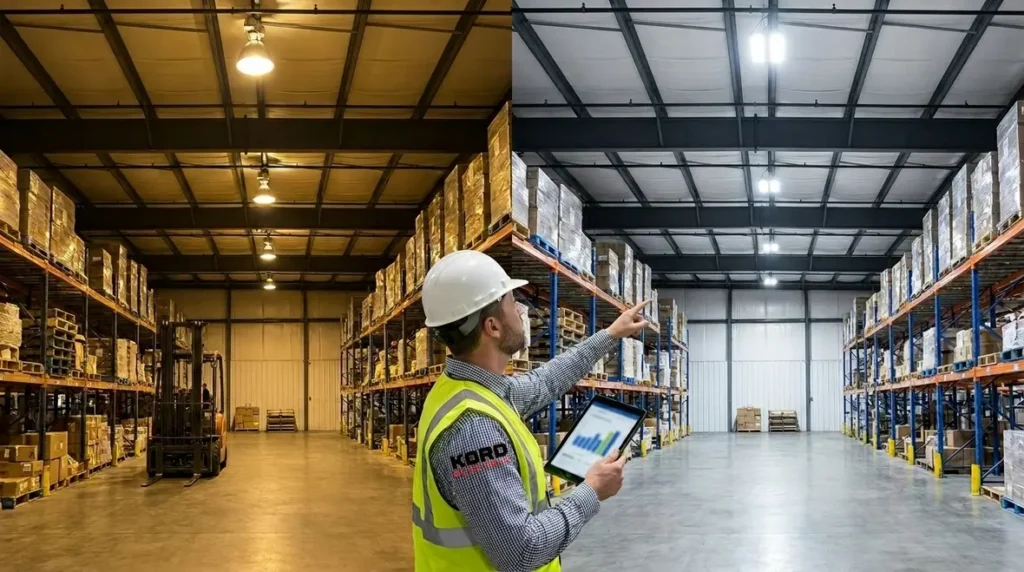
When we step into a large warehouse, we do not just “swap fixtures and hope.” We start with warehouse lighting efficiency optimization, meaning we focus on what the space needs, where it needs it, and how to keep energy use under control while raising usable light. Then, we plan retrofits that protect uptime, reduce rework, and deliver steady performance long after the new lights are switched on. At Kord Electric, our technicians and expert service staff walk through the process in plain language, so stakeholders understand what we are doing and why. And yes, we still try to keep it exciting, because even a lighting retrofit can feel like a never ending season of a TV show. We finish the job, we measure results, and we keep the lights doing the right thing.
Audit the site like a pro, not like a guess
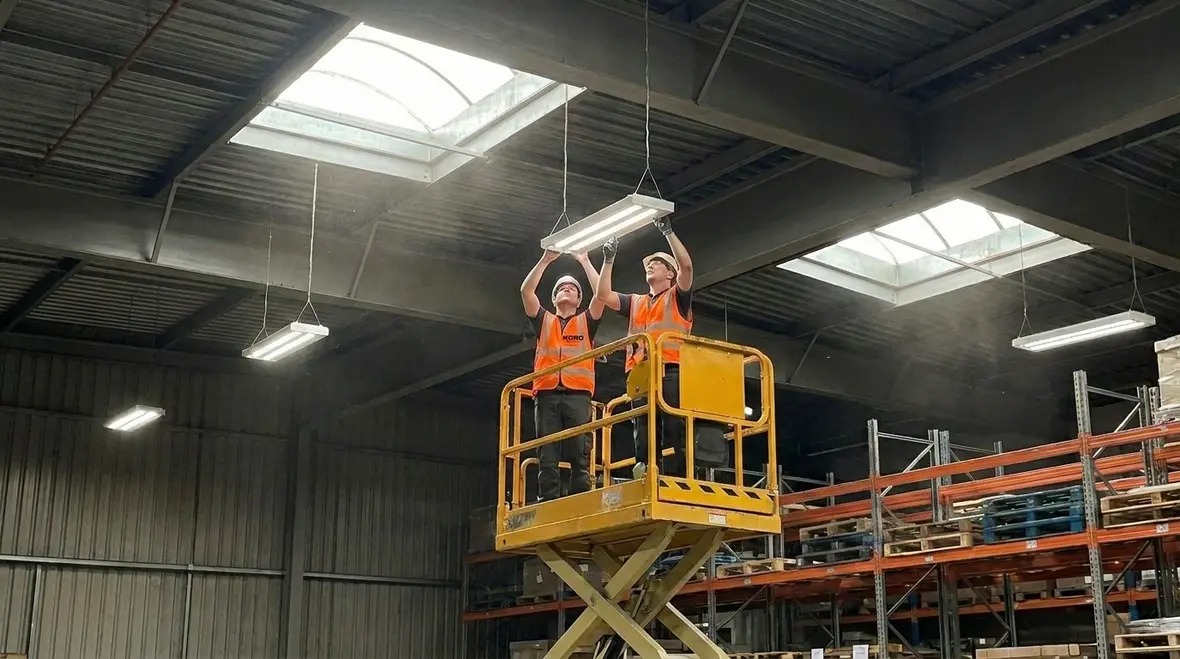
First, we collect real data instead of relying on outdated drawings or “it looks dim over there.” Because warehouses can vary wildly by bay layout, ceiling height, door locations, mezzanines, skylight presence, and even stored inventory, one uniform approach rarely works. So we assess lighting conditions at key work zones, aisle ends, loading docks, and high motion areas where drivers and lift operators need stable visibility.
Next, we evaluate existing equipment and controls. We look for lamp types, ballast condition, fixture age, reflectance of walls, and how the building currently handles switching and daylight. Then we map lighting levels to tasks and safety needs. After that, we model upgrades so we can forecast results, including energy savings and light distribution, before anyone approves the spend.
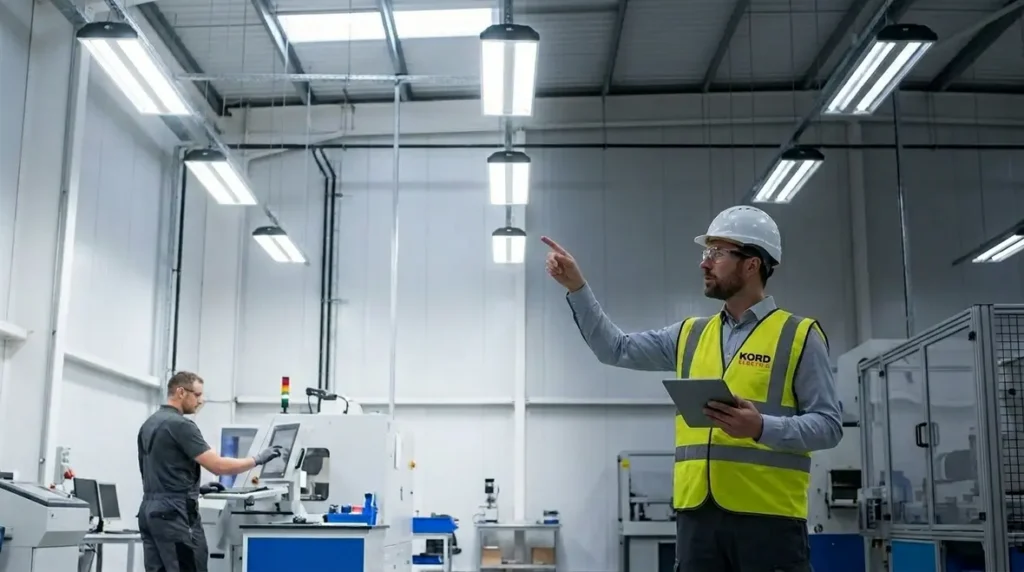
Our technicians explain the findings in a calm, straightforward way. For example, if we see uneven illumination due to fixture spacing, we do not just say “replace everything.” We show how optics and mounting height affect glare and shadows, and we recommend targeted changes that keep downtime low. That way, we reduce trial and error, and we prevent the classic retrofit mistake of turning the warehouse into a bright room with the same operating inefficiency. Nobody wants to light up the ceiling just to feel productive.
Right sizing for controls, dimming, and daylight response

Then we tune how the lights behave, not just how bright they are. In large facilities, the biggest waste often comes from running full output when full output is unnecessary. Therefore, we focus on occupancy and scheduling controls, plus dimming strategies where they make sense.
We review control zones so the system matches real movement patterns. For instance, forklifts and foot traffic travel differently than conveyor lines, and dock doors open unpredictably. So we recommend zoning logic that turns areas on when needed, maintains safe levels, and steps down when the space sits idle. If your warehouse has skylights or large clerestory windows, we also plan for daylight response. That approach reduces energy use without sacrificing visibility when natural light is strong.
Importantly, our expert service staff explains the control sequence clearly. We tell building managers what triggers each zone, how fast lights ramp up, and what happens during partial occupancy. We also help owners avoid control setups that frustrate operators. Because a lighting system that feels “smart” on paper can still annoy a team that just wants it to work, every day, without a meeting.
How we plan a retrofit that keeps your operations running
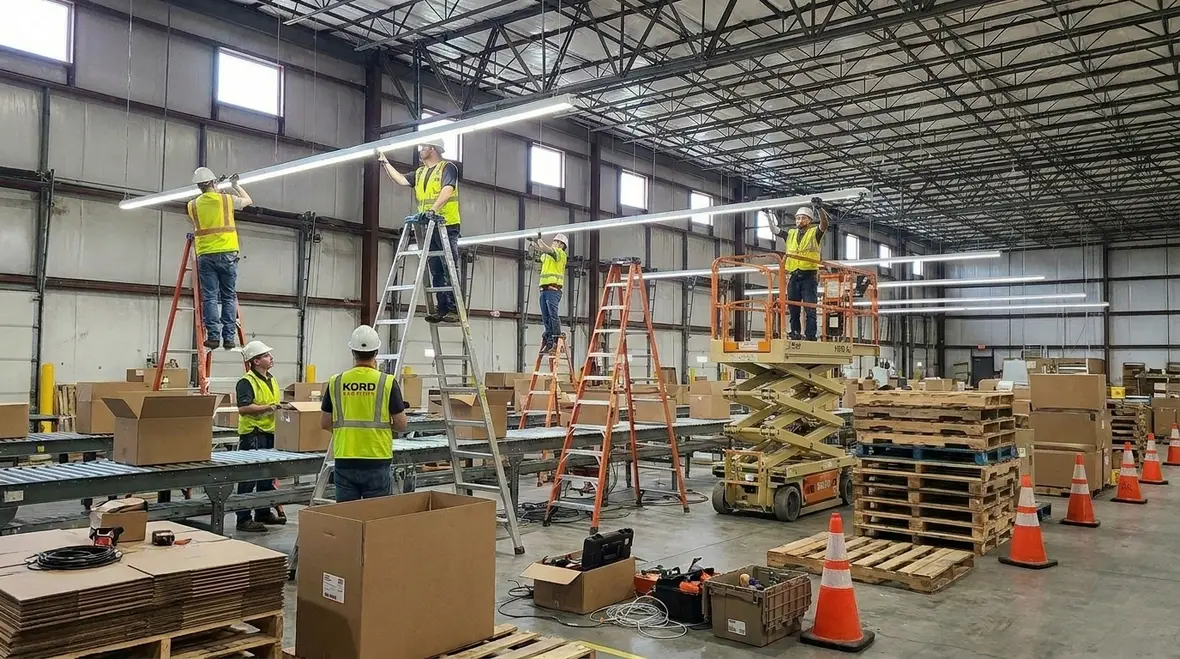
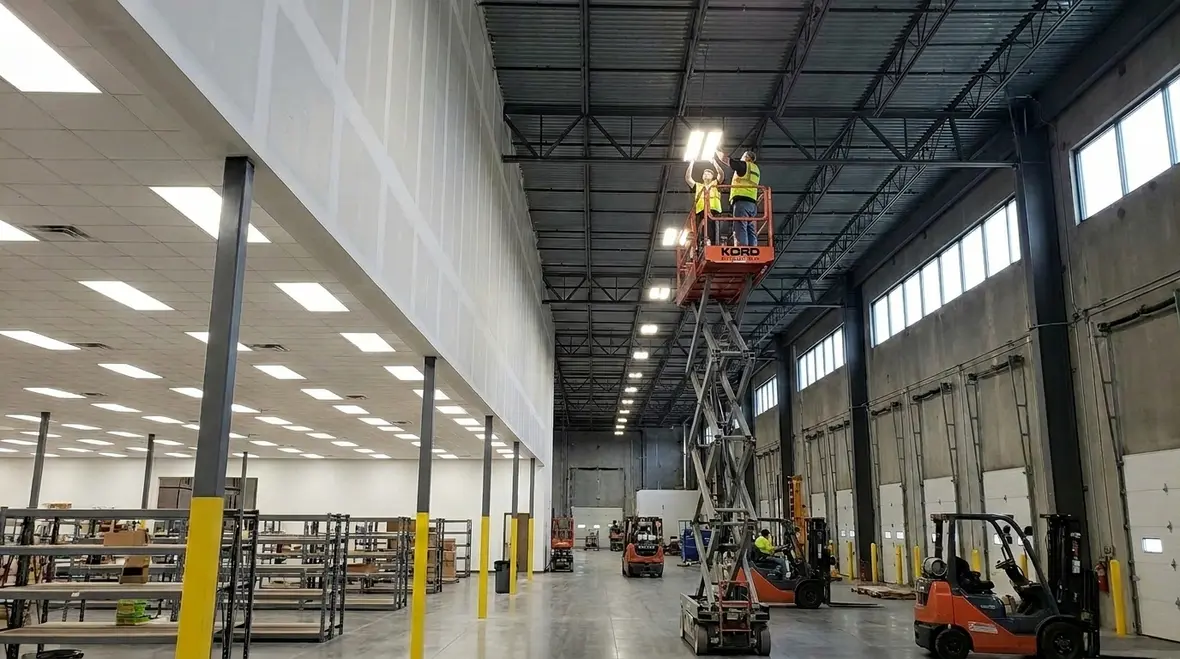
Once the design is set, the next challenge is time. Warehouses run on schedules, not on optimism. So we build a retrofit plan around safety, access, and production windows. We coordinate staging areas, lift routes, and material delivery so work teams do not block critical paths.
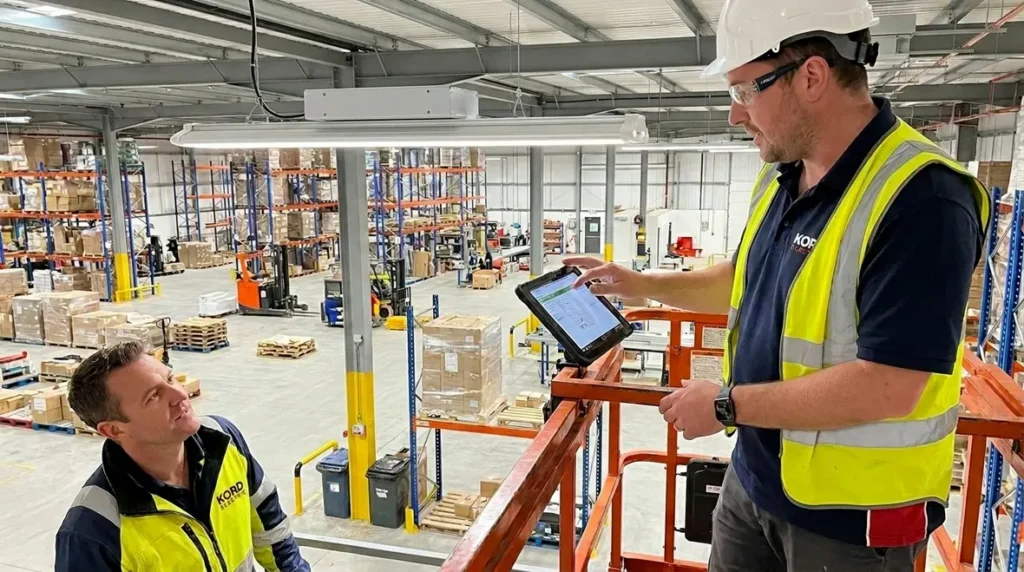
We also plan for ladder and lift safety, lockout needs, and how we handle wiring changes. In many industrial buildings, we must work with existing circuits and panel layouts. Therefore, we verify load capacity and consider how new LED drivers and control components will fit the electrical system.
Then we sequence installation so we can keep lights on where required. In practice, this often means working in sections and testing as we go. When we test, we confirm light levels at the target grid points, check uniformity, and verify control function before we move to the next zone. That reduces rework and keeps the project from drifting into “we will figure it out later” territory. And later is where budgets go to hide.
Code compliance and safe electrical execution for major facilities
Large commercial and industrial properties must meet strict installation standards, and we take that seriously. In our process, we follow code related guidance for lighting installation and compliance, as outlined in our Lighting Installation Code Compliance Guide. Because compliance is not just paperwork, it affects safety, inspections, and long term reliability.
We verify proper wiring methods, fixture mounting requirements, circuit protection, and grounding practices. We also confirm labeling and documentation needs so the electrical scope can pass inspection without surprises. Additionally, we pay attention to system components that impact performance, including drivers, controls, and sensor placement requirements that affect both safety and operation.
Our technicians do not just install and disappear. They walk through the safety checks and testing steps that support code compliance. If a facility has a unique requirement, such as strict maintenance access rules or specific control behaviors, our expert service staff helps align the retrofit plan with those needs. In other words, we build the upgrade so it holds up in the real world, not just under ideal conditions.
Measure performance before you celebrate the savings
After installation, we measure performance so the upgrade delivers what the design promised. Lighting quality is not just foot candles or lumens. We look at uniformity, glare control, and how the light supports the actual tasks in each zone.
Then we confirm that controls operate as intended. We verify occupancy behavior, ensure dimming targets match the design, and confirm daylight response where applicable. If a warehouse uses scheduled lighting for security or shift changes, we validate those schedules too. When systems include sensors, we check placement and coverage so they respond to real movement and not to random airflow or temporary positioning.
Finally, we review energy performance expectations. We compare baseline usage patterns to the modeled retrofit plan, and we help teams understand how savings show up in utility bills. And yes, we know budgets want numbers that stay consistent. So we support owners with documentation and clear explanations of the results they can track.
Common retrofit mistakes in warehouses, and how we avoid them
In large warehouse lighting upgrades, teams often stumble in predictable ways. First, they replace fixtures but keep outdated switching and control logic. As a result, lights still run when they should not. Second, they install without verifying spacing and reflectance impacts, which leads to dark pockets and glare hot spots. Third, they ignore the effect of mounting height changes during retrofit work, even when fixtures look similar on spec sheets.
Another mistake is rushing the commissioning process. If the controls do not behave correctly during the first weeks of operation, operators tend to override settings, and then the system slowly becomes “set it and forget it,” which is not the same as “efficient.” Therefore, we commission thoroughly and validate performance during real operating conditions when possible.
Our expert service staff also helps teams plan maintenance. When access paths are known, lamp and driver replacements become simpler. Also, we help define how the facility will handle sensor cleaning and control checks over time. That keeps the lighting system from drifting out of spec, like a schedule that no longer matches the shifts.
And since we are on the topic, yes, we have seen projects where a warehouse ends up brighter than a daytime set, while the energy savings stay in the budget’s imagination. We do better than that.
Conclusion: Let Kord Electric tune your retrofit for results
If you want a lighting retrofit that performs in the real world, we are ready. We help commercial and industrial facility owners maximize performance, reduce energy waste, and keep operations moving through a measured, code compliant process. Our technicians and expert service staff explain every step, test what we install, and document outcomes you can trust. Reach out to Kord Electric for a site assessment and retrofit plan built around your warehouse layout, your schedule, and your compliance needs. Let’s turn those fixtures from “installed” into truly efficient.
For facilities that want to connect warehouse lighting efficiency optimization with broader system resilience, our dedicated Lighting Installation Services help tie design, code compliance, and long term performance together across large commercial and industrial sites.
If you are planning a broader upgrade path or bundling lighting with ongoing inspections, you can also align your retrofit with structured programs like Electrical Preventive Maintenance to keep panels, protection devices, and lighting controls tuned long after the initial project wraps.