
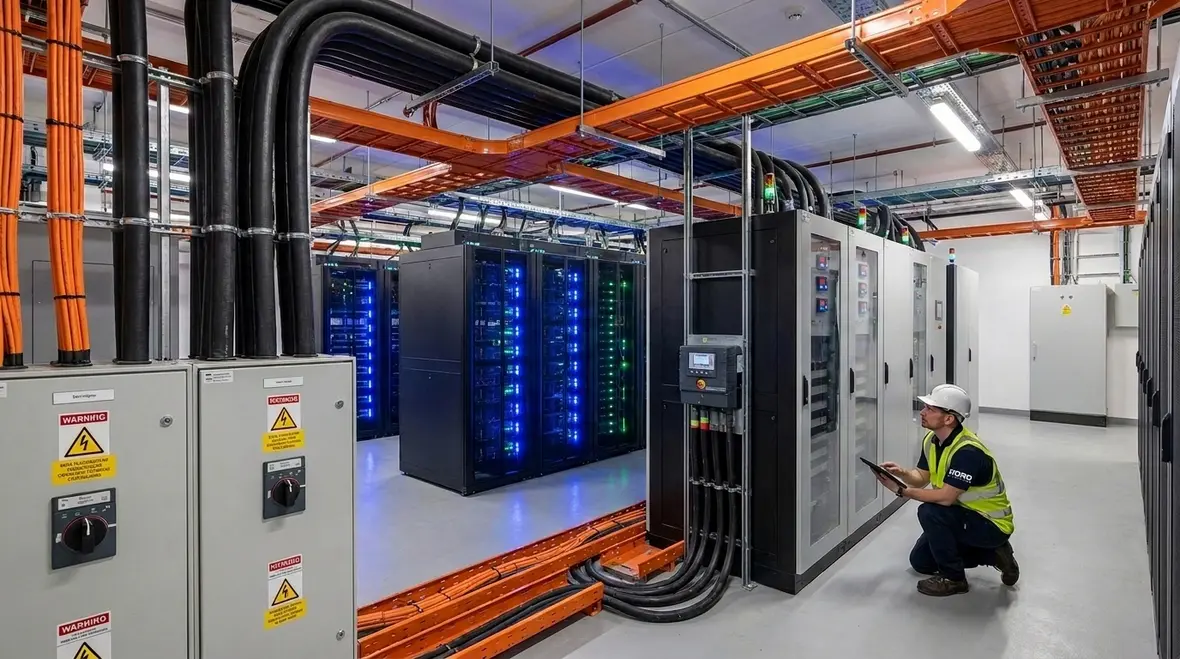
Data Centre Electrical Infrastructure Power Distribution Reliability
Power Distribution is the heartbeat of any modern facility, and in our Data Centre Electrical Infrastructure: Power Distribution & Reliability work, we see it every day. In the first moments of a data centre design, others focus on racks, cabling, and air flow. We focus on what keeps the lights on when the unexpected shows up. That is because power does not care about deadlines, trends, or memes. It cares about planning, protection, and clean routing from utility to load. At Kord Electric, we guide commercial and industrial facilities and major property buildings with expert-led electrical infrastructure planning, installation, and ongoing support. And yes, our team explains things in plain language, because “trust me” should never be part of a single line diagram.
Overview of data centre electrical infrastructure that supports uptime
In a data centre, the electrical system must keep servers running through fast changes, slow aging, and rare emergencies. Therefore, we treat the electrical design as a chain of reliability, where every link must be sized, protected, and coordinated. The goal is simple to say and hard to execute. We design for stability under normal operation, and we also design for controlled behavior during faults. If a breaker trips, it should trip with purpose, not confusion.
Next, we look at how power moves through the building. Typically, utility power enters the site, then transfers into main distribution, then continues into busbars or switchboards, and finally reaches UPS systems, PDUs, and critical loads. Each step must balance safety, redundancy, and maintainability. Meanwhile, the physical layout matters too, because heat, moisture control, cable routes, and access all influence long term performance.
Also, we remind our clients that uptime is not a slogan. It is math, coordination settings, and disciplined commissioning. When others rush these steps, systems can appear fine on paper and fail under real load. Our technicians and expert service staff help clients understand that difference, so the result lasts beyond the first test day.
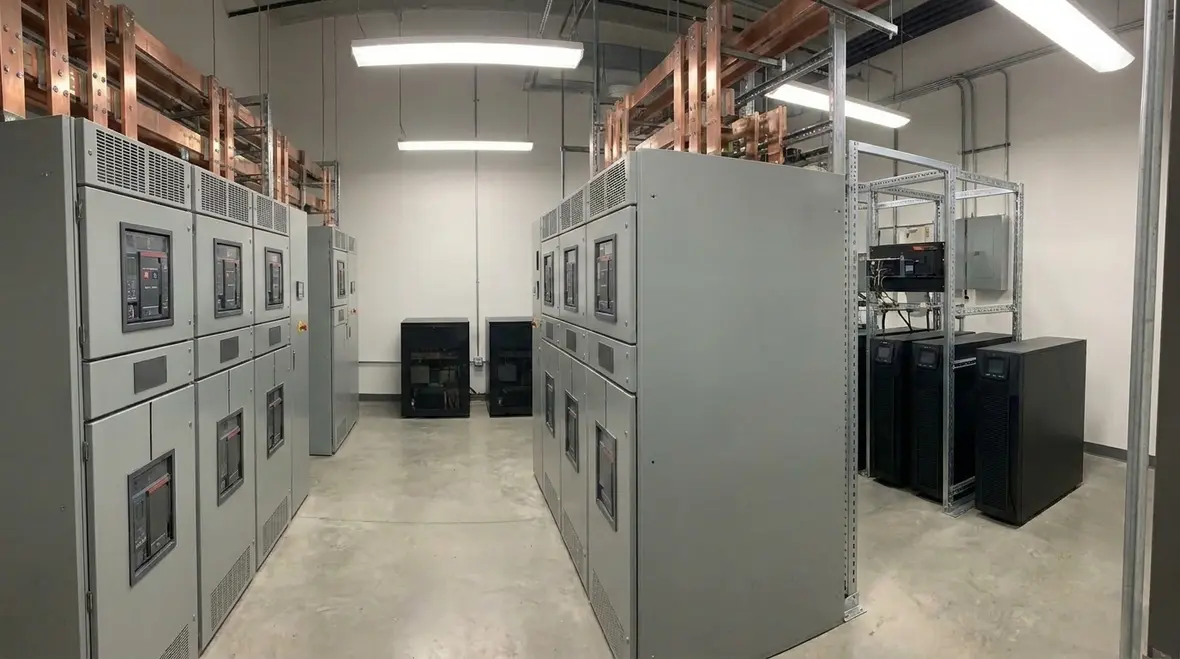
If you want an even broader foundation on how upstream design decisions shape uptime, you can pair this discussion with our Data Center Electrical Infrastructure Essentials guide, which explores how distribution, redundancy, and layout work together across modern facilities.
Design approach for power distribution reliability
When we design Data Centre Electrical Infrastructure: Power Distribution & Reliability, we start with architecture, then move into protection, then validate with commissioning. In other words, we do not guess. We model the load profiles, we plan redundancy paths, and we build the switching logic around real operating needs. That is how we avoid “mystery outages” that show up later like an unwanted plot twist.
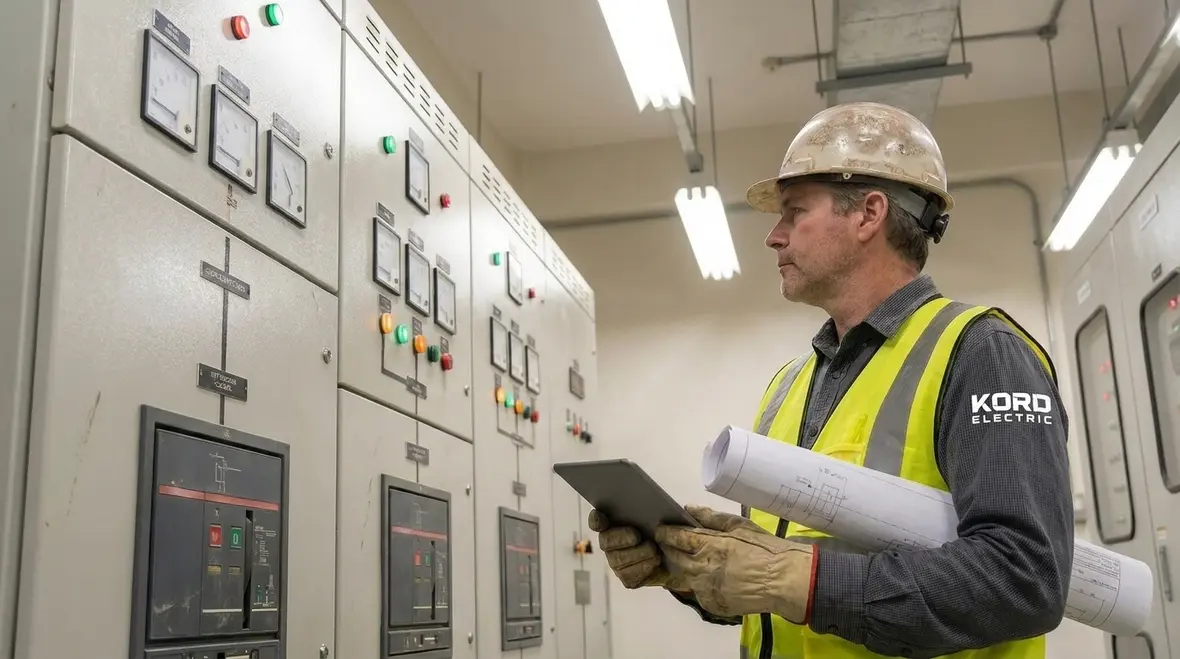
We commonly support designs that use separate distribution paths for critical and non critical systems. This reduces the chance that one event knocks out everything. However, redundancy only works when it is designed, tested, and maintained as a system. So, we also align distribution equipment ratings, fault levels, and insulation coordination. If these numbers do not match the electrical reality, reliability drops.
Additionally, we plan for future growth, because data centres rarely stay the same. New loads add heat, current, and distribution demand. Therefore, our technicians consider spare capacity, upgrade paths, and cable allowances. We explain these options clearly to clients, so others do not treat future expansion like a surprise billing event.
For facility leaders comparing design options across multiple properties, pairing this reliability mindset with broader regional service coverage, such as our Los Angeles County commercial and industrial electrical services, helps keep standards consistent across entire portfolios.
How we manage voltage levels, bus systems, and load segregation
Voltage planning sets the tone for efficiency and safety. We help clients map where each voltage level belongs, and how it connects to UPS output, generator systems, and distribution boards. Proper segregation also matters. By separating loads into logical groups, we reduce the impact of faults and simplify maintenance.
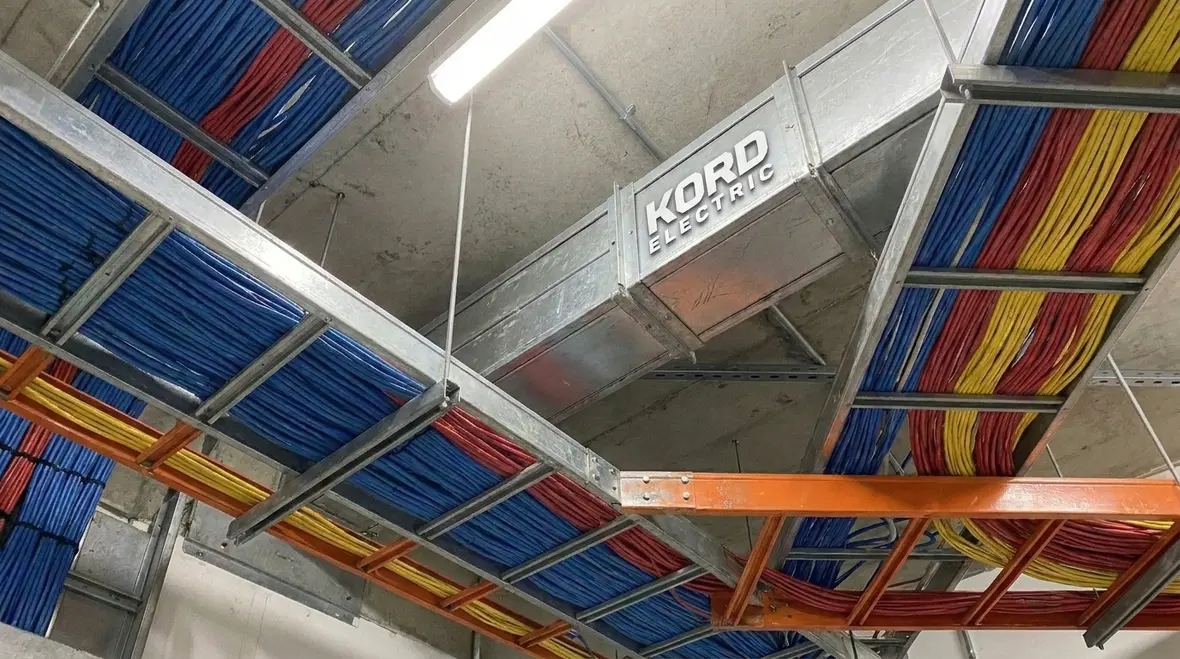
For example, we often support schemes where critical loads receive power through dedicated paths and non critical systems route through separate protection. That way, a maintenance task in one area does not force a shutdown in another. Meanwhile, busbar systems and switchboards can improve performance when designed correctly. They can reduce losses and offer robust distribution, but only if bus ratings, spacing, and thermal paths match the expected current.
In practice, we also check how devices coordinate at each stage. That means protection curves and selectivity settings work together. Otherwise, the wrong upstream device may trip, and the site loses more than it should. Our expert service staff walks clients through these coordination choices, using straightforward examples instead of engineering riddles.
UPS, generators, and transfer schemes for fast, calm switching
When utility power dips, the data centre needs immediate ride through. That is where UPS and generator systems play their roles. We help clients design a transfer strategy that maintains power continuity while staying safe for equipment and personnel.
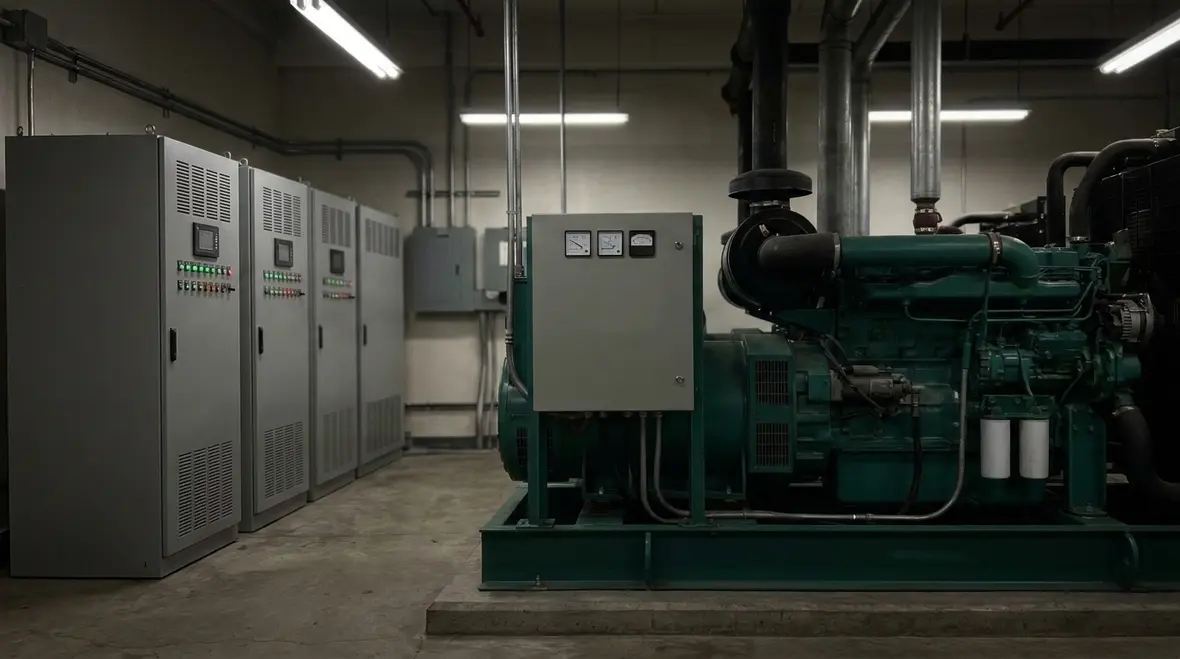
UPS systems typically cover the gap while generators start. Yet the exact timing, switching method, and synchronization strategy depend on the chosen setup. Therefore, we confirm how the UPS output feeds downstream distribution and how maintenance bypass systems isolate loads without shutting down critical areas. If you have ever watched a movie where the hero trips right before the big moment, you understand the problem. In electrical terms, that is what “bad switching” feels like.
Similarly, generator systems need proper start logic, fuel readiness, and load acceptance planning. We coordinate these elements with the rest of the Data Centre Electrical Infrastructure: Power Distribution & Reliability plan so that the system does not overload during the transition. We also advise on monitoring and alarms, because the best time to act is before the alarm becomes an incident report.
Throughout this phase, our technicians keep communication clear. We explain why certain interlocks exist, what maintenance modes do, and how testing should run. Clients then know what to expect during commissioning and operational changeovers.
Protection, selectivity, and fault management that others overlook
Protection is not just about safety. It is about keeping the rest of the system alive when one component fails. So, we focus on selectivity, coordination, and arc fault considerations where relevant. That means we design so the device closest to the fault clears it, while upstream devices stay available.
We also plan fault levels and verify breaker and switchgear ratings. If a device faces higher fault current than it can safely interrupt, reliability suffers and repair becomes a bigger ordeal. Therefore, we validate these calculations and align equipment specifications across the distribution chain.
In addition, we think about cable protection, earthing and bonding, and insulation discipline. Some teams treat these as “standard details” and move on. Yet in data centres, standards support uptime because they prevent unwanted behavior that appears only after months of operation.
Our expert service staff often shows clients how a fault protection plan reduces downtime. We do it with a simple story: if a cable fault occurs in one zone, the correct selectivity prevents a whole room outage. That is the difference between planned control and reactive chaos.
Monitoring, metering, and maintenance that keep reliability real
A data centre electrical system must be visible to the team operating it. For that reason, we recommend monitoring and metering strategies that track performance across key elements. This includes understanding loading trends, identifying abnormal temperature rises, and watching for alarm patterns that predict failure.
When we support Data Centre Electrical Infrastructure: Power Distribution & Reliability projects, we also plan maintenance without disruption. That means clear isolation procedures, test plans, and replacement strategies for parts that wear over time. We also help clients create operational readiness for commissioning and periodic checks.
Additionally, we stress the value of documentation. Others skip it, then struggle later when equipment labels do not match the current operating scheme. We ensure clients receive structured records that support safe operation. Our technicians guide the facility team on what to check, how to interpret alarms, and how to prepare for planned downtime windows.
And if you think maintenance is boring, we agree. But so is emergency calling at 3 a.m. Maintenance is the sequel you choose, not the one that chooses you. For facility teams building out their care programs, pairing this with resources like electrical maintenance checklists or efficiency guides makes the day‑to‑day work more predictable and less dramatic.
Dual column example: typical reliability components and what they protect
| Component | What it protects the facility from |
Main switchgear and distribution |
We manage fault interruption, safe isolation, and stable power routing across zones. |
UPS systems |
We ride through short utility disturbances and bridge the change to generator support. |
Generator systems and transfer logic |
We provide extended backup during longer outages with correct load acceptance behavior. |
Protection coordination |
We limit how far a fault spreads by using selectivity and coordination across devices. |
Monitoring and metering |
We detect early issues, reduce surprise trips, and support trend driven maintenance. |
FAQ
Conclusion and call to action
Data centre electrical infrastructure is not guesswork, and uptime is not luck. At Kord Electric, we help commercial and industrial facilities and major property buildings build Data Centre Electrical Infrastructure: Power Distribution & Reliability through solid design, clear documentation, expert installation, and commissioning support. If you want a calm, reliable power system that performs when it matters, contact us. Our technicians and expert service staff will explain your options, map the risks, and build a plan that stays steady long after the first power-on.
Whether you are planning a new build, modernizing an existing data hall, or aligning multiple properties under a single electrical standard, we help you connect strategy with field-proven details. From early power studies through long-term maintenance planning, our team supports the full lifecycle so your facility can focus on serving customers instead of chasing surprise outages.


