Demand Response Programs for Commercial Leaders
In the world of commercial and industrial facilities, power is not just a utility. It is the heartbeat of operations. At Kord Electric, they speak often about demand response and energy savings because those two ideas now shape how modern buildings survive peak pricing, grid stress, and rising operating costs. Their technicians and expert service staff walk facility managers through these programs with calm clarity, showing how strategic load control can protect budgets without slowing production. In fact, when done right, demand response becomes less about sacrifice and more about smart timing. And timing, as any seasoned plant manager knows, is everything.
So let us slow this down and unpack it properly. Because while the concept sounds technical, the impact is practical, measurable, and surprisingly empowering.
What Is Demand Response and Why Should Large Facilities Care?
At its core, demand response is a coordinated effort between utility providers and large energy users. When the grid faces peak demand, usually during extreme weather or heavy usage periods, utilities signal participating facilities to temporarily reduce or shift their electricity consumption. In return, those facilities receive financial incentives, lower peak demand charges, or other compensation.
Now, this is not about turning off the lights and hoping for the best. Instead, it is about precision. It is about adjusting non critical loads, staggering equipment cycles, or tapping into backup systems for short intervals. Consequently, facilities maintain operations while helping stabilize the grid.
Kord Electric works exclusively with commercial, industrial, and major property buildings. Therefore, their focus remains on high load environments such as manufacturing plants, distribution centers, hospitals, data centers, and multi building campuses. These facilities often face steep demand charges. However, through well designed demand response strategies, they can reduce peak usage at critical moments and unlock meaningful cost reductions.
And let us be honest. If the grid calls and you can answer without disrupting production, you might as well get paid for it. That is not just smart. That is strategic.
How Demand Response Programs Work Inside Commercial Buildings
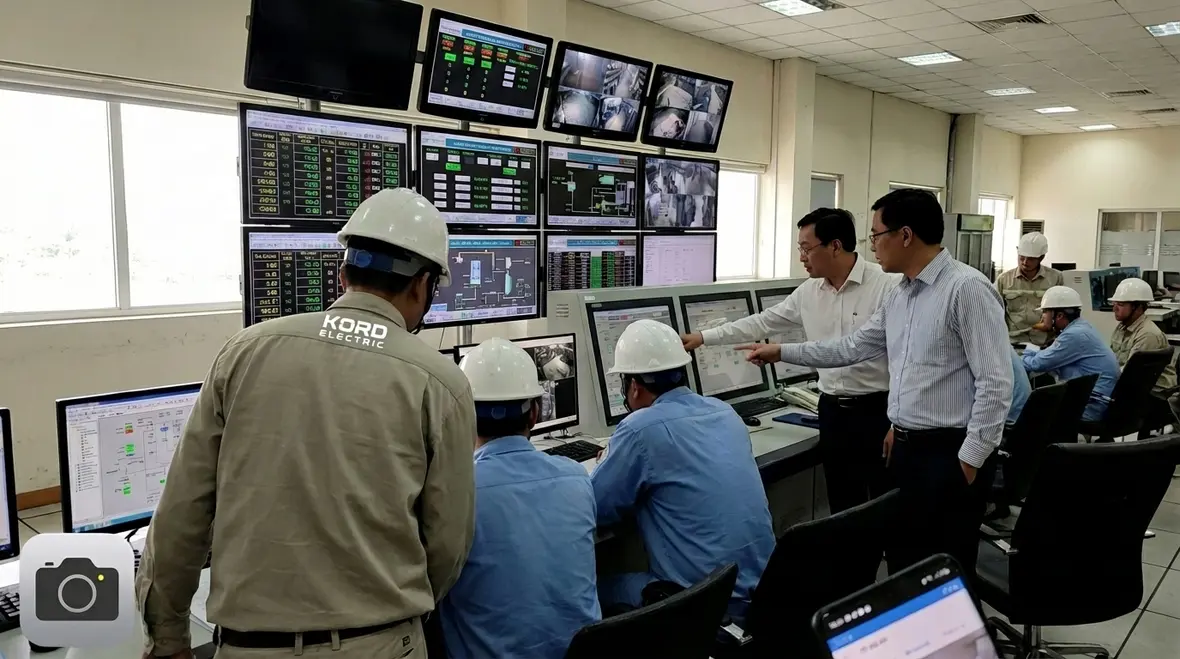
Although the concept sounds broad, the mechanics are straightforward. Utilities monitor grid conditions in real time. When demand approaches critical thresholds, they issue event notifications to enrolled participants. These events can last from thirty minutes to several hours, depending on system stress.
Once notified, participating facilities reduce their load according to a pre arranged plan. This is where planning matters.
Kord Electric technicians help clients identify flexible loads ahead of time. For example:
- Adjusting HVAC setpoints by a few degrees in large commercial buildings
- Shifting non urgent production tasks to off peak hours
- Temporarily cycling certain motors or compressors
- Using onsite generation or battery systems to offset grid draw
- Managing lighting levels in non occupied zones
Because these strategies are mapped in advance, response becomes smooth rather than reactive. In addition, automated control systems can execute adjustments instantly once a signal is received. That means no scrambling. No guesswork. Just coordinated action.
Kord Electric expert service staff often compare it to conducting an orchestra. Every system plays its part. However, the conductor decides when certain sections soften so the entire performance stays balanced.
Pre-Planning vs. Last-Minute Scramble
Facilities that treat demand response as a last-minute scramble rarely see the full benefit. The real gains come from pre-planning: mapping which loads are flexible, which are non negotiable, and how long each system can be adjusted without consequence. With the right playbook, your building can respond in minutes while everyone on the floor keeps working.
Demand Response and Energy Savings Without Operational Disruption
The question many facility directors ask is simple. Will this interfere with production or tenant comfort?
The short answer is no, not when designed properly.
Kord Electric approaches each facility with a detailed load analysis. They study interval data, peak demand patterns, seasonal variations, and operational schedules. Therefore, instead of blanket reductions, they design targeted actions that minimize impact.
For example, in a distribution center with high lighting loads, small percentage reductions across wide square footage can produce significant kilowatt reductions. Meanwhile, in a manufacturing plant, staggered motor startups can flatten demand spikes without slowing throughput.
Because the focus remains on peak shaving rather than overall shutdown, facilities often see energy savings beyond event days. As a result, improved load management can lower monthly demand charges even outside formal demand response events.
There is also a cultural shift that occurs. Once leadership sees how flexible certain systems truly are, they begin to manage energy with greater intention. And intention, over time, leads to measurable cost control.
It is not dramatic. It is disciplined. Think less Hollywood blackout scene and more chess match with the utility grid.

Linking Demand Response to Broader Energy Strategy
Demand response works even better when it plugs into a larger energy strategy. Facilities that have already invested in efficient lighting and controls, such as those outlined in Kord Electric’s lighting installation services, can unlock deeper flexibility without sacrificing performance. Coordinated planning turns occasional demand response events into a year round energy savings and reliability tool.
To see how lighting upgrades support better load control, many leaders look at services like commercial and industrial lighting installation, which dramatically improve baseline efficiency while giving facility teams more precise control over where and when power is used.
Financial Incentives and Long Term Cost Control
Money talks. Especially in large facilities where electricity bills can rival payroll.
Demand response programs typically offer several forms of compensation:
- Capacity payments for being available during peak events
- Performance payments based on actual load reduction
- Reduced demand charges through peak shaving
- Potential rebates for enabling technologies and controls
However, participation requires verification. Utilities measure baseline consumption and compare it to actual performance during events. Therefore, accurate metering and control integration become essential.
Kord Electric ensures that monitoring systems are properly configured. Their technicians test response strategies before live events occur. Consequently, when the signal arrives, facilities respond with confidence.
Over time, consistent participation can produce predictable revenue streams. While no one is retiring on demand response payments alone, these incentives can offset capital improvements, support energy management upgrades, and enhance overall energy savings.
Moreover, when facilities combine demand response with efficiency measures such as LED retrofits, advanced controls, and power factor correction, the compounded effect strengthens financial resilience. In other words, the grid pays you to be flexible, and your building rewards you for being efficient. That is a partnership worth having.
Inside Kord Electric’s Evaluation Process for Large Properties
Before enrolling a facility in any program, Kord Electric conducts a structured evaluation. They do not rely on guesswork. Instead, they rely on data.
The process typically includes:
- Detailed load profiling and interval data review
- Identification of controllable and non controllable assets
- Assessment of building automation capabilities
- Review of backup generation or storage resources
- Financial modeling of projected incentives and cost reductions
Because commercial and industrial sites vary widely, no two strategies look identical. A hospital campus requires different safeguards than a cold storage warehouse. Likewise, a data center demands stricter uptime controls than a corporate office complex.
Kord Electric expert service staff take time to explain each step. They translate technical findings into clear operational language so leadership teams understand both the risks and the rewards. And yes, they sometimes throw in a light joke about how electricity behaves like a toddler. Ignore it for too long, and it will absolutely cost you.

From Assessment to Implementation
The evaluation is not just a paperwork exercise. It is the bridge between theory and execution. Once the analysis is complete, Kord Electric helps leadership prioritize measures, schedule test events, and integrate controls so that when the first real demand response signal arrives, the facility reacts with the calm precision of a team that has already rehearsed.
Dual Focus: Grid Stability and Facility Performance
Grid Benefits
- Reduces strain during peak demand periods
- Prevents blackouts and emergency load shedding
- Supports integration of renewable energy sources
- Improves overall system reliability
Facility Benefits
- Lowers peak demand charges
- Generates incentive revenue
- Enhances energy visibility
- Strengthens operational planning
Although these two sets of benefits serve different interests, they align more than most realize. When large facilities participate in demand response, they act as responsible grid citizens. At the same time, they sharpen their own cost control strategies.
Furthermore, as renewable energy grows, grid variability increases. Solar output dips at sunset. Wind generation shifts unexpectedly. Therefore, flexible load from commercial and industrial buildings becomes a stabilizing force.
Kord Electric helps facilities step into that role with structure rather than improvisation. Because while hero moments are great in movies, real world energy management prefers preparation.
Integration With Automation and Smart Controls
Modern demand response depends heavily on automation. Manual shutdowns might work once. However, consistency requires integration.
Kord Electric evaluates existing building management systems and industrial control panels. When needed, they upgrade or reprogram controls to allow automated load adjustments. As a result, response time improves and human error decreases.
For example, pre programmed sequences can:
- Raise chilled water setpoints incrementally
- Cycle rooftop units in defined intervals
- Delay non essential process equipment startups
- Dispatch stored energy during peak windows
Because these actions occur within defined parameters, comfort and production remain protected. Additionally, facility managers retain override authority if conditions require it.
This balance between automation and oversight creates confidence. And confidence encourages long term participation in demand response programs.
Common Misconceptions About Demand Response Programs
Despite its benefits, some myths persist.
First, many believe participation means frequent interruptions. In reality, event frequency depends on regional grid conditions. Some areas experience only a handful of events each year.
Second, there is concern about lost productivity. However, when Kord Electric designs the plan, they avoid critical processes. Therefore, essential operations continue uninterrupted.
Third, some assume the paperwork outweighs the payoff. While enrollment does require documentation, expert service staff handle much of the coordination with utilities and program administrators. Consequently, internal teams stay focused on operations.
Finally, there is the fear of complexity. Yet once systems are configured, participation becomes routine. It is less like defusing a bomb and more like setting a thermostat schedule. Although the stakes feel high, the execution is calm and controlled.
Frequently Asked Questions
Connecting Demand Response to Broader Electrical Reliability
Demand response works best in facilities where the underlying electrical systems are stable and well maintained. If your site struggles with voltage fluctuations, overloaded panels, or recurring electrical issues, those should be addressed first so that load adjustments during events do not worsen existing problems.
Many commercial leaders pair demand response planning with services like voltage fluctuation diagnostics and repair and electrical preventive maintenance programs. This combination tightens system reliability, reduces unexpected downtime, and ensures that when you do respond to grid events, your equipment and infrastructure are ready.
Conclusion: Turning Energy Strategy Into Action
For commercial and industrial leaders, energy strategy can no longer sit quietly in the background. Demand response offers a structured path toward measurable energy savings, grid partnership, and long term cost control. Kord Electric guides facilities through every step with steady expertise and clear communication. Their technicians design plans that protect operations while unlocking financial value.
Now is the time to turn flexibility into strength. By combining demand response with disciplined electrical maintenance, modern lighting systems, and thoughtful automation, commercial leaders can turn what once felt like a utility cost burden into a strategic advantage.
If you are looking to take the next step, explore Kord Electric’s electrical preventive maintenance services to build a stronger foundation for demand response, reliability, and long term performance across your portfolio.