Electrical Panel Thermal Imaging for Commercial Systems
Kord Electric uses electrical panel thermal imaging to spotlight issues inside commercial and industrial electrical systems before they escalate. When our technicians scan a panel, they can often see heat patterns that the eye cannot. And yes, the panel is usually not “blushing” for no reason. That warmth can point to loose connections, failing breakers, overloaded circuits, or hotspots that silently grow into outages. In this guide, our team explains how we find these hidden hazards, what we look for, how we document findings, and how we help facility owners act early, safely, and with confidence.
What hidden hazards show up in commercial panels?
In commercial and industrial facilities, electrical panels rarely fail in a neat, predictable way. Instead, problems build over time, and then the system “decides” to act up during peak demand, usually when everyone is watching. That is why our experienced service staff treats electrical panel scans like a routine inspection, not a last resort.
During electrical panel thermal imaging inspections, our technicians commonly detect several risk sources. First, they locate abnormal warmth near bus bars, lugs, and terminations. Next, they observe heat differences between phases that should be balanced. After that, they check for signs of overloading and recurring current imbalance. Finally, they look at the surrounding equipment because a panel does not live alone. It shares the electrical neighborhood with feeders, breakers, and upstream transformers.
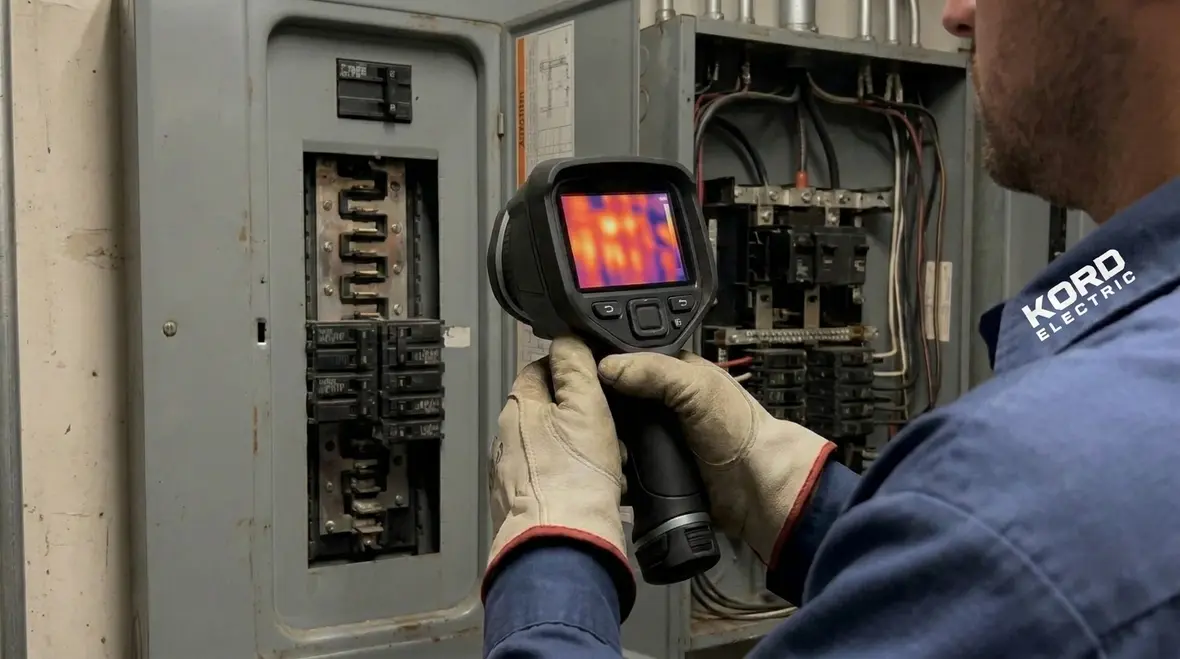
For example, a loose lug can create resistance, and resistance turns energy into heat. Meanwhile, a failing breaker or worn contact surfaces may generate localized hot spots. Even when a system still “works,” a thermal pattern can reveal that parts are aging faster than they should. So, we do not just hunt for emergencies. We hunt for causes.
How thermal imaging works on live electrical gear
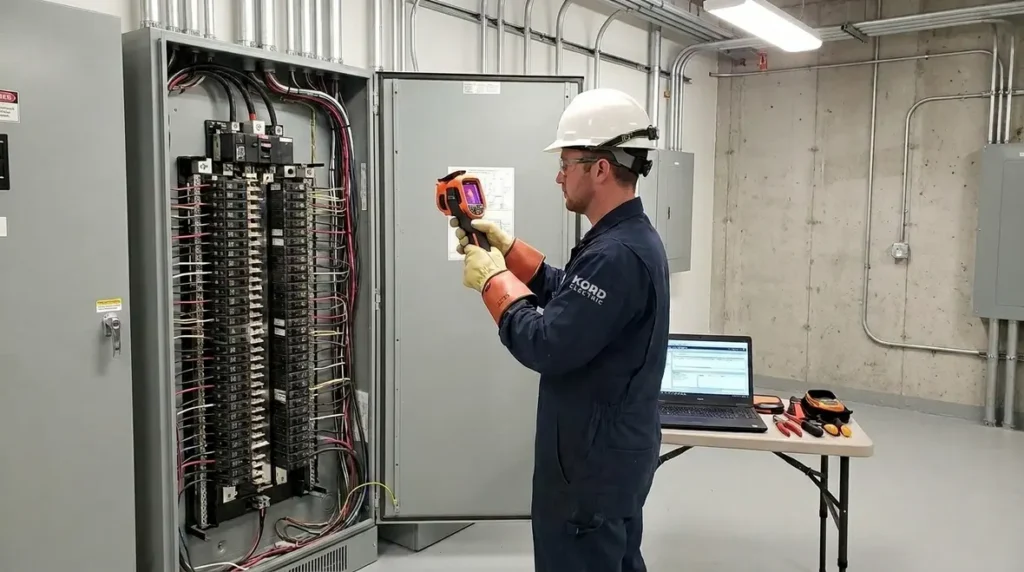
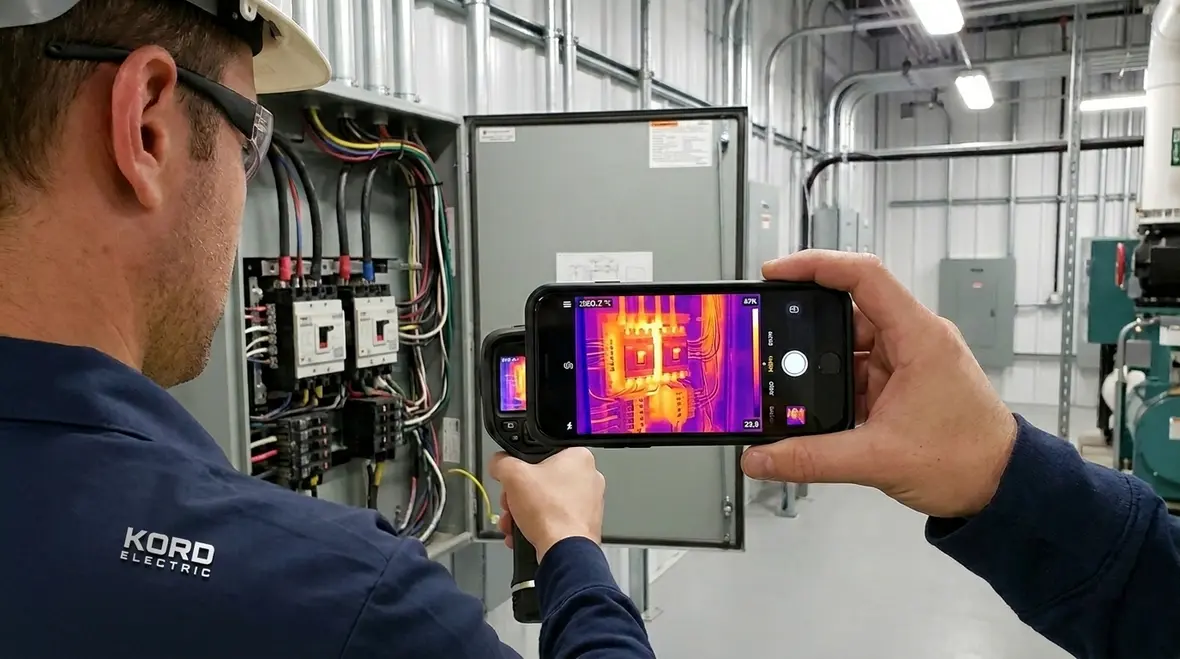
Thermal imaging measures surface temperature and converts that data into a visual map. In practice, our technicians place the camera at a safe distance, aim at key components, and capture images while the equipment operates under normal load or controlled conditions. Then we compare hotspots to expected behavior and to other similar points.
And here is the calm, practical part: we do not treat every warm spot as a crisis. A panel can run warm because loads are real. However, what matters is where the heat concentrates and how it differs from the rest. Additionally, we record ambient conditions and note the panel’s operating status so we can interpret the images with context.

Our electrical experts explain what the camera sees in plain terms. We also set expectations early. Thermal images do not “diagnose like a doctor with X ray vision.” Instead, they help us prioritize where to inspect further using safe, proper verification steps. That is how we keep findings accurate and useful for the people who run the building.
Where hotspots usually form inside a distribution panel
Hotspots typically appear at the places that experience the most stress: connections, contact surfaces, and joints. To make our inspections consistent, our team focuses on the same high risk zones every time.
- Breaker connections and terminals: If heat concentrates around breaker housings or terminal points, it often signals contact resistance or mechanical wear.
- Bus bar joints and phase connections: Uneven warmth across phases can indicate imbalance or a connection problem that only shows under load.
- Feeder lug areas: Lugs and terminations can loosen slightly over years due to vibration and thermal cycling, and that can create localized heating.
- Neutral and ground points: Neutral issues sometimes hide in plain sight until they create measurable temperature differences.
- Overloaded branch circuits: When a circuit carries more current than expected, the heat pattern can climb steadily across time.
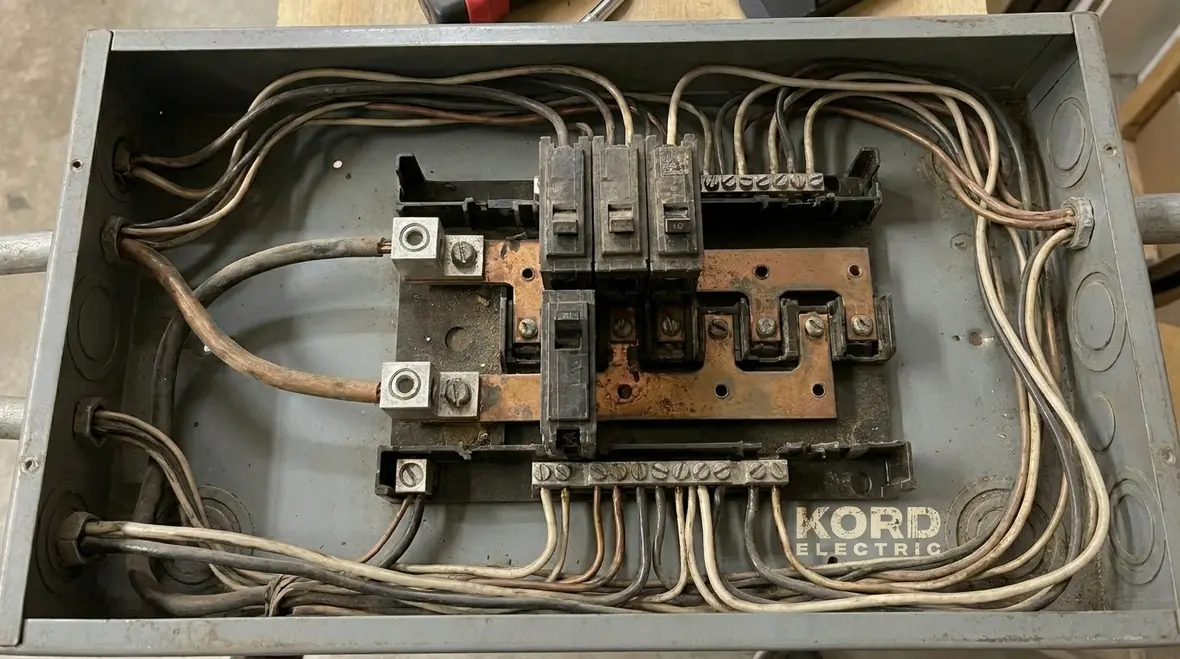
Meanwhile, we also look for “patterns,” not just individual pixels. For instance, a hotspot that repeats in the same location across multiple scans may indicate a connection that needs attention. Conversely, a single odd reading may reflect a short term load event or a camera angle factor. So, we compare findings across components and across time, then we recommend action that matches the risk.
What we document after each thermal imaging visit
After our technicians complete the scan, we do not hand over a pretty picture and disappear into the night like a superhero with better marketing. We build a clear record that helps decision makers move quickly. Our process typically includes the following elements.
- Annotated thermal images: We label hotspots on the equipment so that maintenance teams can find the exact locations.
- Temperature data with context: We include readings and operating notes so the data makes sense, not just looks impressive.
- Risk ranking: We sort findings by severity and likely cause so the facility owner can plan without guessing.
- Recommended next steps: We outline verification and corrective actions, such as torque checks, contact inspection, replacement, or load balancing.
- Maintenance guidance: We suggest timing for follow up scans based on risk level and building criticality.
At this stage, our expert service staff explains the “why” behind the recommendation. We translate electrical clues into plain language, because the people managing the facility do not need a lecture. They need a path forward that reduces downtime risk and improves safety. And yes, we keep it business casual, even when the data is serious.
How we decide between repair, monitoring, or replacement
Not every warm area requires immediate replacement. We aim for smart decisions that protect reliability without wasting budget. Therefore, we evaluate each finding using multiple signals, not one temperature number.
First, we assess how intense and how concentrated the heat appears. Next, we compare it to similar components, such as other breakers or parallel feeders. Then we consider the panel’s duty cycle, known history, and whether the equipment serves critical loads. After that, our technicians plan a verification step, which may include inspection during safe shutdown, torque verification, or component checks per applicable standards.
Because we work with commercial and industrial facilities, we also account for operational constraints. We schedule work around production needs, life safety requirements, and downtime tolerance. If a corrective action can wait safely, we recommend monitoring and follow up scanning. If it cannot, we recommend repair or replacement and we provide a clear justification.
In short, we help owners avoid the “replace everything” mindset. Like a movie that tries to end too many plots at once, that approach burns money. Instead, we focus on the component that shows abnormal thermal behavior and supports the most credible root cause.
How electrical panel thermal imaging improves safety and uptime
For facilities, the cost of an electrical failure is rarely just the part that breaks. It can include lost production, delayed operations, refrigeration or process interruptions, safety hazards, and emergency response expenses. With electrical panel thermal imaging, Kord Electric helps reduce that risk by identifying problems while they are still manageable.
Our approach supports safety in two ways. First, it helps detect connection resistance and failing components before they create severe overheating. Second, it helps our teams target maintenance so they can reduce the chance of unexpected failure. Then, for uptime, we help facilities plan corrective action. When repairs align with scheduled maintenance windows, the building stays productive.
Additionally, we help maintenance leaders justify budgets. Thermal imaging gives visible evidence that a condition exists, and our documentation connects that evidence to recommended actions. In many cases, this turns a vague concern into a practical work plan. People can sign off with clarity, not hope.
For facilities that want to dig deeper into the broader risk picture, this approach pairs naturally with structured maintenance insights like those in Kord Electric’s article on hidden electrical risks in commercial buildings and long term strategy pieces such as their guide to rewiring cost for commercial electrical systems. Together, these practices support safer operation, better planning, and a calmer facilities calendar.
FAQ
Final call from Kord Electric
If your facility relies on electrical systems to run the day, don’t wait for the “surprise outage” plot twist. Kord Electric can schedule electrical panel thermal imaging for your commercial or industrial panels, document hotspots clearly, and help your team act before heat turns into damage. Our technicians and expert service staff will walk you through what we see and what to do next. Contact us today to plan a scan that fits your operating schedule, protects your equipment, and keeps production steady.
For many organizations, the smartest move is to integrate thermal scans into a structured program like Kord Electric’s electrical preventive maintenance services. This kind of ongoing maintenance strategy keeps panels, switchgear, emergency systems, and distribution equipment on a regular health check so small problems are handled before they grow into downtime events.