Electrical Service Panel Capacity Evaluation Guide
Kord Electric starts with a simple idea: commercial upgrades don’t fail because someone wanted more power. They fail because the building tried to drink from a firehose while the electrical panel was sipping through a straw. In our electrical service panel capacity evaluation, we review the panel, the load history, and the future plan so owners get clear next steps, not mystery bills or shutdown surprises. And yes, we explain things in plain language. Our technicians and expert service staff talk like they’re standing next to you, not like they’re reading a textbook upside down. If a property needs an upgrade, we tell you early, because waiting usually costs more.
Recognize when an upgrade is really needed
In a commercial or industrial setting, electrical issues often show up in “small” ways first. A little voltage drop here. Circuit breakers that seem tired there. Unexpected tripping during normal operations. These symptoms rarely appear out of nowhere, and they usually point to a mismatch between installed capacity and real demand.
Also, owners sometimes notice the obvious signs last. For example, equipment gets added, production ramps up, or tenants change layouts. Then the panel starts acting like it is holding its breath. We help others avoid that situation by treating the electrical panel as a system, not a box of breakers. Therefore, we look at how much load is already present, how stable it is, and what new loads will land on the same feeders.
In plain terms, the goal is to confirm the panel can handle planned growth without running hot, tripping, or forcing constant patchwork. If that sounds dramatic, consider this: in commercial and industrial facilities, “temporary” fixes often become permanent, and that is how you end up with a panel that resembles a crowded lunch line during a sales event.
Map the building loads before you touch anything
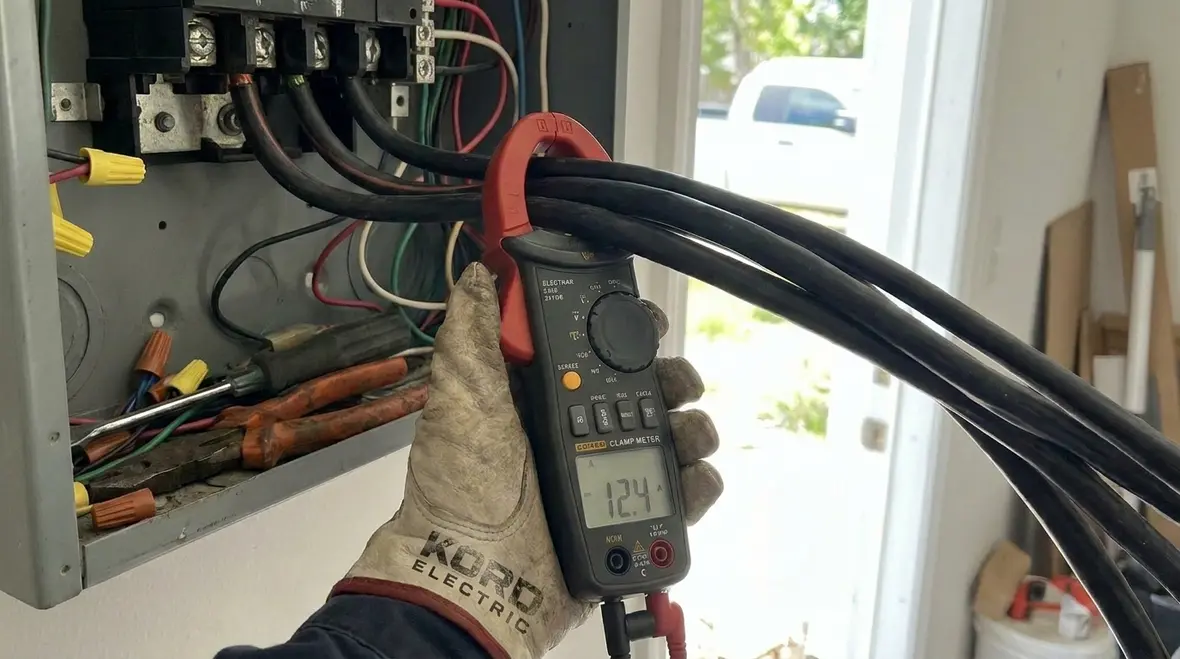
Once we know the symptoms and the schedule, we build a load picture that matches how the facility actually runs. First, our technicians gather details about existing equipment and usage patterns. Then they connect those details to the panel’s capacity so the electrical service panel capacity evaluation rests on real numbers, not guesses.
We focus on loads that swing or scale up fast, because those usually cause the trouble. Examples include HVAC compressors, motor loads, process equipment, lighting retrofits, kitchen or laundry equipment in major property buildings, and any 3 phase equipment that draws steady current with occasional spikes. Even if the building looks “fine” during daylight hours, production cycles or evening operations can change everything.
Next, we check diversity. Not every load runs at full power at the same time, and commercial tenants rarely operate like synchronized robots. Therefore, we use practical assumptions based on operating hours, duty cycles, and control systems. That approach keeps the upgrade plan accurate and avoids oversizing that wastes budget.
Finally, we document future plans. This includes equipment adds, EV charging if relevant to the facility, expansion phases, and tenant turnover. In our experience, the right upgrade decision depends less on today’s numbers and more on tomorrow’s timeline. For properties beginning to explore larger infrastructure changes, pairing this evaluation with broader planning such as a rewiring cost review for commercial electrical systems can keep long-term upgrades aligned with budget and capacity.
How we review panel ratings and circuit arrangement
With the load picture in hand, we move to the panel itself. A correct evaluation does not stop at the panel’s label on the door. Instead, we verify the rating, the distribution layout, and how current actually flows through the system.
Our expert service staff examines several key items:
- Service amperage rating and whether it is truly the limiting factor, or if feeders and transformers constrain the system.
- Main breaker size and whether it matches the equipment behind it.
- Bus bar condition and signs of heat stress, corrosion, or uneven terminations.
- Breaker types and counts, including how many circuits are already allocated and whether they leave room for the planned loads.
- Phasing balance, especially in 3 phase panels where one leg can quietly become the “weak sibling.”
Then we connect the arrangement to the likely load behavior. For example, if large loads sit on the same sections, the panel can reach thermal limits sooner than the overall rating suggests. Similarly, if breakers are crowded with nuisance issues, the panel can lose effective capacity even when it still looks within spec.
At Kord Electric, we explain what we see and why it matters. That means you hear about heat, voltage, and distribution, not just “the numbers look off.” In other words, we keep it professional and calming, but we do not treat the panel like a black box. A panel is a system, and systems can be understood.
Measure demand with data, not hope
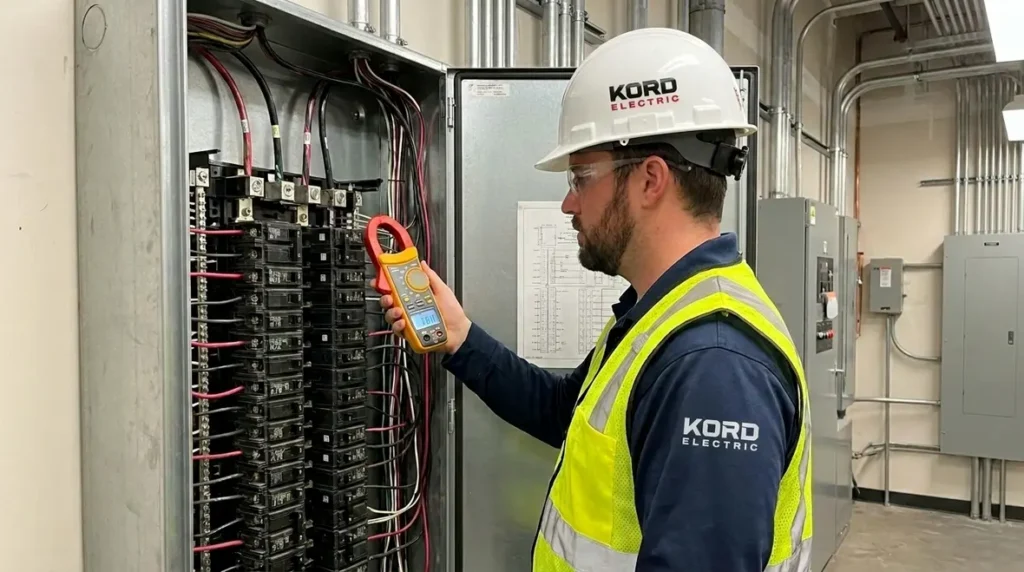
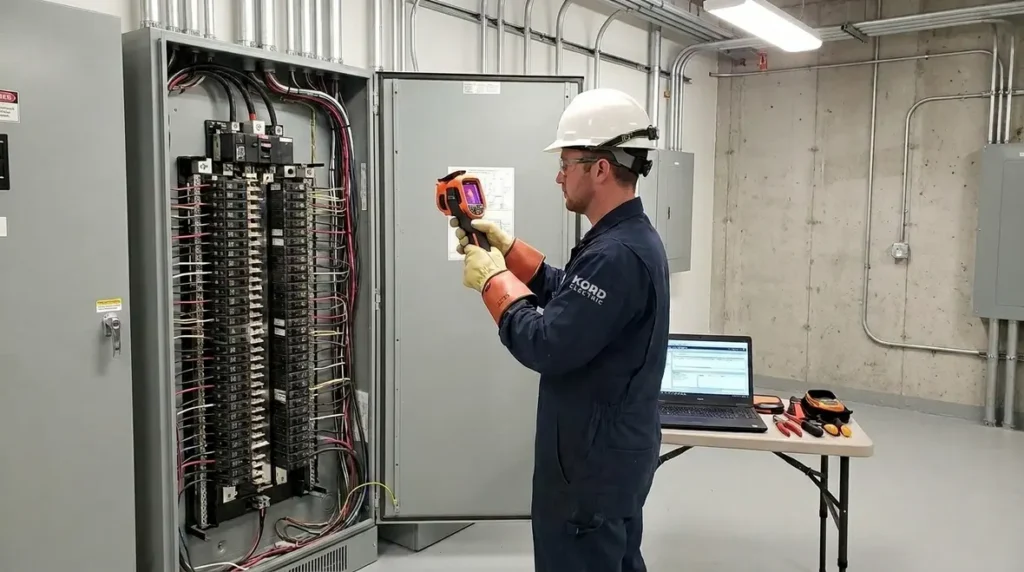
After reviewing ratings and layout, we confirm real performance using measurement where needed. Many commercial buildings have inconsistent load profiles, and nameplate values can be optimistic. Therefore, our approach often includes load studies, monitoring, or validated measurements taken at the panel and connected circuits.
We pay attention to three areas:
- Peak demand, because upgrades triggered by short peaks often get missed in a casual review.
- Continuous load behavior, because steady draw builds heat over time.
- Voltage stability, since low voltage can reduce equipment performance and increase current draw.
When measurements show that current is routinely near limits, the evaluation becomes clear. However, the more subtle cases still matter. Sometimes current does not exceed the rating, but heat stress or poor balance creates problems. In those cases, a panel can wear out early, and the “upgrade later” plan turns into “emergency now.”
We also factor in power quality issues. Harmonics from variable frequency drives, LED lighting drivers, and certain process equipment can create extra current and overheating. That is why our technicians do not just ask what is plugged in. They also ask how the equipment behaves electrically.
And yes, we recognize that some owners want a quick answer like they are ordering fries. Yet electrical work demands accuracy. A fast guess can cost more than a careful evaluation, especially when the building depends on uptime.
Estimate remaining capacity and plan the safest path
Once we confirm demand, we estimate remaining headroom and map the upgrade steps. This is where the electrical service panel capacity evaluation becomes a business tool, not just an electrical report.
We calculate effective capacity by combining:
- Available breaker space and thermal limits within the panel sections
- Expected load growth based on tenant changes or operational expansion
- Feeder and transformer constraints when they limit upstream performance
- Safety margins needed for reliability and future flexibility
Then we propose options that match commercial realities. Sometimes the correct move is adding new distribution equipment. Other times, we recommend replacing specific components or upgrading the service to reduce stress on feeders and panel components. In larger major property buildings, we may coordinate changes across multiple panels or distribution areas to keep operations running.
Throughout this process, our technicians keep the plan practical. We schedule work to reduce downtime. We also confirm labeling, documentation, and circuit clarity, because a well organized panel prevents future confusion when new equipment arrives.
Most importantly, we plan for reliability. We aim to prevent recurring breaker trips, reduce heat risk, and give the facility room to grow without constant rework. That is the difference between an upgrade that looks good on paper and one that performs on the ground, where the lights, motors, and controls actually live.
For facilities that want to turn this one time check into an ongoing reliability strategy, pairing panel evaluations with structured electrical preventive maintenance programs helps keep capacity, safety, and performance aligned over the long term.
Common mistakes during upgrades and how we help others avoid them
Even with good intentions, mistakes happen in commercial and industrial electrical projects. Usually, the error starts with assumptions. Someone sees a panel label and thinks the job is solved. Someone else adds new equipment without checking whether the load pattern changes. Or the team updates breakers but ignores upstream constraints.
Here are the mistakes we see most often, and what we do to prevent them:
- Assuming spare breakers mean spare capacity. Breaker slots can exist while the bus and thermal design cannot handle new load.
- Ignoring phase balance. One leg can overload while other legs look fine, causing repeated nuisance trips.
- Overlooking harmonics. Modern loads can raise effective current beyond what simple calculations predict.
- Skipping future planning. The upgrade works today, then fails when expansion or tenant changes arrive.
- Neglecting labeling and documentation. Clear circuit identification prevents costly follow up work during later upgrades.
We approach these problems with calm, structured steps. And if you hear one of our technicians explain a concept twice, it is not because we are confused. It is because clarity beats speed. In the commercial world, clarity also reduces change orders, and nobody loves those. Change orders are like surprise plot twists in a movie you did not buy tickets for.
FAQ
Call Kord Electric for a confident upgrade plan
If your commercial or industrial facility plans new equipment, tenant changes, or production growth, you need a clear path, not a gamble. Kord Electric performs a thorough electrical service panel capacity evaluation so you understand what the panel can support today and what it must support tomorrow. Our technicians and expert service staff explain findings in plain language and outline practical upgrade options with minimal disruption. Contact us to schedule an assessment and protect your uptime like it is the main character in your day.
When your evaluation points toward broader improvements—whether that means modernizing aging infrastructure, adjusting distribution, or coordinating new equipment installs—our dedicated commercial services help turn the plan into action. From targeted upgrades to full-scale work informed by resources like the Rewiring Cost Guide for Commercial Electrical Systems, we align scope, budget, and long-term capacity so the building can grow without constant electrical surprises.
To keep that performance steady long after the evaluation is complete, Kord Electric also offers structured electrical preventive maintenance services for commercial and industrial properties. Together, capacity planning and preventive maintenance turn your service panel from a potential bottleneck into a quiet, reliable backbone for everything the facility needs to power next.
If your facility is planning lighting retrofits, process upgrades, or new distribution tied to this evaluation, our specialized installation offerings—such as recessed and commercial lighting installation services—help tie safe capacity, clear compliance, and modern efficiency into one coordinated project instead of scattered tasks.