Emergency Lighting Installation for Commercial Facilities
Emergency Lighting Installation Guide for Commercial and Industrial Facilities
When the power goes out in a commercial tower or industrial plant, darkness does not simply dim the mood. It raises risk. At Kord Electric, we design and install emergency lights, exit signs, and integrated safety systems that guide people calmly and clearly to safety. Our technicians and expert service staff explain every step, because informed property managers make better decisions. In this guide, the team at Kord Electric walks through how professional emergency lighting installation works, why it matters for large facilities, and how the right system protects both people and property.
Now, let us turn on the lights, even if the grid has other plans.
Understanding the Role of Emergency Lighting in Major Buildings
In commercial and industrial environments, lighting is not just about visibility. It is about control. During a power failure, fire event, or system fault, emergency lights activate instantly to illuminate paths of egress. At the same time, exit signs direct occupants toward safe exits. Together, these components form a backbone of building safety systems that operate when normal power fails.
However, installing fixtures on a wall is not enough. Large properties such as warehouses, manufacturing plants, hospitals, office towers, and distribution centers require layered planning. Ceiling height, floor layout, occupancy load, hazardous zones, and machinery placement all influence placement. Therefore, our technicians begin every project with a detailed site assessment.
Because every facility operates differently, we tailor solutions. A high ceiling warehouse demands high output units with precise beam spread. Meanwhile, a corporate high rise requires corridor coverage and stairwell illumination that meets strict code requirements. In both cases, the goal remains the same. Clear guidance. Zero confusion. No guesswork.
And yes, even the most seasoned facility manager appreciates lights that behave like loyal employees. They show up when needed and never ask for coffee breaks.
How Do You Install Emergency Lights in a Commercial Facility?
This is the question property managers often ask when speaking with our service staff. The answer is both technical and strategic.
First, we conduct a compliance review. Local and national codes govern illumination levels, spacing, battery duration, and signage placement. Our electricians verify required foot candle levels along egress paths. Next, we evaluate power sources. Some systems rely on individual battery packs, while others connect to central inverters or generators.
After planning, our team maps fixture locations. Stairwells, corridors, exit doors, intersections, and high risk zones receive priority. Additionally, we confirm that exit signs remain visible from all approach angles. That may require double faced units or directional arrows.
Installation itself follows a disciplined process.
- Secure mounting of fixtures and exit signs at code compliant heights
- Dedicated circuit connections or integration with central power systems
- Battery backup configuration and load testing
- Full illumination testing under simulated outage conditions
- Documentation for inspection and facility records
Finally, our technicians perform a complete functional test. We cut normal power to ensure emergency lights activate instantly. No flicker. No delay. If the system hesitates, we adjust until it performs flawlessly.
Because in a real emergency, seconds matter. And nobody wants their evacuation plan to feel like a suspense movie scene.
Designing Safety Systems for Industrial and High Occupancy Spaces

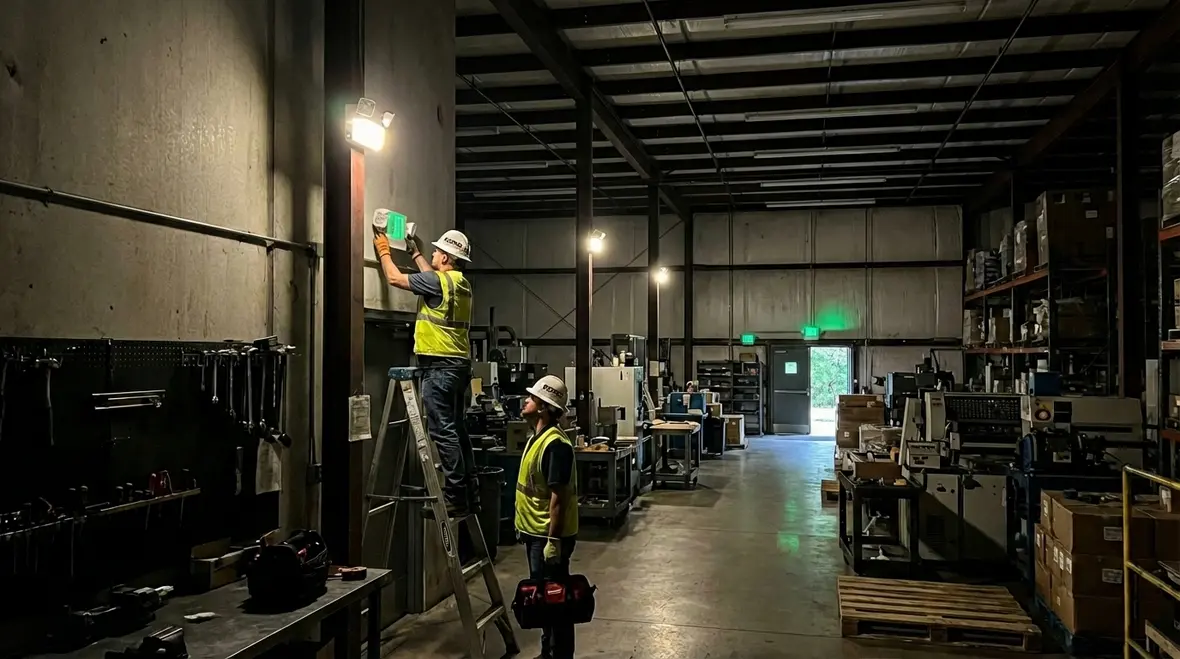
Industrial facilities present unique challenges. Heavy machinery, storage racks, chemical areas, and restricted zones demand careful planning. Therefore, we design safety systems that do more than meet minimum code. We create coverage that anticipates real world movement.
For example, in a manufacturing plant, workers may operate in segmented departments. If a power loss occurs during shift operations, pathways must remain visible despite equipment shadows. Consequently, our design team calculates light distribution patterns that minimize dark pockets.
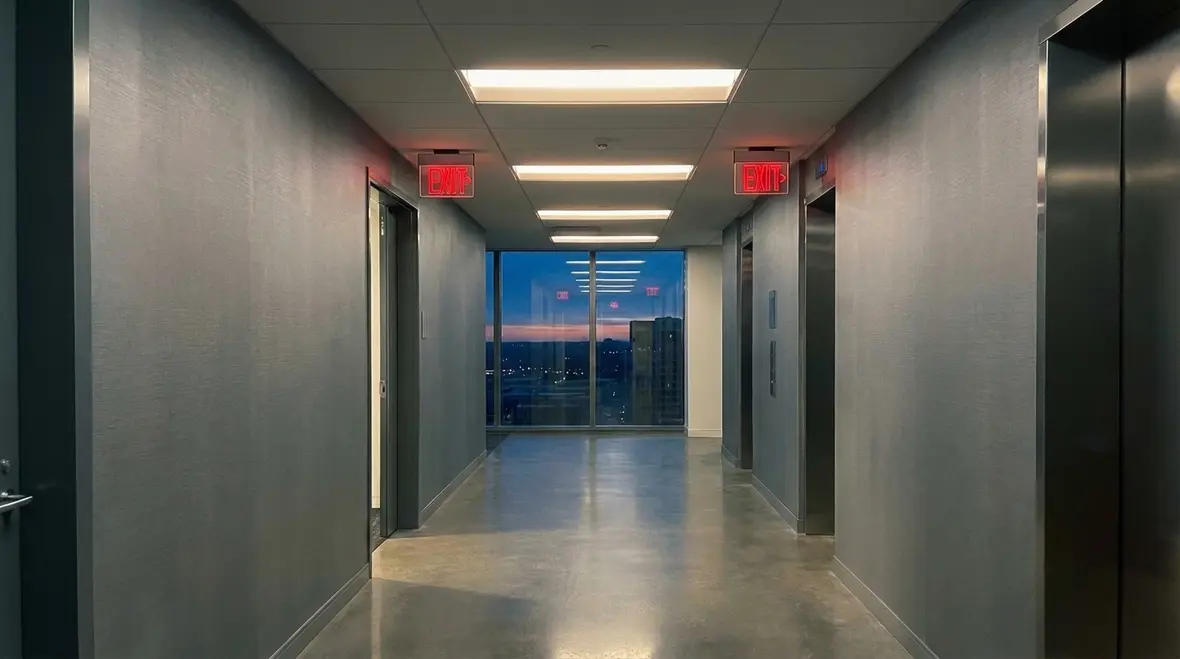
In high occupancy office buildings, stairwells become critical channels during evacuation. We ensure consistent illumination from top floor to ground level. Furthermore, illuminated exit signs are placed at each change in direction, so occupants never second guess their route.
Our expert service staff also explain battery duration options. Many commercial codes require at least ninety minutes of backup operation. However, some industrial clients request extended duration to align with internal safety policies. We guide them through these choices in plain language. No jargon. No mystery.
Moreover, integration with fire alarms and building management systems adds another layer of reliability. When alarms trigger, emergency lights can respond in coordination. That synergy strengthens overall protection.
Because in large properties, safety works best when systems speak the same language.
Key Components and Technical Considerations
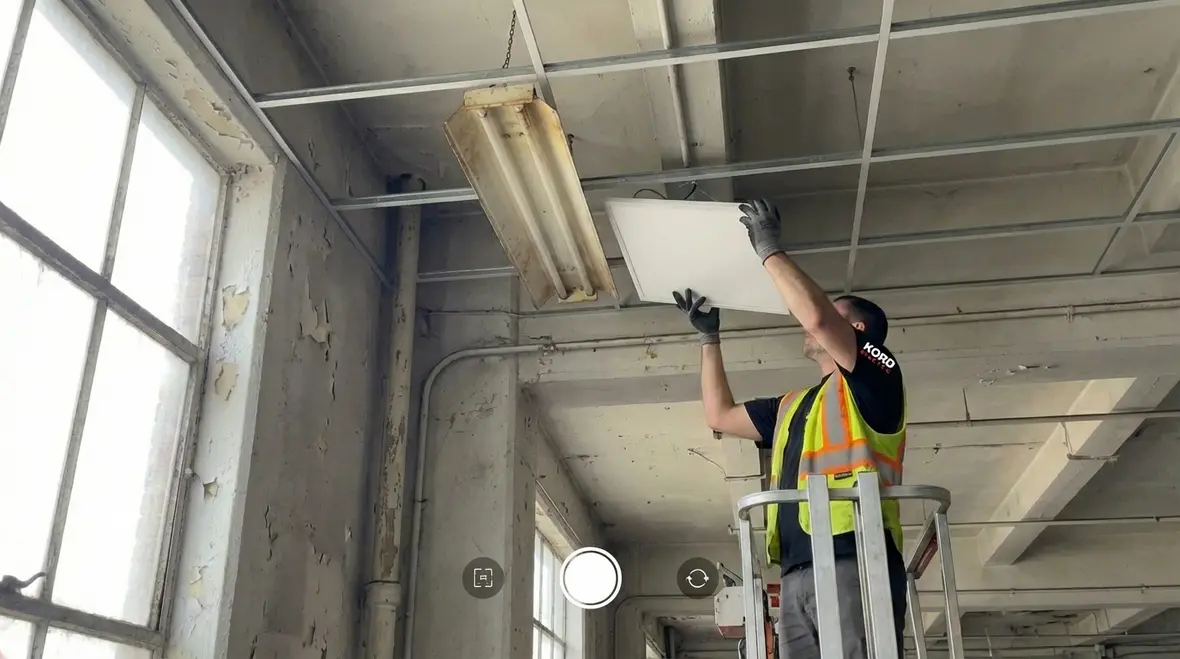
While the concept seems simple, emergency lighting installation involves several technical elements that must align perfectly. The team at Kord Electric approaches each one with precision.
Power Source Options
Facilities may use self contained battery units, central battery systems, or generator backed circuits. Each option carries benefits. Self contained units simplify localized maintenance. Central systems streamline testing across multiple fixtures. We assess operational needs before recommending a configuration.
Illumination Levels
Code mandates minimum light levels along egress routes. However, wide industrial aisles often require more robust output to ensure safe movement around equipment. Our technicians calculate spacing ratios and mounting heights to achieve balanced coverage.
Durability and Environment
Warehouses may expose fixtures to dust and vibration. Manufacturing plants may involve heat or moisture. Therefore, we select units rated for the environment. A delicate office fixture does not belong above a stamping press. It simply would not survive the first week.
Visibility of Exit Signs
Exit signs must remain clearly visible under all conditions. We verify letter size, color contrast, and directional arrows. Additionally, we position them to avoid obstruction from shelving or architectural features.
Because an exit sign hidden behind inventory helps no one.
Maintenance Planning from Day One
Installation is only part of the journey. Over time, batteries age. Lamps degrade. Dust accumulates. Therefore, we help facility managers establish inspection schedules. Routine monthly checks and annual full duration tests ensure readiness.
Our service staff often say that emergency lights are like parachutes. You hope never to use them. But you absolutely want them packed correctly.
Dual Focus: Compliance and Operational Confidence

When commercial property owners contact Kord Electric, they usually want two outcomes. First, meet regulatory standards. Second, protect people without disrupting operations. We balance both priorities carefully.
Column One: Regulatory Requirements
- Adherence to local and national electrical codes
- Minimum illumination along egress paths
- Ninety minute battery backup standards
- Proper exit sign placement and visibility
- Documented inspection records for authorities
Column Two: Operational Priorities
- Minimal downtime during installation
- Strategic scheduling around production hours
- Integration with existing safety systems
- Energy efficient fixture selection
- Long term maintenance planning
By addressing both columns simultaneously, we create solutions that satisfy inspectors and executive teams alike. Furthermore, we communicate clearly with facility leadership throughout the project. Our expert technicians explain why certain placements matter and how each component supports overall safety.
After all, confidence grows when people understand the system protecting them.
Emergency Lighting Installation Guide for Large Scale Retrofits
Not every facility starts with a blank blueprint. Many commercial and industrial properties operate in aging buildings. Therefore, retrofitting becomes essential.
First, our team audits existing emergency lights and exit signs. We evaluate battery health, illumination strength, wiring integrity, and code alignment. Often, we discover units that technically power on but fail to meet current standards. In other cases, facility expansions have created new corridors without updated coverage.
Next, we design a phased upgrade plan. This approach allows businesses to maintain operations while improvements occur section by section. For example, in a distribution center, we may upgrade one zone during scheduled maintenance windows, then move to the next area.
Additionally, modern LED technology offers efficiency and longer life. Upgrading older incandescent or fluorescent units reduces maintenance frequency. Over time, energy savings help offset installation costs.
Our technicians take care to match new systems with existing infrastructure. If central power supports part of the building, we ensure seamless integration. When older wiring needs replacement, we handle it safely and cleanly.
Because retrofits should feel like an upgrade, not a construction nightmare.
Why Professional Installation Matters More Than Ever
Some property owners may wonder if emergency lighting installation appears straightforward. Mount the unit. Connect the wires. Done. However, commercial and industrial environments demand more than surface level work.
Improper spacing can create shadowed areas. Incorrect circuit connections may prevent activation during a true outage. Weak battery configuration can shorten runtime below required limits. Each of these mistakes carries liability.
Therefore, Kord Electric assigns trained electricians who specialize in commercial systems. Our expert service staff stay current with evolving regulations. Moreover, we document every installation detail for facility records and inspections.
We also conduct post installation walkthroughs with property managers. During these sessions, our technicians explain testing procedures and maintenance intervals. That transparency builds trust and ensures long term reliability.
Because when an emergency strikes, there is no time to troubleshoot. The system must simply work.
Related Maintenance and Safety Services
Emergency lights and exit signs do their best work as part of a broader electrical maintenance strategy. Many commercial and industrial properties pair new emergency lighting installations with structured electrical preventive maintenance programs that include emergency lighting testing, generator and ATS inspections, and annual compliance documentation. Coordinating these services keeps your safety systems aligned, up to date, and ready when you need them most.
Frequently Asked Questions
Conclusion: Illuminate Safety with Kord Electric
In commercial and industrial facilities, preparation defines resilience. Emergency lights, exit signs, and coordinated safety systems stand ready when normal power fades. Kord Electric designs, installs, and maintains these systems with precision and clarity. Our technicians explain each step, ensuring property managers feel confident and informed. When safety cannot wait, neither should you. Contact Kord Electric today and let us illuminate a safer path forward for your facility.
For facilities that want to go a step further, pairing emergency lighting projects with ongoing electrical preventive maintenance services helps keep life safety equipment, distribution gear, and critical systems operating reliably year round.