

Emergency Power Systems for Manufacturing Uptime
At Kord Electric, we understand that production lines do not pause for bad weather, utility failures, or surprise equipment failures. That is why we implement emergency power systems for manufacturing that keep critical loads running when the grid goes quiet. In practical terms, we build backup plans that protect uptime, support safe shutdown, and reduce costly downtime events. And yes, we do explain everything clearly, because the last thing you need is a power plan that sounds like a magic trick. We help commercial and industrial facilities and major property buildings make the right moves before the lights go out.
What should backup power protect in a manufacturing plant
In most industrial facilities, backup power has one job: keep the right things on, long enough, in the right way. First, Kord Electric identifies which systems make or break production. For example, we often see the top targets as process control systems, essential HVAC loads for product quality, critical compressed air circuits, safety systems, and key networking gear. Then we map what can safely wait. This is where our technicians do their best work, because experience shows that not every load should run during a transfer event. If you try to run everything, the system costs more, and it can become less reliable. Nobody wants a backup system that behaves like a restaurant that opens the whole menu during a fire drill.
Next, we consider the full “uptime chain.” Power must reach switchgear, then to motor starters, then into control panels, and finally into the machines that actually keep product moving. Therefore, backup power design must include correct load sizing, proper transfer methods, and enough fuel or runtime margin. Finally, we account for how long a site can tolerate interruption before it needs stable power. A short transfer may be fine for some controls, while other loads require steady output immediately.
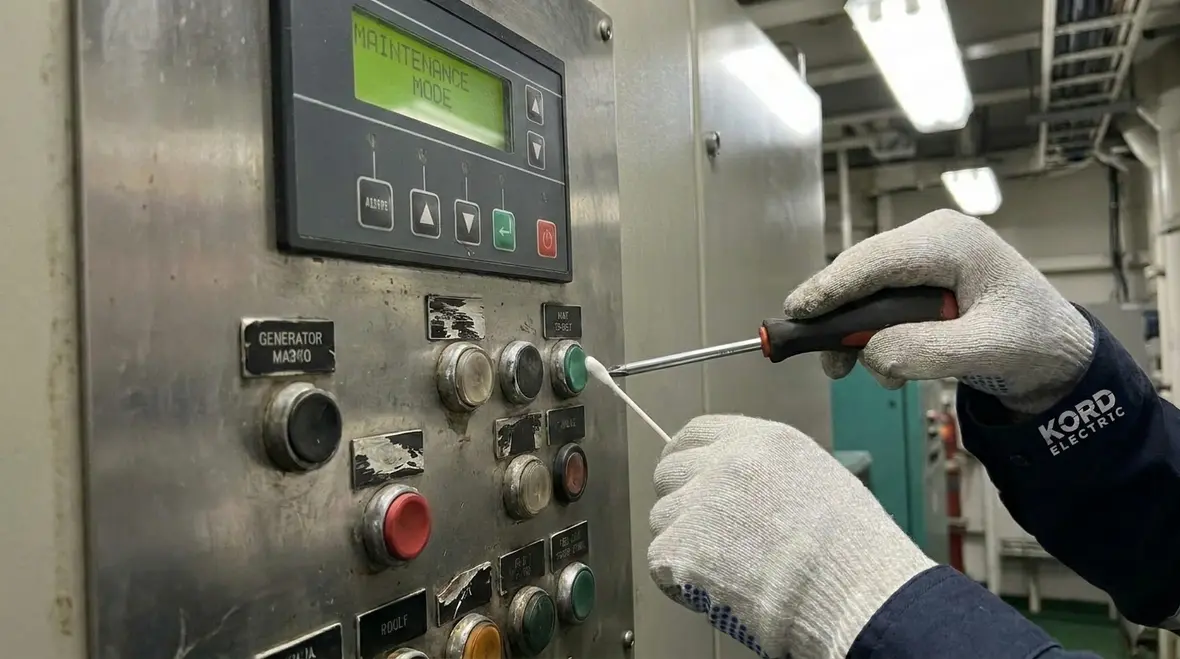
How Kord Electric builds backup power systems for uptime
When we design emergency power systems for manufacturing, we treat the project like a living system, not a one time install. First, our expert service staff gathers operating data during walkthroughs and reviews. We ask how production schedules run, what loads cycle, and what power quality matters for sensitive equipment. Then we calculate run time targets and peak start requirements, because starting a compressor or a large pump can hit a system harder than you expect.
After that, we coordinate the electrical architecture: generators or other sources, transfer equipment, switchgear, distribution paths, and controls. We also plan for safe operation during abnormal events. That means interlocks, proper labeling, and transfer logic that prevents backfeed risks. Also, we ensure the system can support both automatic and manual start scenarios, based on how the facility handles emergencies.
Then we connect it to real operations. We do not stop at wiring diagrams. We help facility teams understand what will happen during a utility outage, what alarms they should expect, and how to confirm stable power. In other words, we turn a complex system into something operators can use with confidence.

Preventing failures through electrical preventive maintenance
Backup power fails when people assume it will “just work” every time. Therefore, we lean on electrical preventive maintenance as a core strategy, because it keeps the system healthy before the outage. Our maintenance approach is supported by the same discipline described in our preventive plan at Kord Electric: electrical preventive maintenance. And unlike some plans you might sign, this one stays practical.
Our technicians check the things that quietly drift out of spec. For example, they verify breaker operation, inspect terminations, test protective settings, and confirm correct phase rotation where it matters. They also monitor components that wear over time, like battery systems, charger performance, control relays, and transfer mechanisms. When we find weak points, we address them before they turn into a site emergency.
At the same time, we verify performance. We test alarms and controls under safe conditions. We confirm that transfer times meet expectations. We review startup readiness, including generator set health and fuel system status. Then we document findings and track trends. That way, maintenance turns into decision making, not just a checklist exercise.
And yes, we get it. Nobody wakes up excited to test switchgear. Yet, with the right cadence, those tests prevent the kind of downtime that makes a whole shift look like they are auditioning for a silent film.
Where backup power fits with safety and production continuity
Successful backup power does not only keep equipment running. It also protects people and supports safe procedures. First, emergency loads must align with facility safety goals. Our team coordinates the control logic so safety systems receive power when they should, and only in the way they should. That includes proper transfer sequences, clear separation between utility and generator sources, and reliable signaling for operators.
Next, we support continuity plans that match how manufacturing actually works. For instance, some sites require orderly shutdown of certain lines while continuing critical operations like refrigeration, ventilation, process monitoring, or material handling for containment. Others can maintain full production immediately after transfer. We help decide which approach fits your equipment and product risk. Then we configure the emergency power systems for manufacturing so they support that plan without creating new hazards.
In addition, we plan for coordination across building systems. Backup power must work with fire alarm equipment, access control, security systems, and communications. Otherwise, you may keep manufacturing alive, while the rest of the building goes dark and turns the site into a mystery novel with no flashlight.
How to plan run time and load priority without guessing
Many facilities guess at runtime and then discover they guessed wrong during an outage. Kord Electric helps commercial and industrial facilities and major property buildings avoid that problem by planning with real load behavior. First, we classify loads by priority: critical loads that must run, important loads that can shed, and non critical loads that can wait. Then we size the power source to cover the realistic operating profile, not an optimistic spreadsheet fantasy.
To do this, our technicians and expert service staff review electrical drawings, recent utility data, and equipment specifications. We also take into account motor starting surges, because large motors can dominate peak demand. Then we confirm the transfer and distribution system supports those peaks. That means the right feeder ratings, correct settings, and stable control operation.
Once sizing is right, we address fuel strategy and endurance. We discuss how much runtime the facility expects during a worst case scenario, and we align that with system capacity. We also consider maintenance access and replenishment workflows. The goal is simple: if the grid stays down, your manufacturing plan stays practical.
Dual column snapshot: what we verify during planning
Load and control checks
Critical load list, motor starting profile, transfer logic, safety circuit needs, communications and monitoring requirements
Reliability checks
Generator readiness, battery and charger health, protective device performance, preventive maintenance history, runtime targets
What an outage response plan should include
Even with the best system, the outage moment is where discipline matters. Kord Electric helps facilities create an outage response plan that operators can follow quickly. First, we define the roles: who confirms utility loss, who verifies transfer, and who checks load status after power stabilizes. Then we provide clear steps for acknowledging alarms, inspecting system indicators, and confirming critical circuits stay energized.
Next, we align the plan with real facility practices. If your plant uses shift teams, we ensure procedures are simple enough to follow while production staff handle their roles. If your site uses a maintenance call tree, we help integrate system notifications. Also, we coach teams on what normal system behavior looks like, so a transfer event does not trigger panic or unnecessary manual actions.
Finally, we schedule follow up. After a utility outage, we recommend inspection of transfer events, protective devices, and control readings. Then we update the maintenance plan based on what happened. That way, each event improves readiness rather than repeating the same lesson with a new set of alarms.
How emergency power supports broader electrical strategy
For many facilities, emergency power systems for manufacturing are one part of a larger reliability strategy. Structured service plans, like the programs outlined in Kord Electric’s commercial and industrial electrical maintenance plans, connect backup power with routine inspections, thermal imaging, and power quality assessments so the whole system works together instead of in isolated pieces.
When teams pair disciplined maintenance with well designed emergency power, they gain a clearer view of system health. Voltage fluctuations, overloaded circuits, and hidden electrical risks show up earlier, so corrective work can be scheduled before production feels the impact. Over time, that combination of planning and emergency readiness turns backup power from a “nice to have” into a core part of operational resilience.
Facilities that depend on uptime can also extend this strategy into targeted services such as voltage fluctuation diagnostics for commercial and industrial sites, or lighting and distribution projects that support visibility and safety while keeping power quality in check.
FAQ
Ready to protect manufacturing uptime with a stronger power plan?
If your facility runs production with any level of risk, you deserve a backup strategy that holds up under real conditions. Kord Electric helps you design emergency power systems for manufacturing, set clear load priorities, and maintain the system so it stays dependable. Our technicians explain each step in plain language and support commercial and industrial facilities and major property buildings with ongoing service. If your operation also needs support diagnosing voltage instability or planning structured maintenance, services like voltage fluctuation repair for commercial and industrial facilities and electrical preventive maintenance programs can be integrated into a single, long term reliability roadmap.
Call us today to review your current setup, align backup power with your continuity and safety goals, and build a plan that keeps downtime from becoming your new business model.


