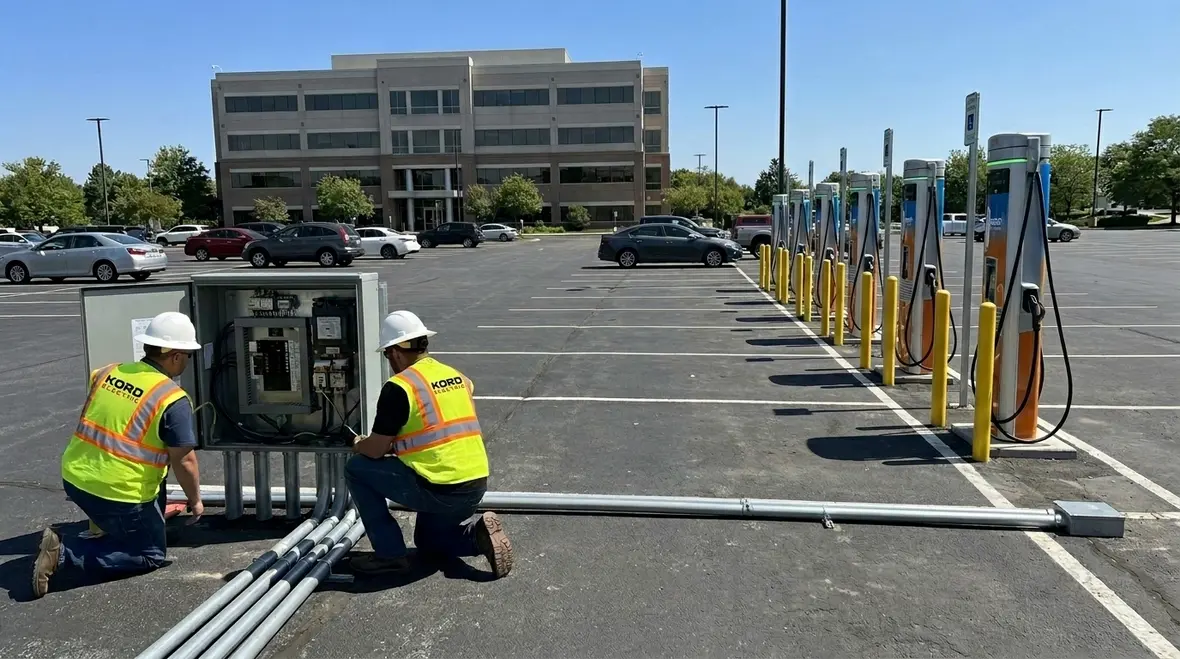
EV Charging Infrastructure Strategy for Parking Lots
Electric vehicle charging infrastructure strategy for commercial parking lots
When Kord Electric plans EV charger upgrades for commercial parking lots, we start with an electric vehicle charging infrastructure strategy that is built for real uptime, real usage, and real growth. In other words, we do not just “add chargers.” Instead, we map power, layouts, and load timing so the building can support today’s demand and tomorrow’s vehicles without constant surprises. Our expert service staff also walks facility teams through the plan, so decisions feel clear instead of like a pop quiz you did not study for. And yes, sometimes we laugh a little, because if power planning were easy, every parking lot would look like a futuristic movie set.
In this guide, others can expect a practical approach for commercial and industrial facilities and major property buildings. We will cover site planning, panel upgrades, cabling decisions, permitting, and budgeting, all in a calm, step by step flow.
Site planning that prevents costly reroutes
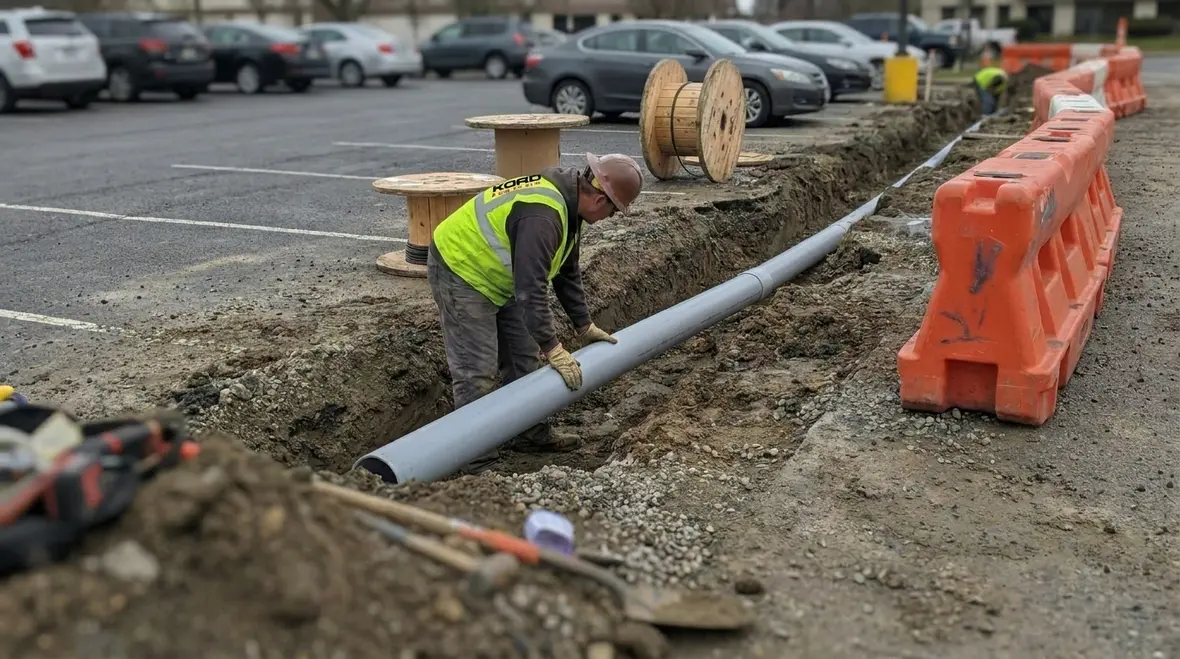
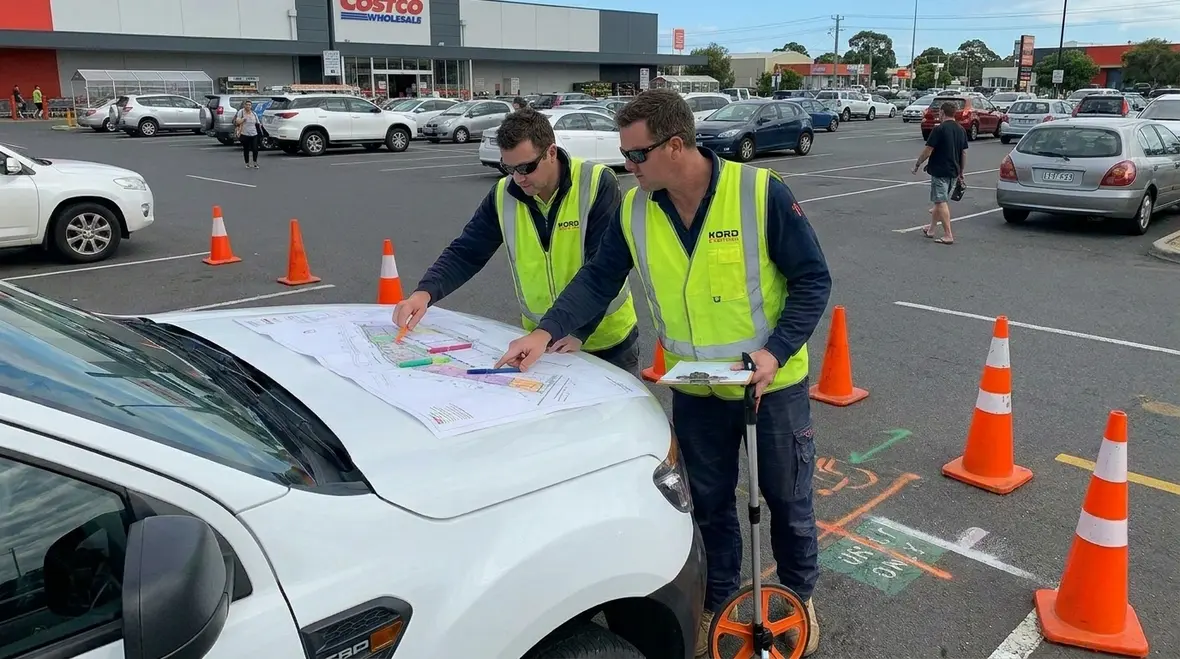
First, we help clients define where vehicles will actually park, which drivers will use the stations, and how that traffic will move during peak hours. Then we set a charger placement plan that keeps cable runs efficient and avoids ugly reroutes later. That matters because changing charger locations after conduit work starts can turn “a simple install” into a schedule shuffle that costs more than anyone wants to admit at staff meetings.
Next, our technicians evaluate curb space, island geometry, pedestrian crossings, and emergency vehicle access. They also review stormwater and landscaping constraints for major property buildings, since trenching and restoration plans need to align with the site’s civil work. When teams coordinate early, we keep the installation tidy and safe.
Finally, we consider user experience in the layout. Stations that are hard to reach get ignored. Stations that block circulation get complained about. So we balance visibility, access, and parking management so the infrastructure strategy stays practical, not just theoretical.
How load planning protects your building’s electrical capacity
After placement comes power. Commercial electrical systems already run forklifts, HVAC, kitchens, elevators, and lighting. Therefore, EV charging must fit inside the existing load profile. To do that well, we use load planning that considers demand patterns, charger power levels, and how charging sessions stack over time.
Our expert service staff explains options in plain language. For example, load sharing can reduce the risk of overloading a main service by distributing available capacity among active stations. Also, we can coordinate charger schedules with building load management systems, so charging ramps align with lower demand periods. This helps keep the facility stable while still meeting customer needs.
And if the site has multiple tenants, we plan carefully because shared panels and ambiguous responsibilities can get messy. So we clarify ownership and metering needs before any design locks in. When that happens, the project runs smoother, and the facility team does not inherit confusion.
What technicians review before any wires get pulled
Before conduit is installed, we send our technicians through a review checklist that covers electrical one line diagrams, panel capacity, grounding and bonding paths, and protection device coordination. Then we confirm equipment compatibility, including charger models, communication methods, and network features that support reporting and management.
In addition, we verify where heat will build up. Outdoor enclosures, transformer proximity, and vault conditions can change the installation requirements. Therefore, we design for safety and reliability, not “good enough.”
We also plan for long term maintenance access. If a technician cannot reach a disconnect or pull box without moving landscaping or shutting down operations, it becomes a recurring headache. So we design access routes up front, which helps keep future service work fast and predictable.
Rewiring costs and budgeting for commercial systems
Most facilities ask the same thing early: what will the electrical work cost, and what triggers rewiring? Kord Electric addresses this with a cost framework that aligns with real commercial conditions. To support that, we refer to our rewiring cost guide for commercial electrical systems and how commercial changes often create a domino effect across panels, conduit, and protection devices.
In practice, rewiring cost drivers usually include the distance to reach a suitable electrical supply point, the need for new feeders, panel capacity upgrades, and whether existing infrastructure can support the charger’s current demands. If a building requires a service upgrade, the cost can rise because utility coordination, transformer changes, and utility-side work may get involved. Also, permitting and inspections can add cost and time, especially when the scope expands beyond the first estimate.
So when we budget, we separate essentials from upgrades. Essentials include conduit, wiring, disconnects, breakers, grounding, and charger installation. Upgrades might include load management features, additional network hardware, or electrical room modifications. This structure keeps stakeholders focused on outcomes, not buzzwords.
For major property buildings, we sometimes stage work so tenants keep operating. That approach can reduce downtime and protect revenue. And yes, it still feels like scheduling a wedding, but with more wire and fewer flower petals.
Conduit, cabling, and safety details that matter outdoors
Commercial and industrial parking lots live outdoors, and outdoor conditions punish weak design. Sun, rain, freeze thaw cycles, and vehicle impact risk all affect how conduit and cabling should be installed. Therefore, we design with protection in mind from day one.
Our technicians select conduit routing that keeps transitions clean and reduces the number of bends that create pulling difficulties. Then we ensure correct conductor sizing based on charger load, voltage drop needs, and installation method. We also specify proper termination practices so connections stay reliable during repeated thermal cycles.
Next, we address safety devices and protection coordination. That includes correctly sized breakers, appropriate surge protection decisions, and correct grounding and bonding so faults clear as designed. We also handle labeling and documentation, because future service should be simple, not a scavenger hunt.
Finally, we verify compliance with applicable electrical codes and local requirements. When teams treat code compliance as part of the plan rather than a last minute hurdle, inspections go smoother and the project stays on track.
Permits, coordination, and timeline realism
EV charger projects can stall when teams underestimate coordination work. So we manage permitting steps early, align electrical design with site realities, and coordinate with utility schedules when service changes are required. That reduces the risk of waiting on power company approvals while the rest of the construction team finishes their tasks.
Then we coordinate with property managers, facility leads, and contractors working on asphalt, striping, lighting, and site access. Parking lot striping affects navigation and safety, and charger placement affects parking flow. Therefore, we sequence the work so the site looks right and works right.
Timeline realism matters because commercial operations run under deadlines. As a result, we help clients choose a practical installation window and a commissioning plan that checks communication, power output, and fault behavior before chargers open to users.
And if someone asks, “Can we just install it fast,” we smile calmly. Speed is fine, but safety and compliance are faster than a lawsuit. That is not a threat, it is a business model.
FAQ: EV charging infrastructure for commercial facilities
Ready to upgrade your commercial charging capacity?
If your facility needs reliable EV charging, Kord Electric helps you plan like a professional and install like a craftsman. We build an electric vehicle charging infrastructure strategy that fits your electrical capacity, site layout, and long term service needs. Our expert service staff explains options clearly, then our technicians execute the details with safety and code compliance in mind. For organizations that want end-to-end support, our dedicated EV charger installation services tie planning, construction, and commissioning together under one team.
Whether you manage a commercial parking structure, an industrial yard, or a mixed-use campus, a thoughtful electric vehicle charging infrastructure strategy keeps your building prepared for today’s drivers and tomorrow’s fleets. Contact us today to schedule a site assessment, and we will help you turn your parking lot into a reliable, future-ready charging asset instead of a guesswork experiment.
To explore how EV charging upgrades fit into broader electrical improvements and budgeting, you can also review our detailed rewiring cost guide for commercial electrical systems, which explains how panel capacity, feeders, and distribution changes affect total project cost for major properties.